
Reviewed · MUSEUMS
Treasures of Mexico City: Palaces and Museums
Mexico City’s historic center packs an astonishing amount of art and architecture into a few blocks, and this four-hour walk makes that concentration work in your favor. You move from grand paintings at MUNAL to the golden details of the Post Office Palace, ending at the marble-clad Palace of Fine Arts.
In This Article
- Key points to know before you book
- Why these four buildings make a good Mexico City walk
- Starting at the Palace of Fine Arts
- MUNAL: Mexican art from the viceregal era onward
- The Banamex Culture Palace and Mexico’s financial story
- The Post Office Palace, where a public service became architecture
- Palace of Fine Arts: marble, murals, and national culture
- How the walking format affects your day
- The guide can make or break this experience
- Who should book this four-hour experience?
- Should you book Treasures of Mexico City: Palaces and Museums?
- FAQ
- How long is the Treasures of Mexico City tour?
- Where does the tour meet?
- Which places are visited?
- Are museum and monument tickets included?
- Is the tour available in English?
- Is food included?
- Can I cancel the booking?
I like the way the tour connects art with money, government, and daily civic life. I also like that admission to the museums and monuments is included, with a separate entrance to help keep the visit moving. The main consideration is pace: four major buildings in four hours leaves little room for a long, quiet look at every gallery.
Key points to know before you book
- Four major landmarks in one walk: Visit MUNAL, the Banamex Culture Palace, the Post Office Palace, and the Palace of Fine Arts.
- A useful mix of art and architecture: The route covers Mexican painting, banking, postal history, and one of the capital’s leading cultural centers.
- English and Spanish guiding: You can join a live tour in either language, though some material may remain in its original language.
- Museum entry is included: Your ticket covers the listed museums and monuments, helping the $42 price make sense.
- A central meeting point: Meet at the Palace of Fine Arts and return there at the end.
- A guide can shape the experience: Barbi is praised for her passion and strong command of the subject, while the guides are also described as entertaining.
Why these four buildings make a good Mexico City walk
This is not a tour of isolated sights. It is a compact lesson in how Mexico City developed as a center of art, commerce, public service, and national identity.
The buildings also offer a useful contrast. MUNAL takes you through centuries of Mexican artistic work. The National Bank of Mexico shows how financial institutions helped shape modern Mexico. The Post Office Palace turns a practical public service into a lavish architectural statement. Bellas Artes brings the route back to art, murals, music, and national culture.
I find this kind of route especially useful at the beginning of a Mexico City stay. You get names, styles, artists, and historical references that can make later visits to the capital easier to understand. Since the walk begins and ends at the Palace of Fine Arts, you also finish in a part of the city that is well suited to further independent exploring.
The tour costs $42 per person. That is a fair price if you want structured guiding and plan to visit all four sites. Admission is included, and a live guide can save you from spending your limited vacation time trying to understand each building on your own.
The value depends on your habits. If you prefer to wander slowly, read every label, and spend half a day in one museum, this schedule may feel tight. If you want a clear introduction to several major sights, it is a practical use of four hours.
Other city tours we've reviewed in Mexico City


Starting at the Palace of Fine Arts
The meeting point is the Palace of Fine Arts, known locally as Palacio de Bellas Artes. Look for your guide wearing a blue shirt, carrying an umbrella, or wearing a backpack.
This is a sensible starting place. The building is one of Mexico City’s best-known landmarks, so you have a clear visual target even in a busy central area. It also gives the tour a strong opening, since you begin beside one of the city’s key cultural institutions before setting off on foot.
Bring a camera. The route has plenty of architectural detail, from carved stone and polished surfaces to decorative metalwork and painted interiors. Comfortable clothes matter too, since this is a walking tour with several indoor visits rather than a bus ride between sights.
The duration is four hours. Starting times vary, so you need to check availability for the date you want. The exact group size is not provided, so do not assume this will be a private tour or a tiny group.
MUNAL: Mexican art from the viceregal era onward
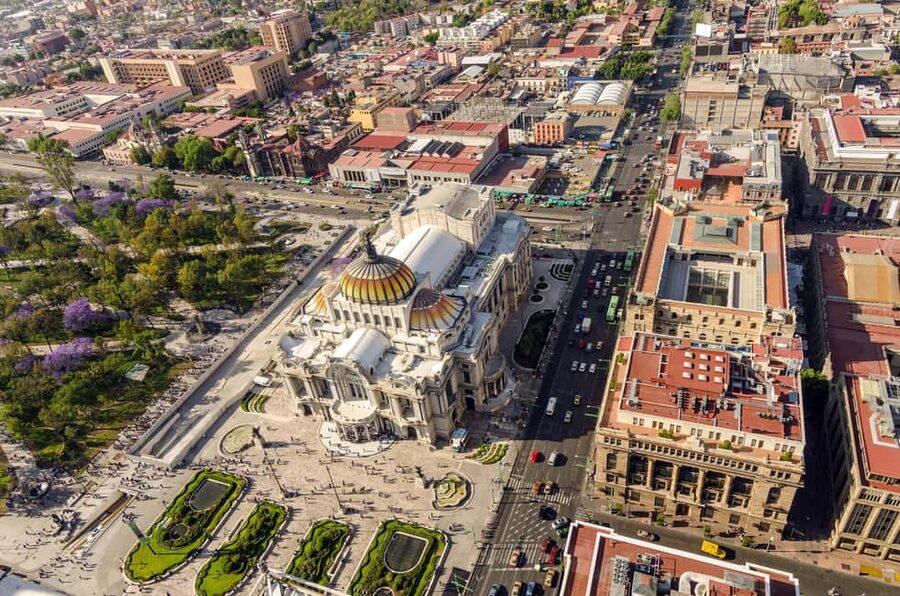
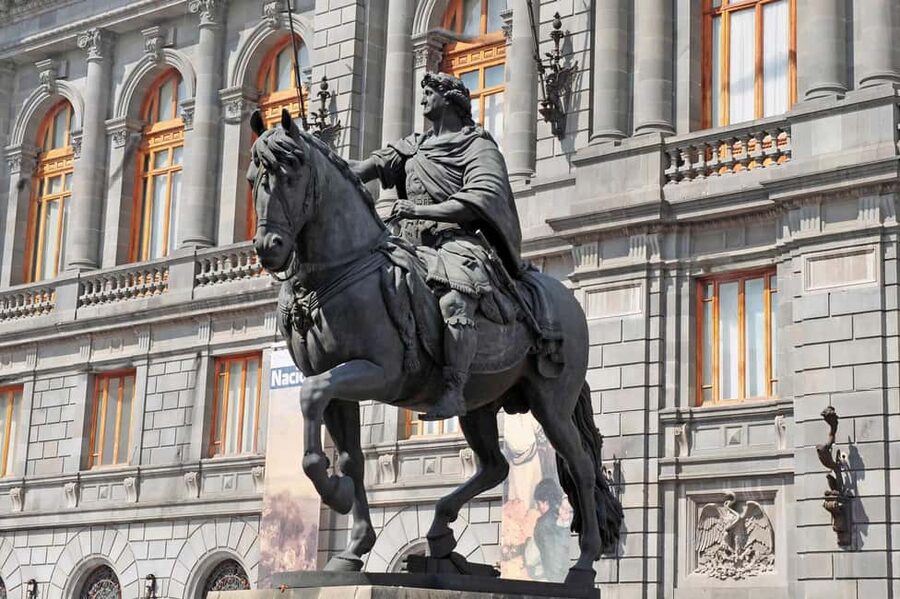
The National Museum of Art, usually called MUNAL, is the first main stop. Its collection traces Mexican art from the viceregal period into the early 20th century.
That span gives the museum real teaching value. Rather than seeing Mexican art as a single style, you can follow changes in subject matter, taste, technique, and national identity over time. The guide helps link the works to the country’s wider cultural development.
I would pay attention to the transition between periods. The point is not simply to collect a few famous paintings for your camera. It is to notice how artistic work changes as Mexico moves through different political and social eras.
The visit is guided, which is useful in a museum covering such a broad period. A good explanation can help you understand why a painting matters, what period it belongs to, and how it fits into the larger story.
There is one important warning. In extraordinary circumstances, MUNAL may not be open to the public during the tour. If that happens, the first part of the experience can change, so keep that possibility in mind if this museum is your main reason for booking.
Because the tour includes several more major buildings, you should not expect unlimited time in every room. Take notes of artists or works that catch your attention. You can return later if you want a slower visit.
The Banamex Culture Palace and Mexico’s financial story
The next stop is the National Bank of Mexico, presented as the Banamex Culture Palace. This part of the walk adds something many art-focused city tours leave out: the role of banking in national development.
The building is more than a place where financial transactions once took place. It represents Mexico’s economic growth and modernization. Your guide explains how banking influenced the country’s economic course and introduces the institution’s place in Mexican financial life.
This stop changes the rhythm of the tour. After looking at art, you begin thinking about commerce, public confidence, investment, and the systems that support a growing capital. That contrast makes the whole route more useful. You are not just seeing pretty facades. You are considering why these buildings were created and what they helped Mexico become.
The cultural value here rests heavily on the guide’s explanation. Visitors who already know a lot about Mexican banking may find this stop brief, but most people will appreciate the context. It gives you a better sense of how economic institutions fit into the story of Mexico City.
The tour description refers to the building as an important pillar of the Mexican financial system. Expect a guided visit focused on its historical and institutional role, rather than a technical lesson in modern banking.
The Post Office Palace, where a public service became architecture
The Palacio de Correos de México is likely to be one of the most visually memorable stops. Its purpose is practical, but its interior is anything but plain.
The building brings together Art Nouveau, Venetian Neo-Gothic, Baroque, and Neoclassical influences. That mix could sound chaotic on paper. Inside, it becomes a display of columns, gold-toned details, decorative surfaces, and carefully finished architectural features.
I like this stop because it shows how a public building can express ambition. A post office does not need to look lavish, yet this one was designed to make an impression. The message is clear: communication and civic service mattered enough to deserve a grand setting.
Your guide points out the details that are easy to miss when you are walking through on your own. Look upward as well as straight ahead. The building’s appeal comes from the combination of smaller decorative elements, not only from one famous room or facade.
This is also a good place for your camera, though you should stay focused on the guide and the group. Since the tour moves through multiple sites, you may have to choose between photographing every ornament and keeping up with the explanation.
For me, the Post Office Palace gives the walk its best architectural contrast. MUNAL is about collections and paintings. The bank is about economic institutions. The post office is about the visual language of public life.
Other museum experiences in Mexico City
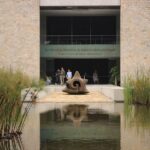


Palace of Fine Arts: marble, murals, and national culture
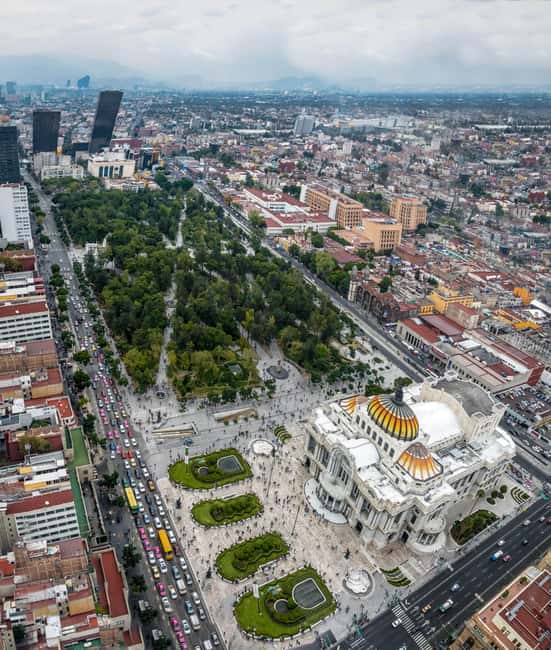
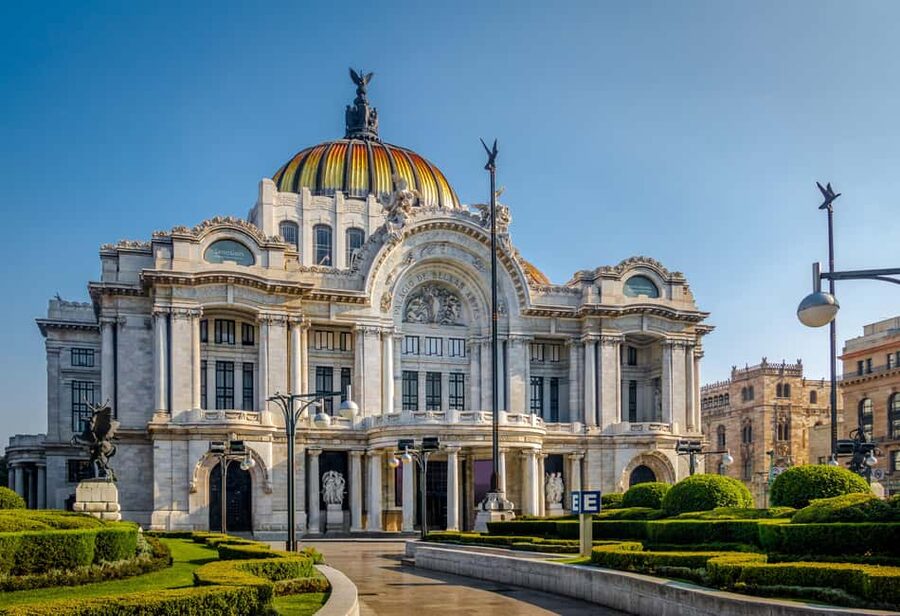
The route ends at the Palace of Fine Arts, the same landmark where you meet the guide. Its white marble exterior makes a strong impression, but the interior is the real payoff for anyone interested in Mexican art.
The halls include murals by major Mexican artists such as Diego Rivera and Rufino Tamayo. The building also serves as one of Latin America’s leading cultural centers, with exhibitions and performances that have helped shape the capital’s artistic life.
This final stop works well because the tour has already prepared you to look at the building in more than one way. You have seen art develop across centuries at MUNAL, considered the economic forces behind modern Mexico, and studied a public building covered in decorative detail. Bellas Artes brings those threads together through art, architecture, and national culture.
I would save a little energy for this stop. The Palace of Fine Arts can easily become the building you remember most, especially if murals or grand public interiors interest you. The tour includes a guided visit, so you can expect interpretation rather than a simple exterior photo stop.
At the same time, the building can be a busy cultural venue, and the available experience may depend on what is open during your visit. The supplied details do not promise a specific exhibition or performance, so book this tour for the architecture, murals, and cultural setting rather than for a particular show.
How the walking format affects your day
The tour stays within a central area and returns to the Palace of Fine Arts. That makes the route easy to combine with other plans before or after, at least in principle. You do not need to arrange a separate transfer between the four listed stops.
The practical benefit is continuity. Your guide can explain one building in relation to the next, and you can see the changes in style and purpose as you walk. The drawback is that a walking tour leaves less room for spontaneous stops, long coffee breaks, or extended browsing.
Four hours is enough for an introduction, not a full study of each site. I would choose this tour if you want orientation and context. I would not choose it as your only museum time in Mexico City if you already know you prefer slow, independent visits.
The meeting instructions are simple but important. Find the guide at Bellas Artes by looking for a blue shirt, umbrella, or backpack. Carry a camera and wear comfortable clothing. Food and drinks are not included, so plan around the four-hour period if you need a snack or meal.
The tour is offered in English and Spanish. Some content may be shown in its original language, so you should be comfortable with that possibility. Alcohol and drugs are not allowed.
The guide can make or break this experience
A route with four major stops depends on clear explanations and good time management. The strongest feedback attached to this experience focuses on the guides, especially Barbi, who is described as driven, passionate, and entertaining.
That matters here. MUNAL and the Banamex Culture Palace cover subjects that can feel abstract without context. At the Post Office Palace and Bellas Artes, a guide who points out specific details can help you see more than the obvious decoration.
The guide’s role is also to keep the group moving. With four buildings in four hours, you need someone who can give useful background without turning every room into a lecture. The available feedback describes the guiding as both informed and engaging, which is exactly the balance this itinerary needs.
Guide assignments can change, so you should not book on the assumption that Barbi will lead your particular departure. Still, her name is worth noting if you are comparing available tour options.
Who should book this four-hour experience?
I would recommend it to first-time visitors who want a strong introduction to Mexico City’s central cultural district. It is also a good fit if you enjoy architecture but want more than a photo walk.
Families and mixed-interest groups may find the subject range helpful. One person can focus on paintings, another on buildings, and another on the story of Mexico’s economic growth. The route keeps changing enough to prevent one theme from dominating the whole morning or afternoon.
Art lovers should appreciate the combination of MUNAL and Bellas Artes. Architecture fans may find the Post Office Palace especially rewarding. Visitors with an interest in civic history will get more from the bank and post office than they would from a tour that only covers palaces and churches.
I would be more cautious if you have limited mobility, since the experience is described as a walking tour and no accessibility details are provided. You should also think twice if you dislike fixed schedules or need a long time at each museum.
Free cancellation up to 24 hours before the activity and the option to reserve now and pay later make the booking less restrictive. Those policies are useful, but the real question is still whether you want a guided overview or an unhurried museum day.
Should you book Treasures of Mexico City: Palaces and Museums?
Book it if you want four important central sights explained in one organized walk. The $42 price is reasonable because museum and monument admission is included, and the guide adds context that would take time to assemble on your own.
The biggest strengths are the variety, the central route, the architectural detail at the Post Office Palace, and the chance to connect MUNAL and Bellas Artes with Mexico’s financial and civic story. The main weakness is the tight schedule, especially for serious museum lovers.
I would choose this tour near the start of a Mexico City visit, then return later to the building or collection that interests you most. That approach gives you both a helpful framework and time for your own discoveries.
FAQ
How long is the Treasures of Mexico City tour?
The tour lasts four hours.
Where does the tour meet?
Meet your guide at the Palace of Fine Arts in Mexico City. Look for a blue shirt, umbrella, or backpack.
Which places are visited?
The tour visits the National Museum of Art, the Banamex Culture Palace, the Post Office Palace, and the Palace of Fine Arts.
Are museum and monument tickets included?
Yes. Entry tickets to all listed museums and monuments are included.
Is the tour available in English?
Yes. Live guiding is available in English and Spanish. Some content may be shown in its original language.
Is food included?
No. Food and beverages are not included in the tour price.
Can I cancel the booking?
Yes. You can cancel up to 24 hours in advance for a full refund. You can also reserve now and pay later.
More Museum Experiences in Mexico City
More City Tours in Mexico City



More tours in Mexico City we've reviewed





Museums, compared.
 ★ 4.4CDMX: Xochimilco, Coyoacan, Frida Kahlo Museum & Murals TourFrom $89
 ★ 4.5Chapultepec Castle & Anthropology Museum TourFrom $795 hours (approx.)
 ★ 5.0Frida Kahlo VIP [Museum Tickets Included] Bike, Markets & ChurrosFrom $834 hours (approx.)
 ★ 4.5Anthropology Museum Guided TourFrom $392 hours 30 minutes (approx.)
 ★ 5.0Frida Kahlo VIP [Museum Tickets Included] Walk, Markets & ChurrosFrom $833 to 4 hours (approx.)
 ★ 5.0EXCLUSIVE TOUR Frida Kahlo Museum – SMALL GROUPSFrom $862 hours (approx.)
 ★ 4.4Mexico City: Anthropology Museum Guided VisitFrom $672.5 hours
 ★ 4.5Mexico City: Frida Kahlo Museum Entry Ticket w/Digital GuideFrom $34
The lists this tour appears in