
Reviewed · ROMA & POLANCO TOURS
Colonia Roma Musical Walking Tour
Colonia Roma’s story comes together through surprising links: a 16th-century chapel, revolutionary corridos, newspaper crime reports, modernist housing debates, and the ancient origins of tortillas. This is not a checklist of postcard sights. It is a close look at how Mexican identity took shape in one Mexico City neighborhood.
In This Article
- Key points at a glance
- Why this Roma walk is different
- Beginning at Romita’s old chapel
- Everyday objects and the Lamm family house
- Corridos along Avenida Álvaro Obregón
- Plaza Luis Cabrera and the problem of housing
- Plaza Rio de Janeiro and Roma’s changing role
- La Casa de Las Brujas and eclectic architecture
- Tortillería Premier and the ancient story of tortillas
- What the $41.63 price gives you
- Who should book this walk
- Should you book the Colonia Roma Musical Walking Tour?
- FAQ
- Where does the tour begin?
- What time does the tour start?
- Where does the tour end?
- How long does the experience last?
- What language is the tour offered in?
- How many people can join the tour?
- What is the price?
- Are admission tickets included?
- Is the tour close to public transportation?
- What happens if the weather is poor?
I like the tour’s small maximum of 12 people, which suits the narrow streets and discussion-heavy subject. I also like the way Gabriel Acevedo Velarde connects ordinary places, such as a tortilla shop or a newspaper stand, with larger questions about politics, architecture, religion, and social change.
The main consideration is its intellectual focus. You will walk for about two hours and 15 minutes, but the appeal comes from listening and making connections rather than entering major attractions. Several stops are exterior or brief, so this may not be the right pick if you want a conventional sightseeing tour with lots of interior visits.
Key points at a glance
- Start at a 16th-century chapel: Meet at Capilla de San Francisco Javier de la Romita and hear how the old settlement kept its identity into the 20th century.
- Follow Roma’s changing purpose: See how the neighborhood shifted from an upscale residential plan to an area with shops and services.
- Connect corridos with crime reporting: Avenida Álvaro Obregón provides a setting for discussing revolutionary music and the Mexican crime press.
- Study architecture in context: Plaza Luis Cabrera and La Casa de Las Brujas reveal debates about housing, taste, and city growth.
- Learn the surprising story of tortillas: At Tortillería Premier, the discussion reaches back to the first Zapotec state, five centuries before Christ.
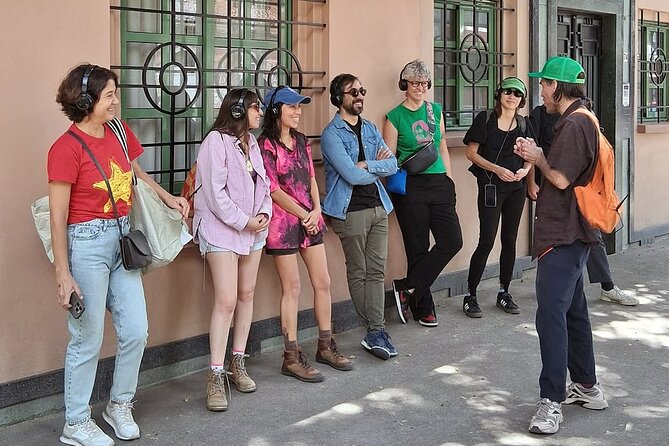
- Walk in English with Gabriel Acevedo Velarde: The 10:30 am outing is limited to 12 people and ends at Río de Janeiro Plaza.
Why this Roma walk is different
Many walks through Roma focus on cafés, pretty façades, and the neighborhood’s current food scene. This experience takes another route. It uses 11 locations across Colonia Roma to explain how the area reflects wider Mexican cultural and historical identities.
That approach gives you a useful reason to notice details that might otherwise pass by. A plaza is not just a pleasant place to sit. A house is not simply an attractive building. A tortilla shop becomes part of a story that reaches back to early Zapotec society.
The musical element also gives the walk a particular angle. Corridos are narrative songs, often tied to people, events, conflict, and public memory. Along Avenida Álvaro Obregón, the discussion links these songs with crime reporting during the Mexican Revolution. You are not only learning what happened. You are considering how ordinary people heard, remembered, and retold events.
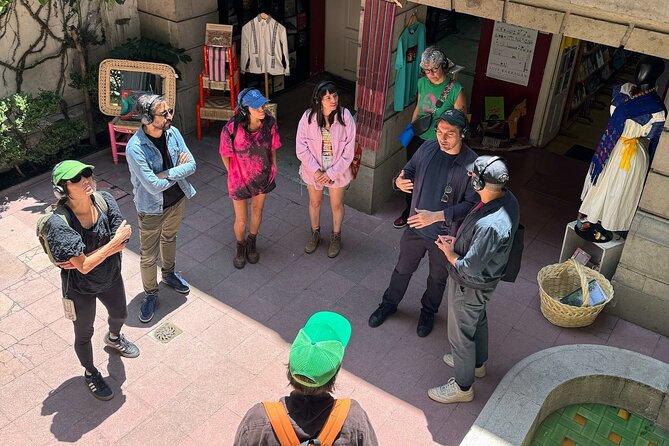
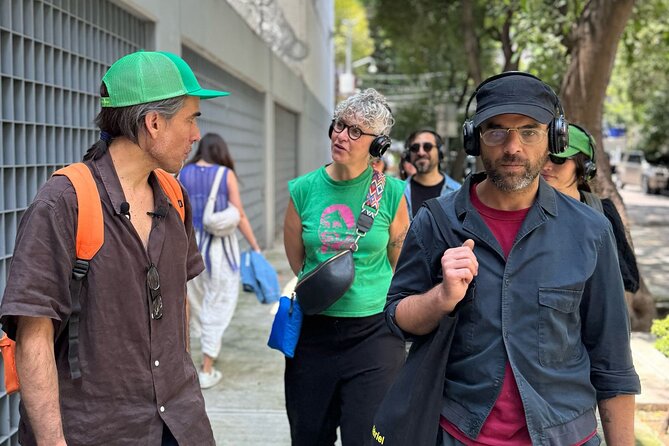
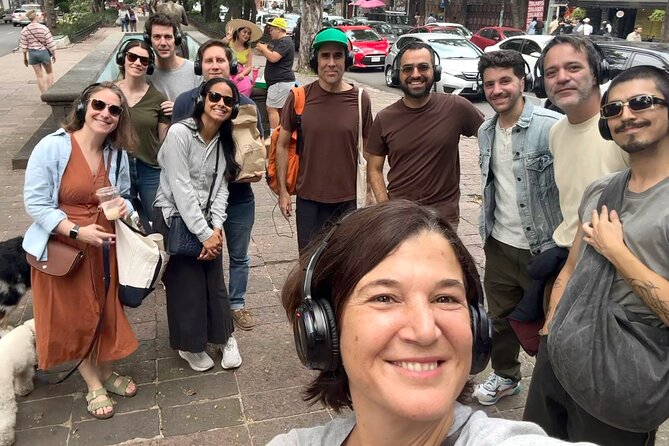
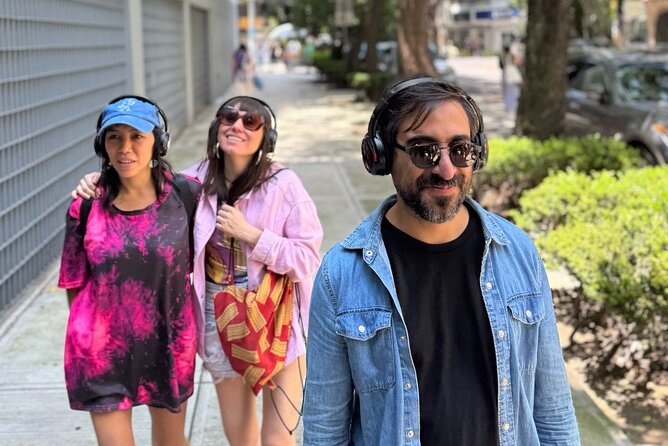
The group limit matters here. With no more than 12 people, the walk should feel more like a guided conversation than a large procession. The tour is offered in English, and Gabriel Acevedo Velarde’s approach is built around connections between subjects that may seem unrelated at first.
A few more Mexico City tours and experiences worth a look


Beginning at Romita’s old chapel
The meeting point is Capilla de San Francisco Javier de la Romita, at Plaza Romita 30. The tour begins at 10:30 am, and this is a useful place to start because Romita feels distinct from the planned streets of much of Roma.
The chapel dates from the 16th century. A small town formed around it and kept its separate identity until the 20th century. That fact gives the opening discussion a strong sense of place: the modern neighborhood was not created on an empty page.
The chapel is also used to discuss the origin of the Virgin of Guadalupe. That subject brings religion into the story from the start, but the point is not simply to identify an old building. You begin by considering how local communities, beliefs, and symbols helped shape Mexican identity.
The opening stop lasts about 10 minutes. Admission is free, and the chapel is a brief introduction rather than a long interior visit. If you want an in-depth religious art tour, you may find this portion too short. If you enjoy seeing how one small building fits into the history of a whole district, it is a smart beginning.
Everyday objects and the Lamm family house
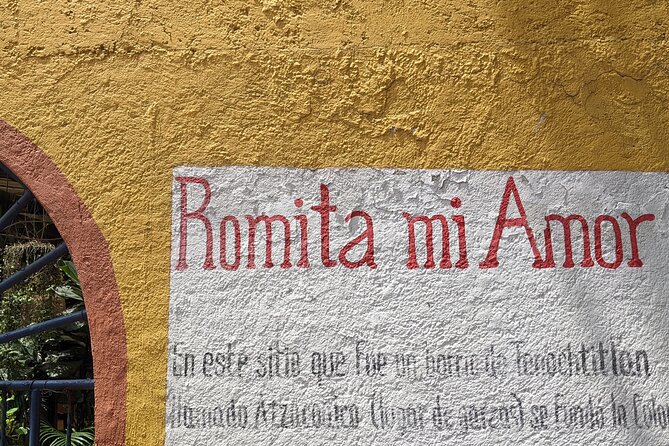
Two parts of the walk focus on places connected to modern Mexican life and architecture. One stop is an amusing museum of everyday objects from Mexico’s modern era. The supplied details do not name the museum, so you should treat this as a small, specific stop rather than expect a large national collection.
Its value is in the ordinary things. Everyday objects can show how people lived, what they bought, and how modern life changed. This keeps the tour from becoming a procession of grand buildings and famous names.
Another stop examines a house associated with the Lamm family. The family never actually lived there, but the building reflects a confident approach to space. That matters because Mexico City was facing a serious need for housing when it was constructed.
Here, architecture becomes social evidence. A house can express ambition and taste, but it can also reveal who had room to build generously while the city’s population was growing. You will get more from this stop if you pay attention to the tension between private space and public need.
Corridos along Avenida Álvaro Obregón
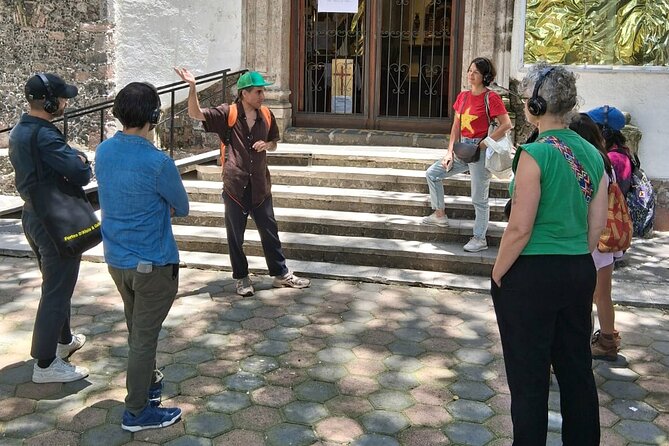
Avenida Álvaro Obregón is the neighborhood’s most iconic road and one of the clearest points where the tour’s musical theme comes forward. The stop lasts about eight minutes and focuses on the relationship between corridos and the crime press during the Mexican Revolution.
Corridos are narrative musical pieces. They tell stories, often in a direct and memorable way. Crime newspapers served a different format, but both could turn events and personalities into public stories.
This connection gives you a better way to think about music. A corrido is not only entertainment. It can be a way of recording conflict, spreading news, shaping reputations, and preserving a popular version of the past.
The stop is short, so do not expect a concert or a long musical performance. The strength is the idea itself and the setting. Standing on a major Roma avenue while discussing how music and printed news carried stories makes the neighborhood feel connected to national events.
Plaza Luis Cabrera and the problem of housing
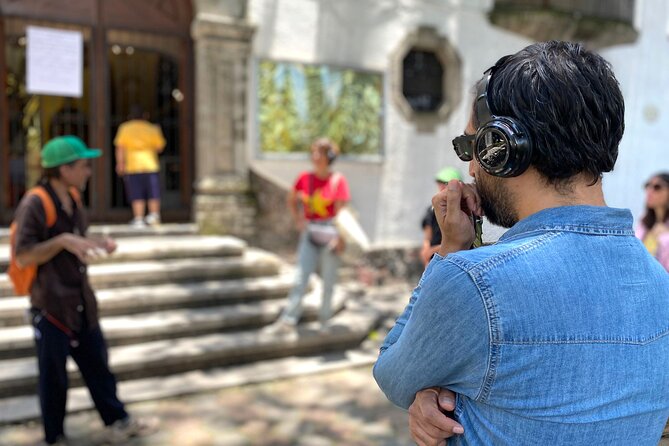
At Plaza Luis Cabrera, the conversation turns to a 1933 debate between conservative and modernist architects. The discussion considers what the argument reveals about aspirational and lasting ambitions, as well as the pressing need for housing in a city whose population was doubling every decade.
This is one of the most useful stops for understanding that architecture is never only about appearance. Styles can reflect beliefs about progress, order, comfort, and the future. At the same time, a city must house its people, and elegant ideas can collide with practical limits.
The 10-minute stop gives the subject enough room to breathe. You will likely find this part most rewarding if you enjoy cities as living systems rather than collections of buildings. It also helps explain why the Lamm house and other Roma structures deserve attention beyond their façades.
Plaza Luis Cabrera is not presented as an isolated pretty square. It becomes a place where design arguments expose larger concerns about class, growth, and the kind of city Mexico City hoped to become.
Other walking tours we've reviewed in Mexico City
Plaza Rio de Janeiro and Roma’s changing role
Roma was first conceived as an exclusively residential neighborhood. That plan did not last. Planners and owners soon realized that a district devoted only to homes did not meet the daily needs of its residents.
Plaza Rio de Janeiro reflects the shift toward a more self-sufficient neighborhood with basic services. This is a modest but important urban story. Streets and buildings change when people need places to shop, work, eat, and handle ordinary tasks close to home.
The plaza is also the end point of the walk, at the corner of Calle Durango and Orizaba. It was part of the neighborhood’s first plan in 1902 and is described as its main plaza.
That ending gives the route a clear shape. You begin with an older settlement and chapel, then move through architecture, music, housing debates, and local services before finishing at a central square. The walk is not a random collection of stops. It traces Roma’s movement from planned residential district to an active part of the wider city.
La Casa de Las Brujas and eclectic architecture
La Casa de Las Brujas, or the Witches’ House, was originally built as a hotel but became an apartment building. It is used to discuss eclectic architecture and the changing role of Roma.
The building helps explain two shifts at once. First, architectural styles could mix influences rather than follow one strict design language. Second, the neighborhood was no longer serving only the people who lived there. It was becoming a place with services for the rest of Mexico City.
The stop lasts about five minutes, so the treatment is necessarily concise. Still, the building is a useful visual marker for the neighborhood’s changing identity. You can look at it not only as an unusual structure, but as evidence of how a district adapts when its original plan no longer fits daily life.
Tortillería Premier and the ancient story of tortillas
At Tortillería Premier in Roma Norte, the tour makes one of its most unexpected connections. The discussion focuses on the history of tortillas and their link to the first Zapotec state, five centuries before Christ.
The subject may sound simple, but it changes the way you think about a basic food. Tortillas are so central to Mexican life that it is easy to treat them as timeless. This stop places them in a much older political and cultural setting.
The visit lasts about eight minutes. It is a typical tortilla shop, not a grand historic site, and that is exactly why it fits the tour. You are asked to see a familiar neighborhood business as part of a much older story about technology, society, and state formation.
This was also the link Gabriel specifically highlights: the invention of tortillas and the formation of the first Zapotec state. If you enjoy tours that connect daily life with archaeology and political history, this is likely one of the most memorable moments.
What the $41.63 price gives you
At $41.63 per person, the tour is priced above a casual neighborhood stroll but below many longer guided excursions. The value depends on what you want from a walk.
You are paying for about two hours and 15 minutes with an English-speaking guide, a small group capped at 12, and a carefully connected discussion across 11 locations. The stops are free, so the cost is for interpretation rather than admission tickets.
That distinction matters. You will not receive a long list of paid museum entries or major landmark interiors. Instead, you get context that would be difficult to assemble on your own, especially the links between the Virgin of Guadalupe, revolutionary music, architectural debates, neighborhood planning, and Zapotec history.
I consider the price reasonable for visitors who want ideas and local context. It is less attractive if you mainly want photographs, food samples, or a fast introduction to Roma’s most famous façades.
The mobile ticket is practical, and confirmation is received at booking. The tour is close to public transportation, and service animals are allowed. Most people can participate, but you should be ready for a walking experience lasting more than two hours.
Who should book this walk
I would choose this tour if you enjoy architecture with social meaning, cultural history, and unusual connections. It suits someone who wants to understand why a neighborhood looks and functions as it does, not just where to take a good photo.
It is also a good fit if you have already seen some of Mexico City’s major sights and want a more focused neighborhood experience. The exclusively Roma route keeps the subject coherent and avoids wasting time crossing the city.
You may want something else if your priority is food tasting, shopping, nightlife, or extended museum time. The itinerary includes a tortilla shop and a museum of everyday objects, but the tour is not presented as a food tour or a broad city highlights walk.
Wear comfortable shoes and allow enough time for the full route. The data does not specify the exact walking distance, so you should think of it simply as a sustained neighborhood walk rather than a seated lecture.
Weather is another practical point. The experience requires good weather. If poor weather forces cancellation, you are offered another date or a full refund. You can cancel for a full refund up to 24 hours before the start time, but changes or cancellations inside that window are not accepted.
Should you book the Colonia Roma Musical Walking Tour?
Book it if you want a small, English-language walk led by ideas rather than spectacle. Gabriel Acevedo Velarde’s route makes Roma useful as a classroom, linking a 16th-century chapel, revolutionary corridos, housing arguments, an eclectic apartment building, and the ancient history of tortillas.
Skip it if you need major interiors, substantial admission inclusions, or a relaxed stroll with little discussion. For the right person, the $41.63 fee buys something valuable: a new way to read an ordinary street, plaza, house, or tortilla shop.
FAQ
Where does the tour begin?
The tour begins at Capilla de San Francisco Javier de la Romita, Pl. Romita 30, La Romita, Centro, Cuauhtémoc, Mexico City.
What time does the tour start?
The start time is 10:30 am.
Where does the tour end?
The tour ends at Río de Janeiro Plaza, at Calle Durango and Orizaba in Roma Norte.
How long does the experience last?
The walking tour lasts approximately two hours and 15 minutes.
What language is the tour offered in?
The tour is offered in English.
How many people can join the tour?
The maximum group size is 12 people.
What is the price?
The price is $41.63 per person.
Are admission tickets included?
The listed stops have free admission. The tour price covers the guided experience rather than paid entry tickets.
Is the tour close to public transportation?
Yes. The experience is near public transportation.
What happens if the weather is poor?
The experience requires good weather. If it is canceled because of poor weather, you will be offered a different date or a full refund.
More Walking Tours in Mexico City
More Roma & Polanco Tours in Mexico City


More tours in Mexico City we've reviewed


Roma & Polanco Tours, compared.
 ★ 5.0Polanco Food Tour: The Bestselling Food Adventure in Mexico CityFrom $1093 hours (approx.)
 ★ 5.0Colonia Roma Food TourFrom $1104 hours (approx.)
 ★ 4.9Mexico City: 3–Hour Polanco Food TourFrom $1053 hours
 ★ 5.0Michelin Taco Bike Tour: Roma Norte & Condesa /All-Inclusive.From $1013 hours 30 minutes (approx.)
 ★ 5.0Mexico City: Roma & Condesa Private & Personalized Walking TourFrom $772 to 5 hours (approx.)
 ★ 5.0Tacos and Mezcal Experience in Polanco!From $493 hours (approx.)
 ★ 5.0Epic Condesa and Roma Norte Walking TourFrom $594 hours 30 minutes (approx.)
 ★ 4.9Mexico City: Roma and Condesa Neighborhoods Walking TourFrom $583 hours
The lists this tour appears in