
Reviewed · CITY TOURS
Day of the Dead Tour in Mexico City
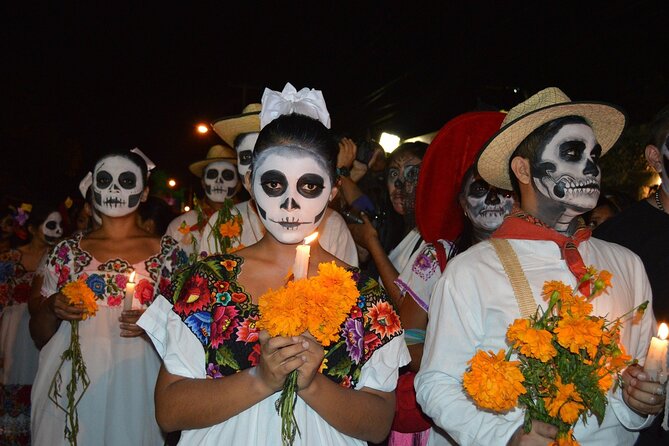
Mexico City’s Day of the Dead traditions come alive after dark, when family altars glow in local cemeteries and Xochimilco’s canals fill with music. This tour combines both experiences in one long evening, with a certified guide explaining the blend of pre-Hispanic and Catholic ideas about death.
In This Article
- Key points to know before booking
- What this Day of the Dead evening is really like
- The city ride from Reforma to the cemetery
- Inside a Mexico City cemetery after dark
- Xochimilco by trajinera, mariachi, and canal vendors
- The large-group problem
- Is $73 a fair price?
- Who should book this tour?
- Practical ways to make the night better
- Should you book the Day of the Dead Tour?
- FAQ
- How much does the Day of the Dead Tour cost?
- How long does the tour last?
- What time does the tour start?
- Where does the tour finish?
- Is transportation included?
- Is the cemetery entrance included?
- Is the Xochimilco boat ride included?
- Is mariachi included?
- Are food and drinks included?
- Can children join the tour?
- Is the tour offered in English?
- Can I cancel for a full refund?
I like the nighttime cemetery visit, where local families’ altars provide a more personal look at Día de Muertos than a museum display. I also like the live mariachi and trajinera ride, a classic Mexico City experience that gives the evening some music and celebration.
The main drawback is logistics. On peak dates, especially November 1 and 2, traffic, large groups, late departures, and crowded canals can eat up much of your seven or eight hours. Go for the convenience and holiday atmosphere, not a carefully paced small-group tour.
Key points to know before booking
- The cemetery is the most meaningful stop: You see altars prepared by local families and learn how Mexican customs combine older Indigenous beliefs with Catholic traditions.
- Xochimilco is a nighttime ride: The trajinera is fun and social, but darkness limits views of the canals, chinampas, and floating gardens.
- Expect a large operation: The advertised maximum is 99 people, but past holiday departures have involved several buses and groups of more than 400.
- Plan for serious traffic: Some departures have taken 90 minutes or two hours to reach the cemetery, leaving less time on site.
- Mariachi is the strongest part of the boat stop: Live musicians provide the clearest burst of energy at the end of the night.
- This is not a food tour: Transportation, admission, the boat, and mariachi are included, but food and drinks cost extra.
What this Day of the Dead evening is really like
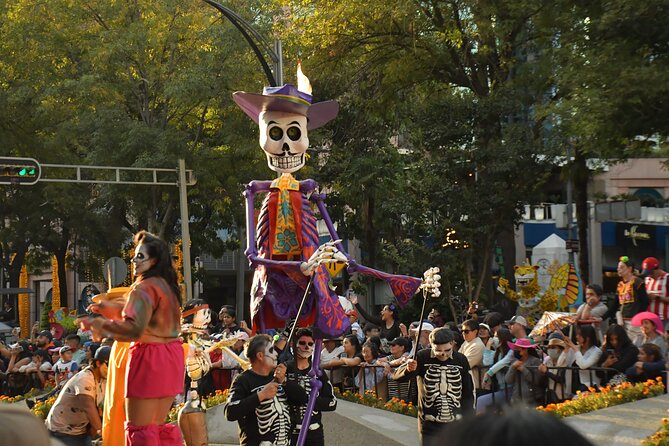
This is a once-a-year seasonal tour built around two very different sides of Día de Muertos. The cemetery offers quiet observation and cultural explanation. Xochimilco brings music, boats, vendors, and a party mood.
The advertised start time is 6 pm, with round transportation from a meeting point and a return to that same meeting point. In practice, you should arrive early, since boarding can begin around 5:30 pm. The evening may last seven or eight hours, though late departures and traffic have pushed some outings well past midnight.
The tour is offered in English and includes a professional certified guide. The quality of the explanation can depend on the group arrangement. Guides named in past accounts include Lilly and Pamela, both of whom were singled out for trying to keep the evening moving and help people when plans became difficult. Still, a large group may be split between guides, and you may not hear every explanation clearly, especially on a double-decker bus.
Other city tours we've reviewed in Mexico City

The city ride from Reforma to the cemetery
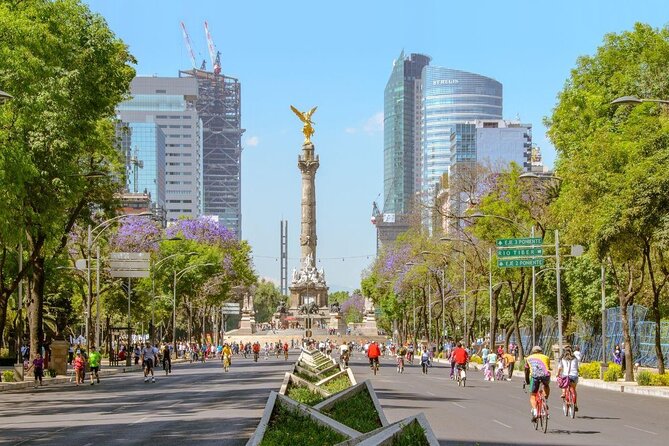
The opening drive can include a broad look at Mexico City, passing landmarks such as the Monumento a la Revolución, the Ángel de la Independencia, and Paseo de la Reforma. That panoramic route gives you a quick sense of the city before the evening moves toward the cemetery.
The trouble is timing. Day of the Dead is one of Mexico’s busiest holiday periods, and street closures, processions, food stalls, and heavy traffic can slow every part of the program. A drive that might be manageable on an ordinary night can become the longest part of your evening.
Past departures have involved waits of 45 minutes to an hour and a half before the bus even left. Some groups then spent another 90 minutes or two hours in traffic. You may be assigned to a double-decker bus, and an open roof can feel very cold once the sun is down. Bring a warm layer, even if the afternoon felt mild.
The bus setup also affects how much you learn. A guide speaking through a weak microphone is hard to follow from the back, and the English commentary may be shorter when a group is combined with Spanish speakers. Try to sit where you can hear, and ask the guide to repeat key points if the bus is noisy.
Inside a Mexico City cemetery after dark
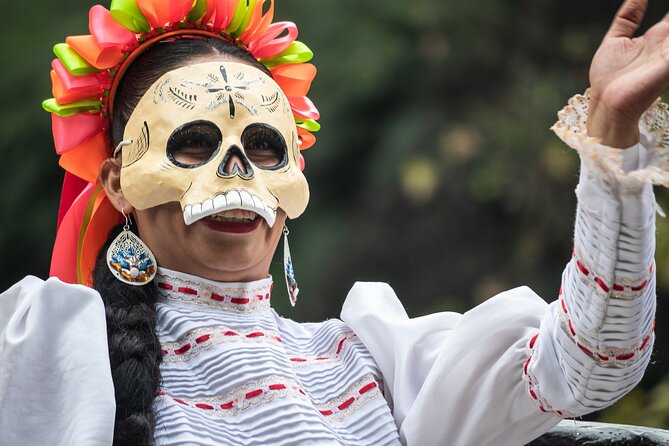
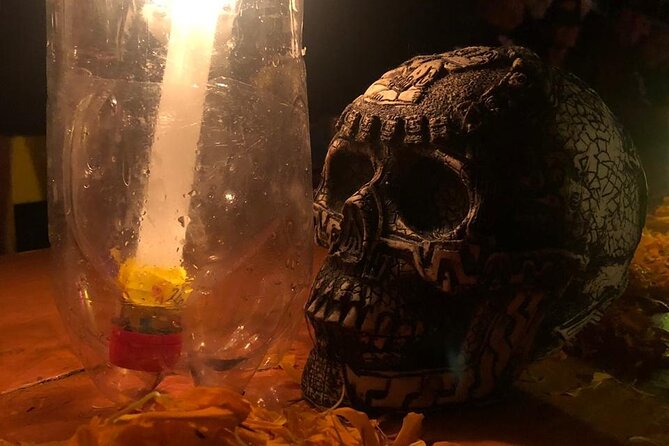
The cemetery is the heart of the evening. You walk among graves and altars made by local families to honor relatives who have died. Marigolds, candles, photographs, food, and personal objects may form part of these displays, though the exact appearance depends on the cemetery and the families present that night.
This is a valuable stop because Día de Muertos is not simply a Mexican version of Halloween. The tradition reflects older views of death and remembrance, joined over centuries with Catholic practices. A good guide can help you understand why families welcome the dead back through memory, offerings, and time spent at the graves.
The tour includes cemetery admission and usually allows time to look around on your own, followed by some guided orientation. That format gives you room to observe quietly, but it may feel too loose if you hoped for a detailed walk through every altar. In some departures, only 30 or 40 minutes remained at the cemetery because of the late arrival.
You may also need to walk about 15 minutes from the bus parking area to the entrance. Food stalls near the cemetery can be useful because no food is included, but the schedule may force you to choose between eating and spending more time among the altars.
A practical point matters here: cemetery access can change on specific dates. The operator has explained that the cemetery could not be visited on November 2 in one recent year because of circumstances outside its control. If the cemetery is the main reason you are booking, check the current date-specific details before paying.
Treat the cemetery as a place of mourning and family devotion, not a staged show. Follow the guide’s instructions, stay on paths, and take photographs with care. In the dark, tombs and narrow walkways can make wandering difficult, so keep track of your group and meeting point.
Xochimilco by trajinera, mariachi, and canal vendors
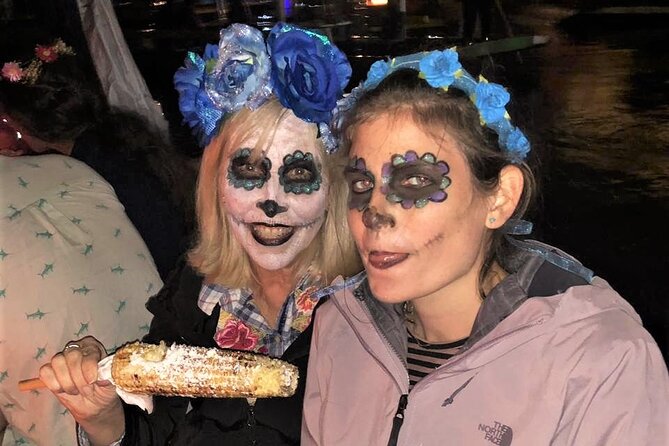
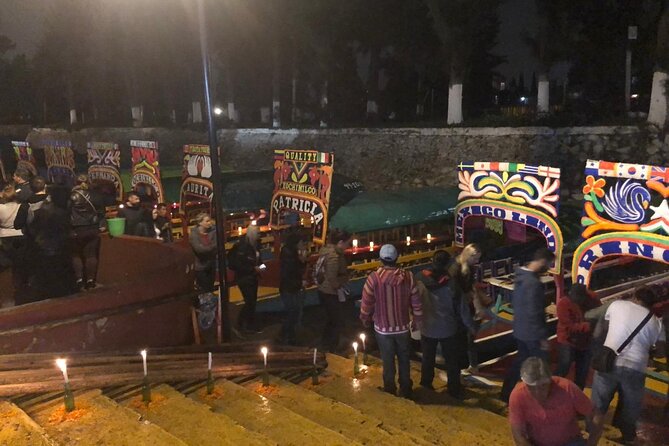
The second major stop is a ride through Xochimilco’s canals on a colorful trajinera. These flat-bottomed boats are one of Mexico City’s best-known local experiences. The canals are remnants of the old lake system, and the floating gardens, called chinampas, reflect a long tradition of farming on built-up plots of land.
In daylight, Xochimilco gives you more to look at: gardens, canal edges, boats, and working plots. At night, the feeling changes. You see lights, passing boats, occasional buildings, and the dark water, but much of the floating-garden setting is hard to make out. If you want the best view of the chinampas, book a daytime canal ride separately.
The boat ride is included and generally lasts about two hours according to the planned schedule, though the actual time can vary. The ride may be calm and social, with music and chances to buy food, drinks, and souvenirs from passing vendors. If you prefer a quiet cultural visit, the party atmosphere may feel excessive. If you enjoy music and shared boats, it can be the evening’s most relaxed portion.
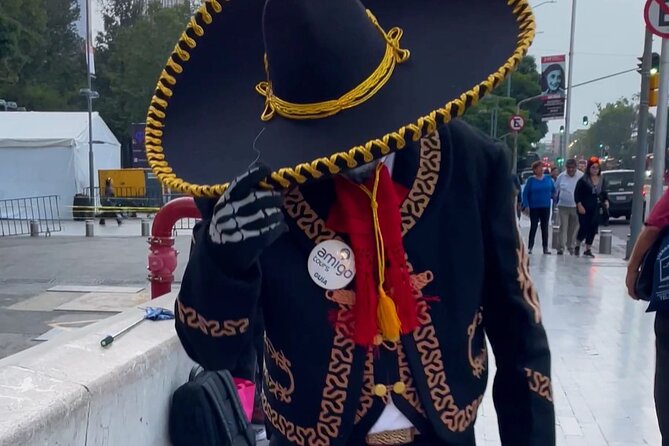
Live mariachi is included. The musicians may perform on or near the boats, and the length of the performance can vary. Some groups have enjoyed an excellent set at the final stop, while others have heard only a short performance while passing by. The mariachi is a real highlight, but you should not assume you will receive a long private concert.
Food and drinks are not included. Quesadillas and other food may be available at the chinampa or from vendors, but prices and quality can vary. Bring some cash if you want to eat or buy a drink, and do not expect the included ticket to cover a meal.
Large groups create their own problems at Xochimilco. The operator may divide the group between two or more trajineras before reaching the meal or mariachi area. You could spend time waiting at the dock, moving between boats, or trying to locate your guide. Keep your phone charged and note the name or appearance of your boat.
The large-group problem
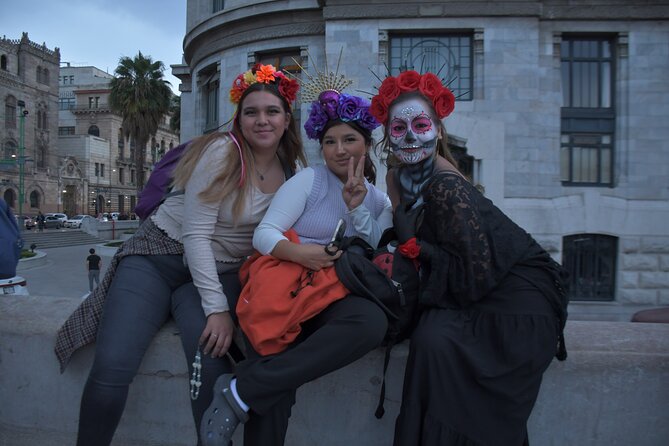
The tour advertises a maximum of 99 people, but holiday operations have sometimes been much larger. Past departures have involved several buses and more than 400 people in the overall operation, with English and Spanish groups sharing transport or being split between guides.
That scale explains many of the complaints about the experience. Counting passengers, assigning buses, finding parking, and moving people through a cemetery or canal dock all take time. The guide may be doing crowd control instead of giving a full cultural talk.
A smaller group would make the cemetery more respectful and the boat stop easier to manage. It would also improve the chance of hearing the guide. If you want close attention, detailed interpretation, and an easy pace, a private cemetery visit plus a separate small-group Xochimilco outing may be a better use of your money.
This tour does offer one practical advantage: you do not need to arrange transport between two far-flung parts of Mexico City during a crowded holiday. The bus handles the connections, and the guide helps you find the major stops. That convenience has value, especially if you are unfamiliar with the city or do not speak much Spanish.



Is $73 a fair price?
At $73 per person, the price is reasonable only if you value bundled transportation and access during a difficult holiday period. You receive round transportation from the meeting point, a certified guide, cemetery admission, the trajinera ride, and live mariachi.
You do not receive food or drinks. You are also paying for a long evening in which transport can take up half the time. If the cemetery visit happens as planned and you enjoy the mariachi, the package can feel fair. If delays reduce the cemetery to 30 minutes and the canal ride offers few views, the value drops quickly.
I would compare the price with what you want most. For cultural learning, the guide and cemetery access matter most. For a festive night out, the mariachi and boat matter more. For scenery, the nighttime timing is a weakness.
The free cancellation rule helps reduce booking risk. You can cancel for a full refund up to 24 hours before the start time. Changes or cancellations inside that window are not accepted for a refund.
Who should book this tour?
I would recommend it to adults and older teenagers who want a holiday-themed evening without arranging several separate transfers. It suits people who enjoy group outings, live music, and a loose schedule. It can also work well for first-time visitors who want a quick introduction to both a cemetery tradition and Xochimilco.
Children under 12 are not permitted. The night also involves walking, standing, boarding buses and boats, and staying out late, so it is not a good fit for anyone who needs a short, carefully timed outing.
I would hesitate to recommend it to photographers who want clear views of the chinampas, or to anyone who dislikes crowds and long bus rides. The same applies if your main goal is a quiet, detailed lesson about Día de Muertos. The tour’s setting is special, but its operation can feel hurried, crowded, and improvised.
Practical ways to make the night better
Arrive before 6 pm, but prepare for a wait. Bring a warm jacket, because open-top bus seating and the canal ride can be cold after dark. Comfortable shoes matter for the walk from parking to the cemetery and for standing during transfers.
Eat before departure or carry a small snack. Food is not included, and the cemetery schedule may leave little time to choose a meal. Bring cash for food, drinks, or canal vendors, since the tour price covers only the listed inclusions.
Sit near the front or middle of the bus so you have a better chance of hearing the guide. At Xochimilco, remember which trajinera you boarded and stay close to your group. The canals can become confusing when many colorful boats are gathered together.
Finally, keep your evening flexible. Do not schedule an early dinner, show, or airport transfer afterward. Traffic, street closures, and the size of the holiday crowds can push the return well beyond the planned timetable.
Should you book the Day of the Dead Tour?
Book it if you want a convenient, all-in-one holiday outing and can accept a large group, a late night, and uncertain traffic. The cemetery altars and live mariachi offer genuine highlights, and the boat ride gives you a festive taste of Xochimilco.
Skip it if you need reliable timing, a small group, strong English commentary, or daylight views of the floating gardens. For the best value, confirm that the cemetery stop is operating on your chosen date, arrive early, dress warmly, and think of the $73 as payment for access and transportation rather than a tightly managed cultural tour.
FAQ
How much does the Day of the Dead Tour cost?
The tour costs $73 per person.
How long does the tour last?
The planned duration is approximately seven to eight hours.
What time does the tour start?
The tour starts at 6 pm. You should arrive early because boarding may begin before the stated start time.
Where does the tour finish?
The activity ends back at the meeting point.
Is transportation included?
Yes. Round transportation from the meeting point is included.
Is the cemetery entrance included?
Yes. Entrance to the pantheon is included.
Is the Xochimilco boat ride included?
Yes. The trajinera ride through Xochimilco’s canals is included.
Is mariachi included?
Yes. A live mariachi performance is included.
Are food and drinks included?
No. Food and beverages are not included and must be purchased separately.
Can children join the tour?
Children under 12 are not permitted. The tour is available for participants aged 12 and older.
Is the tour offered in English?
Yes. English is one of the offered languages.
Can I cancel for a full refund?
Yes. You can cancel at least 24 hours before the local start time for a full refund. Cancellations or changes made less than 24 hours before the start are not accepted for a refund.
More City Tours in Mexico City



More tours in Mexico City we've reviewed







City Tours, compared.
 ★ 4.6Mexico City: Teotihuacan, Tlatelolco & Guadalupe Shrine TourFrom $49
 ★ 5.0Teotihuacan Hot Air Balloon Flight from Mexico City / VolareFrom $1553 to 9 hours (approx.)
 ★ 5.0Teotihuacan Private Tour from Mexico CityFrom $1401 to 5 hours (approx.)
 ★ 5.0Historic Center Food Tour in Mexico CityFrom $1155 hours (approx.)
 ★ 5.0The best tour to Teotihuacán from Mexico CityFrom $506 to 7 hours (approx.)
 ★ 4.3From Mexico City: Puebla, Cholula and Tonantzintla Day TripFrom $89
 ★ 4.0Mexico City: Hop-on Hop-off Bus TourFrom $211 - 2 days
 ★ 4.8Mexico City: Historic Downtown Walking TourFrom $263 hours