
Reviewed · CITY TOURS
Day of the Dead Tour in Mixquic from Mexico City
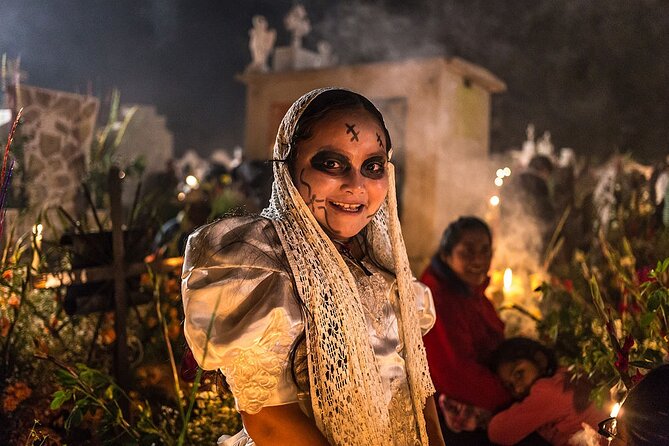
The most moving part of this outing is the Alumbrada, when thousands of candles light the cemetery around San Andrés Mixquic’s church on November 2. I like the local setting and the chance to learn proper cemetery etiquette from a guide such as Adriana, who has handled large groups with calm, clear directions. I also like that pan de muerto and atole are included. The main drawback is the crowd: on the key evening, Mixquic can feel less like a quiet village and more like a packed public festival.
In This Article
- Key points to know before you book
- Why Mixquic matters during Day of the Dead
- Leaving Mexico City at 2:00 pm
- Walking through Mixquic’s decorated streets
- The Church of San Andrés Apóstol and the ofrendas
- The Alumbrada on November 2
- Why the guide can make or break the visit
- Is $99 a fair price?
- The ride back to Mexico City
- Who should book this Mixquic tour?
- Should you book it?
- FAQ
- How long does the Mixquic Day of the Dead tour last?
- Where does the tour start?
- Does the tour include hotel pickup?
- When does the Alumbrada take place?
- What food is included?
- Is the tour offered in English?
- Can I cancel for a full refund?
At $99 per person, this tour makes sense if you want round-trip transport and cultural context without arranging a driver yourself. I would be careful about the pickup terms, though. Small groups meet at Lunario in Polanco, while hotel pickup is listed only for private tours, and traffic can make the five-hour round trip tiring.
Key points to know before you book
- The Alumbrada happens on November 2: This is the night when candles and copal incense fill the cemetery around the Church of San Andrés Apóstol.
- Expect a long road day: The schedule allows about 2 hours 30 minutes each way from Mexico City, plus four hours in Mixquic.
- Adriana has earned strong praise: She has been singled out for explaining etiquette, keeping a group of 19 organized, and communicating well.
- Crowds can change the entire experience: Entry and exit around the cemetery may be slow, and a continuous group walk can break apart.
- Food is simple but fitting: The tour includes pan de muerto and atole, two traditional Day of the Dead treats.
- Check your pickup carefully: Small-group departures meet at Lunario at 2:00 pm. Private tours may arrange a Mexico City pickup.
Why Mixquic matters during Day of the Dead
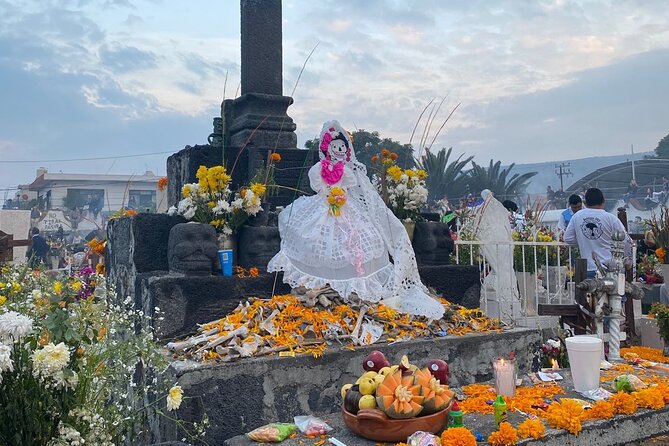
San Andrés Mixquic sits southeast of Mexico City and is known for its strong Day of the Dead customs. The focus here is not a staged performance. Families prepare offerings for departed relatives, place candles and food at graves, and tend to the cemetery as part of an ongoing act of remembrance.
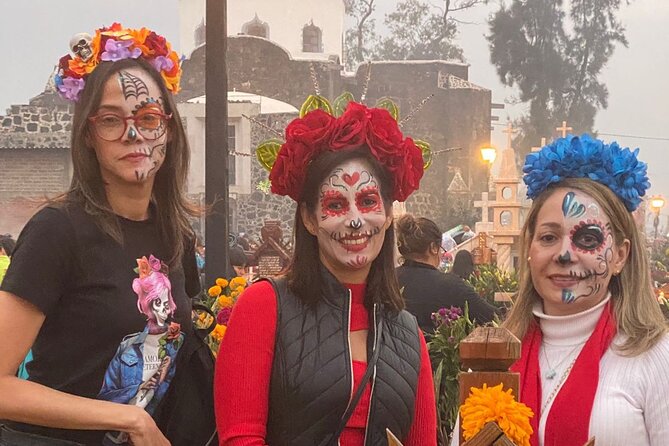
That difference matters. You are not simply looking at painted faces, market decorations, or a parade. You are entering a community celebration with religious and family meaning. The right attitude is quiet curiosity. Follow your guide’s advice, avoid treating graves as props, and remember that the cemetery is a sacred place for local families.
The town welcomes visitors during all three days of the celebration, but November 2 is the important date for the Alumbrada. If you choose another day, you can still see decorated streets, ofrendas, the church, and cemetery customs. If you want the full candlelit scene, book specifically for November 2.
Other city tours we've reviewed in Mexico City

Leaving Mexico City at 2:00 pm
The tour begins at 2:00 pm at Lunario, located at Avenida Paseo de la Reforma 50 in Polanco. For a small-group departure, this is your meeting point. Do not assume that the vehicle will collect you at your hotel just because you entered hotel details during booking. Hotel pickup and drop-off are tied to the private tour option, according to the booking terms.
This is the first place where careful planning pays off. Arrive early, keep your phone available, and provide a contact number with the international prefix. The operator may need to reach you for pickup instructions. A missed meeting can become expensive, especially during a holiday when streets are crowded and vehicles cannot wait easily.
The drive to Mixquic is scheduled at about 2 hours 30 minutes. That is a long transfer, but Mexico City traffic can be unpredictable, so treat the timing as an estimate rather than a promise. On a major holiday, the road may take longer. I would avoid scheduling dinner, a show, or an airport transfer soon after the tour.
The ride has one practical benefit: you arrive without needing to navigate public transport or find parking in a packed town. It also takes up a large share of the day. At $99, you are paying not only for the walking tour but also for the vehicle, the driver, coordination, and the guide’s cultural explanation.
Walking through Mixquic’s decorated streets
The scheduled visit to Mixquic lasts about four hours. The walk includes the decorated streets, the historic Church of San Andrés Apóstol, family ofrendas, and the cemetery surrounding the church.
A guide is especially useful at the start. Adriana received high praise for explaining proper etiquette during the first hour, then giving the group time to explore. That is a sensible format for this event. You need context before heading into the crowds, but you may not want every minute controlled by a guide once you understand the setting.
Expect the group to spread out at times. On the busiest evening, narrow streets and cemetery entrances can make it hard for 19 people to stay together. A guide can set meeting points and give clear instructions, but no operator can remove the crowds from the town.
Keep the group’s agreed meeting point in mind. If you stop for photographs or spend time studying an ofrenda, make sure you know where to regroup. The strongest account of this tour came from a group that returned promptly to the correct meeting point, which tells you something useful: good communication makes a real difference here.
The Church of San Andrés Apóstol and the ofrendas
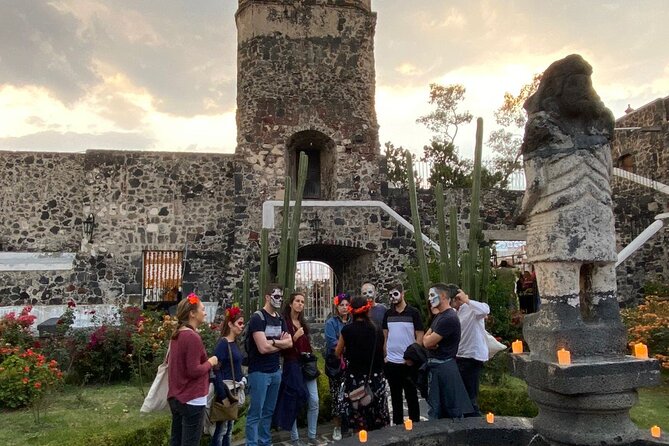
The church is one of the main anchors of the visit. It gives the celebration a clear sense of place, linking the cemetery rituals to Mixquic’s religious tradition. You will have a chance to see how the church, surrounding streets, and cemetery work together as one setting rather than as separate sightseeing stops.
The ofrendas are the heart of the experience. Families arrange offerings for departed souls, often with care and personal meaning. Candles, food, flowers, and other items help create a bridge between the living and the dead. The guide’s job is to explain what you are seeing without turning private remembrance into a spectacle.
This is where the tour has more value than simply hiring transport. A driver can take you to Mixquic, but a local guide can explain why offerings are arranged as they are and how to behave around graves. The included pan de muerto and atole add a small taste of the season, though you should not expect a full meal.
I would bring patience and restraint. Ask questions when the guide invites them, take photographs thoughtfully, and give families room. The celebration is open to visitors, but it remains a living community tradition.
The Alumbrada on November 2
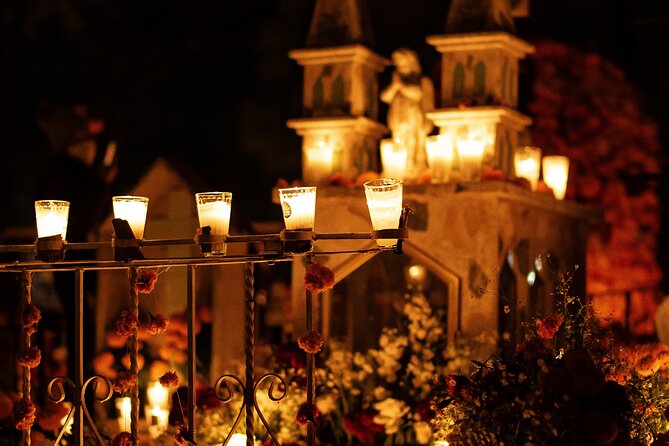
The Alumbrada is the signature moment of the tour. On the evening of November 2, locals light thousands of candles in the cemetery around the church. Copal incense adds another sensory layer, and the combined candlelight, smoke, graves, and church create an atmosphere that can be solemn and powerful.
This is also the busiest version of the outing. The same conditions that make the Alumbrada memorable can make it difficult to enter or leave the cemetery. One review praised the tradition but noted that crowds were especially heavy later in the evening. Another described the event as so crowded that the organized tour quickly became difficult to maintain.
That does not make the Alumbrada a bad choice. It means you should decide what kind of experience you want. If your priority is seeing the famous candlelit cemetery on its main night, accept the crowds as part of the bargain. If you want quiet reflection and easy movement, visiting Mixquic during one of the other celebration days may suit you better, though the tour’s exact date and schedule should be confirmed before booking.
The cemetery may feel emotionally intense. You can enjoy the beauty of the scene while remembering that people are honoring relatives. The best photographs are not always the closest ones. A respectful distance often gives you a better view anyway.



Why the guide can make or break the visit
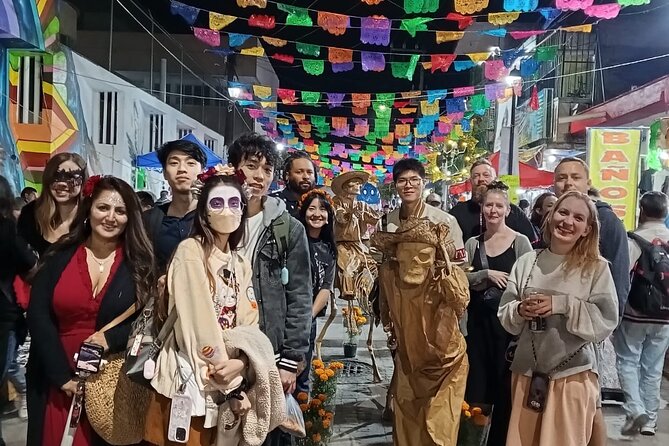
This experience depends heavily on guide quality and communication. Adriana was praised for managing a group of 19, explaining local customs, staying in contact, and getting everyone back to the right meeting place. Those are not small skills on one of Mexico’s busiest holiday nights.
The tour includes a multilingual local guide and is offered in English. The provided details do not guarantee that Adriana will lead every departure, so you should not book solely on the assumption that she will be assigned. Still, her performance shows what you should expect from a strong guide: a clear briefing, sensible meeting points, cultural explanation, and quick updates when plans shift.
There have also been problems with guide availability and communication. In one case, a guide’s personal emergency led to changes in the arrangement. Options included a partial refund, joining a group tour, or canceling for a full refund. That is a fair set of choices, but it also shows why you should read messages before departure and keep your phone active.
The booking record has an overall rating of 3.6 out of 5 from 11 reviews. That middling score reflects a real split. The best experiences praise the guide and the special setting. The weakest involve missed pickups, slow replies, unclear hotel transfer expectations, or the feeling that the tour delivered transport more than guiding once the crowds became extreme.
Is $99 a fair price?
The $99 price includes round transportation from Mexico City, the local guide, the walking tour, pan de muerto, and atole. There is no separate admission charge listed for the church or cemetery, so the value rests mainly on transport and guidance.
For a small group, that can be reasonable. You avoid arranging a private driver, finding parking, and working out how to return from Mixquic after dark. You also get an introduction to local customs and someone coordinating the group at a difficult event.
The value is weaker if your group breaks apart and you spend most of the four hours exploring alone. One person felt the cost was high for what became mostly round-trip transport and wondered if a private driver would have been cheaper. That concern is worth taking seriously, especially if you are comfortable arranging transport yourself.
The price also includes a platform commission that may be as much as 30 percent. That helps explain why the operator has limited room for discounts, but it does not change what you should compare. Look at the full cost of a private car, fuel, parking, and a guide before deciding that $99 is too high.
Private and small-group terms need special attention. The information describes private tours as confirmed for any group size, with pickup at your accommodation or another Mexico City location. Small-group tours require at least two participants and use Lunario as the meeting point. Confirm which format you are buying before payment.
The ride back to Mexico City
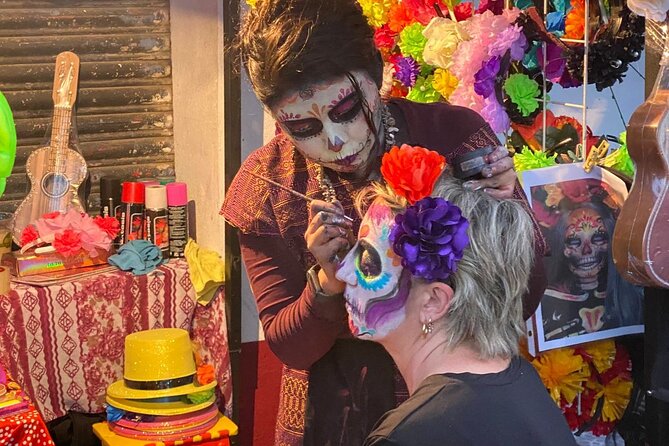
After the Mixquic visit, you return to the vehicle and begin the scheduled 2 hour 30 minute trip back to Mexico City. The tour ends at the original meeting point.
This return leg may be slow after the Alumbrada. Traffic conditions affect both directions, and large holiday crowds can delay departure. I would carry water, wear comfortable shoes, and keep the rest of your evening open.
The long transfer is easier to accept when you view this as a special-event excursion rather than a quick city tour. Mixquic is not a short hop from central Mexico City. The tour gives you a practical way to reach it, but the day will feel demanding if you are already tired or have a packed itinerary.
Who should book this Mixquic tour?
I would recommend it to you if you want to see Day of the Dead in a traditional setting and prefer organized transport from Mexico City. It suits visitors who value explanation, want help with etiquette, and do not want to manage a complicated holiday journey alone.
It is also a good fit if your schedule allows a full eight to nine hours and you can accept an unpredictable return time. The included food is modest, but it adds a seasonal touch.
I would hesitate if you dislike crowds, need a quiet cemetery visit, or expect a guide to lead a tightly organized group every minute. The Alumbrada is popular for good reason, but popularity can overwhelm the streets. I would also avoid booking without confirming the pickup arrangement, especially if you are staying at a hotel.
Free cancellation is available until 24 hours before the start time. Changes made inside that window are not accepted, and a minimum number of participants is required for the small-group option. Poor weather or an unmet minimum may lead to another date or a full refund.
Should you book it?
Book this tour for access, context, and the chance to see Mixquic’s candlelit cemetery without arranging your own transport. Choose November 2 for the Alumbrada, but go in expecting heavy crowds and a flexible group structure.
The strongest version of the experience is a well-run departure with a guide like Adriana, clear meeting points, and realistic expectations. If you confirm the meeting location, keep your phone available, and treat the cemetery with respect, this can be a memorable way to encounter Day of the Dead beyond Mexico City’s central displays.
FAQ
How long does the Mixquic Day of the Dead tour last?
The tour lasts approximately eight to nine hours. The schedule includes about 2 hours 30 minutes from Mexico City to Mixquic, four hours in Mixquic, and about 2 hours 30 minutes for the return trip.
Where does the tour start?
The small-group tour starts at Lunario, Avenida Paseo de la Reforma 50 in Polanco, Mexico City. The listed start time is 2:00 pm.
Does the tour include hotel pickup?
Hotel pickup is listed for private tours only. Small-group participants meet at Lunario. Private tours can arrange pickup at your accommodation or another location in Mexico City if you provide the details.
When does the Alumbrada take place?
The Alumbrada takes place specifically on November 2. This is when locals light thousands of candles in the cemetery around the Church of San Andrés Apóstol.
What food is included?
The tour includes typical Day of the Dead fare: pan de muerto and atole.
Is the tour offered in English?
Yes. The experience is offered in English and includes a multilingual local guide.
Can I cancel for a full refund?
You can cancel for a full refund up to 24 hours before the tour’s start time. Cancellations or changes made less than 24 hours before departure are not accepted for a refund.
More City Tours in Mexico City


More tours in Mexico City we've reviewed






City Tours, compared.
 ★ 4.6Mexico City: Teotihuacan, Tlatelolco & Guadalupe Shrine TourFrom $49
 ★ 5.0Teotihuacan Hot Air Balloon Flight from Mexico City / VolareFrom $1553 to 9 hours (approx.)
 ★ 5.0Teotihuacan Private Tour from Mexico CityFrom $1401 to 5 hours (approx.)
 ★ 5.0Historic Center Food Tour in Mexico CityFrom $1155 hours (approx.)
 ★ 5.0The best tour to Teotihuacán from Mexico CityFrom $506 to 7 hours (approx.)
 ★ 4.3From Mexico City: Puebla, Cholula and Tonantzintla Day TripFrom $89
 ★ 4.0Mexico City: Hop-on Hop-off Bus TourFrom $211 - 2 days
 ★ 4.8Mexico City: Historic Downtown Walking TourFrom $263 hours