
Teotihuacan is the main event, but this seven to eight-hour outing adds several distinctly Mexican touches: breakfast inside a cave, an obsidian and maguey workshop, regional drink tastings, and a stop at the Basilica of Guadalupe. It gives you far more than a quick pyramid photo.
In This Article
- Key points to know before booking
- An early start from El Angel
- Teotihuacan before the heat builds
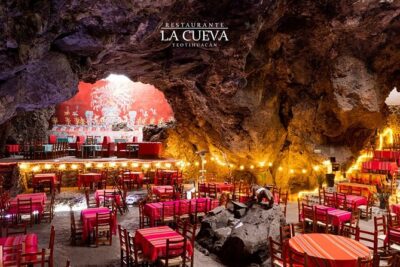
- Breakfast in La Cueva Teotihuacán
- Maguey, obsidian, and Mexican drink tastings
- Meeting the xoloitzcuintle
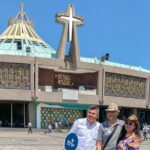
- A meaningful hour at the Basilica of Guadalupe
- What the $113.51 price really covers
- Who will enjoy this full-day combination?
- Should you book this Teotihuacan tour?
- FAQ
- Where does the tour begin?
- Is pickup included?
- Is the Teotihuacan entrance ticket included?
- What language is the tour offered in?
- Is breakfast included?
- How large can the group be?
I like the early start, which gets you to the archaeological zone before the heat becomes tiring, and I like the unusual cave breakfast, a memorable change from the usual café stop. The main thing to consider is that the $113.51 price does not include the Teotihuacan entrance ticket, which costs another $210 MXN per person.
Key points to know before booking
- Teotihuacan comes first: You spend about two hours at the pyramids with a certified guide, when the morning is cooler.
- Breakfast happens inside a cave: La Cueva Teotihuacán provides the meal and admission to this unusual setting.
- The day mixes archaeology with living culture: You taste pulque, tequila, mezcal, and other Mexican drinks while learning about maguey and obsidian.
- You meet a xoloitzcuintle: The endangered Aztec dog is tied to Mexican legends and the Day of the Dead.
- The Basilica of Guadalupe rounds out the day: You have about an hour to see the shrine and bless personal belongings.
- Expect a group of up to 40 people: Transport is included, but the size may limit personal attention.
An early start from El Angel
The day begins at 7 a.m. at the Angel of Independence on Paseo de la Reforma. This is a central, recognizable meeting point, but it is not hotel pickup unless the operator gives you different instructions. The night before, you receive the driver’s details, vehicle information, and license plate through Viator.
That last-minute message matters. Mexico City traffic can make a meeting feel harder than it should, so check your phone the evening before and arrive ready to identify the correct vehicle. The first itinerary entry allows up to an hour at El Angel, though the practical purpose is meeting the driver and getting on the road.
Round-trip transport from Mexico City is included. That saves you from arranging a separate ride to Teotihuacan, which lies well outside the city center. It also means you can relax after the drink tasting instead of thinking about the return journey.
The tour is offered in English. One poor rating came from a French-speaking customer whose requested language was not available, so do not book this experience expecting French guiding. Most travelers can participate, service animals are allowed, and the maximum group size is 40 people.
A few more Mexico City tours and experiences worth a look
Teotihuacan before the heat builds
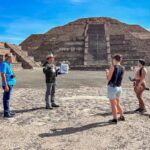
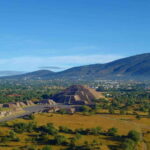
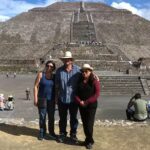
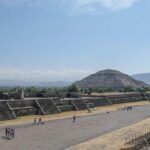
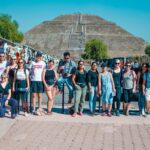
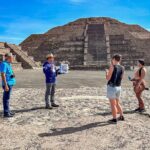
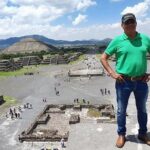
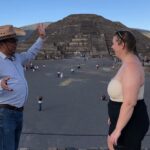
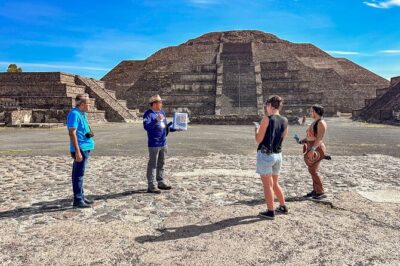
The archaeological zone receives about two hours, with a certified guide explaining the most important points. The timing is sensible. Teotihuacan has broad open spaces and very little shade in the main areas, so arriving early makes the walking easier and leaves you less worn out for the rest of the day.
Bring sunscreen and water. The tour description specifically points to both, and you should take that advice seriously. Comfortable walking shoes also make sense, though the supplied details do not specify the amount of walking or whether climbing every structure is included.
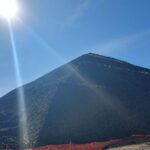
Teotihuacan is known for its monumental pyramids and long ceremonial avenues, but the value of this stop is not only the photographs. A guide can help you understand how the site fits together, point out key structures, and give meaning to what might otherwise look like a series of enormous stone platforms.
The archaeological entrance is not included. Set aside $210 MXN per person for the ticket. This extra cost is clearly stated, but it changes the true price of the outing, so include it when comparing this tour with other Teotihuacan options.
Two hours is enough for an introduction, not an exhaustive archaeological visit. If your main goal is to spend half a day studying every structure, this schedule may feel rushed. If you want the pyramids plus several other experiences in one day, the time limit keeps the program moving.
The guide is described as certified by Mexico’s Secretary of Tourism. That gives you a useful level of confidence about the planned commentary, although the exact guide is not guaranteed. One especially positive account names Enrique Martinez as the driver and Kenya and Felipe as guides, praising their warmth and the way they explained Mexican history. Those names may not apply to every departure, but they show the kind of personal service the provider aims to offer.
Breakfast in La Cueva Teotihuacán
After the pyramids, the group heads to La Cueva Teotihuacán for breakfast inside a natural cave. This is the tour’s most distinctive feature. Many day trips stop at a standard restaurant, while this one makes the meal part of the setting.
Admission to the cave and breakfast are included. That makes the stop easier to enjoy because you do not have to sort out another entrance fee before sitting down. The meal itself is described only as breakfast, so do not book this expecting a specific menu unless the operator provides one after booking.
A cave is not simply a place to eat. It changes the pace of the morning. After walking through the exposed archaeological zone, you get a cooler, enclosed setting and a chance to pause before the workshop and tasting session. For many people, the setting will be as memorable as the food.
Still, this is a group tour, and the cave experience is shared with the other participants. With up to 40 people, the meal may feel social rather than intimate. The supplied information also does not specify dietary options, so contact the operator ahead of time if you have food restrictions.
Maguey, obsidian, and Mexican drink tastings
The next stop, Casa Museo de las Piedras, focuses on regional craftsmanship. An expert explains the properties of maguey and obsidian, two materials closely tied to Mexican culture and daily life.
Maguey is presented as more than a plant. The workshop gives you a chance to connect it with traditional products and drinks, while obsidian offers a look at the stonework and craft associated with the region around Teotihuacan. This stop adds context to the objects and souvenirs you may see elsewhere in Mexico.
You also taste typical Mexican drinks, including pulque, tequila, mezcal, and xoconostle liquor. For those willing to try something less familiar, the tasting may include mezcal with scented flavors. Since alcohol is part of the program, pace yourself. The drink tasting follows a full morning and comes before the journey back toward Mexico City.
You are not required to treat the tasting as a drinking session. Think of it as a cultural sampling, with the chance to notice how different Mexican beverages are made and presented. The exact tasting portions and nonalcoholic alternatives are not specified, so ask if that matters to you.
Meeting the xoloitzcuintle
Casa Museo de las Piedras also introduces you to the xoloitzcuintle, the endangered Aztec dog. This breed has a strong place in Mexican stories and is especially relevant to Day of the Dead traditions.
The visit is valuable because it connects a living animal with the cultural ideas discussed during the day. The tour includes the legend surrounding the dog and explains why it matters during the Day of the Dead. The supplied information compares the connection to the dog shown in the film Coco, which may help families recognize the theme.
This is a short cultural stop, not a separate wildlife activity. You meet the dog as part of the workshop visit, so expectations should stay modest. You will not be spending an hour on animal care or conservation education, but you will get a memorable encounter that many pyramid-focused day trips leave out.
A few more Mexico City tours and experiences worth a look
A meaningful hour at the Basilica of Guadalupe
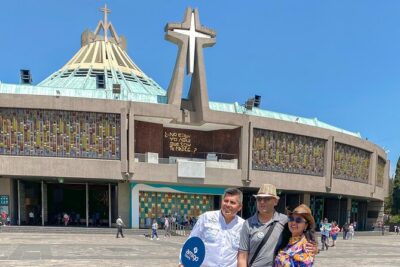
On the return to Mexico City, the tour stops at the Basilica of Santa Maria de Guadalupe for about an hour. The guide explains why this shrine is considered the second most important in the world for the Catholic faith.
The Basilica is both a religious site and a major part of Mexican identity. Even if you are not Catholic, the stop helps explain the devotion surrounding Our Lady of Guadalupe and the place the shrine holds in the country’s public and private life.
You have time to see the basilica and bless personal belongings. This makes the visit more than a drive-by photograph, though an hour is still a limited window. If the site is crowded or you want extended time for prayer, the schedule may not be enough.
The stop also provides a change of subject after the archaeology and workshop. Teotihuacan takes you far back into pre-Hispanic Mexico, while the basilica shows how religious life shapes Mexico today. Put together, the two places create a broader view of the country than a pyramid-only excursion.
What the $113.51 price really covers
At $113.51 per person, the tour sits above a basic transport-and-pyramids outing but includes more components. Your price covers round-trip transport from Mexico City, the certified guide’s archaeological explanation, breakfast in the cave, the obsidian and maguey workshop, drink tastings, the xoloitzcuintle visit, and the Basilica of Guadalupe.
You must add the $210 MXN archaeological entrance fee. The value depends on how much you want packed into one day. If you would otherwise pay separately for transport, breakfast, a guided site visit, and several cultural stops, the package is reasonable.
The tradeoff is control. A private guide or small group could give you more time at Teotihuacan and more freedom to choose restaurants and museums. This experience favors convenience and variety. You cover several places without having to arrange each transfer yourself, but you follow a fixed route.
Group discounts are offered, which could improve the value for families or larger parties. The maximum is 40 people, so ask about the expected group size if that affects your decision. A full vehicle can mean less room for questions and slower loading at each stop.
The overall rating is 4.9 from 52 ratings, with 96 percent recommending the experience. That is a strong record, and the most enthusiastic account gives specific praise to driver Enrique Martinez and guides Kenya and Felipe for making the day feel warm and personal. At the same time, the French-language complaint is a useful warning: language matching should be confirmed before you reserve.
Who will enjoy this full-day combination?
I would choose this tour if you want your first Teotihuacan visit to include more than the pyramids. It suits you especially well if you like cultural context, unusual meals, organized transport, and a day that moves from ancient archaeology to modern religious life.
It also works for people who prefer not to manage Mexico City transport on their own. The early pickup, included return ride, and driver details sent the night before remove much of the planning work.
Families may enjoy the variety. The pyramids, cave meal, drink workshop, and xoloitzcuintle each give the day a new focus. The Day of the Dead connection may be particularly interesting for anyone familiar with Coco.
I would think twice if you want a quiet private experience, have limited stamina for a long day, need a specific language other than English, or want extended time at Teotihuacan. The schedule is active, the group may reach 40 people, and the archaeological ticket costs extra.
Wear practical clothes, bring sunscreen and water, and keep your morning flexible. The itinerary lasts roughly seven to eight hours, so you should not plan another major activity immediately afterward.
Should you book this Teotihuacan tour?
Book it if you want a well-filled cultural day with transportation handled for you. The cave breakfast is the unusual feature, while the workshop, tastings, xoloitzcuintle, and Basilica of Guadalupe give the excursion more range than a standard pyramid visit.
Choose another option if Teotihuacan is your only priority. Two hours may not satisfy someone who wants a slow, detailed archaeological visit, and a group of up to 40 can limit individual attention.
For the right person, the value is the combination. You see one of Mexico’s great archaeological sites, eat in a memorable setting, learn about regional materials and drinks, meet a rare Mexican dog breed, and visit a major shrine, all in one organized day. Just budget for the separate $210 MXN entrance fee and confirm that English service suits your needs.
FAQ
Where does the tour begin?
The meeting point is the Angel of Independence at Av. Paseo de la Reforma 342, Piso 27, Juarez, Cuauhtemoc, Mexico City. The stated start time is 7 a.m.
Is pickup included?
Round-trip transport from Mexico City is included. The listed meeting point is the Angel of Independence, and the driver, vehicle, and license plate details are sent through Viator the night before the booking.
Is the Teotihuacan entrance ticket included?
No. The archaeological zone ticket costs $210 MXN per person and is paid separately.
What language is the tour offered in?
The tour is offered in English. The information provided does not confirm French-language guiding, and one booking complaint specifically concerned the lack of a French-speaking guide.
Is breakfast included?
Yes. Breakfast is included and is served inside La Cueva Teotihuacán, described as a unique natural cave.
How large can the group be?
The maximum group size is 40 people. The total experience lasts approximately seven to eight hours.
More Guided Tours in Mexico City

More Guadalupe Shrine Tours in Mexico City
More Teotihuacan Tours in Mexico City

More tours in Mexico City we've reviewed


Teotihuacan Tours, compared.
 ★ 5.0Teotihuacan, Guadalupe Shrine & Tlatelolco Day Tour with LunchFrom $399 hours (approx.)
 ★ 5.0Balloon flight + Breakfast in cave + Pyramids + Pick up CDMX.From $1722 to 8 hours (approx.)
 ★ 5.0Teotihuacan pyramids morning or afternoon without tourist trapsFrom $645 hours 30 minutes (approx.)
 ★ 4.5Teotihuacan Early Access Guided Tour with optional LunchFrom $398 hours (approx.)
 ★ 5.0Balloon flight + pick up in CDMX + Breakfast in Cave + PyramidsFrom $1694 to 7 hours (approx.)
 ★ 4.6Mexico City: Teotihuacan, Tlatelolco & Guadalupe Shrine TourFrom $49
 ★ 5.0Teotihuacan Hot Air Balloon Flight from Mexico City / VolareFrom $1553 to 9 hours (approx.)
 ★ 5.0Hot Air Balloon Flight with Breakfast Cave and Pyramids TourFrom $1408 hours (approx.)
The lists this tour appears in