
Reviewed · WORKSHOPS
Mexico City: Day of the Dead House and craft workshop
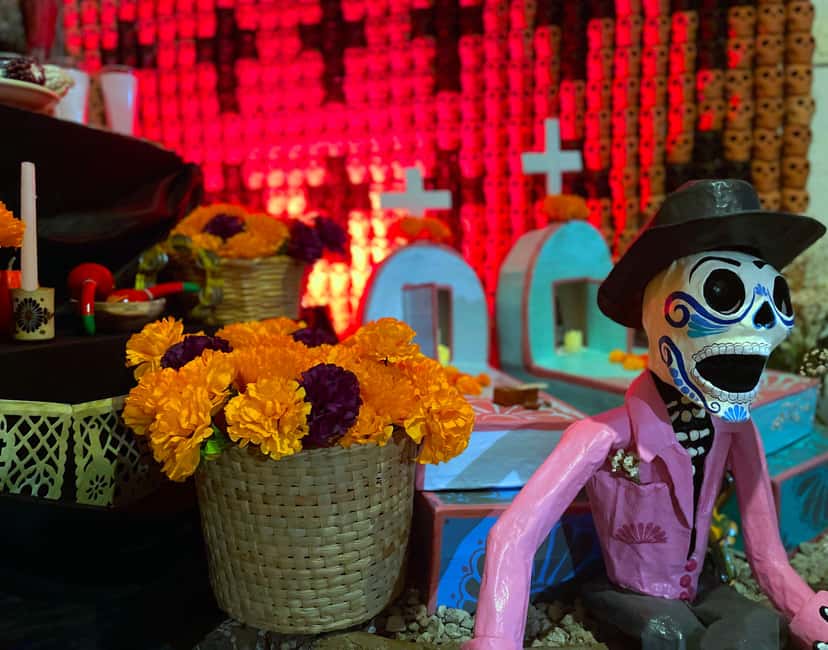
The most unusual part of this short outing is the setting: you enter a real House-Ofrenda that also operates as the Mexskeletons craft workshop. Art covers the space, an offering remains in place all year, and artists may be working on bottles and shot glasses destined for more than 20 countries. You finish with pan de muerto, the lightly sweet bread made for Day of the Dead.
In This Article
- Key points at a glance
- A Day of the Dead house, not just a themed display
- The 30-minute guided visit with Victor
- The special ofrenda available all year
- The Mexskeletons workshop and its working artists
- The short break and sweet finish
- Why the $11 price is good value
- Pairing the visit with Xochimilco
- Who will enjoy this 45-minute cultural stop
- Practical details before you book
- Should you book the Casa Dia de Muertos visit?
- FAQ
- Where does the Day of the Dead house tour meet?
- How long does the experience last?
- Is the tour available in English?
- Is the house open all year?
- Is food included?
- Is the activity wheelchair accessible?
I like the way the visit connects history with living craft, rather than treating Día de los Muertos as a museum display. I also like its price, just $11, and its location about 10 minutes from the Xochimilco trajineras. The main drawback is time: the advertised duration is 45 minutes, while the individual schedule adds up to about 65 minutes, so you should confirm the exact start and finish time before building a tight day around it.
Key points at a glance
- A year-round ofrenda: See a special Day of the Dead offering even if you visit outside the November celebration.
- Artists at work: The house is an active workshop where Mexskeletons bottles and shot glasses are made.
- Useful cultural context: Learn about pre-Hispanic beliefs, Spanish colonial influence, and the celebration today.
- A sweet local sample: Pan de muerto is included at the end of the visit.
- Near Xochimilco: The house is about 10 minutes from the trajineras, making this an easy add-on in southern Mexico City.
- Very low cost: At $11 per person, the tour offers a lot of cultural context for a modest fee.
A Day of the Dead house, not just a themed display
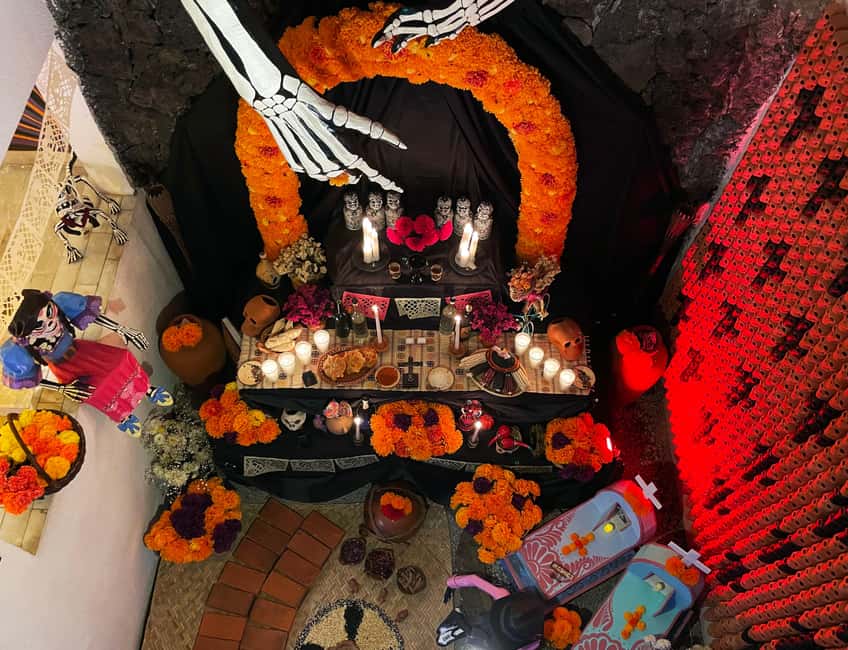
This experience takes place at Rincón Pozo 42 in the State of Mexico, in a white house with black doors and hand-painted blue details near the number 42. The house sits in the middle of the street, so the identifying details matter. You are not looking for a large attraction with a prominent sign.
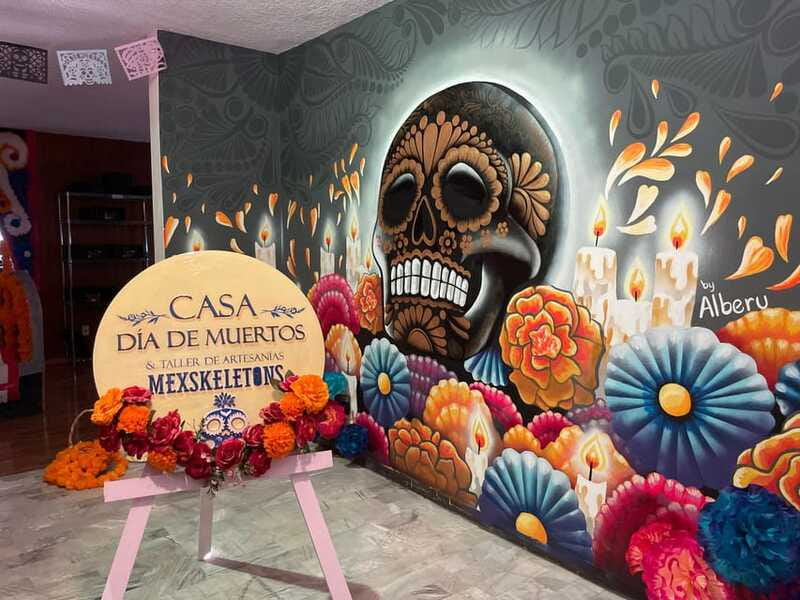
Inside, the home becomes an art-filled setting devoted to Day of the Dead. The point is not simply to look at skeleton figures or take colorful photographs. Your guide explains why the celebration exists, how older beliefs changed after Spanish colonization, and how families and communities live the tradition today.
That context gives the artwork more meaning. A painted skull can be decorative, humorous, religious, or connected to remembrance. During the visit, you get help reading those layers instead of seeing the celebration only as a bright visual theme.
The house is open throughout the year. That matters if you visit Mexico City in spring or summer, when the major Day of the Dead events are not taking place. You still get to see an ofrenda and learn about the celebration without planning your trip around November 1 and 2.
Other city tours we've reviewed in Mexico City

The 30-minute guided visit with Victor
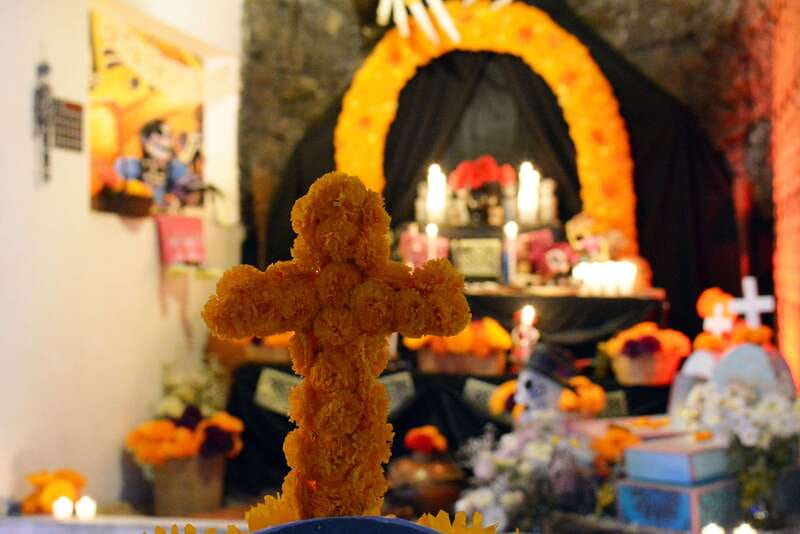
The main part of the outing is a guided tour lasting about 30 minutes. Guides speak Spanish or English, and Victor has received especially warm feedback for explaining the subject in an engaging, easy-to-follow way.
I would pay close attention during this first section. The tour covers three useful periods:
- Pre-Hispanic origins: Your guide introduces older beliefs about death and the place of the dead.
- Colonial syncretism: You learn how Spanish rule and Catholic traditions influenced existing customs.
- Modern practice: The discussion then turns to how Día de los Muertos is lived today.
That progression is helpful because it avoids presenting the holiday as an unchanging ancient ritual. The celebration has developed over time. Your guide can show how older and newer elements sit together, which is one reason the visit works well for someone seeking cultural background rather than only a craft demonstration.
The guide’s tone also seems important here. The experience is intended to feel relaxed and welcoming, and children can follow it too. A family with children found the visit held their attention, while other participants valued the clear explanation of the tradition. Still, this is a compact tour. If you want a long academic lecture about Mesoamerican religion, you will need a museum visit as well.
The special ofrenda available all year
The house includes an authentic Day of the Dead offering, or ofrenda, that remains available to see year-round. This is one of the strongest reasons to book outside the main holiday period.
An ofrenda is not just a table of decorations. It is a place of remembrance, and the objects placed there carry purpose. The guide helps connect the elements of the display to the people and traditions being honored. The exact contents and arrangement can change, but the important point is that you are seeing a working cultural expression rather than a temporary shop window.
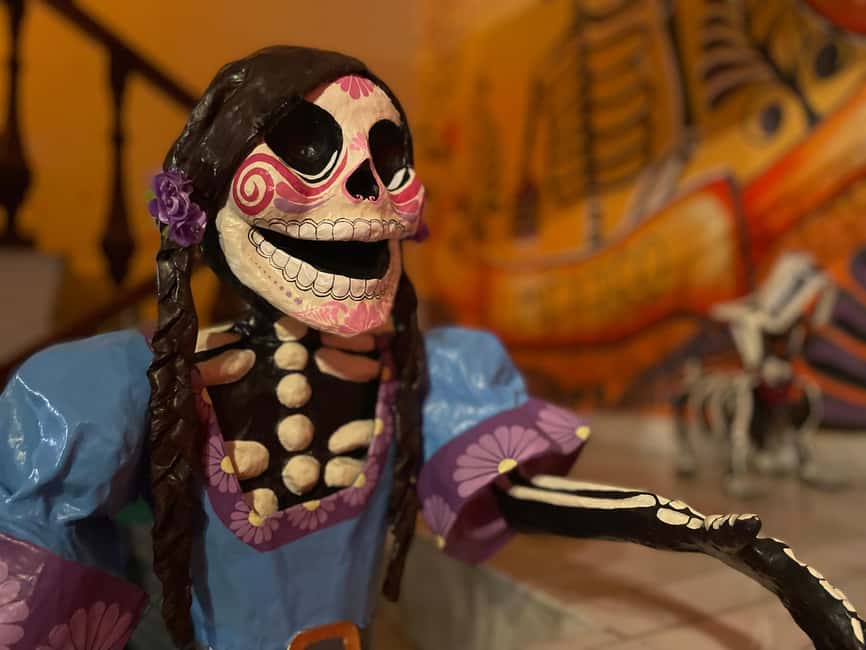
The house also uses artistic interventions throughout the space. That means your visit combines the visual experience of the ofrenda with a more contemporary craft setting. I like this mix because it shows that Day of the Dead is not frozen in the past. Artists continue to adapt its symbols for new objects and new audiences.
Photography may be tempting, but remember that the display has cultural meaning. Take your cue from the guide and the staff, especially around the ofrenda. The supplied information does not specify a photography policy, so it is sensible to ask before using your camera extensively.
The Mexskeletons workshop and its working artists
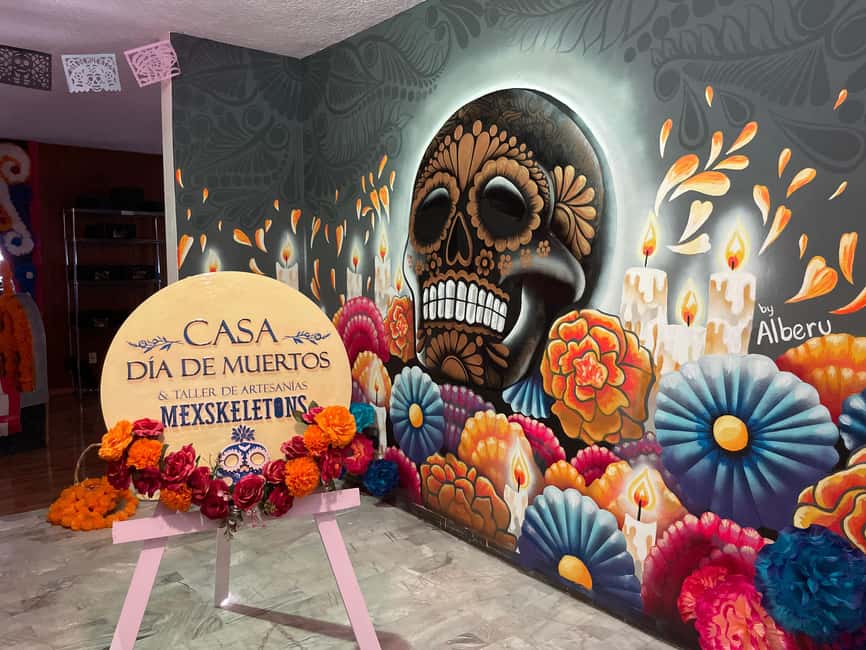
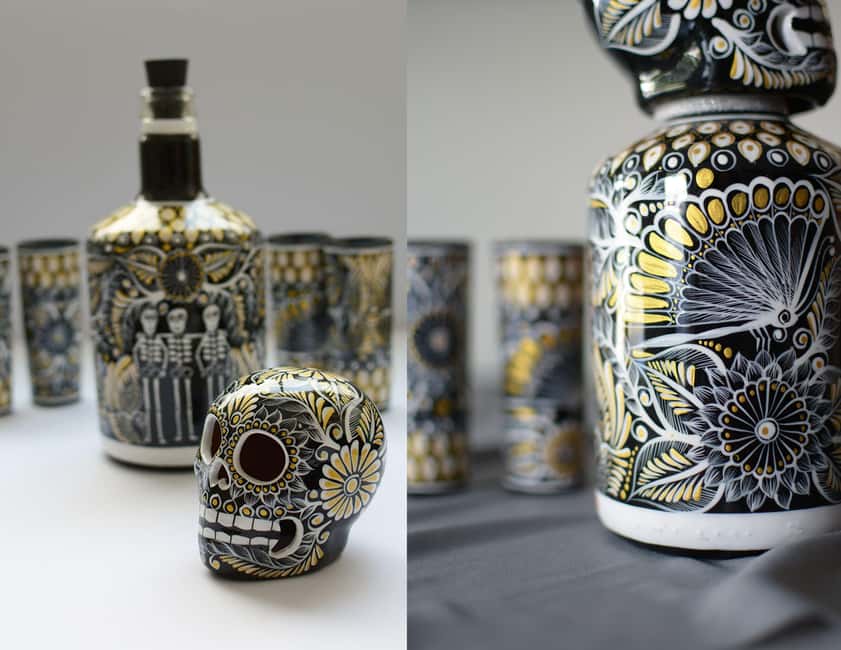
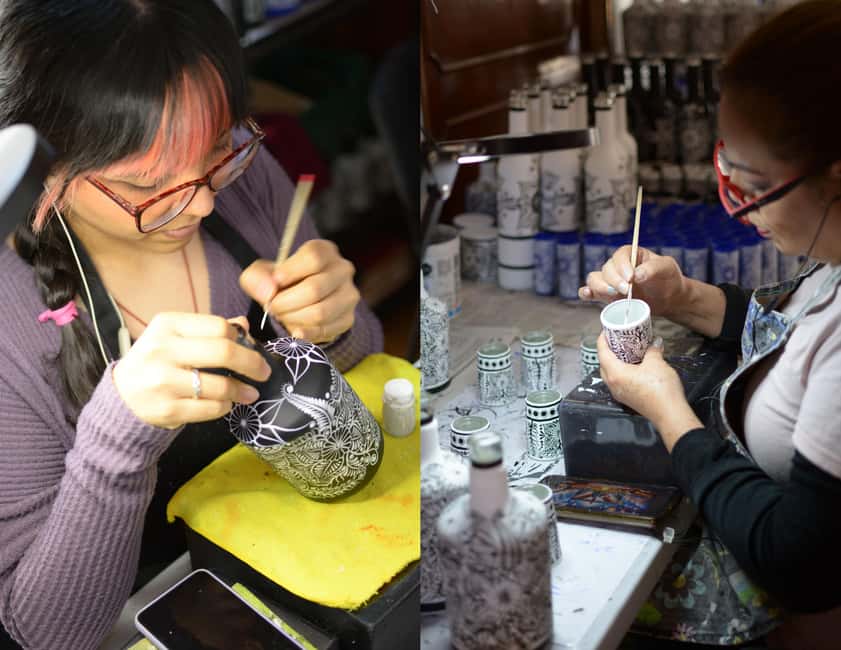
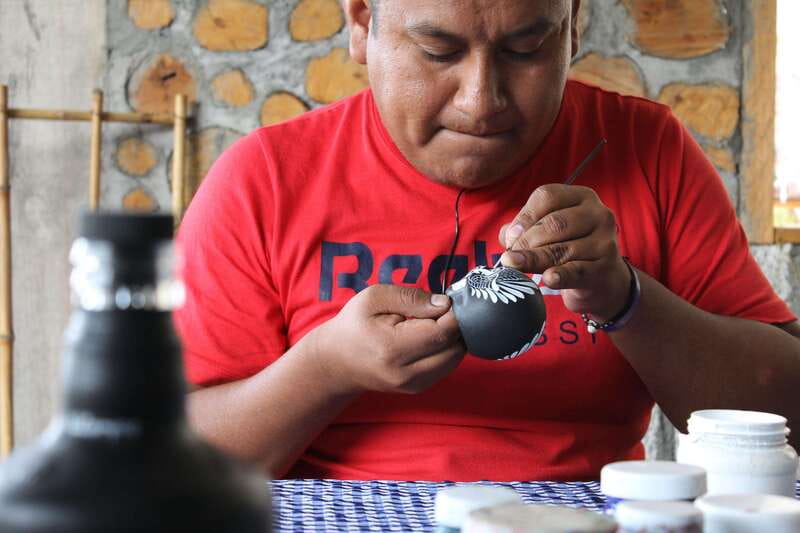
After the house tour, you visit the craft workshop. This is an active artesanías space, not merely a room filled with finished merchandise. Artists are present during the visit, and you may see the people behind the production of bottles, shot glasses, and tequila decanter sets.
The workshop adds a useful human element. You can look at a finished skeleton-themed object in a shop, but seeing the artists at work gives you a better sense of the labor involved. The pieces are exported to more than 20 countries, so the workshop links local production with an international market.
The tour includes an opportunity to see the production of tequila decanter sets. The information does not promise that you will watch every stage of a particular item being made, so I would treat this as a chance to observe the workshop and its artists, not as a guaranteed hands-on class.
That distinction matters. This is called a craft workshop, but you are not promised that you will make your own souvenir. The emphasis is on watching, learning, and seeing the finished art. If you enjoy handmade objects, this section may be the most memorable part. If you expect to spend an hour creating your own skull mask or bottle, this is not that kind of activity.
You also have free time for shopping at Casa Dia de Muertos. The purchase is optional, and the visit allows you to see the objects before deciding if one belongs in your luggage. Prices for individual crafts are not provided, so bring only the expectation of browsing and shopping, not a fixed souvenir budget.
The short break and sweet finish
The schedule includes a secret stop with about five minutes for a break and a visit. Because the description does not explain exactly what this stop includes, do not plan around a major second attraction. It appears to be a brief pause within the house experience.
Tasting samples are included, and the best-defined treat is pan de muerto. This traditional bread is associated with the Day of the Dead season. It is a small detail, but it helps turn the history lesson into a sensory experience.
Several people found the bread a special part of the outing, and I can see why. A short taste gives you something concrete to remember after the explanations about ancient origins and colonial change. It also makes the activity easier for families, since children often connect with food and art faster than with a formal history talk.
Meals and drinks beyond the included samples are not part of the price. If you arrive hungry, plan to eat elsewhere, especially since the experience itself is brief.
A few more Mexico City tours and experiences worth a look





Why the $11 price is good value
At $11 per person, this is one of the easier cultural additions to fit into a Mexico City itinerary. The fee covers the guided house tour, the active craft workshop, the ofrenda, the tequila decanter production viewing opportunity, and tasting samples.
The value comes from the combination. A low-cost craft stop alone might take only a few minutes and tell you little about the objects. A history talk alone might leave you without a clear visual connection to the tradition. Here, you get the explanation, the artwork, the working studio, and a taste of pan de muerto in one compact visit.
The price does not include transportation, meals, or drinks. That is reasonable for a small cultural activity, but you need to pay for your own taxi or other transport to Rincón Pozo 42. One family found the house easy to reach by taxi, and the proximity to Xochimilco makes that the most practical pairing.
I would not book this as your only Día de los Muertos activity if you are visiting during the main festival and want parades, public altars, or cemetery visits. I would book it as a low-cost way to understand the meaning behind what you see elsewhere.
Pairing the visit with Xochimilco
The house is about 10 minutes from the trajineras of Xochimilco. That makes the activity a natural companion to a boat outing through the canals.
You could place the house visit before or after your trajinera ride, depending on your transport and the confirmed start time. Since the tour is short, it can fill a gap in a southern Mexico City day without taking over your schedule. Still, the conflicting timing information deserves attention. The stated duration is 45 minutes, but the listed sections are 30 minutes for the guided tour, 5 minutes for the stop, 15 minutes for the workshop, and 15 minutes of free time and shopping. Those sections total roughly 65 minutes.
I would allow at least an hour, and possibly a little more for arrival and departure, rather than assuming you will be finished exactly 45 minutes after starting. This is especially important if you have a timed boat reservation or another appointment.
Transportation to and from the house is not included. The meeting point is specific enough for a taxi, but check the address details carefully: white facade, black doors, blue hand-painted details, and number 42. The house is in the middle of the street.
Who will enjoy this 45-minute cultural stop
I would recommend this outing to you if you want a clear introduction to Día de los Muertos and prefer a small art setting to a large public event. It suits first-time visitors who want cultural background before seeing altars and decorations elsewhere in Mexico City.
It also works well for families. The colorful house, hands-on craft setting, and pan de muerto keep the visit accessible, while the guide provides enough historical context for adults. The experience is available in English and Spanish, which makes it easier to follow the story without relying on a printed explanation.
Art lovers should find value in seeing the artists behind the Mexskeletons objects. The chance to view bottle and shot glass production gives the visit a practical edge. You are not only hearing about a tradition, you are seeing how its imagery becomes a modern craft product.
I would be more cautious if you have limited mobility. The activity is not suitable for people with mobility impairments or wheelchair users. The information does not give details about steps, seating, or restroom access, so ask the provider directly if you have a particular need.
The visit is also less suitable if you want an extended workshop with your own materials. The included workshop portion is short, and the advertised experience focuses on observing artists and shopping rather than making a craft yourself.
Practical details before you book
The experience operates all year, not only around the Day of the Dead holiday. You can reserve now and pay later, and free cancellation is available up to 24 hours before the activity for a full refund.
Smoking is not allowed. Guides speak Spanish and English, but a specific guide is not guaranteed. Victor has led visits, so you may encounter him, but you should not book on the assumption that he will be your guide.
The house is an active workshop, which means the visit may have a working, informal feel rather than the polished order of a formal museum. I see that as a benefit if you want to meet artists and see production in progress. It also means you should give the craftspeople room to work and listen to instructions inside the house.
Allow time for shopping only if you want it. The final free period is listed as 15 minutes, but purchases are optional. You can simply use that time to look more closely at the art and ask questions.
Should you book the Casa Dia de Muertos visit?
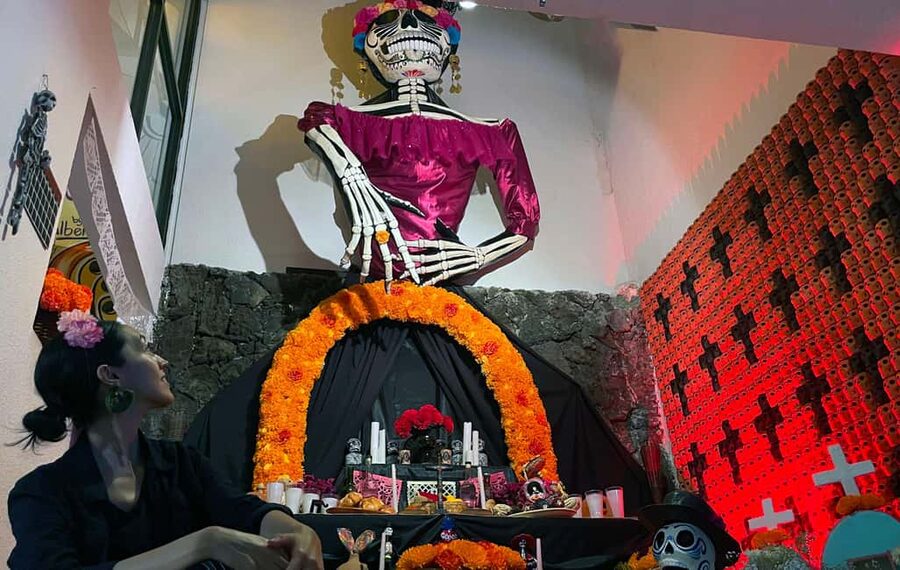
I would book this experience if you are already planning to visit Xochimilco or if you want a short, affordable way to understand Día de los Muertos outside the main holiday dates. The combination of a year-round ofrenda, a working craft studio, English or Spanish guidance, and pan de muerto gives you more substance than the $11 price suggests.
I would skip it if you need a wheelchair-accessible activity, want a long hands-on craft class, or have a tightly timed itinerary that cannot absorb the possible 65-minute schedule. Otherwise, this is a smart small stop: personal, visual, inexpensive, and grounded in the people who continue making the tradition part of daily life.
FAQ
Where does the Day of the Dead house tour meet?
The meeting point is Rincón Pozo 42. Look for a white house with black doors and hand-painted blue details beside the number 42. The house is in the middle of the street.
How long does the experience last?
The advertised duration is 45 minutes. The detailed schedule lists 30 minutes for the guided tour, 5 minutes for a stop, 15 minutes for the workshop, and 15 minutes of free time and shopping, which totals about 65 minutes. Confirm the exact timing before booking other activities.
Is the tour available in English?
Yes. Live guides are available in English and Spanish.
Is the house open all year?
Yes. The experience is available throughout the year, and the house includes a Day of the Dead offering that can be seen outside the main November celebration.
Is food included?
Tasting samples are included, including pan de muerto. Meals and additional drinks are not included.
Is the activity wheelchair accessible?
No. The experience is not suitable for wheelchair users or people with mobility impairments.
More Workshops & Classes in Mexico City
More City Tours in Mexico City


More tours in Mexico City we've reviewed



Workshops, compared.
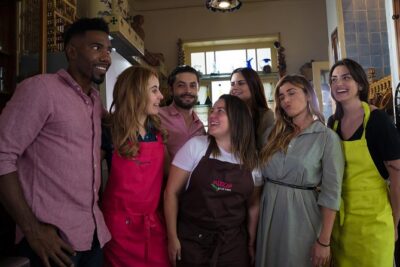 ★ 5.0Mexican Cooking Class with Food Market Visit in Mexico CityFrom $1243 hours 30 minutes (approx.)
 ★ 5.0Essence of Mexico: Authentic Mexican Cooking Class & Market TourFrom $1784 hours 30 minutes (approx.)
 ★ 5.0Mexican Cooking Class & Cocktails in Mexico CityFrom $1323 hours 30 minutes (approx.)
 ★ 5.0Private Mexican Cooking Class with Gastronomic Historian, LuciaFrom $1453 hours (approx.)
 ★ 5.0Mexican Churros Master ClassFrom $702 hours (approx.)
 ★ 4.8Mexico City: Mexican Cooking ClassFrom $1213 hours
 ★ 5.03h Cooking Class in Mexico City: 8 Recipes & Bottomless DrinksFrom $1104 hours (approx.)
 ★ 5.0Private San Angel Tour & Cooking Class in Mexico City with LuciaFrom $1555 hours (approx.)
The lists this tour appears in