
Reviewed · BUS TOURS & PASSES
Mexico City Tourist Bus Tour
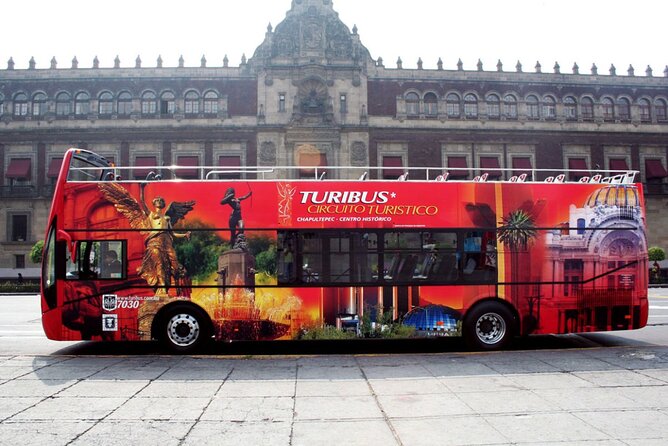
Mexico City’s Turibus gives you a quick visual sweep of a huge capital, from the grand Zócalo and Palacio de Bellas Artes to the long boulevard of Paseo de la Reforma. At $35, it is most useful when you want to get your bearings before choosing where to spend more time.
In This Article
- Key points at a glance
- Starting at Fiesta Americana Reforma
- Reforma puts modern Mexico City beside its monuments
- The Zócalo connects Mexico City’s past and present
- Frida Kahlo Museum requires an extra decision
- Basilica de Guadalupe adds a different side of the city
- Three routes make planning more important than the price
- The upper deck is the best seat, with one important warning
- Is $35 a fair price for this city overview?
- Who will get the most from this ride?
- Booking, weather, and cancellation details
- Should you book the Mexico City Tourist Bus Tour?
- FAQ
- Where does the Mexico City Tourist Bus Tour begin?
- How long does the tour last?
- What is included in the price?
- Is admission to the Frida Kahlo Museum included?
- Is the tour available in English?
- Can I cancel for a full refund?
I like the panoramic second floor and the chance to hop off near major sights. I also like the clean, air-conditioned buses and the helpful service, including easy date changes when a booking mistake was made. The catch is traffic, plus unreliable headphone jacks that can turn the commentary into dead air.
Key points at a glance
- Fiesta Americana Reforma departure: Start at a central meeting point on Reforma, with access to public transportation nearby.
- Major sights in one ride: See the Zócalo, Monument to the Revolution, Palace of Fine Arts, Independence Monument, and Basilica de Guadalupe.
- Frida Kahlo Museum costs extra: Admission is MX$320 per person, so add that to your budget if you plan to enter.
- Three routes require planning: Study the route colors and decide where you will get off before boarding.
- Upper-deck views are the main reward: Air conditioning, panoramic seating, WiFi, and an eight-language audio guide are included.
- Traffic can stretch the day: The advertised ride is about three hours, but a multi-route outing took one passenger 5.5 hours.
Starting at Fiesta Americana Reforma
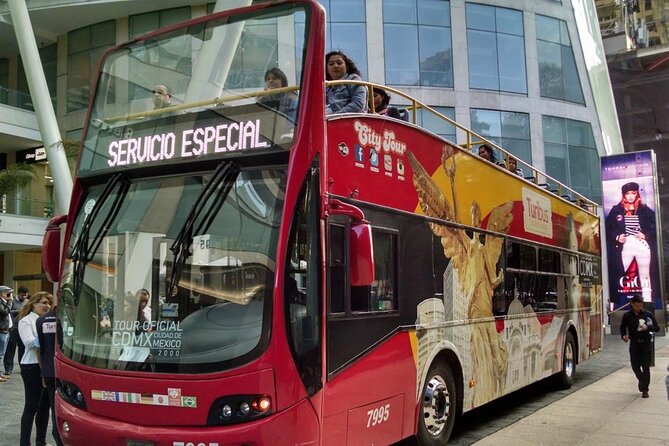
Your meeting point is Fiesta Americana Reforma, a practical place to begin because it sits along one of Mexico City’s most important avenues. The booking includes transportation on the Turibus, but you should still arrive with a clear idea of your first route and first stop.
The service is offered in English, and the audio guide is available in eight languages. That makes the bus useful for first-time visitors who want basic context while watching the city pass by rather than arranging several separate rides.
I would not treat the three-hour estimate as a strict schedule. Mexico City traffic can be heavy, especially on a route that crosses several major districts. If you have a museum reservation, restaurant booking, or evening event, leave plenty of room after the bus ride.
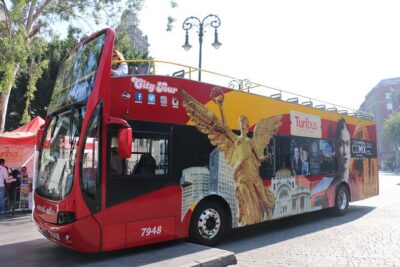
The buses have air conditioning and a panoramic upper deck. The open views are the reason to sit upstairs when conditions are pleasant, while the cooled interior gives you a break from sun and city noise. The service also includes WiFi, though the audio system may be the less dependable feature.
A few more Mexico City tours and experiences worth a look

Reforma puts modern Mexico City beside its monuments
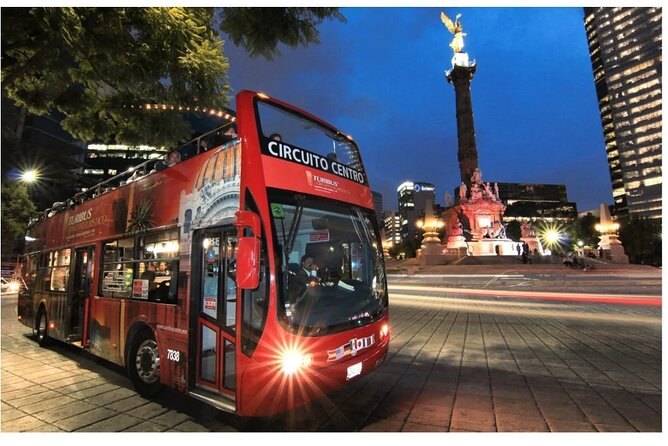
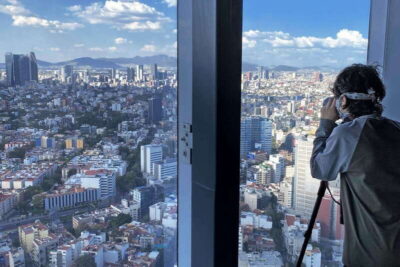
Paseo de la Reforma is one of the best parts of this ride. From the upper deck, you can look along a broad avenue framed by major buildings and Mexico City’s modern skyscrapers. The view helps explain how the capital combines grand public monuments with a fast-growing contemporary city.
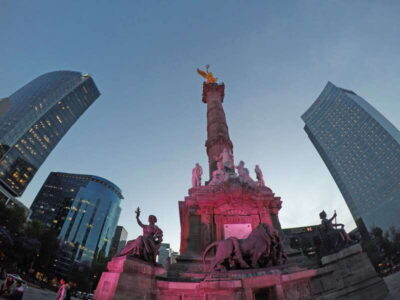
The route includes the Monument to Independence, commonly known as the Angel of Independence, and the Monument to the Revolution. These are not minor roadside sights. They are among the city’s clearest visual markers, and seeing them from a high bus seat gives you a useful first orientation.
You can also pass the Palace of Fine Arts and the Chamber to Juárez, along with other central monuments. The value here is scale. Walking between every stop would take much longer, while the bus lets you see how the central districts connect.
This part of the ride is best for taking photographs and deciding what deserves a closer look later. The drawback is that you may only get a moving view unless you plan a stop. Bring your own sense of priority, because the bus cannot give every monument the time it deserves.
The Zócalo connects Mexico City’s past and present
The Zócalo, officially the Plaza de la Constitución, is the city’s main historic square. From the bus, you can admire its huge open space and the buildings around it, but getting off gives you a far better sense of its size and importance.
This is one of the stops I would plan carefully. The square is a strong choice if you want to walk, take photographs, and see the center at ground level. The bus offers an overview, but the Zócalo is a place where a short stop can become the most memorable part of the outing.
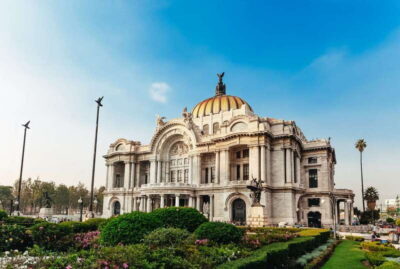
The route also brings you near the Palace of Fine Arts. Its pale exterior and distinctive domed roof make it easy to spot from the bus. If you care about architecture or the city’s arts scene, this is another stop worth marking before you board.
The practical problem is timing. Traffic around the historic center can slow the bus, and a quick ride past the square is not the same as a visit. If your main goal is the Zócalo, check the route carefully and get off rather than expecting the panoramic circuit to provide enough time.
Frida Kahlo Museum requires an extra decision
The Frida Kahlo Museum, known as the Blue House, is included as a stop on the day’s route, but admission is not part of the $35 price. Entry costs MX$320 per person. That separate fee matters because the bus fare covers transportation, not every major attraction along the way.
The museum is presented as a look at Kahlo’s life, artistic legacy, and the creative world connected with Diego Rivera. If you already want to visit the Blue House, the Turibus can help link it with central Mexico City sights without arranging another form of transport.
You should decide in advance if you want to get off here. The bus gives you a broad city circuit, while the museum needs its own time and attention. Trying to combine every stop, every route, and a full museum visit in one short outing can make the day feel rushed.
The $320 admission also changes the tour’s value. At $35, the bus is reasonably priced for a city overview. Once you add a museum ticket, food, and perhaps other paid attractions, the total rises. I would book this route for the transport and orientation, then see the museum as an optional addition rather than assuming it is included.
Basilica de Guadalupe adds a different side of the city
The Basilica de Guadalupe gives the itinerary a major religious and cultural focus. It is a useful contrast to the monuments along Reforma and the museums in the center. Seeing it on the same ride shows you that Mexico City is not only about government buildings, art, and historic plazas.
The basilica is included as part of the sightseeing route, but the supplied details do not specify how long the bus stops there or exactly how much time you have on foot. Plan it as a scheduled stop rather than assuming the bus will wait while you make a long visit.
This is another reason to map out your priorities before boarding. If the basilica matters most to you, confirm which route reaches it and how the route connects with the Zócalo, Reforma, and Frida Kahlo Museum. The service includes several colors and route choices, so a little preparation can save a lot of backtracking.
Other city tours we've reviewed in Mexico City





Three routes make planning more important than the price

A key point about this experience is that it is not simply one fixed loop with every sight visited in a neat sequence. The service has three routes available, and the route colors need attention. One booking experience involved red, green, yellow, and purple areas, with only portions of the red and green sections completed.
The lesson is simple: do not board without a plan. Pick the sights you care about most, note the route color for each one, and decide where you will get off. If you want to cover every route, you may spend much of the day sitting on the bus.
That can be worthwhile if you want a moving introduction to Mexico City. It is less attractive if you expect a tightly timed three-hour sightseeing visit with long stops at each attraction.
The stated duration is about three hours, but traffic and route choices can change that. One outing lasted 5.5 hours after covering parts of multiple areas. I would think of three hours as a basic estimate for the experience, not a guarantee that you can visit every listed sight.
The upper deck is the best seat, with one important warning
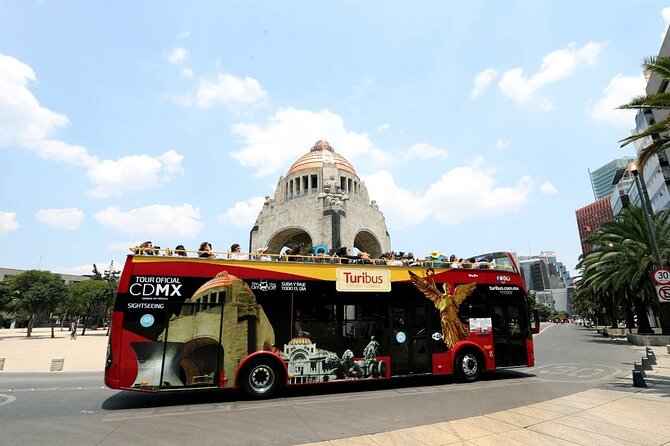
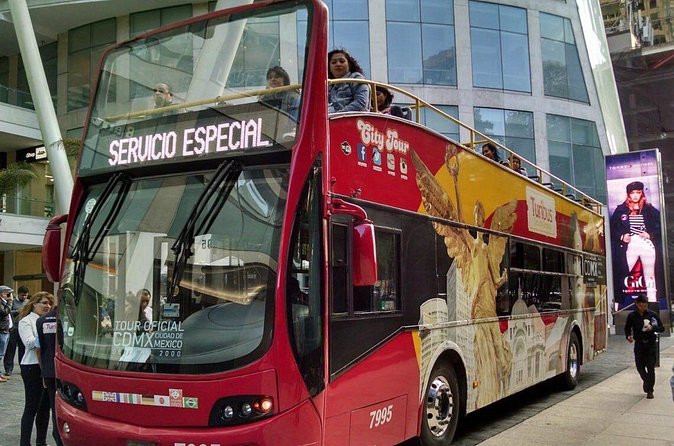
The panoramic second floor gives you the clearest view of monuments, towers, and Reforma’s buildings. It also makes the ride feel more like sightseeing and less like ordinary city transport. If the weather is good, I would choose the upper deck.
Air conditioning is included, which helps when you move between sunny streets and crowded central areas. The buses have been described as clean and well maintained, and the staff service has been friendly and helpful. Those details matter on a long route, especially if traffic leaves you onboard longer than expected.
The weak point is the audio system. A serious technical problem affected about 80 percent of the headphone jacks on one outing. Even where sound worked, the clarity was poor, making the historical commentary hard to follow.
That problem cuts into the value of a sightseeing bus. You are paying not only for a seat and transport, but also for the story of what you are seeing. If the audio fails, your ride becomes a visual circuit with much less context.
Bring headphones if the bus permits personal connections, but the supplied information does not confirm that the system supports your phone. You should not assume digital audio from your own device will work. Still, check your seat’s jack as soon as you board and tell staff if it fails. The team has been helpful with service issues, even though the equipment itself has not always performed well.
Is $35 a fair price for this city overview?
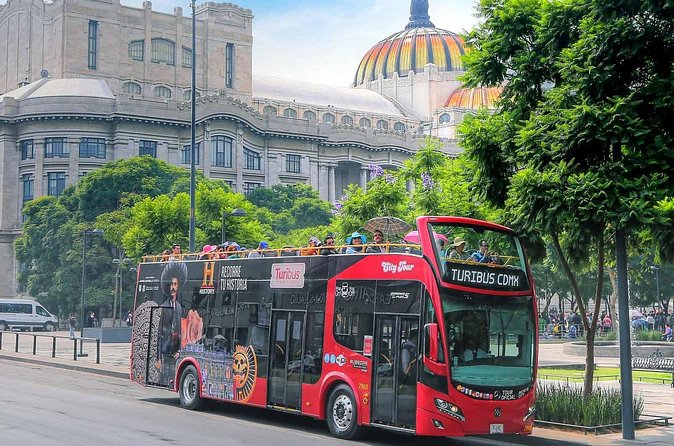
At $35 per person, this is fair value if you use it as a transport and orientation tool. Mexico City is large, and the bus connects major sights that would otherwise require several separate trips. The panoramic deck adds something you do not get from a standard enclosed vehicle.
The value drops if you stay onboard for hours in traffic and never leave the bus. It also drops if the audio does not work, because the commentary is a central part of what you are paying for.
I would compare the price with your plans for the day. If you want to see many districts from above, take photographs, and identify places to revisit, the fare makes sense. If you already know the city and want detailed visits at the Zócalo, Frida Kahlo Museum, and Basilica, using direct transport to each place may give you more time on foot.
Lunch is not included. Plan for that separately, especially if you choose a longer multi-route ride. The Frida Kahlo Museum is also extra at MX$320 per person, so your full cost depends on how many stops you turn into proper visits.
Who will get the most from this ride?

I would recommend the Turibus to someone visiting Mexico City for the first time who wants a broad view before choosing where to return. It suits people who enjoy seeing a city from above, prefer air-conditioned transport, and do not mind adjusting plans around traffic.
It can also work well for families or groups with different interests. One person can use the ride to see the monuments, while another can get off near a chosen attraction. Most people can participate, and the meeting point is near public transportation.
I would be more cautious if you have only three free hours and need to reach another appointment afterward. The route can run long, especially when you use several colors. I would also hesitate to book it solely for the audio guide until you confirm the equipment is working.
The best approach is to treat this as a flexible city sampler. Choose two or three priorities, not every sight on the map. Use the bus to connect them, and accept that traffic may change the order.
Booking, weather, and cancellation details
You receive confirmation at the time of booking, and the ticket is mobile, so you do not need a printed voucher. The experience is offered in English, with the audio guide available in eight languages.
Free cancellation is available if you cancel at least 24 hours before the start time. Changes or cancellations made less than 24 hours ahead are not refunded or accepted. The cut-off uses local Mexico City time.
The experience requires good weather. If poor weather causes cancellation, you can choose another date or receive a full refund. A minimum number of participants is also required, and if that minimum is not met, you can accept another date or experience or receive a full refund.
Should you book the Mexico City Tourist Bus Tour?
Book it if you want a practical first look at Mexico City, especially the Zócalo, Reforma monuments, Palace of Fine Arts, Independence Monument, Frida Kahlo Museum area, and Basilica de Guadalupe. Sit upstairs, plan your route colors, and decide in advance where you will get off.
Skip it if you need a tightly timed sightseeing day, want long visits at each attraction, or depend heavily on clear recorded commentary. At $35, the bus is a useful introduction, but traffic and audio faults can limit the experience.
My advice is to use it on an early day in your visit, when orientation has real value. Keep your schedule open, choose your main stops, and regard the ride as a way to see the city’s scale rather than a substitute for exploring its best places on foot.
FAQ
Where does the Mexico City Tourist Bus Tour begin?
The meeting point is Fiesta Americana Reforma.
How long does the tour last?
The stated duration is approximately three hours, but traffic and use of multiple routes can make the outing considerably longer.
What is included in the price?
The $35 ticket includes Turibus transportation, air conditioning, the panoramic second floor, WiFi onboard, and an audio guide in eight languages.
Is admission to the Frida Kahlo Museum included?
No. Admission costs MX$320 per person and must be paid separately.
Is the tour available in English?
Yes. The experience is offered in English, and the audio guide is available in eight languages.
Can I cancel for a full refund?
Yes, if you cancel at least 24 hours before the experience start time. Cancellations made less than 24 hours ahead are not refunded.
More City Tours in Mexico City
More Bus Tours & Passes in Mexico City



More tours in Mexico City we've reviewed







Bus Tours & Passes, compared.
 ★ 4.0Mexico City: Hop-on Hop-off Bus TourFrom $211 - 2 days
 ★ 4.1Mexico City: Hop-on Hop-off City Tour by Turibus 1-Day PassFrom $2010 hours
 ★ 3.0Turibus Hop On Hop Off Mexico City Tour3 hours (approx.)
 ★ 3.9Mexico City: Hop-On Hop-Off Bus City TourFrom $201 day
 ★ 3.0Hop-on Hop-off or Night Tour Tourist Bus in Mexico City1 to 11 hours (approx.)
 ★ 3.4Mexico City: Night Bus TourFrom $11
 ★ 3.9Mexico City: Hop-on Hop-off City Tour with AttractionsFrom $231 day
 ★ 2.5Tourist Bus in Mexico City Night Tour or Hop-On Hop-Off Service1 hour 15 minutes (approx.)
The lists this tour appears in