
Reviewed · WORKSHOPS
Tortilla Class and Workshop in Mexico
The most memorable part of this Mexico City workshop is not simply eating a quesadilla. It is grinding heirloom corn by hand on a metate, then cooking that masa into a tortilla while learning why the process matters. Clara leads the class with warmth and clear explanations, and Ariane may also help lead the session.
In This Article
- Key points at a glance
- Why this tortilla class is different
- Meeting Clara at Catita Pan y Café
- The opening lesson on Mexican corn
- Grinding heirloom corn on the metate
- Shaping and cooking your tortilla
- Making salsa with a molcajete
- What the $95.31 price buys you
- Who will enjoy this most
- Timing, transport, and booking details
- My final take on the tortilla workshop
- FAQ
- Where does the tortilla class begin?
- What time does the activity start?
- How long does the workshop last?
- Where does the activity end?
- Is the class offered in English?
- What food will I make?
- Is the quesadilla included?
- Are drinks included?
- Is transportation included?
- How many people can join the class?
- Can I cancel for a refund?
I like the hands-on work and the chance to compare tortillas made from freshly ground corn, mill-made masa, and Maseca harina. I also like the small group size, which is capped at eight, so you get room to ask questions and work at your own pace.
The main drawback is the short 90-minute format. You get a focused introduction rather than a full Mexican cooking course, and the $95.31 price is high if you only want a quick snack or a basic tortilla demonstration.
Key points at a glance
- Grind heirloom corn on a real metate: You take part in an old Mexican process instead of watching a staged cooking show.
- Learn why nixtamal matters: The short talk connects corn preparation with flavor and nutritional value.
- Make and cook your own tortilla: Your masa becomes a fresh tortilla on the comal, then a quesadilla with Oaxaca cheese.
- Prepare salsa in a molcajete: You finish the dish with salsa made by hand in a traditional volcanic-stone mortar.
- Small English-language group: The class accepts no more than eight people and begins at 5:00 pm.
- A strong family activity: Children aged 9 and 12 enjoyed the grinding and cooking, while adults got the cultural background.
Why this tortilla class is different
Mexico City offers many food activities, but this one focuses on a single ingredient: corn. That narrow focus is its strength. Instead of racing through several dishes, you spend your time understanding the foundation of Mexican cooking.
Corn is not treated here as a plain side dish or supermarket staple. You hear why heirloom strains are disappearing and why the way corn is prepared affects both taste and nutrition. That gives the class a useful purpose beyond producing a meal.
The central lesson is nixtamal, the process used to transform corn before it becomes masa. The session explains this step in simple terms, then lets you handle the result. You are not expected to leave as a tortilla expert, but you should come away better able to recognize the difference between an industrial corn product and a carefully made tortilla.
That makes the workshop especially appealing if you cook at home. You will not just learn a recipe. You will learn what to look for when buying tortillas and why a handmade tortilla can taste so different from a generic one.
A few more Mexico City tours and experiences worth a look


Meeting Clara at Catita Pan y Café
The activity begins at 5:00 pm at Catita Pan y Café, located at C. Dr. José María Vértiz 997 in Narvarte Poniente, Benito Juárez. The meeting point is near public transportation, and the class ends at the same place.
That simple out-and-back arrangement helps. You do not need to arrange a separate ride to a distant kitchen or worry about finding a second address afterward. Private transportation is not included, so plan your route to the café before the start time.
The workshop is offered in English. The small group limit of eight is important here because the work is physical and shared. You need access to the metate, the comal, and the molcajete, and a smaller class makes it easier to see the demonstrations and get individual help.
You should allow enough time to arrive before 5:00 pm. The activity is short, so arriving late could cut into the hands-on part rather than merely shortening a long lecture.
The opening lesson on Mexican corn
The class starts with a short lecture about the role of corn in Mexico and the loss of heirloom varieties. This is not filler before the cooking begins. It explains why the workshop uses older corn strains and why the tortilla in your hand deserves more attention than it usually gets.
I like this beginning because it gives context without turning the activity into a formal academic talk. Clara is described as warm, engaging, and clear, with a strong command of corn, food, and cooking. That matters in a class aimed at both curious visitors and home cooks.
The lesson also frames the practical comparisons later in the session. You are encouraged to notice how masa made in different ways changes the final tortilla. The point is not that every commercial tortilla is worthless. It is that processing methods have consequences, and your palate can detect them.
If you already know a good deal about Mexican food, you may find the introduction familiar. For most people, though, it provides a useful foundation for the work that follows.
Grinding heirloom corn on the metate
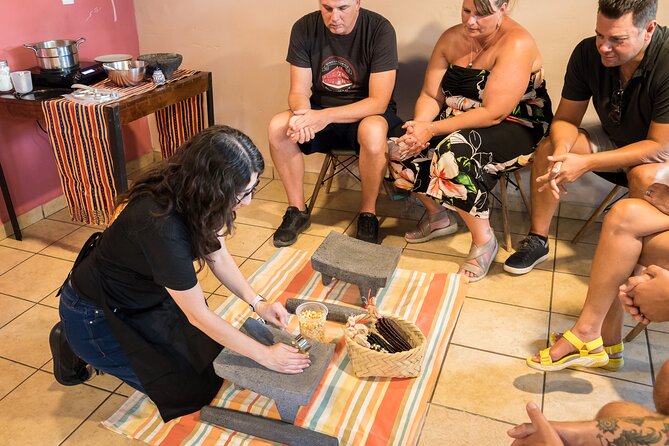
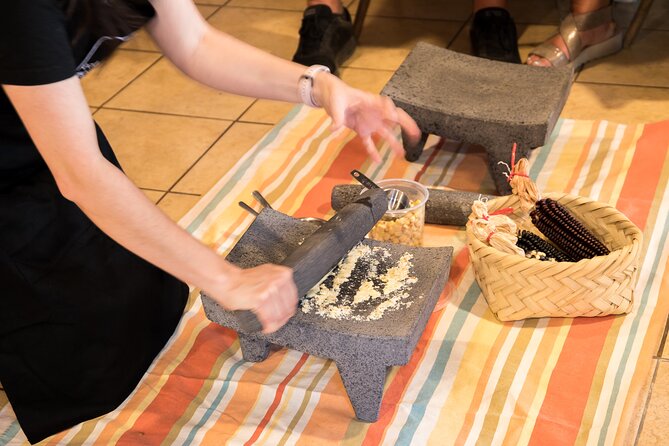
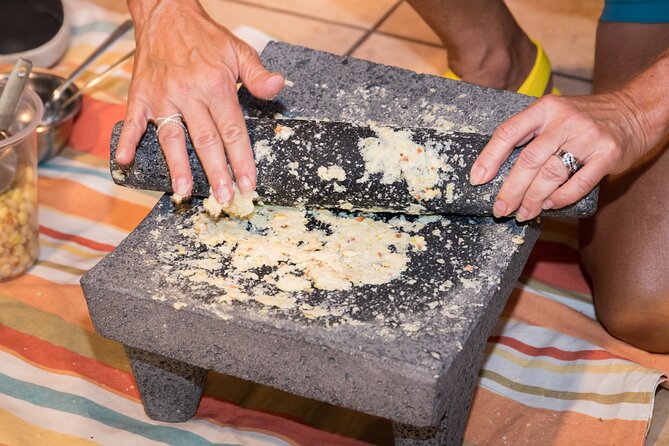
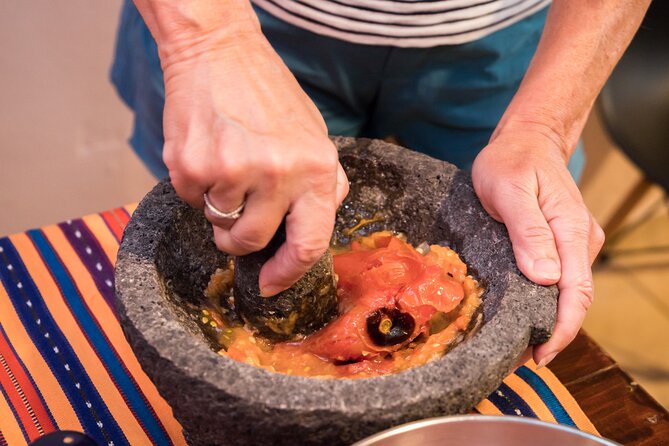
The most unusual part of the experience is grinding corn on the metate, an ancestral Mexican grinding stone made from volcanic rock. This is a physical task, not a quick symbolic gesture. You use the stone to work the corn into masa, seeing how much effort goes into an item that is often picked up cheaply from a store shelf.
This step gives you a better sense of traditional food production than a demonstration alone could provide. The motion takes practice, and the texture changes as you work. The small group format should help because the guide can show you how to use the tool and correct your technique.
One useful feature is the chance to compare three types of tortilla preparation: corn ground by hand on the metate, masa prepared from a mill, and tortillas made with Maseca harina. The comparison gives the workshop a clear educational payoff. You can taste the results side by side instead of relying on a vague claim that one method is better.
The metate-made tortilla is likely to be the highlight for many people. It has the strongest connection to the process you have just performed, and the fresh flavor becomes easier to understand when you have also tasted the alternatives.
Still, you should keep expectations sensible. A 90-minute class cannot recreate every stage of traditional corn production in detail. You are getting a compact introduction, with enough physical work to make the subject real.
Shaping and cooking your tortilla
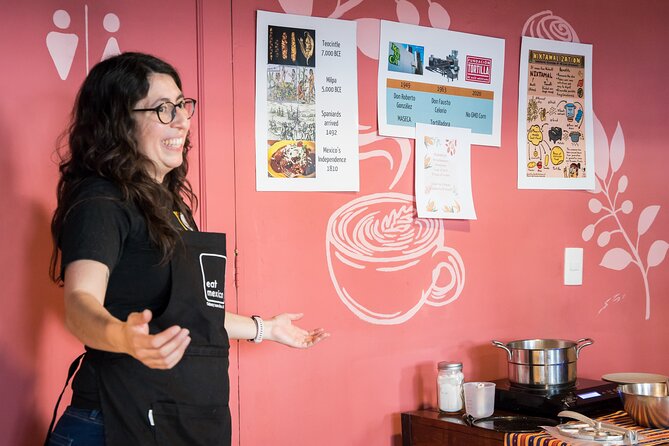
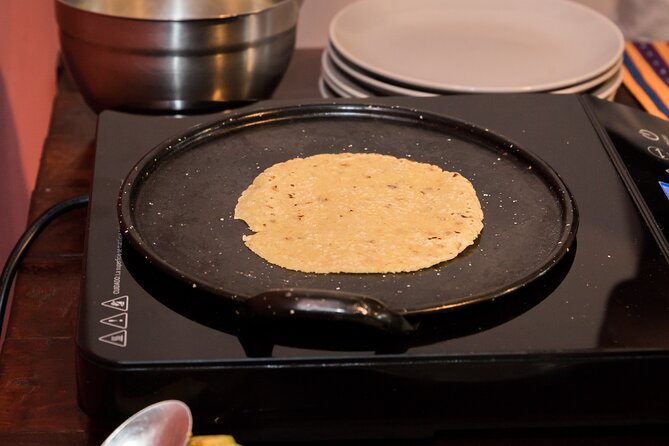
After preparing the masa, you make your own tortilla and cook it fresh on the comal. The comal is the flat cooking surface used for tortillas, and watching the dough become a finished food is one of the most satisfying parts of the class.
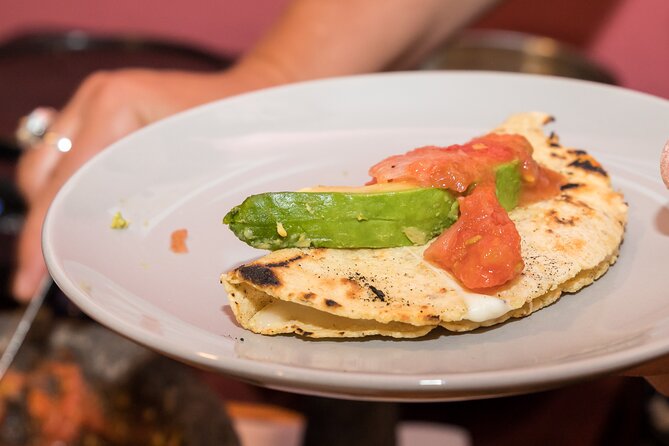
This is also where the lesson becomes dinner. Your tortilla is not left as a sample. You turn it into a quesadilla with fresh Oaxaca cheese, then eat what you have made.
The menu is limited, but that is not a weakness here. The goal is to understand the tortilla, not to prepare a long list of dishes. Fresh cheese, hot masa, and salsa provide enough contrast to show what the tortilla contributes.
Families may find this step particularly rewarding. Children can see an immediate result from the work they did at the metate, and the cooking process gives them a clear finish line. The class has been enjoyed by children aged 9 and 12, so it can work well for families who want food culture with active participation.
You may need to accept that your first tortilla will not be perfectly round. That is part of the charm, and the guide can help you through the process. This is a workshop, not a tortilla-shaping contest.


Making salsa with a molcajete
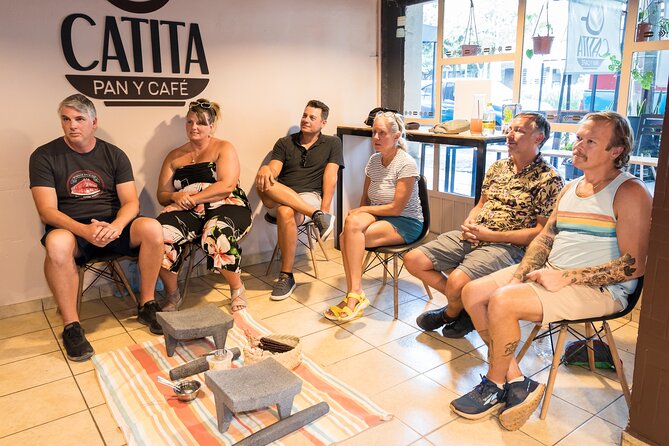
The quesadilla is finished with salsa made in a molcajete, another traditional stone tool. The activity description does not specify the exact ingredients or level of heat, so you should not expect a fixed salsa recipe with precise measurements to take home.
What you do get is a direct lesson in texture. Crushing ingredients in a molcajete produces a different result from simply stirring or blending them. It also gives you another piece of traditional kitchen work to perform yourself.
The salsa matters because it balances the quesadilla. The tortilla and Oaxaca cheese provide the warm, soft base, while the salsa adds the finishing flavor. Making it by hand keeps the meal connected to the same idea as the metate: tools and methods affect what you eat.
If you are sensitive to chile, ask about the salsa before adding a large spoonful. The available details do not state how spicy it is, so a quick question is sensible.
What the $95.31 price buys you
At $95.31 per person, this is not a bargain snack stop. The price makes more sense if you value instruction, cultural context, and the chance to use tools that you would not normally encounter at home.
Your fee includes the quesadilla you prepare and a local culinary guide. It does not include alcoholic drinks or private transportation. Since the class lasts about 90 minutes, you are paying for a compact, specialist workshop rather than an entire evening meal.
For comparison, a basic cooking lesson can be judged by how many dishes you prepare. This class needs a different measure. You are paying for the corn lesson, the metate work, the comparison of tortilla types, the comal cooking, and the molcajete salsa. If you are genuinely interested in Mexican food, that is a fairer way to assess the value.
I would book it more readily as part of a food-focused Mexico City visit than as a standalone budget activity. It works best when you want to understand an ingredient and take part in the process, not simply eat something tasty.
Who will enjoy this most
This class suits home cooks, food students, and anyone curious about how Mexican staples are made. It is also a good choice if you have already taken a broader food tour and want one activity with a tighter focus.
Families should consider it seriously. The hands-on work gives children something to do, and the subject is concrete enough for adults to follow without becoming dry. The class is also suitable for couples and small groups who want an activity with conversation built into the meal.
You may want to choose another experience if you are looking for a large Mexican feast, several courses, or alcoholic drinks. None of those are included. You also should not book it expecting a long, advanced cooking course. The class concentrates on corn, tortillas, and salsa.
The English-language format helps if you want detailed explanations of nixtamal and the tools. Since the group is limited to eight, you should have a better chance to interact directly with Clara or Ariane.
Timing, transport, and booking details
The class begins at 5:00 pm and returns to the meeting point at Catita Pan y Café. It lasts approximately one hour and 30 minutes. That timing makes it easy to fit into an evening in Mexico City, though the activity itself is too short to replace a full dinner if you are especially hungry.
The meeting point is near public transportation. Private transport is not provided, so you are responsible for reaching the café and getting home afterward.
Confirmation is provided when you book, and the activity is often reserved well ahead of time, with an average booking lead time of 47 days. That is a useful warning if your Mexico City dates are fixed. A group limit of eight also means available places may be limited on popular dates.
You can cancel for a full refund up to 24 hours before the start time. Cancellations or changes made less than 24 hours ahead are not accepted for a refund, and the cut-off follows local time.
My final take on the tortilla workshop
I would recommend this workshop if you want food instruction with a real cultural point behind it. The strongest parts are the metate grinding, the comparison between different tortilla methods, and the chance to eat a quesadilla made from your own work.
The class also earns credit for its small size and personable guides. Clara receives particular praise for being warm, engaging, and easy to learn from, while Ariane may co-lead the session. The activity is short, focused, and friendly to families.
I would hesitate only if $95.31 feels high for a small quesadilla or if you want a broad menu. For everyone else, especially home cooks and curious eaters, this is a useful way to understand why a tortilla can be much more than a wrapper.
FAQ
Where does the tortilla class begin?
It begins at Catita Pan y Café, C. Dr. José María Vértiz 997, Narvarte Poniente, Benito Juárez, 03020 Ciudad de México, CDMX, Mexico.
What time does the activity start?
The start time is 5:00 pm.
How long does the workshop last?
The activity lasts approximately one hour and 30 minutes.
Where does the activity end?
It ends back at the meeting point at Catita Pan y Café.
Is the class offered in English?
Yes, the experience is offered in English.
What food will I make?
You will make a tortilla, cook it on a comal, and turn it into a quesadilla with Oaxaca cheese. You will also make salsa in a molcajete.
Is the quesadilla included?
Yes. The quesadilla you make is included as the food portion of the activity.
Are drinks included?
Alcoholic beverages are not included.
Is transportation included?
Private transportation is not included. The meeting point is near public transportation.
How many people can join the class?
The activity accepts a maximum of eight people.
Can I cancel for a refund?
You can cancel up to 24 hours before the start time for a full refund. Cancellations or changes made less than 24 hours before the activity are not accepted for a refund.
More Workshops & Classes in Mexico City


More tours in Mexico City we've reviewed



Workshops, compared.
 ★ 5.0Mexican Cooking Class with Food Market Visit in Mexico CityFrom $1243 hours 30 minutes (approx.)
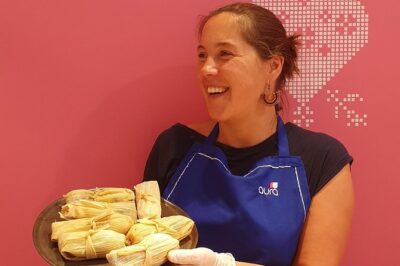 ★ 5.0Essence of Mexico: Authentic Mexican Cooking Class & Market TourFrom $1784 hours 30 minutes (approx.)
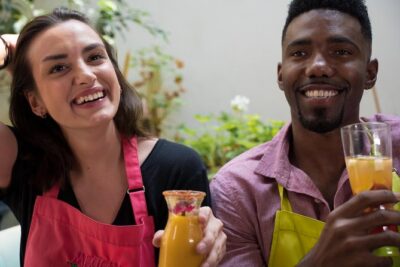 ★ 5.0Mexican Cooking Class & Cocktails in Mexico CityFrom $1323 hours 30 minutes (approx.)
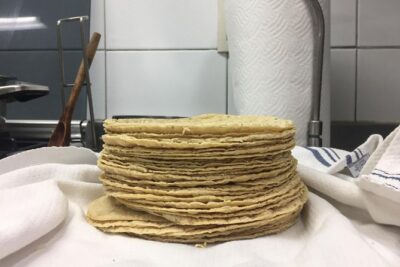 ★ 5.0Private Mexican Cooking Class with Gastronomic Historian, LuciaFrom $1453 hours (approx.)
 ★ 5.0Mexican Churros Master ClassFrom $702 hours (approx.)
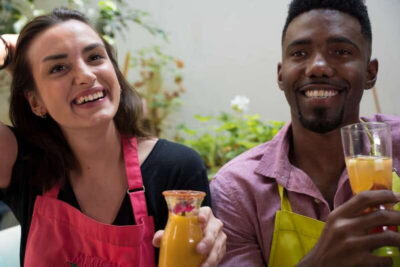 ★ 4.8Mexico City: Mexican Cooking ClassFrom $1213 hours
 ★ 5.03h Cooking Class in Mexico City: 8 Recipes & Bottomless DrinksFrom $1104 hours (approx.)
 ★ 5.0Private San Angel Tour & Cooking Class in Mexico City with LuciaFrom $1555 hours (approx.)
The lists this tour appears in