
Reviewed · WALKING TOURS
Muralist Art Semi Private Walking Tour in Mexico City Downtown
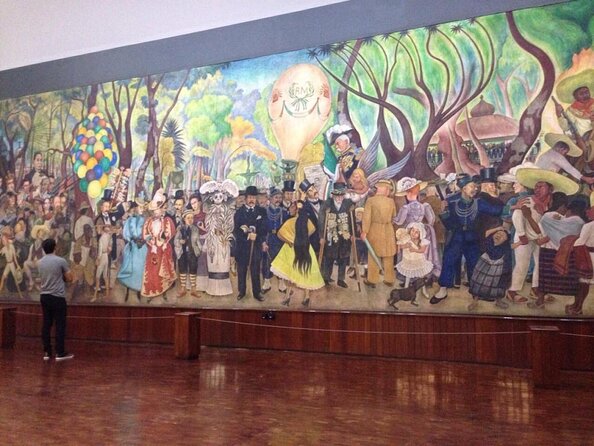
Mexico City’s murals are not just oversized paintings. They are public arguments about revolution, labor, class, religion, and national identity. This walking tour helps you read them, with visits to the Ministry of Education, Antiguo Colegio de San Ildefonso, and Palacio de Bellas Artes. I especially like the small maximum of eight people and the way guides such as Emilio and Emiliano connect art to Mexican politics and social life.
In This Article
- Key points at a glance
- Why Mexico City’s murals need a guide
- Starting at the Ministry of Education
- Antiguo Colegio de San Ildefonso, the movement’s early home
- Palacio de Bellas Artes and its 17 murals
- A close look at the guide’s role
- Is $58.12 a fair price?
- How demanding is the walk?
- Who should book this experience?
- Small details that make planning easier
- Should you book the mural walk?
- FAQ
- How long does the Muralist Art Semi Private Walking Tour last?
- What locations does the tour visit?
- Which muralists are included?
- Are museum admission tickets included?
- What language is the tour offered in?
- How large is the group?
- Where does the tour begin?
- Where does the tour end?
- Is cancellation free?
I also like that the tour includes museum admission, so you can focus on the murals instead of sorting out tickets at each stop. The main caution is simple: three and a half hours means plenty of standing and walking. Wear good shoes, and do not schedule this between two exhausting activities.
Key points at a glance
- Three major mural sites: See work connected with Diego Rivera, José Clemente Orozco, David Siqueiros, Jean Charlot, and other major artists.
- Small-group format: The tour accepts no more than eight people, allowing room for questions and discussion.
- Art with context: Your guide explains the political and social ideas behind the images, not just the names and dates.
- English-language guiding: A certified bilingual guide leads the experience in English.
- Museum entry included: Admission to the buildings visited is part of the price.
- Downtown finish: The walk ends inside the mural area of Palacio de Bellas Artes.
Why Mexico City’s murals need a guide
You can see a mural on your own in a few minutes. You may admire the colors, notice a famous face, and move on. The problem is that much of the meaning sits beneath the surface.
Mexican muralism grew as a public art movement tied to the country’s post-revolutionary identity. The artists were not working only to decorate grand buildings. They were telling stories about Indigenous people, workers, conquest, education, political power, and the struggle to define modern Mexico.
That context changes what you see. A figure in a crowd may represent a whole social class. A historic scene may also comment on the politics of the artist’s own time. A religious image may be placed beside a revolutionary symbol for a reason.
This is where the guide matters most. The strongest part of the experience is not simply reaching famous buildings. It is having someone point out connections between artists, periods, symbols, and political ideas. The guides Emilio and Emiliano are repeatedly praised for clear explanations, thoughtful interpretations, and an ability to answer questions without making the tour feel like a lecture.
You will still have time to look for yourself. The best approach is to first study each mural quietly, then listen to the explanation, and then look again. You often see more the second time.
Other walking tours we've reviewed in Mexico City


Starting at the Ministry of Education
The tour begins at Portal de Escribanos in the Centro Histórico and includes a visit to the Ministry of Education building. This is one of the most useful stops because it can be easy to miss when you are walking downtown on your own.
The building contains murals by Diego Rivera and other important muralists. Rather than presenting a single isolated masterpiece, the setting lets you see how murals work across corridors, walls, and connected spaces. The surrounding architecture becomes part of the experience.
That matters because Rivera’s work is often built for movement. You may notice workers, historical figures, rural life, and political symbols appearing across a sequence of scenes. A guide can show you how one image relates to the next, and how the placement of the murals changes their meaning.
This first stop also sets the tone for the walk. You are not simply collecting famous paintings. You are looking at the way art was placed in public buildings so ordinary people could encounter history and political ideas in daily life.
The exact timing at the Ministry is not specified, so the pace can vary. That is useful if your group has questions, but it also means you should not expect a rigid, minute-by-minute presentation.
Antiguo Colegio de San Ildefonso, the movement’s early home
The Antiguo Colegio de San Ildefonso receives about an hour of the tour and includes admission. It is described as a cradle of the Mexican muralist movement, and it gives you a chance to see several artists in one historic setting.
Murals here include work by José Clemente Orozco, Diego Rivera, and Jean Charlot. Seeing them together helps you compare different approaches rather than treating Mexican muralism as one uniform style.
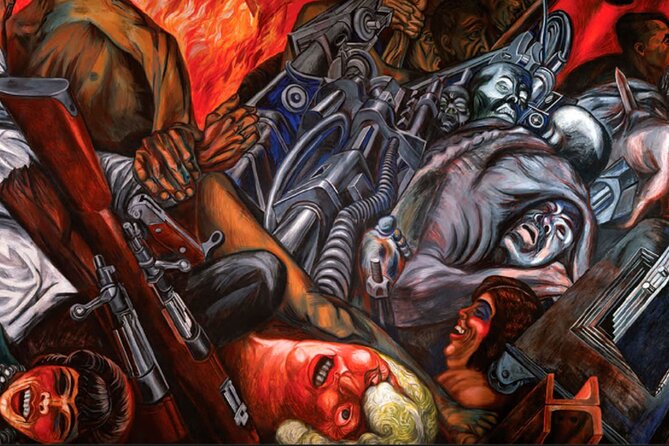
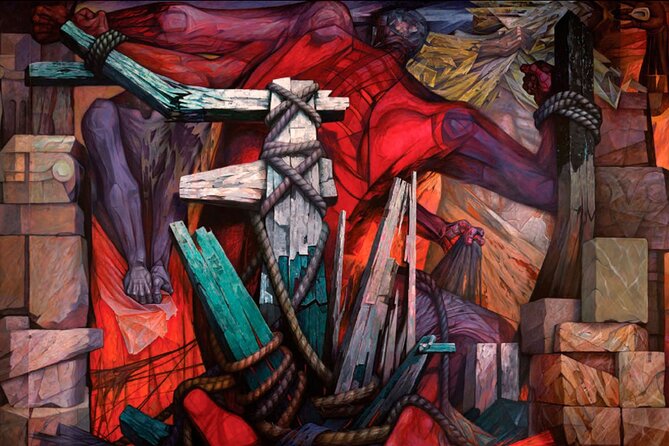
Orozco’s work can feel more severe and dramatic than Rivera’s. His scenes often carry tension, conflict, and moral weight. Rivera is known for large social narratives filled with people, movement, and historical references. Jean Charlot adds another perspective to the early development of the movement.
A good guide will help you notice the differences in line, scale, mood, and subject. You may also learn why the building itself mattered to young artists and students. The setting is not a neutral gallery. It connects art to education, public life, and the formation of a new national culture.
The hour here is long enough for a serious look, but not so long that the entire outing becomes confined to one building. You should expect to stand while listening, though the data does not specify how much seating is available.
Palacio de Bellas Artes and its 17 murals
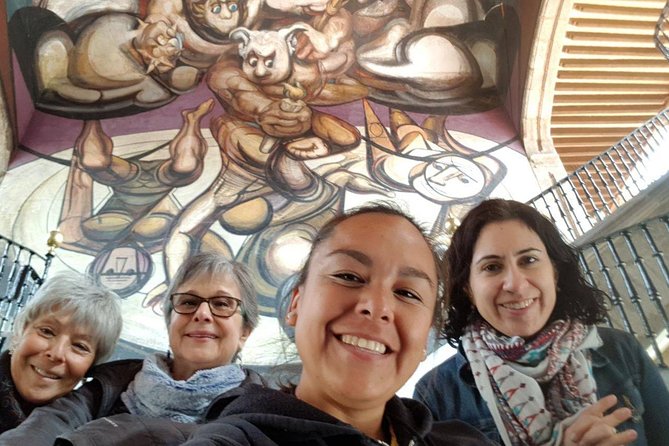
The tour ends inside the Museo del Palacio de Bellas Artes, at Av. Juárez and Eje Central Lázaro Cárdenas. This is the largest scheduled stop, with about an hour devoted to the building and its murals.
Inside are 17 murals by different artists from various periods. The collection gives you a broader view than a single-artist visit. You can see how mural painting developed over time and how later works continued, revised, or challenged earlier ideas.
This is also the stop where the tour’s historical method pays off. Bellas Artes is one of Mexico City’s most important artistic buildings, but the murals are not just decorative highlights within an impressive structure. They reflect changing ideas about the nation, labor, political authority, and the role of art in public life.
David Siqueiros is among the artists associated with the tour’s focus. Along with Rivera and Orozco, he forms the central trio of Mexican muralism. Their work differs in style and tone, but all three used art to address public questions rather than keeping it safely separate from society.
The tour ends inside the mural museum, which is convenient. You do not need to retrace your steps to the starting point. You can continue exploring the Centro Histórico afterward or make your own way to another part of the city.
A close look at the guide’s role
The guide is the main reason to choose this experience instead of visiting the buildings alone. The tour is designed for people who want more than a list of artists and dates.
Past guide names include Emilio and Emiliano. Their approach is described as friendly, clear, and serious about both art and Mexican history. Emiliano, in particular, is noted for asking participants what they see in a mural before offering his own reading. That is a smart method. It keeps you involved and reminds you that interpretation is not always a single correct answer.
The explanations also connect murals to social issues and political events. This can make the experience more moving than a standard museum tour. Some of the works address conflicts that still feel familiar, and the discussion may lead you to think about present-day politics as well as the past.
English is offered, and the guide is certified and bilingual. The comments about clear communication and strong English make this a practical choice if you want complex ideas explained without a language barrier.
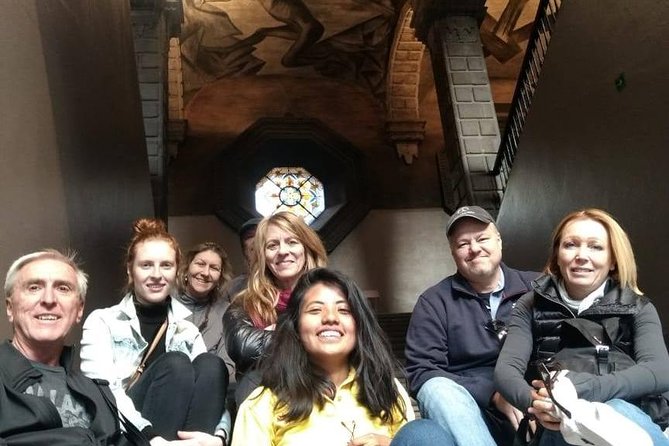
The small group matters here. With a maximum of eight people, you can ask questions without trying to interrupt a large crowd. One booking even became a private experience because only a small party joined. That is not guaranteed, but the limited group size gives you a better chance of personal attention.
Other city tours we've reviewed in Mexico City





Is $58.12 a fair price?
At $58.12 per person, this is not the cheapest way to walk around downtown. You are paying for more than transportation or a basic orientation, though. The price includes a three-and-a-half-hour guided walk, a certified bilingual guide, and entrance tickets to all museums visited.
The value is strongest if you already care about art, architecture, or Mexican political history. A good explanation can transform several impressive but confusing buildings into a connected story. You also avoid spending time deciding which murals matter and where to find them.
The price is less attractive if you prefer to move quickly, take your own route, or look at art without discussion. This is not a casual photo stop. You will spend time listening, standing, comparing works, and asking questions.
Group discounts are available, though the specific discount is not provided. Since the experience is often booked about 20 days ahead, reserve early if your dates are fixed. The small capacity can make last-minute availability uncertain.
How demanding is the walk?
The tour lasts approximately three hours and 30 minutes. You should expect a mixture of walking through downtown, standing in buildings, and pausing in front of murals.
The practical advice from the experience is clear: wear comfortable shoes. One detailed account describes the tour as lasting close to four hours, so you should leave some flexibility after the scheduled end. A thoughtful guide may spend extra time on questions or a particularly important work.
Most people can participate, and service animals are allowed. The tour is near public transportation, but transportation to the meeting point is not included. You will need to make your own way to Portal de Escribanos in the Centro Histórico.
The finish is at Palacio de Bellas Artes, not back at the start. That is an advantage if you plan to continue sightseeing in the area, but it is worth noting when planning your day.
Who should book this experience?
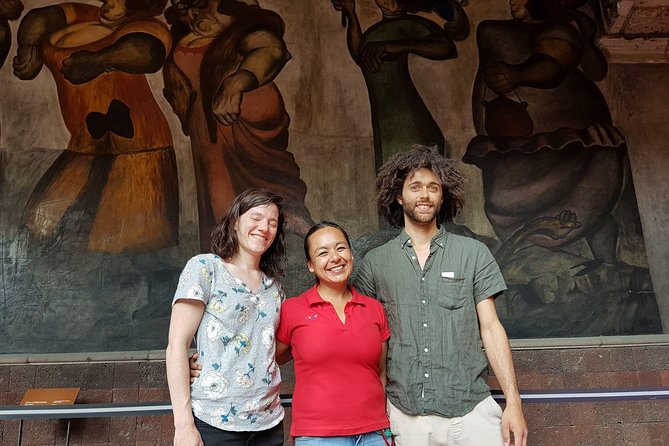
I would choose this tour if you want a crash course in Mexican muralism with enough time for real discussion. It suits solo visitors, couples, families with older children, and friends who enjoy art but do not necessarily have a formal art background.
It is especially useful early in your Mexico City visit. The murals introduce major themes in Mexican history and may help you understand other museums, monuments, and neighborhoods later in the trip.
You should also book it if you like asking questions. The small group and discussion-based approach are suited to curious participants. If you want only a quick introduction, three and a half hours may feel long.
This is not the best match for anyone with difficulty standing or walking for extended periods, since the experience includes both. The information provided says most people can participate, but it does not promise special seating, step-free access, or other mobility arrangements.
Small details that make planning easier
Confirmation arrives at booking, and free cancellation is available up to 24 hours before the start time. Cancellations or changes made less than 24 hours ahead are not accepted for a refund.
The experience is offered in English and accepts a maximum of eight people. Entrance tickets are included, while tips for the guide are optional and transportation to the meeting point is your responsibility.
If you are booking for friends or family, check the group discount option. If you want the best chance of securing a particular date, plan ahead rather than waiting until the last few days.
Should you book the mural walk?
Yes, if you want to understand what you are seeing. The murals at the Ministry of Education, San Ildefonso, and Bellas Artes are worth visiting on their own, but the political symbols, historical references, and artistic differences can be difficult to read without help.
The strongest reasons to book are the small group, included admissions, English guiding, and serious attention to meaning. The main tradeoff is time and physical effort. You will walk and stand for hours, and the discussion may run longer than the stated schedule.
For art lovers, architecture fans, and anyone interested in Mexico’s political past, this is one of the better uses of a half-day in the Centro Histórico. Bring comfortable shoes, arrive ready to look closely, and let the guide show you why these murals still demand attention.
FAQ
How long does the Muralist Art Semi Private Walking Tour last?
The tour lasts approximately three hours and 30 minutes. It may run longer if the group spends extra time discussing the murals.
What locations does the tour visit?
The experience includes the Ministry of Education, Antiguo Colegio de San Ildefonso, and Palacio de Bellas Artes.
Which muralists are included?
The tour focuses on artists including Diego Rivera, José Clemente Orozco, David Siqueiros, and Jean Charlot.
Are museum admission tickets included?
Yes. Entrance tickets to all museums visited during the tour are included in the price.
What language is the tour offered in?
The tour is offered in English and led by a certified bilingual guide.
How large is the group?
The maximum group size is eight people.
Where does the tour begin?
The meeting point is Portal de Escribanos, in Mexico City’s Centro Histórico.
Where does the tour end?
The tour ends inside the mural museum at Palacio de Bellas Artes.
Is cancellation free?
You can cancel for a full refund up to 24 hours before the experience start time. Cancellations or changes made less than 24 hours before the start time are not accepted for a refund.
More Private Tours in Mexico City



More City Tours in Mexico City
More Walking Tours in Mexico City
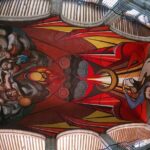
More tours in Mexico City we've reviewed





Walking Tours, compared.
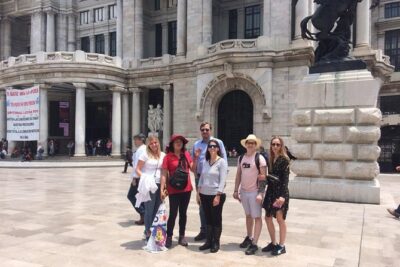 ★ 5.0Historic Downtown Walking TourFrom $263 hours (approx.)
 ★ 4.8Mexico City: Historic Downtown Walking TourFrom $263 hours
 ★ 5.0Frida Kahlo VIP [Museum Tickets Included] Walk, Markets & ChurrosFrom $833 to 4 hours (approx.)
 ★ 5.0Walking Tour of the Historic Center of Mexico City3 hours (approx.)
 ★ 5.0Anthropology Museum Private Experience Walking TourFrom $783 hours (approx.)
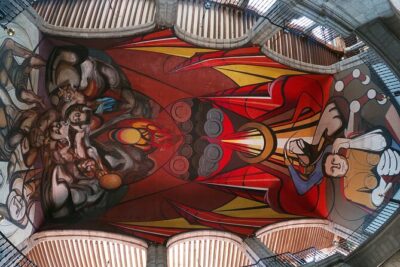 ★ 5.0Walking Tour in Mexico City for Exploring their Cultural HeritageFrom $252 to 3 hours (approx.)
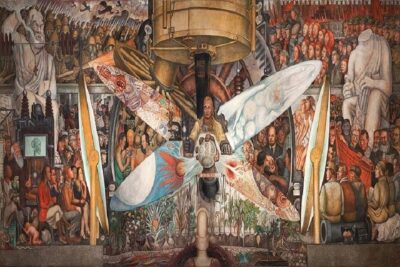 ★ 5.0Walking Tour – Impressive murals in Historical Center of Mexico CityFrom $511 to 3 hours (approx.)
 ★ 5.0Coyoacán Walking Tour: Access to Frida Kahlo Museum & TacosFrom $783 hours 30 minutes (approx.)
The lists this tour appears in