
Reviewed · WALKING TOURS
Walking Tour – Impressive murals in Historical Center of Mexico City
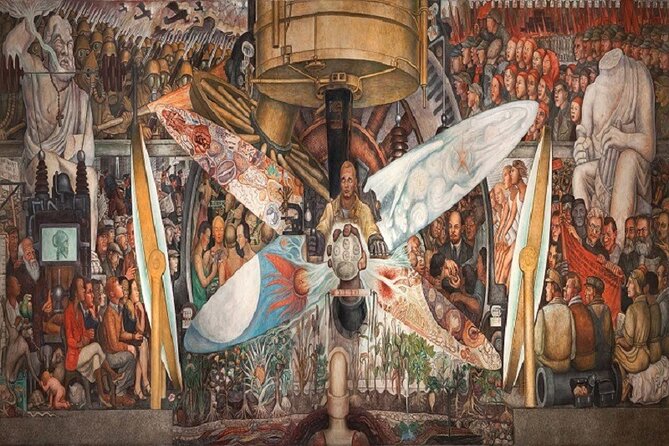
Mexico City’s mural movement makes the past impossible to ignore. On this walking tour, you’ll see Diego Rivera’s first mural, thousands of square meters of work at the Ministry of Public Education, and major paintings inside Palacio de Bellas Artes. The best guides, especially Balaam and Miguel, connect the images to indigenous stories, the Mexican Revolution, and the political debates that shaped modern Mexico.
In This Article
- Key points to know before booking
- Why Mexico City’s murals deserve a guided walk
- San Ildefonso and Diego Rivera’s La Creación
- The Ministry of Public Education’s enormous mural courtyards
- Palacio de Bellas Artes and Mexico’s mural pantheon
- The real subject is politics, identity, and public art
- How much walking should you expect?
- Is $51 a fair price?
- Who should book this mural tour?
- Should you book it?
- FAQ
- How long does the mural walking tour last?
- Where does the tour begin?
- Where does the tour finish?
- Is the tour offered in English?
- Is transportation included?
- Are museum entrances included?
- What happens if I book for Tuesday?
- How large can the group be?
- Can I cancel for a full refund?
I like two things right away: the tour gives you context you would miss on your own, and it links several important buildings in the Historic Center rather than treating each mural as an isolated picture. I also like the choice of morning or afternoon departures, which makes it easier to fit around other sightseeing.
The main caution is practical: this is a walking tour that can run close to three hours, with much of the time spent on your feet. Tuesdays require special attention because the Ministry of Public Education is closed, and one person found the group size of about a dozen too large for the price. The official maximum is 25.
Key points to know before booking
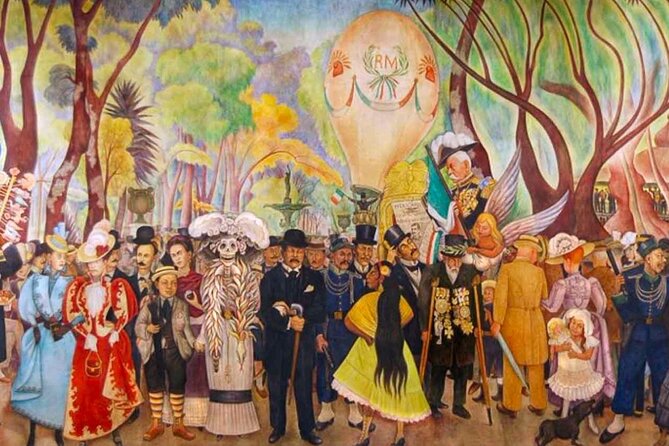
- See Diego Rivera’s first mural: La Creación fills the amphitheater at the former College of San Ildefonso, where Rivera later met Frida Kahlo.
- Walk through vast mural courtyards: The Ministry of Public Education contains more than 3,000 square meters of murals by Rivera, Jean Charlot, Amado de la Cueva, and Roberto Montenegro.
- Expect history with your art: Guides explain indigenous symbols, colonial rule, the Revolution, and the political ideas behind muralism.
- Plan around Tuesday closures: The Ministry is shut that day, so the route changes to another mural venue, including the Diego Rivera Mural Museum.
- Allow up to three hours: The route finishes at Bellas Artes and includes substantial walking between historic sites.
- Budget for the final stop: Admission to Palacio de Bellas Artes is specifically listed as not included, even though other museum entrances are included.
Why Mexico City’s murals deserve a guided walk
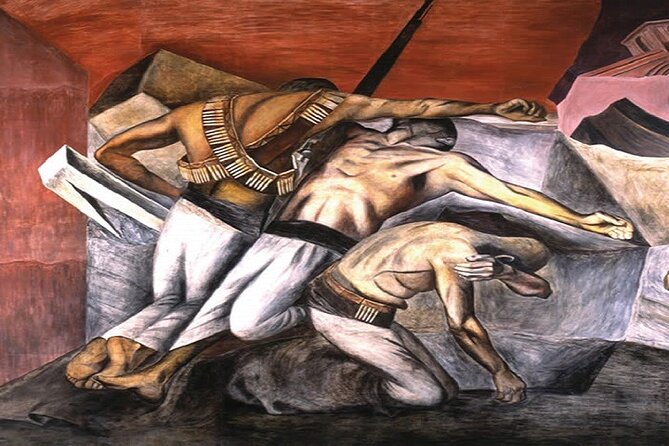
Mexico City’s great murals are not simply large paintings on old walls. They are public arguments about who belonged in the nation, who held power, and how Mexico should remember its past.
A casual visit can leave you impressed by the scale and color but unsure what you are seeing. A guide can point out the Aztec references, colonial figures, workers, political leaders, and religious symbols that give the scenes their meaning. That extra layer is the main reason I think this tour offers good value.
The tour also places the paintings in the buildings where they were made. You are not looking at isolated museum pieces under neutral lighting. You move through a former school, government courtyards, and one of Mexico City’s grandest cultural buildings. The surroundings help explain why muralism mattered: art was placed in public spaces where ordinary people could encounter it.
The English-speaking guides bring different strengths. Balaam is repeatedly praised for explaining art, politics, and Mexican history in clear, engaging terms. Miguel is described as especially strong at linking murals with architecture, archaeological remains, churches, local food, and everyday life in the Historic Center. Their personalities matter here because the subject can become dense if it is presented as a lecture.
Other walking tours we've reviewed in Mexico City

San Ildefonso and Diego Rivera’s La Creación
The tour begins at the former College of San Ildefonso, at Justo Sierra 16. This old National Preparatory School is presented as the birthplace of Mexican muralism, and the first visit lasts about 30 minutes with admission included.
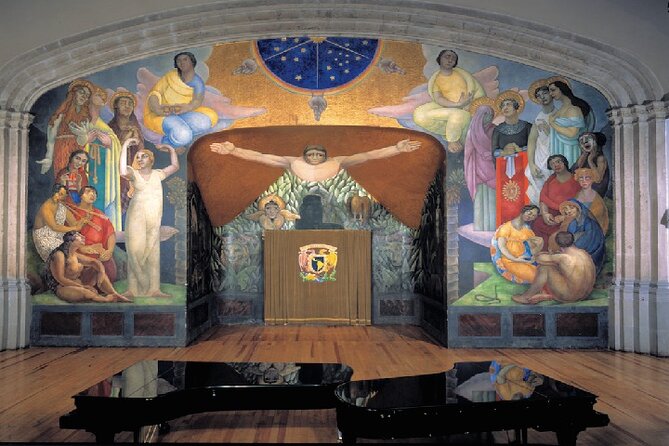
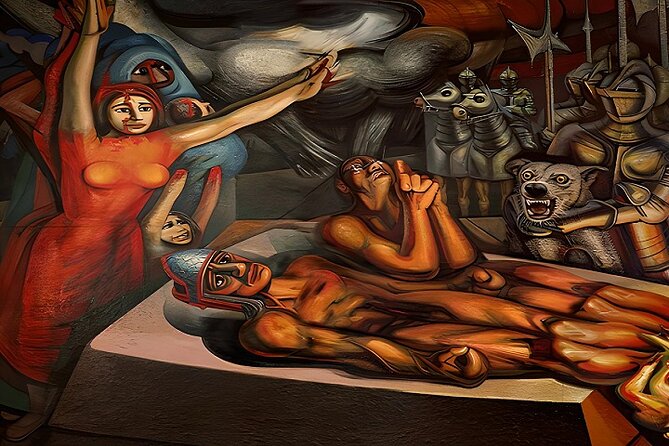
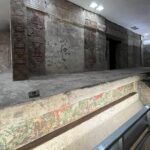
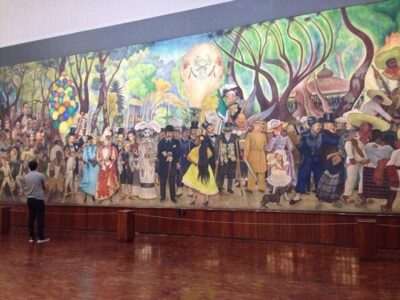
The central work is La Creación, Diego Rivera’s first mural. It decorates the college amphitheater, a fitting setting for a painting connected with education, national identity, and the making of a new Mexico. This is also where Rivera first met Frida Kahlo, then a teenager. That biographical detail adds a human thread to the visit without turning the tour into a celebrity story.
You should expect the guide to spend time explaining how Rivera’s work developed and how the mural movement grew beyond the world of galleries. The painting is more useful as a starting point than as a single masterpiece to check off a list. It introduces the idea that murals were meant to speak to a broad public.
I like beginning here because the building gives the art a sense of place. You are not starting with a quick look at a famous image and then rushing away. You begin inside a former school, where the connection between education and public art is easy to grasp.
The 30-minute visit is also a sensible length. San Ildefonso is important, but the tour needs time for the larger collections ahead. If you are especially interested in Rivera, you will likely want to ask questions here and keep notes, since later stops build on this introduction.
The Ministry of Public Education’s enormous mural courtyards
The second scheduled stop is the Ministry of Public Education, where the route spends about 40 minutes. Admission is included. This is likely the most extensive portion of the tour because the building contains more than 3,000 square meters of murals in its Fiestas and Trabajo courtyards.
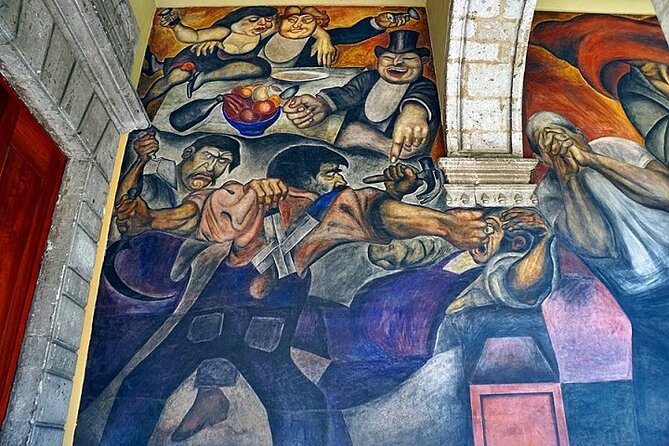
Diego Rivera is the major name, but the collection also includes Jean Charlot, Amado de la Cueva, and Roberto Montenegro. That range matters. You get to compare different artistic approaches rather than treating every mural as part of one uniform Rivera style.
The courtyards are a major reason to book the tour. The scale can be hard to appreciate from a description alone. You are surrounded by painted walls, with images unfolding as you move from one section to another. A guide helps you decide where to look and explains why particular people, objects, and scenes matter.
The site also includes two rooms dedicated to muralism, a multisensory hall with artistic and historical pieces, a library, a children’s reading room, an FCE bookstore, and a café. Not every part will receive equal attention during a three-hour route, but these extra spaces make the building more than a corridor of murals.
The Tuesday closure is the most important scheduling issue. The Ministry of Public Education is closed on Tuesdays, so the tour uses another site instead. The replacement can include the Diego Rivera Mural Museum, the mural in Alameda Park, or other significant works, depending on the day and route.
That change is not a small technical detail. If the Ministry is the main reason you want to book, choose another day. If Tuesday is your only option, the substitute route still offers serious mural content, but it will not be the same experience. One person felt the tour should not have been available on Tuesday because of this change, so check the day before paying.
Palacio de Bellas Artes and Mexico’s mural pantheon
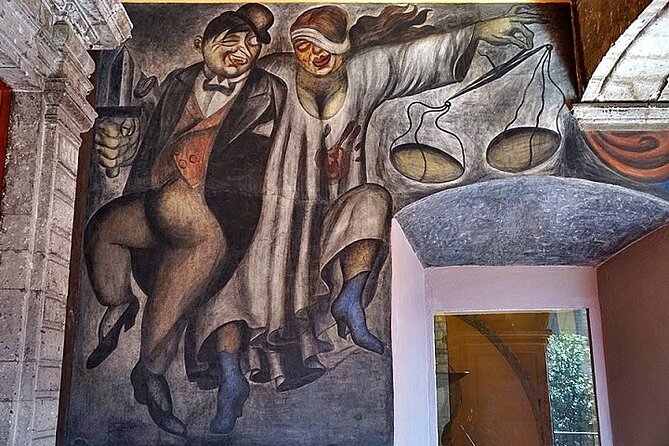
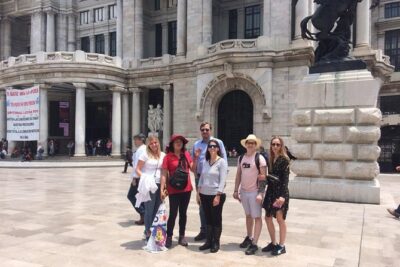
The final scheduled stop is Palacio de Bellas Artes on Avenida Juarez. The visit lasts about 40 minutes, but admission is not included in the tour information for this stop. Check the current entry arrangements when booking and keep room in your budget.
Bellas Artes is Mexico City’s major home for exhibitions, dance, theater, and other arts. Its museum opened at the same time as the building and was the first museum in Mexico. The murals inside are among its most important works, created by Mexican artists with international reputations.
This stop changes the mood of the tour. San Ildefonso feels tied to education, while the Ministry presents muralism across broad working courtyards. Bellas Artes places the art in a formal cultural setting. The building itself is part of the experience, but the mural explanations remain the reason to visit.
Guides may focus on Rivera, José Clemente Orozco, and David Alfaro Siqueiros, along with other artists connected to the movement. The exact focus can shift with the group and the day’s route. Balaam, in particular, has been noted for breaking down individual images and explaining what symbols and political ideas represent.
One of the tour’s strengths is the transition between sites. As you walk, the guide may point out architecture, churches, archaeological digs, historical squares, and local food. The route is not only a trip from one museum door to another. It gives you a running introduction to the Historic Center.
The real subject is politics, identity, and public art
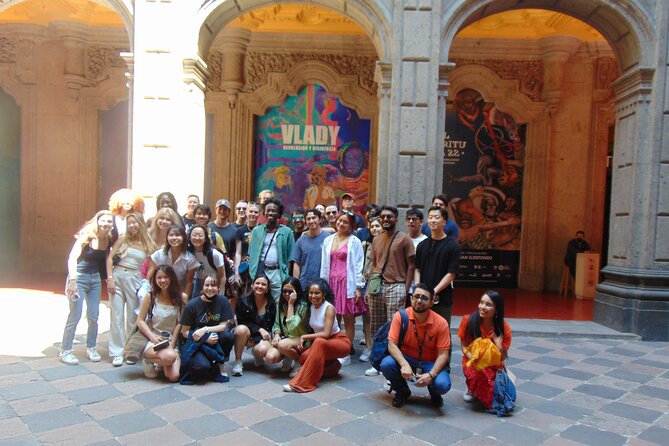
You should not book this tour expecting a light art stroll with a few dates and names. The explanations cover politics and social change, including the period from the 1920s through the 1960s.
That background helps you read Rivera and Orozco with more care. The murals address workers, indigenous identity, colonial conquest, religion, education, and power. Some images celebrate labor. Others criticize institutions or show Mexico as a country shaped by conflict.
I appreciate that the guides do not appear to keep the discussion limited to art technique. They explain how the murals grew out of a particular period in Mexican life. You may hear about Aztec origin stories, indigenous cultural themes, the Conquest, the Revolution, and the political positions of the artists.
This can be especially useful if you are new to Mexican muralism. The paintings are visually direct, but their symbols are not always easy to read. A guide can show you details that you might pass without noticing, then connect those details to larger events.
The approach also suits people who enjoy asking questions. Several guide accounts describe flexible pacing and thoughtful answers. Balaam has adjusted the route around bathroom breaks, street food, and individual interests. Miguel has adapted the emphasis for groups more interested in art, history, or local life.
Other city tours we've reviewed in Mexico City



How much walking should you expect?
The advertised duration is about one to three hours, but the strongest accounts describe nearly three hours. Plan for the longer version, especially if the guide is engaged and the group asks questions.
You will spend much of the time on your feet. Comfortable shoes are essential. The route links several buildings in the Historic Center, and some people may walk more slowly than others. One person had difficulty keeping up with the movement between sites, while another appreciated that the guide suggested an e-bike taxi to Bellas Artes when the route became tiring.
That flexibility is worth noting, but it should not replace realistic planning. If you have limited stamina, tell the guide at the beginning. The group may include people with different walking speeds, and the official maximum of 25 means the experience may feel less personal when fully booked.
The tour is near public transportation, and no transport is included. You meet at the former College of San Ildefonso and finish at Bellas Artes, so you do not return to the starting point. That makes the tour convenient if you want to continue sightseeing in the Alameda area or around the Palacio de Bellas Artes afterward.
Morning and afternoon start times are available. I would choose the time that leaves you least rushed. Since the route can stretch toward three hours, avoid placing a fixed appointment immediately afterward.
Is $51 a fair price?
At $51 per person, this is not a bargain-priced orientation walk. The value depends on how much you want to understand the murals rather than simply see them.
The price includes guide service and museum entrance tickets, though the information specifically excludes Palacio de Bellas Artes admission. Transportation and gratuity are also not included. Group discounts may be available, which could improve the value for families or larger parties.
I think the price is reasonable for an art-focused visitor who would otherwise spend time trying to interpret several large collections alone. The route covers three important settings, and a strong guide can help you understand hundreds of images in a short period.
The value is weaker if you prefer to wander silently, take your time at one or two paintings, or avoid political discussion. It may also feel high if the group reaches the maximum size. At about a dozen people, one person found the group too large for the cost, although other experiences were private or nearly private.
The guide is the deciding factor. Balaam and Miguel receive the strongest praise for passion, clear explanations, and personal attention. One person found Balaam’s English difficult at times, so if detailed verbal interpretation is central to your plans, be aware that communication can vary by guide and group.
Who should book this mural tour?
I would recommend it most strongly to:
- First-time visitors who want a useful introduction to Mexico City’s art and history
- Fans of Diego Rivera, Orozco, Siqueiros, and Mexican muralism
- People who prefer interpretation over independent museum browsing
- Families and couples who enjoy asking questions while sightseeing
- Short-stay visitors who need to see several major mural sites efficiently
- Anyone interested in how art reflects politics and national identity
You may want to skip it if you dislike walking, need a slow museum visit, or want a tour focused only on Rivera. The route covers other artists and wider Mexican history, so the experience is more than a Diego Rivera greatest-hits tour.
For the best chance of seeing the Ministry of Public Education, do not book Tuesday. Bring comfortable shoes, allow close to three hours, and confirm what admission is required at Bellas Artes. If you are traveling with a group, ask about the group discount and consider how a larger party might affect your ability to hear and ask questions.
Should you book it?
Yes, if murals are high on your Mexico City list and you want the pictures explained rather than merely photographed. The combination of San Ildefonso, the Ministry of Public Education, and Bellas Artes gives you a strong look at the movement’s scale, purpose, and major artists.
Book with care if Tuesday is your only available day or if long walks are a problem. The substitute route can still be worthwhile, but the Ministry collection is a distinct attraction. At $51, this tour earns its price through the guide’s interpretation, so request a time that suits you and go in ready to listen, ask questions, and look closely.
Free cancellation is available if you cancel at least 24 hours before the local start time. Inside that window, the amount paid is not refunded and changes are not accepted.
FAQ
How long does the mural walking tour last?
The experience is advertised as lasting about one to three hours. Plan for close to three hours if you want to allow for the full route, questions, and time between buildings.
Where does the tour begin?
The meeting point is the former College of San Ildefonso at Justo Sierra 16 in Mexico City’s Centro Histórico.
Where does the tour finish?
The tour ends at Palacio de Bellas Artes on Avenida Juarez in the Historic Center.
Is the tour offered in English?
Yes. The experience is offered in English.
Is transportation included?
No. Transportation is not included. The route is a walking tour near public transportation.
Are museum entrances included?
Guide service and museum entrance tickets are included, but admission to Palacio de Bellas Artes is specifically listed as not included.
What happens if I book for Tuesday?
The Ministry of Public Education is closed on Tuesdays. The route changes to another mural venue, including the Diego Rivera Mural Museum, depending on the day.
How large can the group be?
The maximum group size is 25 people.
Can I cancel for a full refund?
Yes. You must cancel at least 24 hours before the experience starts, based on local time. Cancellations within 24 hours are not refunded.
More Historical Tours in Mexico City
More City Tours in Mexico City
More Walking Tours in Mexico City
More tours in Mexico City we've reviewed


Walking Tours, compared.
 ★ 5.0Historic Downtown Walking TourFrom $263 hours (approx.)
 ★ 4.8Mexico City: Historic Downtown Walking TourFrom $263 hours
 ★ 5.0Frida Kahlo VIP [Museum Tickets Included] Walk, Markets & ChurrosFrom $833 to 4 hours (approx.)
 ★ 5.0Walking Tour of the Historic Center of Mexico City3 hours (approx.)
 ★ 5.0Anthropology Museum Private Experience Walking TourFrom $783 hours (approx.)
 ★ 5.0Walking Tour in Mexico City for Exploring their Cultural HeritageFrom $252 to 3 hours (approx.)
 ★ 5.0Muralist Art Semi Private Walking Tour in Mexico City DowntownFrom $583 hours 30 minutes (approx.)
 ★ 5.0Coyoacán Walking Tour: Access to Frida Kahlo Museum & TacosFrom $783 hours 30 minutes (approx.)
The lists this tour appears in