
Reviewed · CHAPULTEPEC & MUSEUM TOURS
Private Tour of Mexico City with Anthropology
Mexico City’s past comes into focus on this private half-day outing, especially inside the National Museum of Anthropology, where a good guide can explain the meaning behind major Mexica and Mesoamerican objects. I like the hotel pickup and private vehicle, and I like having an English-speaking guide who can adjust the conversation to your group. The main catch is time: four hours can feel tight once traffic and the long museum visit enter the picture.
In This Article
- Key points to know before booking
- Why this private Mexico City tour works well on a first visit
- Paseo de la Reforma and the first view of the city
- The Zócalo: Mexico City’s great central stage
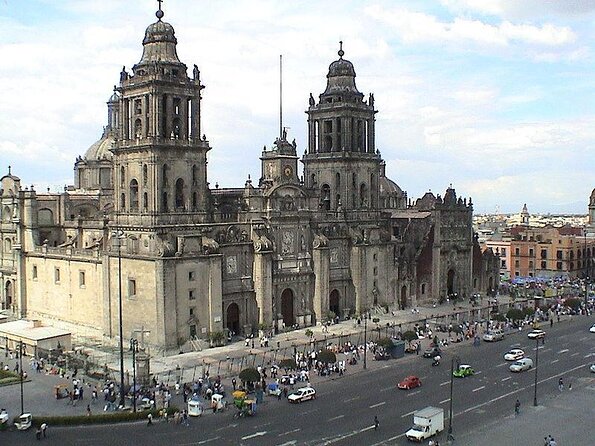
- Metropolitan Cathedral: a short but worthwhile visit
- Palacio Nacional and the story of government
- Two hours inside the National Museum of Anthropology
- Private transport, timing, and the traffic question
- The guide can shape the entire experience
- Is $229.99 per person a fair price?
- Who should book this four-hour outing?
- Should you book it?
- FAQ
- How long does the tour last?
- What locations are included?
- Is hotel pickup included?
- Is the tour private?
- Is the tour offered in English?
- Are museum tickets included?
- Is food included?
- How much time is planned for the Anthropology Museum?
- What should I wear?
- Can I cancel for a full refund?
I also like the useful first-day structure. You see the Zócalo, Metropolitan Cathedral, Palacio Nacional, Paseo de la Reforma, and Chapultepec in one sweep, while guides such as Jorge, Marta, Veronica, Sergio, and Bruno have earned strong praise for their command of Mexican history. If you want slow museum browsing or long visits inside each historic building, this is not the right pace.
Key points to know before booking
- The Anthropology Museum gets two hours: That is enough for a guided introduction, but not enough for every gallery.
- Your group stays private: The vehicle and guide are reserved for two to 12 people.
- Hotel pickup covers Mexico City lodging: Pickup is offered from hotels, Airbnb properties, and other common lodging locations.
- The Zócalo walk gives you the city’s essential setting: The square links today’s Mexico City with the former Mexica political and religious center.
- Traffic can change the balance of the day: Rain, protests, rallies, road closures, and heavy traffic may shorten walking or museum time.
- The guide matters greatly: Jorge, Marta, Veronica, Sergio, Bruno, Arturo, and Carlos are among the guides praised for clear historical explanations.
Why this private Mexico City tour works well on a first visit
Mexico City is too large to understand from a single neighborhood. This tour gives you a quick framework: the grand avenue, the central square, the colonial and national government buildings, and the museum that explains the civilizations before Spanish rule.
The private format is the biggest practical advantage. You are not joining a large coach group or waiting for strangers at every stop. With two to 12 people, you can ask questions, set the pace within reason, and keep the day suited to your own family or friends.
The included vehicle also matters. Mexico City traffic can be slow and unpredictable, so a driver who knows the routes saves you from spending the entire morning figuring out transport. Drivers named Luis, Arturo, Antonio, Lalo, Christian, and others have been praised for punctual pickups, clean vehicles, and calm driving through difficult traffic.
The tour is offered in English and includes bottled water, museum admission, a professional guide, and round-trip transport. Food and drinks beyond the water are not included, so eat before setting out or plan your meal after the tour. One long account described the experience as closer to six hours, while the advertised duration is about four, so allow some flexibility if your schedule is tight.
A few more Mexico City tours and experiences worth a look
Paseo de la Reforma and the first view of the city
The outing begins with pickup at your hotel or lodging. The route takes you along Paseo de la Reforma, one of Mexico City’s best-known avenues, with major landmarks and Chapultepec along the way.
This driving section is not a full walking stop, but it helps you see how the city is organized. Reforma connects major civic, cultural, and park areas, and the vehicle gives you a broad first look before you enter the older center.
Ask your guide questions early. Guides have different strengths and styles. Jorge and Sergio have been praised for detailed history and lively conversation, while Veronica has been singled out for explaining sites clearly and helping groups notice details they might otherwise miss. Marta has also been praised for using a small whiteboard to make names and ideas easier to follow.
If you are traveling with older relatives, the private vehicle is especially useful. One group found Sergio accommodating with elderly parents, and another praised the driver for handling traffic while the guide kept the visit moving.
The Zócalo: Mexico City’s great central stage
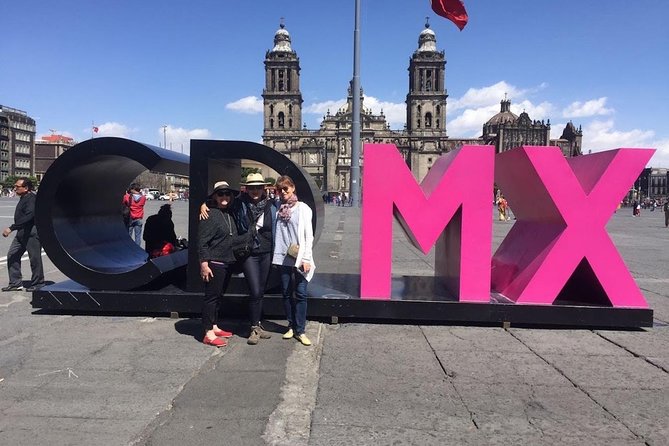
The first scheduled stop is the Zócalo, formally the Plaza de la Constitución. This huge square occupies roughly 46,800 square meters and sits in the heart of the Historic Center.
The square is important because it connects several layers of Mexico City. The Spanish conquistadors chose this area near the political and religious center of Mexico-Tenochtitlan, the Mexica capital. Today, the Zócalo is bordered by major civic and religious buildings, making it an efficient place to begin learning how the city changed over time.
You will take a walking tour through the UNESCO-listed Historic Center. Your guide can point out the setting around the square and explain how the modern city grew over the earlier Mexica center.
This is one place where the time limit matters. The walking portion is scheduled for about one hour, but that hour includes movement and explanations. You may pass important places without entering them. The tour is better at giving you context than at providing long interior visits.
The area also involves outdoor walking, often in sun. Wear comfortable clothes, use sun protection, and bring enough energy for the museum afterward. The stated fitness level is moderate, so this is not a sit-down sightseeing ride.
Metropolitan Cathedral: a short but worthwhile visit
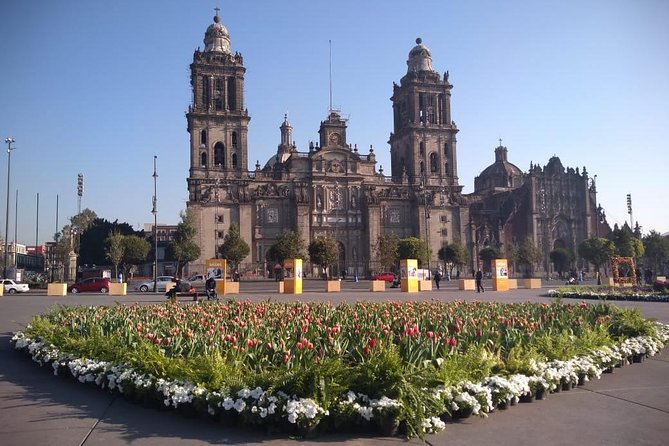
The Metropolitan Cathedral sits on the north side of the Zócalo. It is the seat of the First Archdiocese of Mexico and forms part of the Historic Center’s UNESCO designation.
The scheduled visit is about 30 minutes, and admission is free. That makes it a useful stop, but do not expect a full architectural study. One account described spending only about five minutes inside, which shows how much the actual visit can depend on traffic, walking time, guide preference, and the needs of your group.
The cathedral is most valuable when your guide explains what you are seeing. Veronica received particular praise for making the cathedral and its surrounding area enjoyable, while other guides have been noted for linking architecture to Mexico’s religious and political past.
If churches are a major interest, tell the operator or guide before departure. The itinerary is customizable in principle, but one booking account reported poor communication about a requested change. It is wise to confirm any special plan before the 24-hour cancellation cutoff rather than assume it will be accepted on the day.
Palacio Nacional and the story of government
Palacio Nacional occupies the east side of the Zócalo. Its construction began in 1522 as a residence for Hernán Cortés, on part of the former palace of Moctezuma Xocoyotzin. The Spanish crown later acquired it for the viceroys and colonial institutions.
The building later served different Mexican governments and, for much of the 19th century, housed executive, legislative, and judicial functions. It was also a residence for rulers between 1822 and 1884 and remained a presidential office until 1968, with presidential functions returning in later periods.
The scheduled time here is about 30 minutes, with no admission fee listed. Again, think of this as an exterior and context stop unless your guide confirms an interior visit. The value is in understanding why this building matters and how the political center of Mexico City changed after the Spanish conquest and Mexican independence.
A guide who can explain the building in plain language makes a real difference. The strongest accounts repeatedly praise guides for explaining politics, architecture, religion, and archaeology without leaving the group to stare at a grand facade with no context.
Other city tours we've reviewed in Mexico City



Two hours inside the National Museum of Anthropology
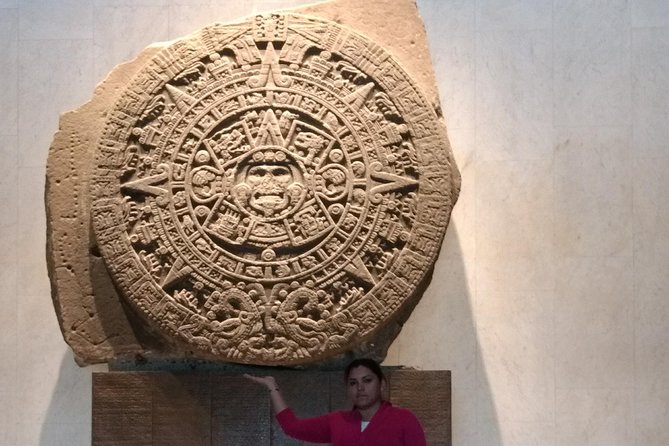
The museum is the centerpiece of the tour. Admission is included, and the planned visit lasts about two hours.
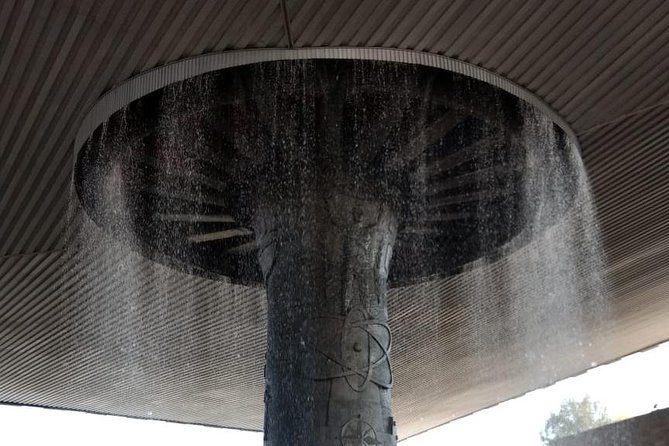
The National Museum of Anthropology was built in Chapultepec between 1963 and 1964 and opened in 1964 under President Adolfo López Mateos. Its purpose is to present the archaeological legacy of Mesoamerica and the cultural diversity of Mexico’s peoples.
The collection is large. Two hours is enough for a guided route through important rooms and major objects, but not enough to see everything at a relaxed pace. One useful way to approach the visit is to let your guide choose the key pieces instead of trying to cover every gallery.
This is where expert commentary earns its keep. Jorge has been praised for explaining artifacts with the feel of a history professor. Marta was valued for helping a solo visitor navigate the museum, which can otherwise feel overwhelming. Sergio was described as funny, energetic, and well versed in anthropology, while Carlos was praised for explaining Mexican and Mayan history.
You should expect a focused introduction rather than a quiet afternoon of museum study. If you love archaeology, allow extra time after the tour if your schedule permits. One couple said they could have spent two more hours inside. If your group includes teens or several age groups, tell the guide what keeps everyone interested. Arturo was praised for holding the attention of grandparents and teenagers by choosing highlights and adjusting the pace.
The museum visit also gives the earlier city stops more meaning. The Zócalo is not just a square, and Palacio Nacional is not just a government building. The museum helps you place Mexico City’s Spanish colonial and modern layers beside the civilizations that came before them.
Private transport, timing, and the traffic question
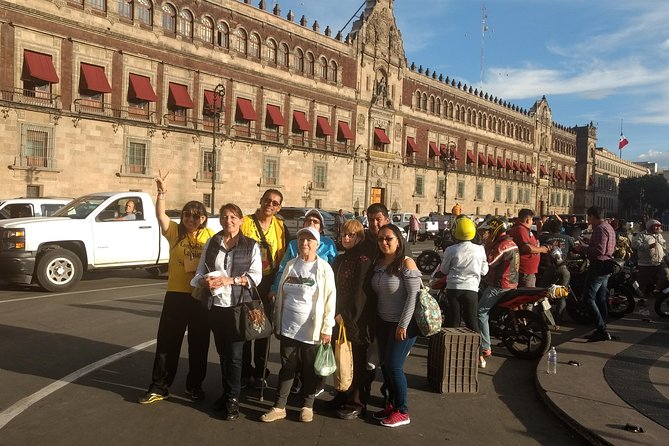
The driver is separate from the guide, which is helpful in a city where parking and traffic can consume precious minutes. Pickup and drop-off are included, and coverage is offered at hotels, Airbnb properties, and common lodging places throughout Mexico City.
The vehicle lets you cover distances that would be awkward on foot. It also provides a break from outdoor walking. Bottled water is included, but meals are not.
Traffic is the main variable. Rain, demonstrations, sit-ins, rallies, and road closures can affect the route. If the city is moving slowly, you may spend a larger share of the four hours in the vehicle and less time inside the cathedral or historic buildings.
For that reason, I would not schedule an important flight, dinner reservation, or timed attraction immediately afterward. The tour is advertised at about four hours, but some outings may run longer. Confirm pickup details in advance, too. Most accounts describe punctual service, but one person experienced weak communication before the day and did not receive direct driver contact until pickup.
The guide can shape the entire experience
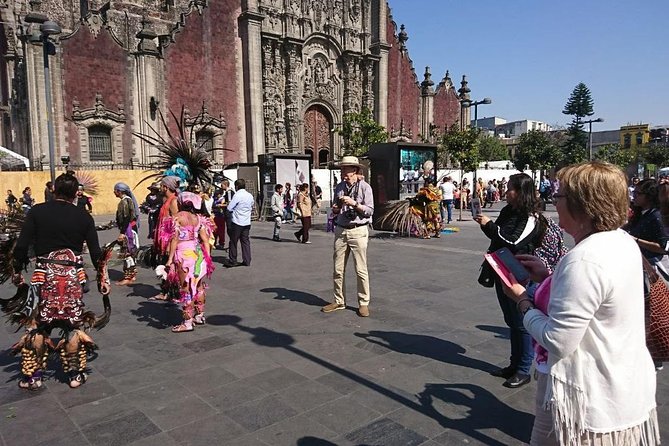
The guide is more important here than the vehicle. The museum contains too much material for a casual walk, and the historic center has too many layers for a quick look without explanation.
The most praised guides include Jorge, Marta, Veronica, Sergio, Bruno, Arturo, and Carlos. Their strengths vary. Jorge is associated with detailed historical explanations, Marta with clear teaching and conversation, Veronica with flexibility and practical help, and Sergio with humor and strong English.
There was also a report of a guide whose English was not strong enough for the group. That appears to be an exception, but it is a fair reason to confirm that your assigned guide speaks English comfortably. The tour is offered in English, yet individual communication can still vary.
One unhappy account also described a guide who gave too much academic detail and did not adjust the schedule or style. Another raised an awkward lunch situation. Since food is not included, the simplest plan is to handle meals independently unless you clearly agree on arrangements with the guide.
Is $229.99 per person a fair price?
At $229.99 per person, this is not a budget city sightseeing tour. The value depends heavily on group size.
For two people, the cost is high, but you receive private transport, hotel pickup and drop-off, a professional guide, bottled water, and museum tickets. You are also paying for the time saved by having a driver manage the city rather than arranging separate taxis or public transport.
For a group of four to 12, the price becomes easier to justify because the private vehicle and guide cost are spread across more people. Families and small groups may find this especially useful, since everyone can stay together and ask questions.
The price makes less sense if you want only the museum or only the Historic Center. The tour tries to combine both, and that creates its central weakness: travel time can reduce the depth of each stop. If you have a full day, separate museum and city-center visits may give you more time inside each place.
Who should book this four-hour outing?
I would choose this tour for a first visit, a family group, or anyone who wants a broad introduction without managing Mexico City transport. It also suits people who prefer history explained aloud rather than reading every museum label.
It is a good fit for groups with mixed interests. One person can ask about archaeology, another about architecture, and another about modern Mexican life, all within a private setting.
I would hesitate if you are a serious museum visitor with only one day and want to study the collection at length. I would also hesitate if you dislike a brisk schedule or need firm timing. The tour covers a lot, but it cannot give every stop equal attention.
Free cancellation is available up to 24 hours before the start time. Changes or cancellations inside that window are not accepted for a refund. Children must be accompanied by an adult, and comfortable clothing is recommended.
Should you book it?
Book it if you want a private introduction to Mexico City with the Anthropology Museum as the main prize. The combination of hotel transport, the Zócalo, cathedral, Palacio Nacional, and a guided museum route gives you useful orientation in a short period.
Before paying, confirm your pickup details, ask about the assigned guide’s English, and decide if four hours is enough for your interests. If your group wants depth, request extra museum time or book separate visits. If you want the city’s major themes explained efficiently, this tour is a strong choice, especially for four or more people sharing the cost.
FAQ
How long does the tour last?
The advertised duration is approximately four hours. Some outings may take closer to six hours, so keep your schedule flexible.
What locations are included?
The planned stops are the Zócalo, the National Museum of Anthropology, the Metropolitan Cathedral, and Palacio Nacional. The route also includes driving along Paseo de la Reforma, with Chapultepec seen along the way.
Is hotel pickup included?
Yes. Round-trip hotel pickup and drop-off are included, with coverage at hotels, Airbnb properties, and common lodging locations throughout Mexico City.
Is the tour private?
Yes. Only your own group participates. The tour accommodates groups of two to 12 passengers.
Is the tour offered in English?
Yes. English is listed as the language offered.
Are museum tickets included?
Yes. Admission to the National Museum of Anthropology is included.
Is food included?
No. Food and drinks are not included. Bottled water is provided.
How much time is planned for the Anthropology Museum?
About two hours are scheduled inside the museum. That is enough for selected highlights, but the museum is large and you may want extra time if archaeology is a major interest.
What should I wear?
Wear comfortable clothes and be prepared for moderate physical activity. The tour includes outdoor walking, so sun protection is useful.
Can I cancel for a full refund?
Yes, if you cancel at least 24 hours before the experience start time. Cancellations or changes made less than 24 hours in advance are not accepted for a refund.
More Private Tours in Mexico City



More City Tours in Mexico City
More Chapultepec & Museum Tours in Mexico City


More tours in Mexico City we've reviewed





Chapultepec & Museum Tours, compared.
 ★ 4.4CDMX: Xochimilco, Coyoacan, Frida Kahlo Museum & Murals TourFrom $89
 ★ 4.5Chapultepec Castle & Anthropology Museum TourFrom $795 hours (approx.)
 ★ 5.0Frida Kahlo VIP [Museum Tickets Included] Bike, Markets & ChurrosFrom $834 hours (approx.)
 ★ 4.5Anthropology Museum Guided TourFrom $392 hours 30 minutes (approx.)
 ★ 5.0Frida Kahlo VIP [Museum Tickets Included] Walk, Markets & ChurrosFrom $833 to 4 hours (approx.)
 ★ 5.0EXCLUSIVE TOUR Frida Kahlo Museum – SMALL GROUPSFrom $862 hours (approx.)
 ★ 4.4Mexico City: Anthropology Museum Guided VisitFrom $672.5 hours
 ★ 4.5Mexico City: Frida Kahlo Museum Entry Ticket w/Digital GuideFrom $34
The lists this tour appears in