
Reviewed · HISTORICAL TOURS
Architecture and History of Mexico City – Small Groups
Mexico City’s center makes far more sense when someone connects its buildings, materials, art, and politics. This small-group walk with Raul moves from Torre Latinoamericana to the Zócalo, showing how Mexica, Spanish colonial, 19th-century, and modern Mexico overlap in a compact part of town. I especially like the House of Tiles balcony stop and the chance to step into the Atrium of the Temple of San Francisco.
In This Article
- Key points to know before you book
- Start at Torre Latinoamericana, where Mexico City comes into focus
- San Francisco and the materials beneath the city
- The House of Tiles, art, balconies, and three centuries of change
- Bellas Artes and the politics behind the grand buildings
- Palacio Postal, a short look at early 20th-century design
- Plaza Tolsá and an eclectic view of the city
- Templo Mayor and the pre-Spanish foundations of the center
- Finish in the Zócalo with room for questions
- What Raul’s guiding style adds
- Price, pace, and practical value
- Who should take this Mexico City walk?
- Should you book it?
- FAQ
- How long does the Architecture and History of Mexico City tour last?
- Where does the tour begin?
- Where does the tour finish?
- How many people can join the group?
- Is transportation included?
- Is admission to Palacio de Bellas Artes included?
- What happens if bad weather cancels the experience?
I also like that you can ask questions throughout, rather than wait for a speech to end. Raul’s warm, thorough style has earned strong praise, and his explanations reach beyond façades into mural art, symbolism, sociology, and the city’s pre-Spanish foundations. The main consideration is pace: three hours on foot, with several stops, calls for decent fitness and comfortable shoes. Admission to Palacio de Bellas Artes is not included.
Key points to know before you book
- A six-person maximum keeps the walk personal: You should have room to ask questions and hear the guide clearly.
- Raul gives the city a connected story: Expect more than dates and building names, with links between architecture, politics, art, and culture.
- The route covers major Historic Center landmarks: Torre Latinoamericana, San Francisco, the House of Tiles, Bellas Artes, Palacio Postal, Plaza Tolsá, Templo Mayor, and the Zócalo.
- The House of Tiles offers more than a quick photograph: You use its balconies to view nearby buildings and examine a notable work of art.
- The tour is useful at the start of a Mexico City visit: Its background on pre-Spanish and later Mexico can help you make better sense of museums and monuments afterward.
- Bring energy for a three-hour walk: Transportation is not private, and travel time is already part of the stated duration.
Start at Torre Latinoamericana, where Mexico City comes into focus
The meeting point is Torre Latinoamericana, at Eje Central Lázaro Cárdenas 2 in the Centro Histórico. This is a smart place to begin because the surrounding streets put several eras of Mexico City in view at once.
The opening half hour is not simply a photo stop. It sets up the central idea of the walk: Mexico City is built in layers. Raul uses this corner to explain how the city changed over time and how different architectural choices reflect different periods of Mexican life.
You can expect a guide-led discussion rather than a visit to an observation deck. The listed stop has no admission charge, and the focus is on the street-level setting and the buildings around it. If this is your first activity in the city, the orientation is useful. One particularly good reason to schedule it early is that the historical framework can help you understand later visits to places such as the National Museum of Anthropology.
Other city tours we've reviewed in Mexico City


San Francisco and the materials beneath the city
The walk continues to the Atrium of the Temple of San Francisco, with about 25 minutes devoted to the site. Here the subject shifts toward construction materials and the historical events that shaped Mexico.
That may sound less dramatic than a grand palace, but it is one of the more useful parts of the route. Buildings are not just decoration. Their stone, layout, and construction methods tell you about available resources, religious power, colonial change, and the practical work of building a city.
The atrium gives Raul a place to explain those connections in a physical setting. You are not only hearing about events in the abstract. You are looking at a building that carries evidence of those changes. The stop is free, though the experience remains dependent on what can be seen and accessed during the visit.
The House of Tiles, art, balconies, and three centuries of change
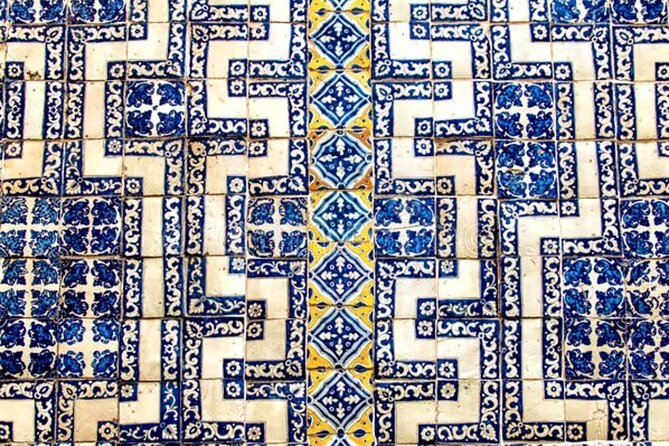
The House of Tiles is one of the tour’s most distinctive stops. You spend around 25 minutes examining a work of art inside the building, then use its balconies to look toward other structures in the center.
That balcony view matters. From the street, you often see one façade at a time. From above, even briefly, you can compare rooflines, colors, materials, and the way buildings sit beside one another. Raul uses the setting to trace the building’s evolution across almost 300 years, giving you a clearer sense of how the Historic Center changed without losing every older layer.
The art discussion also adds welcome depth. The tour does not treat the House of Tiles as a pretty exterior alone. Raul has been praised for explaining mural art and symbolic figures such as griffins and mermaids, details that can otherwise pass unnoticed.
This is a good example of the tour’s value. You do not need to be an architecture specialist to enjoy it. You simply need to look closely, then let the guide explain why a detail matters.
Bellas Artes and the politics behind the grand buildings
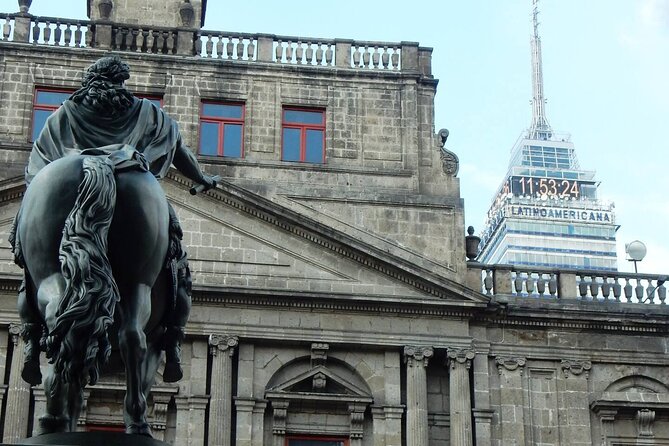
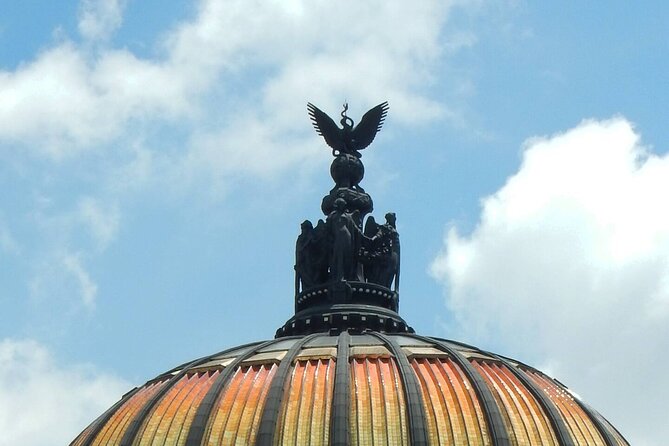
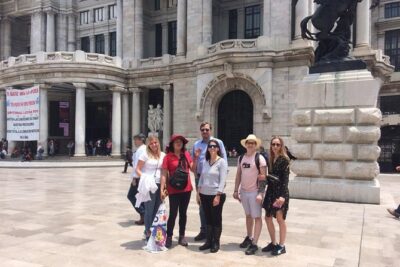
The route reaches Palacio de Bellas Artes for about 20 minutes. This is a major architectural and artistic landmark, but the visit is important for another reason: Raul places the building and its neighbors within their political and artistic setting.
That approach helps prevent the usual quick-stop problem. You can take a photograph of Bellas Artes in seconds, but understanding why it looks the way it does takes longer. The discussion covers the historical, political, and artistic conditions surrounding its creation.
Keep the admission detail in mind. Entry to Palacio de Bellas Artes is not included in the tour price, so this stop should be understood as a guided visit to the area and building rather than a bundled museum visit. The supplied schedule gives the stop 20 minutes, which is enough for context but not a full museum visit.
If you want to see the interior collections or spend serious time with the murals, you will need to arrange that separately. The walk gives you a foundation, then lets you decide which sites deserve a longer return visit.
Palacio Postal, a short look at early 20th-century design
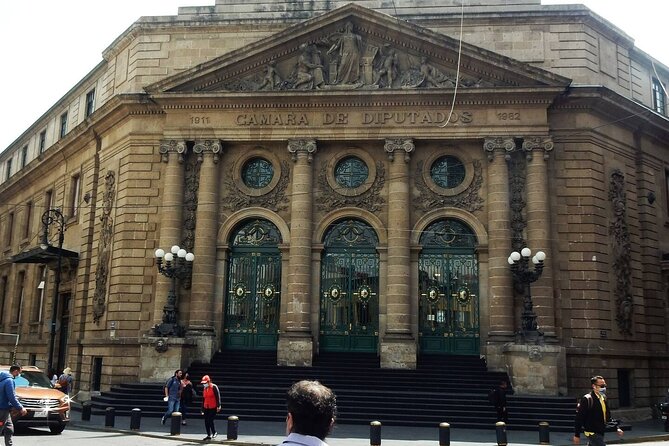
Palacio Postal receives about 20 minutes. It is an ornate post office from the beginning of the 20th century, and the group may visit inside depending on the time of day.
That qualification is worth noting. Interior access is not guaranteed, so you should not book the walk solely for an indoor visit. Still, the building gives the tour a useful change of mood. After colonial religious architecture and the artistic setting around Bellas Artes, Palacio Postal shows a later vision of civic style and public service.
The stop is free. If the timing allows entry, you can look at the interior as part of the walk. If not, Raul can still explain the building from the surrounding area. The flexible approach keeps the tour moving, though anyone wanting a detailed architectural study of the post office may find 20 minutes brief.
Other historical tours in Mexico City





Plaza Tolsá and an eclectic view of the city
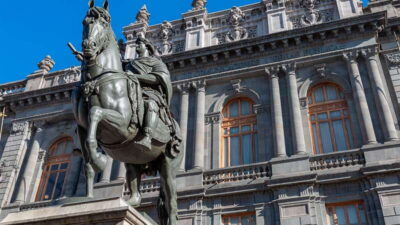
At Plaza Tolsá, the group spends another 20 minutes examining the buildings around the statue of Charles IV of Spain. This is where the route broadens from single monuments to the character of an entire urban space.
The plaza brings together different architectural styles, making it a useful place to discuss the city’s eclectic design. Rather than presenting Mexico City as one fixed style, Raul shows how its appearance developed through several periods and influences.
The statue also gives the discussion a political edge. Its presence provides a way to consider Spanish rule and the changing meaning of public monuments. You are not just looking at an open square. You are considering who was honored, how public spaces were shaped, and how later generations view those choices.
This stop may appeal most to you if you enjoy connections between architecture and society. It is less about entering a single famous building and more about reading the square as a historical document.
Templo Mayor and the pre-Spanish foundations of the center
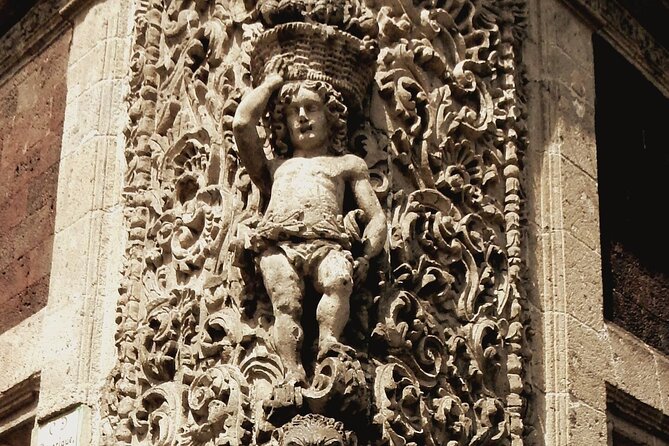
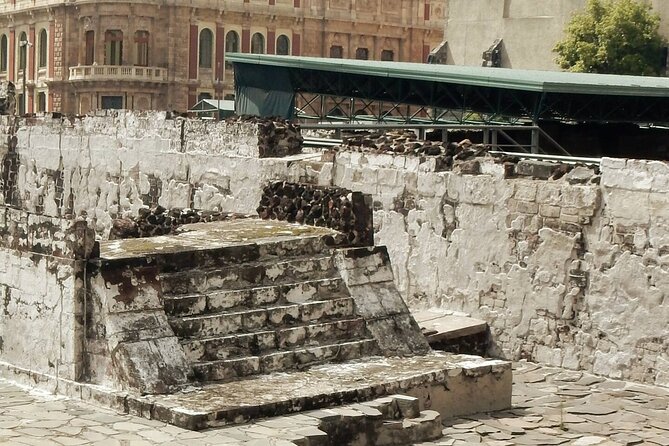
Before the final stop, the route visits the archaeological site at Museo del Templo Mayor. The scheduled time is about 20 minutes.
This is an important point in the walk because it brings the story back to the city’s Mexica foundations. The center of Mexico City is not only colonial and modern. Beneath and beside its later buildings are traces of an older capital and a civilization that shaped the region long before Spanish rule.
The limited time means you should think of this as an introduction, not a full museum visit. If archaeology is a main interest, you may want to return with more time. Even a short stop, though, helps connect the earlier discussion of Spanish buildings with the older city below them.
The strongest part of Raul’s approach is the way he links pre-Spanish and post-Spanish Mexico instead of treating them as separate subjects. That broad view is especially helpful before visiting other museums and archaeological sites.
Finish in the Zócalo with room for questions
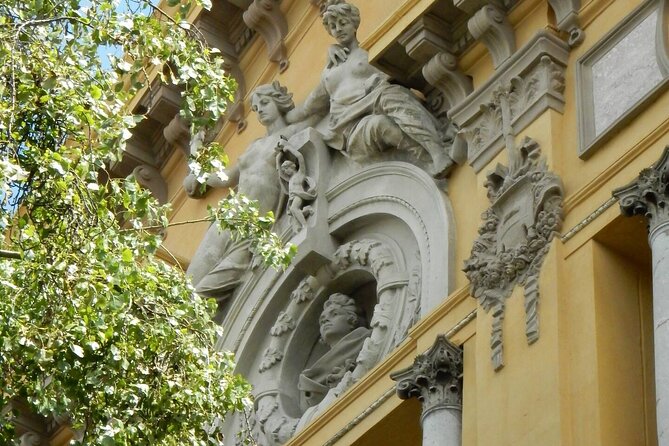
The walk ends at Constitution Plaza, better known as the Zócalo, Mexico City’s main square. The scheduled time is about 20 minutes, giving Raul a chance to bring the earlier stories together.
The ending works because the Zócalo gathers many of the themes introduced along the way: political power, religion, architecture, public space, and the city’s older foundations. You finish not with one isolated monument, but with a way to read the center as a series of overlapping chapters.
Raul also uses this time for questions and recommendations for the rest of your visit, or for a future trip to Mexico City. That can be very useful if you take the walk near the start of your stay. You can ask about museums, neighborhoods, or which landmarks deserve a longer visit.
The endpoint is convenient for continuing your day, but you will need to arrange your own transport afterward. No private transportation is included.
What Raul’s guiding style adds
The guide makes a major difference here. Raul has been praised for being warm, engaging, and generous with his time, while also explaining architecture in a clear way. His strongest skill appears to be connection: he links buildings to political events, art movements, social change, and the city’s older foundations.
You should expect a thorough walk rather than a rapid checklist of sights. The route has eight stops, but the purpose is not to rush through all eight. It is to use them as examples of how Mexico City developed.
Several details make the experience more memorable:
- Mural art is discussed in its wider setting, not treated as decoration alone.
- Mythical figures such as griffins and mermaids become clues to a building’s artistic language.
- Architecture is tied to sociology and politics, not only dates and styles.
- The guide encourages questions and can offer ideas for the rest of your visit.
- The small group, capped at six, makes a long explanation easier to follow.
This style suits you if you like asking why a building looks the way it does. It may be less suitable if you prefer a quick photo walk with little commentary.
Price, pace, and practical value
At $83.59 per person, this is not the cheapest way to see the Historic Center. The value depends on how much you want from a guide. You are paying for a three to three-and-a-half-hour walking experience, a maximum group of six, bottled water, and a connected explanation of the city’s architecture and past.
The small group is important. With six people or fewer, you should have a better chance to hear Raul, ask questions, and pause when a detail catches your attention. A larger group might cost less, but it would likely feel less personal.
The price does not include private transportation. That is not a serious issue for this route because the listed stops are in the central area and the experience is built around walking, but you should still plan your journey to Torre Latinoamericana and your onward plans from the Zócalo.
The duration is another practical point. Three hours can pass quickly when the guide is explaining several centuries of change, but it is still a substantial time on your feet. Wear comfortable shoes and arrive ready for a moderate level of walking. Transportation or travel time connected with the route is already counted in the total duration.
The tour requires good weather. It is also non-refundable and cannot be changed for personal reasons, so check the forecast before booking. If poor weather forces cancellation, you will be offered another date or a full refund.
Who should take this Mexico City walk?
I would recommend it most strongly for a first or early visit to Mexico City. The route gives you a useful framework before you spend more time at museums, churches, archaeological sites, and major public buildings.
It is also a good match for:
- You enjoy architecture but want historical context with it.
- You prefer a small group to a large sightseeing crowd.
- You like asking questions during a tour.
- You want a guide who connects art, politics, society, and buildings.
- You have moderate physical fitness and are comfortable walking for several hours.
- You want to finish near the Zócalo, where you can continue exploring on your own.
You may want to skip it if you dislike detailed commentary, need a short and highly relaxed outing, or want extended interior visits at each attraction. The schedule gives most stops 20 to 30 minutes, so the experience offers breadth and explanation rather than long museum sessions.
Should you book it?
Book this walk if you want Mexico City’s Historic Center to feel like a connected story instead of a row of attractive buildings. Raul’s strongest contribution is his ability to explain why the architecture matters, from Mexica foundations and colonial construction to mural art and early 20th-century civic design.
I would take it near the start of a Mexico City trip, especially if you plan to visit the Anthropology Museum or other major cultural sites afterward. The small group, clear route, and time for questions make the $83.59 price reasonable for a focused introduction, though you should budget separately for Bellas Artes admission and accept that the Palacio Postal interior depends on the time of day.
FAQ
How long does the Architecture and History of Mexico City tour last?
The experience lasts approximately three to three and a half hours. Travel time connected with the route is already included in the total duration.
Where does the tour begin?
It begins at Torre Latinoamericana, Eje Central Lázaro Cárdenas 2, in Mexico City’s Centro Histórico.
Where does the tour finish?
The walk finishes at Constitution Plaza, the Zócalo, in the Historic Center.
How many people can join the group?
The maximum group size is six travelers.
Is transportation included?
Private transportation is not included. The experience is a walking tour, and the listed travel time is already part of its total duration.
Is admission to Palacio de Bellas Artes included?
No. Admission to Palacio de Bellas Artes is not included in the tour price.
What happens if bad weather cancels the experience?
If poor weather causes the tour to be canceled, you will be offered a different date or a full refund. The experience is otherwise non-refundable and cannot be changed for personal reasons.
More Historical Tours in Mexico City
More City Tours in Mexico City


More tours in Mexico City we've reviewed






Historical Tours, compared.
 ★ 5.0Historic Downtown Walking TourFrom $263 hours (approx.)
 ★ 5.0Historic Center Food Tour in Mexico CityFrom $1155 hours (approx.)
 ★ 4.8Mexico City: Historic Downtown Walking TourFrom $263 hours
 ★ 5.0Walking Tour of the Historic Center of Mexico City3 hours (approx.)
 ★ 5.0Mexico City Historical Centre Food Tour with 7 Authentic TastingsFrom $653 hours (approx.)
 ★ 5.0Walking Tour in Mexico City for Exploring their Cultural HeritageFrom $252 to 3 hours (approx.)
 ★ 5.0Walking Tour – Impressive murals in Historical Center of Mexico CityFrom $511 to 3 hours (approx.)
 ★ 4.5Mexico City: Guided walking tour through the most historic parts of the city.From $303 hours
The lists this tour appears in