
Reviewed · WALKING TOURS
Mexico City: Guided walking tour through the most historic parts of the city.
Mexico City’s historic center is best understood on foot, where an Aztec temple, a Spanish cathedral, grand republican buildings, and ordinary street life all occupy the same few blocks. This three-hour walk connects those layers in a clear route from the Zócalo to the Palace of Fine Arts, with guides such as Areli, Oscar, Laura, and Alexia bringing the stories to life.
In This Article
- Five things to know before you go
- Why this walk makes sense for a first day in Mexico City
- Meeting at the Metropolitan Cathedral
- The Zócalo and the Metropolitan Cathedral
- Templo Mayor and the Aztec capital beneath the city
- Plaza de Santo Domingo and the colonial city
- Palacio de Correos and the city of grand interiors
- Casa de los Azulejos and everyday Mexico City
- Finishing at the Palace of Fine Arts
- What the guides add to the route
- Pace, group size, and comfort
- Is $30 a fair price?
- Who should book this Mexico City walking tour?
- My verdict
- FAQ
- Where does the Mexico City walking tour begin?
- Where does the tour finish?
- How long does the walking tour last?
- What languages are available?
- Is food included in the $30 price?
- Are entrance fees included?
- What should I bring?
- Does the tour operate in bad weather?
- Can wheelchair users join the tour?
- Can I cancel for a full refund?
I like the way the tour covers three major eras of Mexican history instead of treating the center as a parade of pretty buildings. I also like the practical side: guides explain how to choose street food, use public transportation, and find less obvious corners. The main consideration is the amount of standing at the opening stops, and the tour is not suitable for wheelchair users.
Five things to know before you go
- Three hours, one useful introduction: The route gives you a solid first look at central Mexico City without taking up an entire day.
- The opening history lesson is detailed: Expect substantial explanations at the Zócalo and cathedral before the walk gets moving.
- Guides add local advice: Food stalls, street habits, transport, photo spots, and places to continue exploring are part of the experience.
- The route ends near major museums and landmarks: Finishing at the Palace of Fine Arts makes it easy to continue sightseeing afterward.
- Bring cash and sun protection: Food is not included, and the walk continues in rain or shine.
Why this walk makes sense for a first day in Mexico City
The historic center can feel confusing at first. The streets are full of churches, government buildings, shops, plazas, ruins, and layers of construction from different centuries. Without context, you may see a grand cathedral beside an excavation and miss the reason those two places belong in the same story.
This tour gives you a framework. You begin with Mexico-Tenochtitlan, move through the Spanish viceroyalty, and then follow the city into the republican era. That sequence helps you read the buildings rather than simply photograph them.
The guides also connect major events to people. Hernán Cortés, Moctezuma, Diego Rivera, Pancho Villa, Emiliano Zapata, and Porfirio Díaz all enter the story, along with women who shaped Mexican life and culture. The best guides, including Areli and Oscar, have been praised for answering questions beyond the basic facts. That matters because Mexico City’s story is not tidy. It involves conquest, religion, politics, art, social change, and the daily work of millions of people.
The experience costs $30 per person. That is fair value if you want a guide to organize the center’s major sights and give you useful advice for the rest of your stay. You are paying for the interpretation, not admission to attractions. Entrance fees, food, drinks, and transport to the meeting point are extra.
Other walking tours we've reviewed in Mexico City



Meeting at the Metropolitan Cathedral
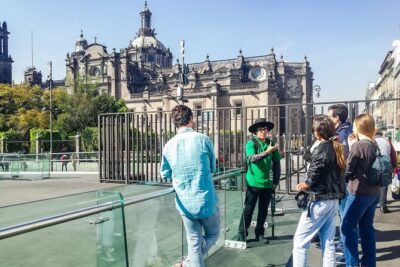
The meeting point is outside the main entrance of the Metropolitan Cathedral, facing the Zócalo and its large national flag. Look for a guide in a green uniform with a green umbrella. This detail is worth remembering because the cathedral frontage can be busy.
Allow at least an hour to reach the meeting point. The tour does not include transport, and Mexico City traffic can turn a short journey into a slow one. Arriving early also gives you a moment to look across the Zócalo before the guide begins.
Wear comfortable shoes. This is a real walking tour, not a short stroll between bus stops. Sunglasses, a hat, sunscreen, weather-appropriate clothing, and some cash are sensible. The tour operates in all weather, so a light rain layer can be useful even when the morning looks clear.
The tour is offered in English and Spanish. Some material may appear in its original language, so ask the guide to clarify anything important to you.
The Zócalo and the Metropolitan Cathedral
The Zócalo is the right place to begin because it brings Mexico City’s past and present together in one enormous square. The guide explains the origins of Mexico-Tenochtitlan and how the Aztec capital became the core of modern Mexico City.
Look around before focusing on the buildings. This square is not only a monument site. It is also a public stage for ceremonies, gatherings, demonstrations, celebrations, and everyday city life. The tour uses the space to explain how power has shifted across the centuries.
The Metropolitan Cathedral receives about 20 minutes of attention, including time inside. Its scale and architecture show the authority of the colonial church, but the building also reveals a long process of construction and change. The point is not simply to admire the altar or façade. You learn why the cathedral was built here and how it fits into the city that came before it.
This opening section can be fairly stationary. One person specifically found that the group listened in one spot for too long before walking. I would keep that in mind if you dislike long introductions, or if you are touring with children who need movement. On the other hand, the background makes the later stops easier to understand.
Templo Mayor and the Aztec capital beneath the city
A few steps from the cathedral, the Templo Mayor ruins provide the clearest physical reminder that the Spanish city was built over Mexico-Tenochtitlan. You see fragments and foundations from the Aztec ceremonial center beside the colonial buildings of today.
The guide spends about 30 minutes explaining the site. This is one of the most valuable parts of the route because it turns the idea of layers of history into something visible. The modern street grid, cathedral, ruins, and surrounding structures are not separate attractions. They occupy the same historic ground.
The tour includes a guided look at the area, but entrance fees are not included. The supplied details do not specify whether the group enters every museum area, so check the current arrangements when booking if the museum interior is a priority for you.
This stop is especially useful for first-time visitors. A guide can explain what you are looking at and why the remains matter, while you get a quick introduction to the site without giving up a full day. If you want extensive archaeological detail, plan a separate visit with more time.
Plaza de Santo Domingo and the colonial city
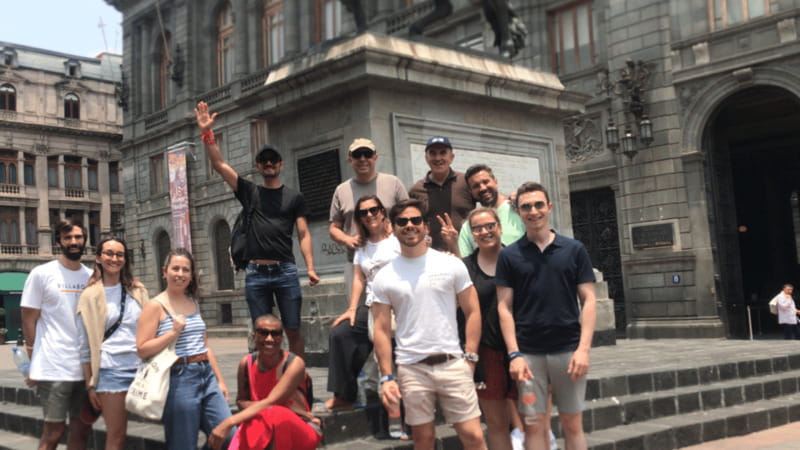
The walk continues to Plaza de Santo Domingo, with about 25 minutes for explanation and photographs. The plaza is tied to the Dominican order and offers a different view of colonial Mexico City than the cathedral does.
Here, the tour shifts from imperial and religious power to the networks that helped organize colonial society. Your guide may also point out details in the surrounding streets that you would likely pass without noticing. The stated aim is to visit corners and local places that do not usually appear in standard guidebooks, though the exact stops can change with weather and city events.
That flexibility is a practical advantage. A walking route through central Mexico City must respond to closures, public activities, and weather. Rather than promising a rigid script, the guides adapt the experience to keep the group moving and seeing worthwhile places.
Other guided tours in Mexico City

Palacio de Correos and the city of grand interiors
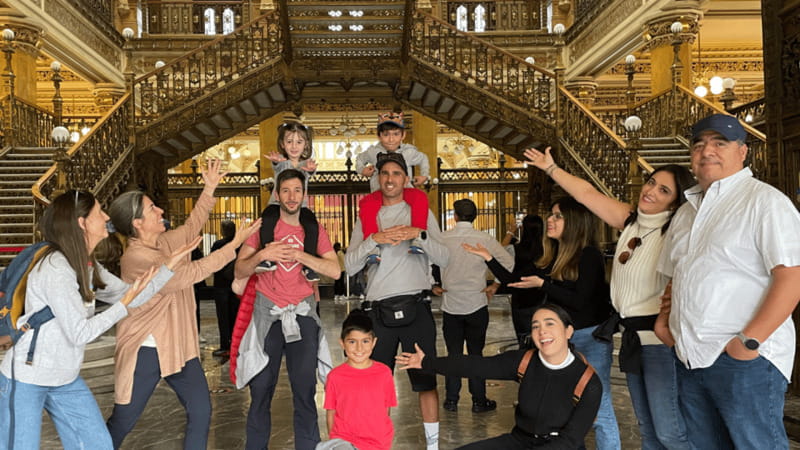
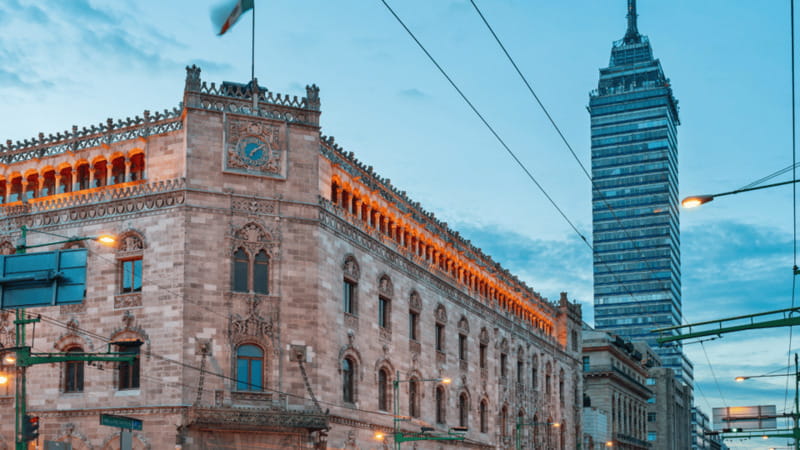
The Palacio de Correos de México is one of the route’s most ornate stops. You have time for photographs, a visit, and some free time, roughly 25 minutes in total.
The building helps explain the republican period, when Mexico City adopted grand civic architecture to project a modern national identity. It also provides a change of pace after the archaeological and religious sites. You are no longer looking mainly at ruins or a cathedral. You are seeing the city present itself as a modern capital.
Use the free time well. Take photographs, look closely at the decorative details, and ask your guide how the building fits into the larger story of the city. The stop is not designed as a long architectural lecture, so anyone wanting a specialist account will need to continue independently.
Casa de los Azulejos and everyday Mexico City
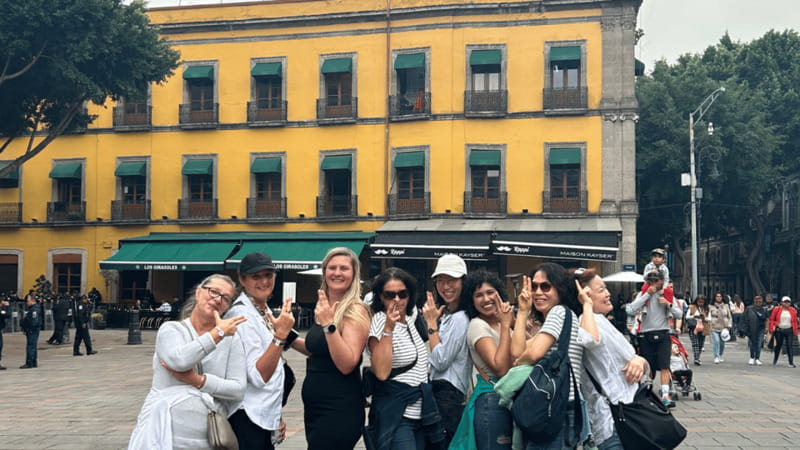
Casa de los Azulejos, the House of Tiles, is a short but memorable stop. The blue-and-white exterior gives the walk one of its most recognizable photo opportunities, and the visit lasts about 20 minutes.
This is also where the tour’s mix of major sights and local observations works well. The guide can help you notice how a famous façade sits within ordinary city life, with people shopping, commuting, eating, and meeting nearby. Mexico City is not an open-air museum. Its historic buildings remain part of a working center.
The food advice is one of the tour’s strongest practical features. Guides explain how locals judge places to eat and how to spot safer street-food options. They may suggest tacos or other places to try after the walk, but food and drinks are not included. Bring cash if you plan to eat during the tour or immediately afterward.
One guide, Laura, was especially praised for combining information about buildings with advice on food and city life. Alexia also has a reputation for offering useful suggestions for lunch and further sightseeing. Those recommendations can be worth as much as another list of dates and names.
Finishing at the Palace of Fine Arts
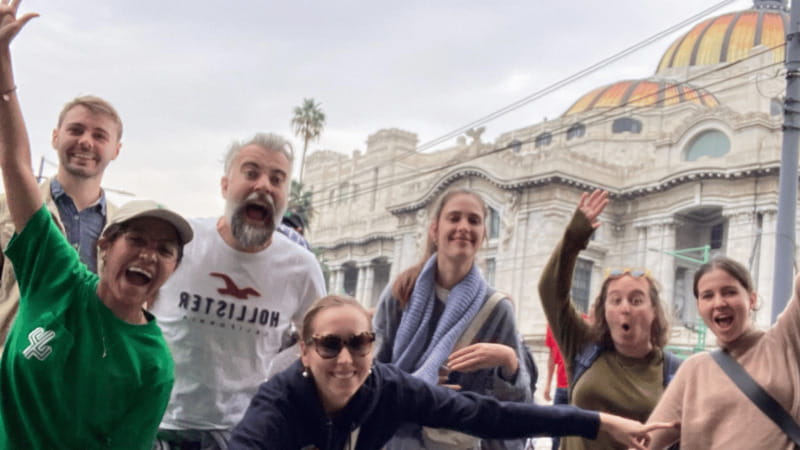
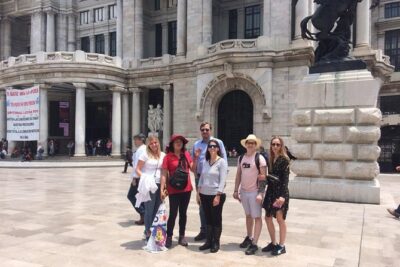
The route ends at the Palace of Fine Arts after about 20 minutes of photography and explanation. Its domes, stonework, and position near the center make it a natural finale.
The building represents the cultural ambitions of modern Mexico and links architecture with music, theater, painting, and national identity. Diego Rivera enters the story here, along with the wider role of art in public life.
Finishing at this location is convenient. You can stop for photographs, continue toward nearby sights, or use the guide’s recommendations to plan the rest of your day. The tour does not include admission, so treat the exterior and orientation as the main scheduled experience unless you arrange additional entry yourself.
The end point also makes the route feel complete. You begin with the origins of the city and finish with the capital presenting itself through art and architecture.
What the guides add to the route
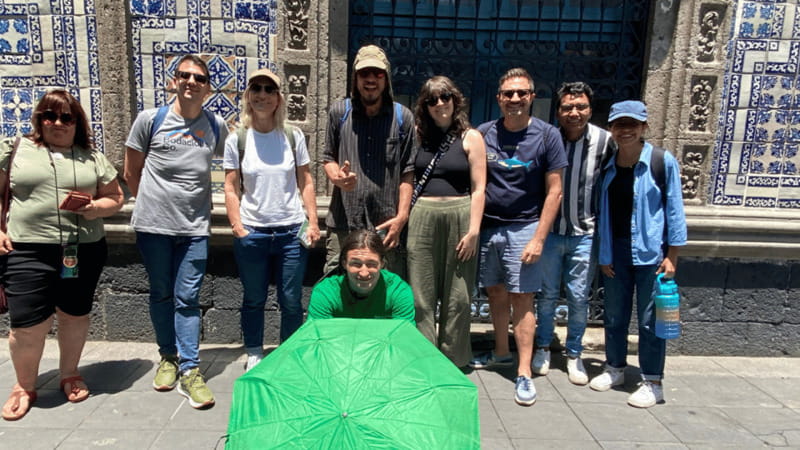
The quality of a history walk depends heavily on the person leading it. This experience uses several guides, so the style can vary. Names highlighted in the supplied information include Areli, Luis, Oscar, Gabriela, Alexia, Benjamin, Neza, Laura, Eduardo, Thomas, Gaby, and Michelle.
The strongest pattern is clear: guides are energetic, friendly, and willing to answer questions. Oscar is described as warm and full of stories. Areli is praised for explaining history with respect for the people of the past and for helping the group choose street food. Alexia is known for strong historical context and practical suggestions. Gaby brings in myths, cultural curiosities, and modern anecdotes, while Neza adapted the route to include more Day of the Dead material during a seasonal event.
That last example shows why the flexible format matters. You are not getting a recorded script. The guide can respond to the group, the calendar, and the city around you.
The route works best when you ask questions. Ask about food, public transport, local customs, or places to visit afterward. Several guides have been praised for handling historical, cultural, and social questions from a mixed group.
Pace, group size, and comfort
The advertised duration is three hours. The itinerary allows roughly 25 minutes at the Zócalo, 20 minutes inside the cathedral, 30 minutes at Templo Mayor, 25 minutes at Santo Domingo, 25 minutes at the Palacio de Correos, 20 minutes at Casa de los Azulejos, and 20 minutes at the Palace of Fine Arts. Those times include walking, explanations, photographs, and short periods of free time.
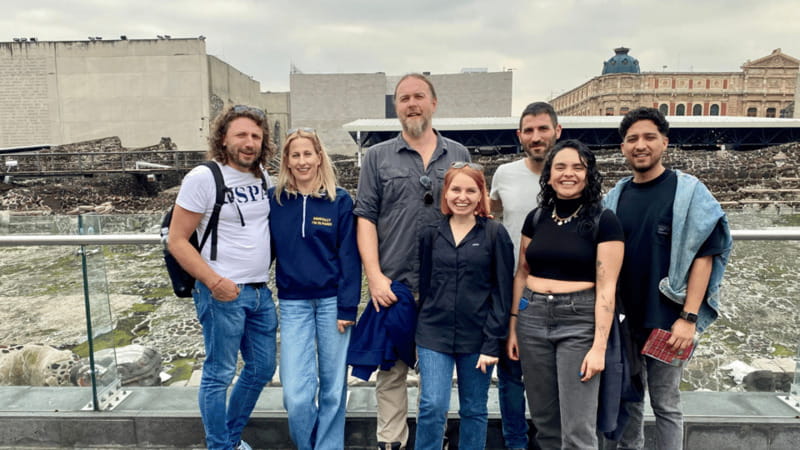
The exact pace depends on the group. Small groups can make the experience feel personal, and one reported group had only five people. Another group had six. Smaller numbers make it easier to ask questions and avoid losing the guide in crowded streets, though group size can vary by departure.
The opening may feel slow if you prefer to learn while walking. Families should prepare children with water, snacks, and something to keep them occupied. One guide held younger children’s attention with details such as quinceañera dresses, showing the value of a guide who can adjust the material to the audience.
This is not suitable for wheelchair users, and the walking format may be tiring for anyone who has trouble standing or covering uneven city streets. People over 95 are also listed as not suitable for the activity.
Is $30 a fair price?
At $30, I see this as a good introductory tour rather than a complete study of Mexico City. You get a local guide, a planned route through the historic center, didactic material, and practical advice that can save you time later.
The value is strongest if you are new to the city and want to understand what you are seeing. A self-guided walk can cover the same streets, but it will not easily connect Templo Mayor to the cathedral, explain the three historical periods, or help you choose a food stall.
The price does not cover transport, entrance fees, food, or drinks. If you want to spend longer inside museums or archaeological sites, budget for separate admission and time. Think of this as a well-organized orientation walk that helps you decide where to return.
Free cancellation up to 24 hours before the start and the option to reserve now and pay later make planning easier. Still, check the departure time and meeting details carefully before you leave your accommodation.
Who should book this Mexico City walking tour?
I would choose this tour for a first or second day in Mexico City, especially if you want a historical base before exploring museums and neighborhoods on your own. It suits curious adults, couples, solo visitors, and families whose children can manage a three-hour walk.
It is also useful if food matters to you. You do not receive a meal, but you get advice on tacos, street stalls, lunch places, and local eating habits. That practical layer keeps the tour from becoming only a lesson in dates and buildings.
You may want another option if you already know the historic center well, need wheelchair access, or prefer a quiet, specialist museum tour. You should also allow extra time after the walk if you want to enter attractions rather than see them mainly from the route.
My verdict
Book it if you want a lively introduction to Mexico City’s center, with ancient ruins, colonial architecture, republican landmarks, and useful local advice in one morning or afternoon. The guides are the main strength, and names such as Oscar, Areli, Laura, Alexia, and Gaby suggest the company has several strong storytellers.
Go in ready to walk, stand, listen, and ask questions. Bring cash for food, protect yourself from the sun, and remember that rain will not cancel the route. For $30, it is a sensible way to get your bearings and learn where to spend the rest of your time.
FAQ
Where does the Mexico City walking tour begin?
It begins at the main entrance of the Metropolitan Cathedral, facing the Zócalo and the large flag in the square. Look for a guide wearing a green uniform and holding a green umbrella.
Where does the tour finish?
The tour finishes at the Palace of Fine Arts, also called Palacio de Bellas Artes.
How long does the walking tour last?
The tour lasts three hours.
What languages are available?
The tour is offered in English and Spanish. Some content may be shown in its original language.
Is food included in the $30 price?
No. Food and beverages are not included. Bring cash if you want to eat during the walk.
Are entrance fees included?
No. Entrance fees are not included in the tour price.
What should I bring?
Bring comfortable shoes, sunglasses, a hat, sunscreen, cash, and clothing suited to the weather. If children join you, bring the water, snacks, or toys they need.
Does the tour operate in bad weather?
Yes. The tour takes place regardless of weather conditions, so dress accordingly.
Can wheelchair users join the tour?
No. The activity is listed as unsuitable for wheelchair users.
Can I cancel for a full refund?
Yes. You can cancel up to 24 hours in advance for a full refund. You can also reserve now and pay later.
More City Tours in Mexico City



More Guided Tours in Mexico City
More Walking Tours in Mexico City

More tours in Mexico City we've reviewed




Walking Tours, compared.
 ★ 5.0Historic Downtown Walking TourFrom $263 hours (approx.)
 ★ 4.8Mexico City: Historic Downtown Walking TourFrom $263 hours
 ★ 5.0Frida Kahlo VIP [Museum Tickets Included] Walk, Markets & ChurrosFrom $833 to 4 hours (approx.)
 ★ 5.0Walking Tour of the Historic Center of Mexico City3 hours (approx.)
 ★ 5.0Anthropology Museum Private Experience Walking TourFrom $783 hours (approx.)
 ★ 5.0Walking Tour in Mexico City for Exploring their Cultural HeritageFrom $252 to 3 hours (approx.)
 ★ 5.0Walking Tour – Impressive murals in Historical Center of Mexico CityFrom $511 to 3 hours (approx.)
 ★ 5.0Muralist Art Semi Private Walking Tour in Mexico City DowntownFrom $583 hours 30 minutes (approx.)
The lists this tour appears in