
Reviewed · WALKING TOURS
CableCar Experience: Off the Beaten Path Mexico City Walking Tour
Mexico City’s most revealing ride may be the one that leaves the postcard center behind. This small-group tour carries you from Bellas Artes into Iztapalapa by Metro and Cablebús, with street food, community art, local history, and a taste of pulque along the way.
In This Article
- Key points to know before booking
- Why Iztapalapa changes your view of Mexico City
- Meeting Bellas Artes before the morning Metro
- The Metro ride is part of the lesson
- Iztapalapa’s museum and the Passion tradition
- Riding Línea 2 of the Cablebús
- Market tacos in Desarrollo Urbano Quetzalcoatl
- Ending with pulque at La Hermosa Hortensia
- What the $50.81 price really covers
- Who should book this Mexico City tour
- Timing, food, and cancellation details
- Should you book the Iztapalapa Cablebús tour?
- FAQ
- Where does the tour start?
- Where does the tour end?
- How long does the experience last?
- Is the Cablebús ride included?
- Is pulque included?
- Can the tour accommodate vegetarian or vegan diets?
I like the local transport focus, since you see how the city actually moves instead of watching it through a tour-van window. I also like the chance to visit a neighborhood most first-time visitors skip, then look down on it from the Cablebús.
The tradeoff is real: the tour lasts four to five hours and includes a long Metro ride during the morning rush. At $50.81, you are paying for a guide and context, not simply a seven-peso cable-car ride. Very young children may find the pace and transit time tiring.
Key points to know before booking
- Iztapalapa beyond the center: See everyday Mexico City life, local public spaces, street art, markets, and traditions far from the usual Centro route.
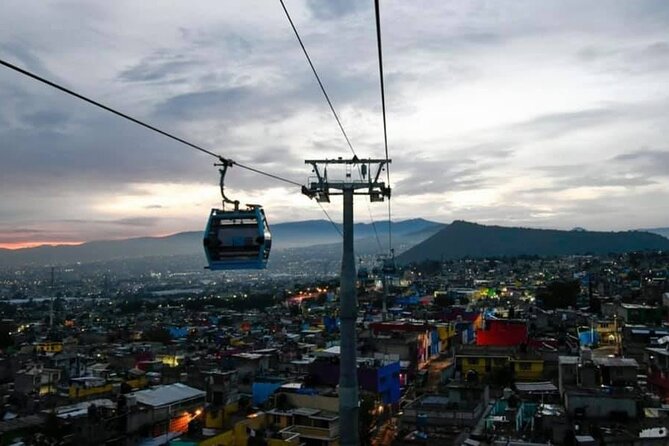
- Metro and Cablebús together: The tour uses the city’s main transport network, then adds sweeping views from Línea 2 of the Cablebús.
- Small groups capped at nine: A compact group makes it easier to ask questions and stay together on public transport.
- A local museum with a strong focus: Learn about Iztapalapa’s famous community-led Holy Week performance and the district’s older roots.
- Market tacos and pulque: Snacks, vegetarian and vegan options on request, and a traditional alcoholic drink are included.
- Guides vary by departure: Ramon, Cecilia, Vijay, Lionel, Leonel, and Aaron are among the guides associated with the experience, so the tone may differ from one date to another.
Why Iztapalapa changes your view of Mexico City
The usual Mexico City visit stays near Centro Histórico, Chapultepec, Roma, Condesa, or Coyoacán. Those places deserve your time, but they show only one slice of a vast capital. Iztapalapa offers a different frame: dense residential districts, public transport at full scale, neighborhood markets, murals, community projects, and traditions that remain part of daily life.
This tour does not treat Iztapalapa as a backdrop. It connects the district to the city’s transport system, social life, and long past. You will hear about how mobility shapes work and family routines, then see the area from street level and from above.
That makes the outing especially useful if you have already seen the headline sights. It also suits you if you prefer places where daily life is the main attraction. The route is not a polished museum circuit, and that is part of its appeal.
Other walking tours we've reviewed in Mexico City



Meeting Bellas Artes before the morning Metro
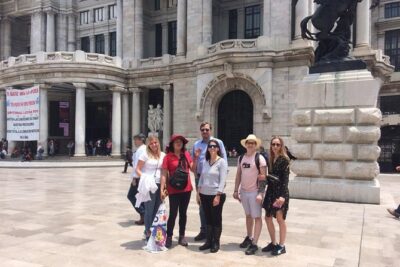
You meet at 9:00 a.m. outside the Palacio de Bellas Artes, at Alameda Central. This is a convenient and recognizable starting point in central Mexico City, but the mood changes quickly once you leave the plaza and enter the Metro system.
The opening discussion focuses on the city’s transport network and why it matters. Mexico City is enormous, and the Metro is not just a way to move between attractions. It is the backbone of ordinary life for many residents.
You will use the same system locals use, which gives the first section a practical, grounded feel. The guide explains how the network helps connect central areas with the outer districts, and the ride becomes part sightseeing, part urban lesson.
The main caution is timing. The tour starts in the morning, and one person found the Metro ride lengthy and crowded during rush hour. If you dislike busy public transport, want a relaxed private ride, or are bringing a very young child, this may not be your easiest half-day in Mexico City.
The Metro ride is part of the lesson
About two hours and ten minutes of the stated route involves the Metro and related transfers. That is a substantial portion of a four to five-hour outing, so you should book this with the right expectation: the ride itself is not filler, but it is still time spent moving.
I like this approach because it shows the distance between the tourist center and Iztapalapa in a way a map cannot. You begin beside one of Mexico City’s best-known cultural buildings, then watch the city’s scale unfold through stations, connections, and changing surroundings.
The guide may talk about history, politics, geology, culture, and local customs, depending on your questions and the person leading the group. Ramon, Cecilia, Vijay, Lionel, Leonel, and Aaron have all guided departures, and the experience seems to benefit from guides who can adjust the conversation to the group.
A small group, with a maximum of nine people, helps here. You can ask questions without holding up a large tour, and the guide can keep an eye on everyone through stations and transfers. Still, keep your expectations sensible. This is a walking and public-transport outing, not a seated lecture or a private vehicle tour.
Iztapalapa’s museum and the Passion tradition
The Museum of Cultures by Iztapalapa Passion provides a useful pause after the Metro. The visit lasts about 45 minutes and focuses on Iztapalapa’s history and its famous Holy Week performance.
The Passion play is a large community-led tradition, and it gives you a way to understand the district through its own public culture. Instead of receiving a general overview of Mexico, you get a specific example of how local identity is created and maintained.
A viewpoint at the museum was a highlight for one guide-led group, so take advantage of any chance to look out over the surrounding area. The museum stop also keeps the day from becoming only transport, food, and scenery.
You should not expect a major national museum with hours of galleries. This is a local cultural stop, and its value comes from its connection to Iztapalapa. If your main goal is fine art or famous archaeological objects, the city’s larger museums will serve you better. If you want context for the neighborhood you are visiting, this short stop earns its place.
Riding Línea 2 of the Cablebús
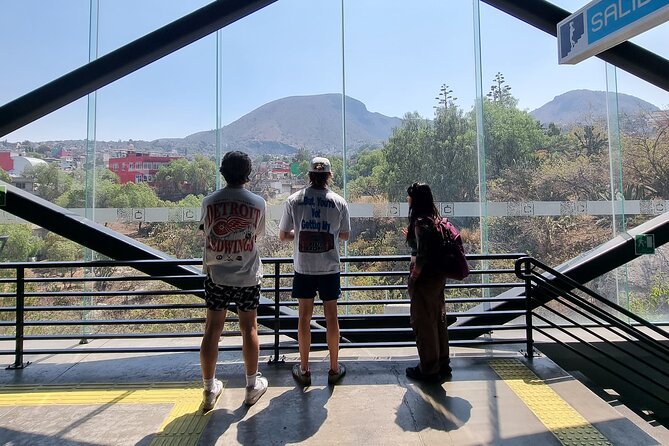
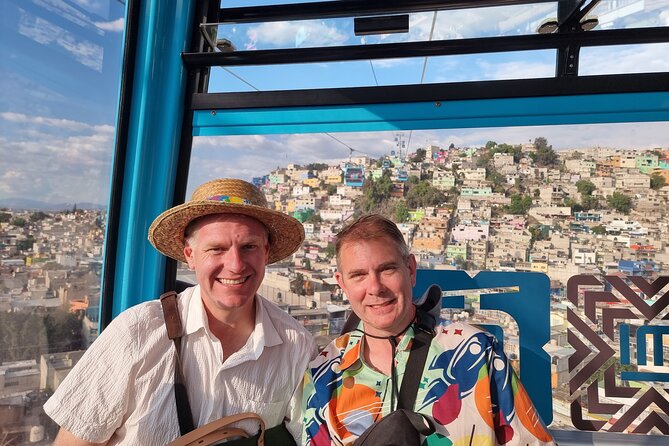
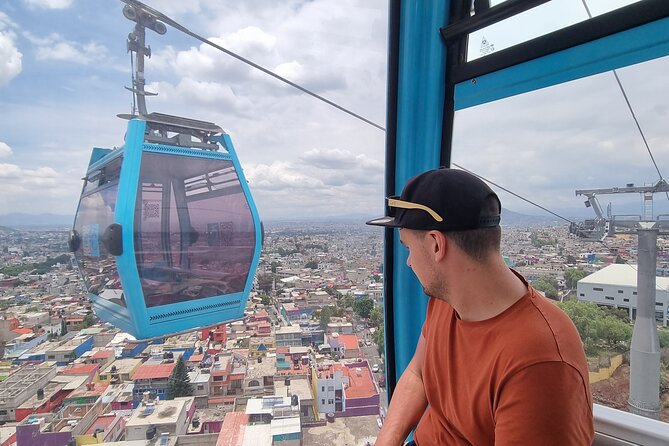
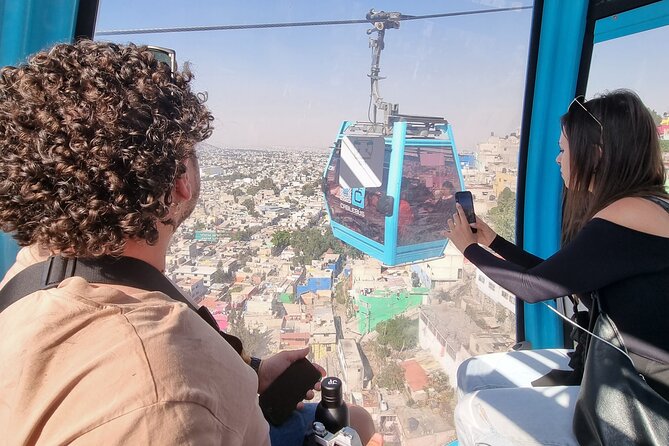
The Cablebús is the visual centerpiece. At Constitución de 1917, you board Línea 2 and glide above the streets of Iztapalapa.
From the cabins, you can take in the scale of Mexico City from a new angle. The ride offers valley views, colorful street art, rooftops, neighborhood streets, and the layered sprawl of a huge urban area. The height turns ordinary details into a broad city picture, while murals and public projects give you reasons to keep looking down.
This is also where the tour’s theme comes together. You have used the Metro to reach the district, walked through its local spaces, and then seen how the neighborhood fits into the wider capital. The Cablebús is public transport, but it also functions as an excellent sightseeing ride.
The included ride lasts about 45 minutes. You could buy a low-cost Cablebús ride yourself, so the ticket alone does not justify the tour price. The value lies in having a guide explain what you are seeing, handle the route, connect the views to local history, and link the ride with the museum and food stops.
If you want the Cablebús alone, go independently. If you want the ride as part of a carefully connected introduction to Iztapalapa, the guided version makes more sense.
Other city tours we've reviewed in Mexico City




Market tacos in Desarrollo Urbano Quetzalcoatl
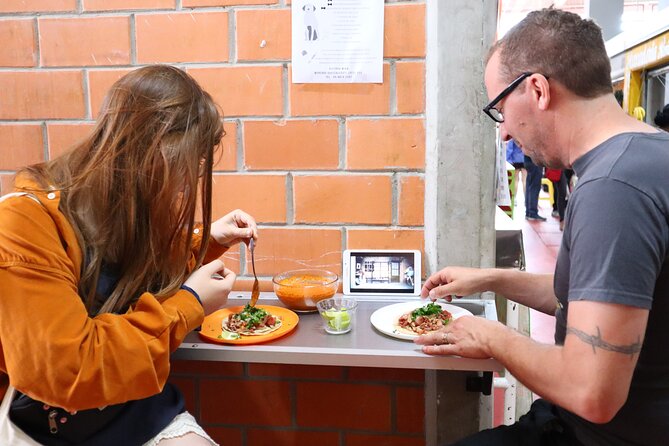
The next stop is Mercado Desarrollo Urbano Quetzalcoatl, where you eat at a local taco spot. The stop lasts around 30 minutes and includes Mexican snacks.
This is the kind of meal that works best when you are open to simple food rather than a formal restaurant setting. The point is not presentation. It is the chance to eat in a neighborhood market and try the sort of food that makes up an ordinary Mexico City break.
Vegetarian and vegan options can be provided if you share your dietary needs in advance. That is worth doing before the tour, since the stop is planned around a local market rather than a restaurant with a full menu designed for special diets.
Several people singled out the food as a high point, with one calling the tacos the best they had in town. I would treat that as a sign that the stop is a serious part of the outing, not a token snack break. Even so, tastes vary, and you should not book this expecting a long meal or a choice of many restaurants.
The market also helps balance the museum and transport sections. You get time to pause, eat, and watch the neighborhood at close range.
Ending with pulque at La Hermosa Hortensia
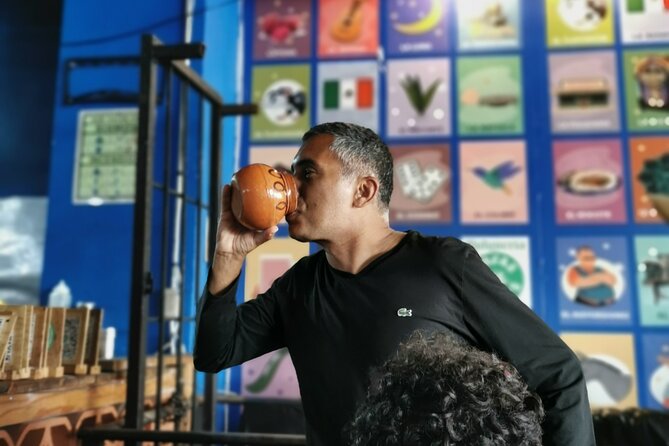
The final planned stop is Pulquería La Hermosa Hortensia, a local bar downtown. After returning by Metro, you finish with pulque, a pre-Hispanic drink often linked with the gods in Mexican tradition.
Pulque is made from fermented agave sap and has a texture and flavor unlike the beer, tequila, or mezcal most visitors already know. The experience includes an alcoholic serving for anyone over 18, the legal drinking age in Mexico. People under 18 receive a non-alcoholic drink instead.
Some versions may be flavored. One person particularly liked peppermint pulque, while another described the drink as interesting rather than instantly familiar. That is a fair warning. Pulque is worth trying because it is tied to Mexican foodways and history, but it may not be your favorite drink.
The pulquería gives the day a social finish. You are not simply ticking off a final sight, you are sitting down with a local beverage after seeing the district from several angles. Non-drinkers can still take part through the alternative drink, though alcohol is clearly part of the intended ending.
What the $50.81 price really covers
The price is $50.81 per person. That includes transport tickets, the Cablebús ride, Mexican snacks, and pulque for participants over 18. The tour is also offered in English, and the group size is limited to nine.
The price looks high if you compare it only with public-transport fares. The Cablebús ride costs very little when purchased on its own, and the Metro is inexpensive. You could recreate the basic route for much less if you are comfortable navigating the system, finding the museum, choosing a market stall, and locating the pulquería yourself.
You are paying for the human side of the day. A good guide explains the city as you move through it, keeps a small group together, answers questions, and adds meaning to places that might otherwise look like anonymous stations or rooftops. Guides such as Cecilia have been praised for clear English and Spanish, while Ramon was able to discuss topics ranging from politics and geology to customs. Those are useful skills on a route with little English-language signage built into the experience.
Value depends on your travel style. I would consider the price fair if you want a guided introduction to Iztapalapa and prefer not to plan a complicated route. I would skip it if you enjoy independent Metro exploration and mainly want a cheap Cablebús view.
Who should book this Mexico City tour
This outing suits you best if you:
- Want to see a side of Mexico City beyond the familiar central districts.
- Enjoy public transport and do not mind a long ride.
- Like asking questions about history, culture, politics, and daily life.
- Prefer markets, local bars, and public spaces to a standard museum circuit.
- Want an English-language guide in a group of no more than nine.
- Are comfortable walking and spending several hours on the move.
It is less suitable if you need a private vehicle, dislike crowded transit, or want a slow morning with minimal walking. The tour is also not ideal for very young children, since the Metro section can be long and tiring.
Most people can participate, and the meeting point is near public transportation. The route requires attention in stations and public areas, so stay close to the guide and follow the group’s instructions.
Timing, food, and cancellation details
Plan on four to five hours, starting at 9:00 a.m. The tour ends back at the original meeting point downtown after the return to La Hermosa Hortensia and the final drink.
Snacks are included, with vegetarian and vegan choices available when requested. Pulque is served only to those over 18, while younger participants receive a non-alcoholic option.
You can cancel for a full refund up to 24 hours before the local start time. Cancellations or changes made within 24 hours are not refunded or accepted. The outing depends on good weather and a minimum number of participants. If poor weather or low enrollment cancels the departure, you are offered another date or experience, or a full refund.
Should you book the Iztapalapa Cablebús tour?
Book it if you want Mexico City to feel larger, more complicated, and more personal than the center’s familiar sights. The combination of Metro, museum, market, Cablebús, tacos, and pulque creates a full picture of one district rather than a quick photo stop.
The strongest reason to go is the guide. Ramon, Cecilia, Lionel, Leonel, Aaron, and Vijay have different styles, but the best departures depend on a guide who can make the transport and neighborhood details meaningful. Since the assigned guide can vary, book for the route and format rather than expecting one particular person unless the provider confirms it.
Skip it if your main goal is a low-cost cable-car ride or if a crowded morning Metro trip sounds unpleasant. For independent explorers, the route can be done more cheaply. For you, if you want the context, local food, and confidence to visit Iztapalapa with a guide, this is one of the more distinctive half-day choices in Mexico City.
FAQ
Where does the tour start?
The tour starts at 9:00 a.m. outside the Museo del Palacio de Bellas Artes, at Alameda Central in central Mexico City.
Where does the tour end?
The experience ends back at the original meeting point after returning downtown.
How long does the experience last?
It lasts approximately four to five hours.
Is the Cablebús ride included?
Yes. The Cablebús ride on Línea 2 is included, along with Metro transport tickets.
Is pulque included?
Yes. Pulque is included for participants over 18. Those under 18 receive a non-alcoholic drink instead.
Can the tour accommodate vegetarian or vegan diets?
Yes. Vegetarian and vegan snack options can be provided, but you should share your dietary needs in advance.
More City Tours in Mexico City
More Walking Tours in Mexico City

More tours in Mexico City we've reviewed





Walking Tours, compared.
 ★ 5.0Historic Downtown Walking TourFrom $263 hours (approx.)
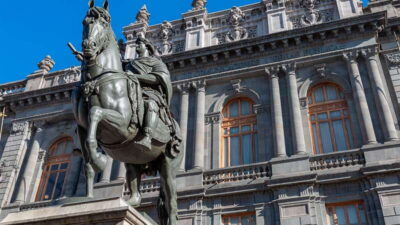 ★ 4.8Mexico City: Historic Downtown Walking TourFrom $263 hours
 ★ 5.0Frida Kahlo VIP [Museum Tickets Included] Walk, Markets & ChurrosFrom $833 to 4 hours (approx.)
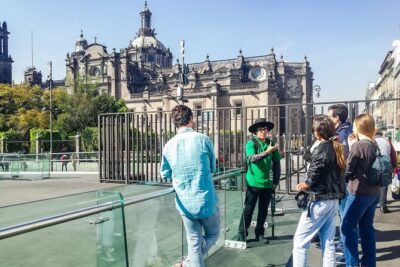 ★ 5.0Walking Tour of the Historic Center of Mexico City3 hours (approx.)
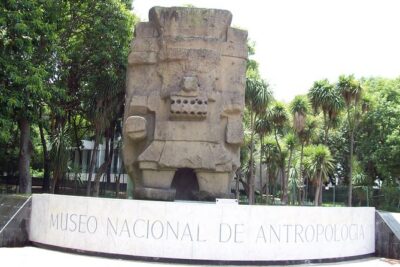 ★ 5.0Anthropology Museum Private Experience Walking TourFrom $783 hours (approx.)
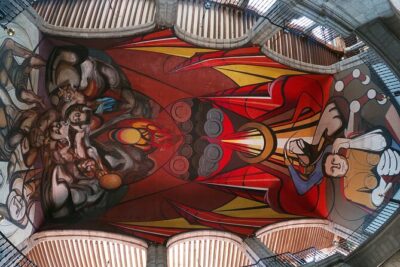 ★ 5.0Walking Tour in Mexico City for Exploring their Cultural HeritageFrom $252 to 3 hours (approx.)
 ★ 5.0Walking Tour – Impressive murals in Historical Center of Mexico CityFrom $511 to 3 hours (approx.)
 ★ 5.0Muralist Art Semi Private Walking Tour in Mexico City DowntownFrom $583 hours 30 minutes (approx.)
The lists this tour appears in