
Reviewed · HISTORICAL TOURS
Explore Mexico City: A Journey Through History, Art, and Cuisine!
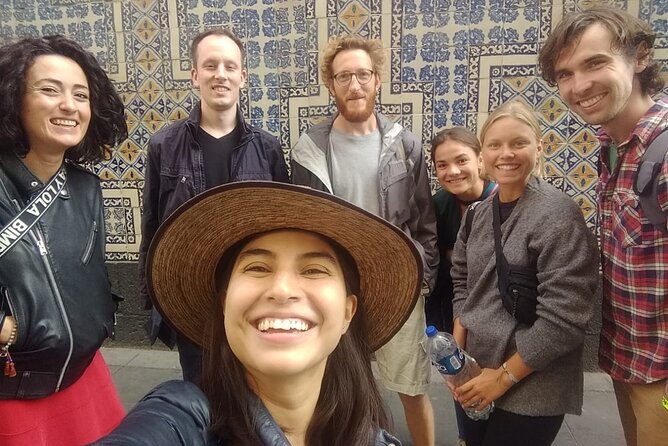
Mexico City’s story unfolds block by block on this two-hour walk through Centro Histórico. You begin beside Templo Mayor, the Aztec ceremonial center, then pass grand churches, working civic buildings, a century-old candy shop, and Diego Rivera murals before finishing at the Palace of Fine Arts.
In This Article
- Key points to know before you book
- Why this route works for a first look at Mexico City
- Templo Mayor: Mexico City begins with the Aztecs
- The Zócalo and the view toward National Palace
- Metropolitan Cathedral: a quick lesson in changing styles
- Dulcería de Celaya: the route’s sweetest surprise
- House of Tiles: a compact lesson in city style
- Palacio Postal: a beautiful building that still serves a purpose
- Bellas Artes: the finish line and a useful next stop
- Diego Rivera’s murals and the story of Mexican life
- What the guides add to the experience
- Timing, walking, and what to bring
- What the $20 price does and does not buy
- Who should book this walk?
- Should you book Andares Free Walking Tour?
- FAQ
- How long does the Mexico City walking tour last?
- What time does the tour start?
- Where does the tour begin?
- Where does the tour finish?
- Is the tour offered in English?
- Are museum entrance tickets included?
- How far in advance can I cancel for a full refund?
I like the route’s mix of famous sights and less obvious stops, especially Dulcería de Celaya and Palacio Postal. I also like the guides’ personal approach. Belen, Sara, and Diego are singled out for clear English, strong local insight, and easy conversation. The main catch is that museum admission is not included, so treat this as an orientation walk rather than a full museum tour.
Key points to know before you book
- Eight central stops in about two hours: The route covers Templo Mayor, the Zócalo, Metropolitan Cathedral, Dulcería de Celaya, House of Tiles, Palacio Postal, Bellas Artes, and Diego Rivera’s murals.
- A useful first-day introduction: You get a quick grasp of Aztec Mexico, Spanish colonial power, Mexican architecture, food traditions, and modern art.
- No long museum visits: The schedule allows short explanations at each site, but entrance fees and extended indoor visits are not part of the experience.
- English-speaking guides with personality: Belen, Sara, and Diego have been praised for clear explanations, local stories, and a friendly manner.
- A small group, usually easier to manage: The maximum group size is 20 people, and some departures may be much smaller.
- Bring water and comfortable shoes: It is a walking tour, and bottled water is not supplied.
Why this route works for a first look at Mexico City
This walk is built around a powerful idea: Mexico City is not one historical period layered neatly on top of another. Aztec foundations, Spanish churches, nineteenth-century commercial buildings, post-Revolutionary art, and modern city life all share the same few blocks.
That makes the route useful for your first morning in town. You will not spend an hour inside one museum, but you will learn where the major places are and how they fit together. The walk also ends near Bellas Artes, a handy point for continuing on your own.
The pace appears to be moderate rather than rushed. One family described it as comfortable for everyone in the group, while a solo visitor ended up with a private walk because nobody else joined that departure. With a maximum of 20 people, the experience can feel personal, though a full group will naturally offer less time for individual questions.
The price needs a little attention. The experience is listed at $20 per person, while the tour description presents the guiding service as free and says you may leave a tip at the end. That wording can be confusing. Check the final booking price and understand that tips are optional. One person felt uncomfortable when a suggested tip amount was mentioned, so you should decide in advance what you think the guide’s time was worth.
Other city tours we've reviewed in Mexico City


Templo Mayor: Mexico City begins with the Aztecs
The meeting point is República de Guatemala 4, beside Museo del Templo Mayor, with a 9:30 a.m. start. This is an excellent place to begin because the remains of the Aztec temple sit at the center of the city’s story.
The guide explains where the Aztecs came from, how they lived, and how they built the dominant empire of their era. That opening matters because the colonial center around you was built directly over the old Aztec capital of Tenochtitlan. You are not simply looking at ruins. You are learning why this spot became the heart of power in the Valley of Mexico.
The planned stop lasts about 15 minutes. That is enough for an introduction and a sense of the site, not a careful museum visit. If you want to study the archaeological collections, plan a separate visit and budget for your own admission. This is one of the places where the short tour format helps you get oriented but limits detail.
The Zócalo and the view toward National Palace
From Templo Mayor, the group moves to the Zócalo, Mexico City’s great central square. The guide explains why it is called the Zócalo and what occupied this area before the Spanish arrived.
You will also see the National Palace from the square. The stop is scheduled for about 10 minutes, so expect a focused talk rather than a long examination of the building. The value here is the connection between space and power. The square has served as a public, political, and ceremonial center across different periods, and the guide helps you read those changes.
This is also a good moment to ask questions about the city’s past and present. Several guides have been praised for talking about everyday life in Mexico City, not just repeating dates and architectural labels. That conversational quality can make the short stop feel more useful than a formal lecture.
Metropolitan Cathedral: a quick lesson in changing styles
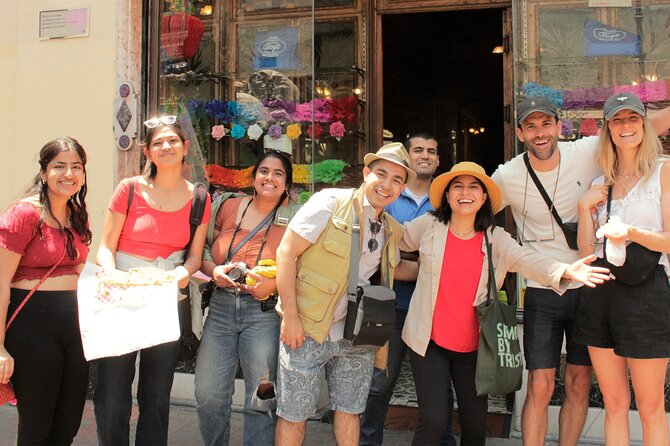
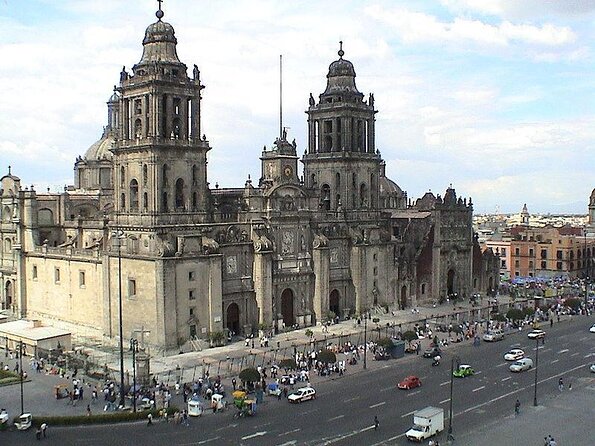
The Metropolitan Cathedral is the next major landmark. The guide discusses its architecture and explains why it is the most important church in the city.
You can expect roughly eight minutes here. That is brief, but the cathedral’s exterior gives the guide plenty to point out. The building reflects the long development of Mexico City, and the tour uses it to show how religious and political authority shaped the historic center.
The schedule does not promise an extended interior visit or a guided examination of every chapel. If the cathedral is high on your list, return later with more time. The walking tour’s job is to place it in context, not replace a dedicated visit.
Dulcería de Celaya: the route’s sweetest surprise

Dulcería de Celaya is one of the most appealing stops because it shifts the subject from monuments to food. The shop is described as the oldest candy store in Mexico City, and the guide explains which sweets are traditional, how they are prepared, and where they come from.
This is the sort of stop that gives the walk character. You are not only hearing about national history. You are seeing how culinary traditions are packaged, sold, and remembered in an old city shop.
The visit lasts about 10 minutes. That is enough to look around and hear the story, but you should not assume that tasting or purchases are included. If something catches your eye, you can decide for yourself if you want to buy it. The shop also gives you a practical idea for a later return, when you can browse without keeping pace with the group.
Other historical tours in Mexico City




House of Tiles: a compact lesson in city style
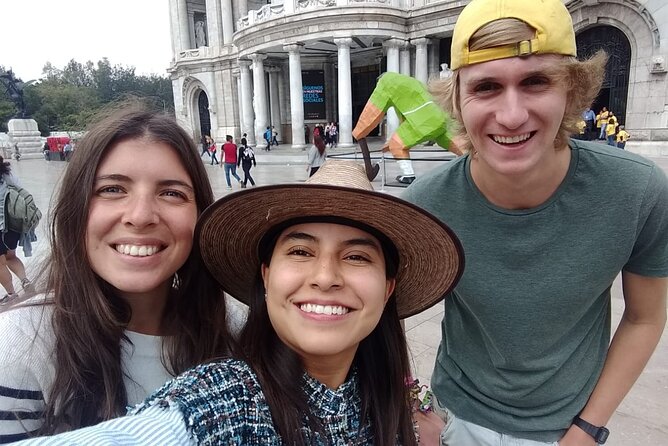
The House of Tiles, or Casa de los Azulejos, is one of the route’s most photogenic buildings. The group enters, and the guide explains its history and the art inside.
The building’s decorated tile exterior makes an immediate impression, but the interior matters too. This stop gives you a chance to compare private or commercial architecture with the government and religious buildings seen earlier.
The planned visit is about 15 minutes. That is a sensible amount of time for a walking tour, though not enough for a slow architectural study. I would pay attention to the guide’s explanation, take a few photographs, and note the location for another visit.
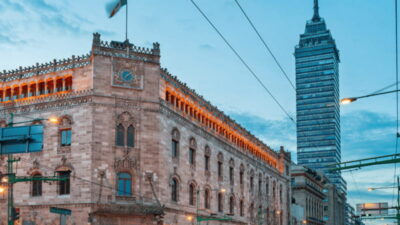
Palacio Postal: a beautiful building that still serves a purpose
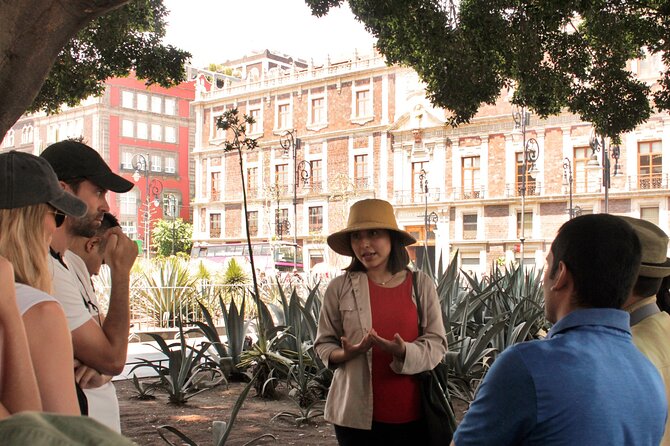
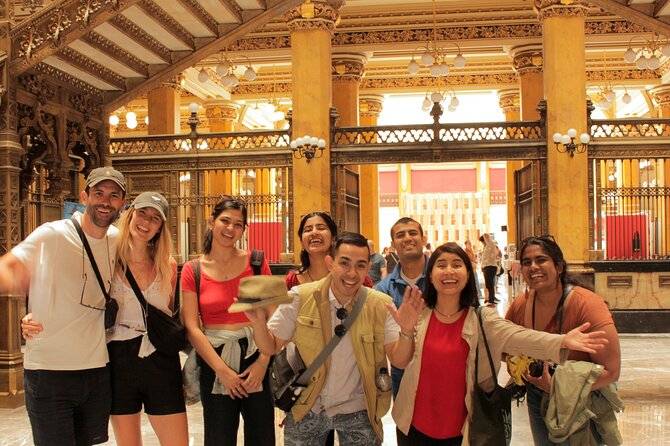
Palacio Postal is another strong choice because it is not merely a preserved monument. The guide explains what the building was before, how it still works, and the history behind it.
That working function adds a useful layer to the tour. You are seeing architecture tied to daily city life rather than a building frozen behind museum glass. The stop also broadens the story beyond Aztec and colonial Mexico, bringing in the city’s later commercial and civic growth.
Allow about 15 minutes here. The guide can point out the building’s decorative details and explain its role, while you get a quick look at the interior. As with the other stops, the short visit is best understood as an introduction.
Bellas Artes: the finish line and a useful next stop
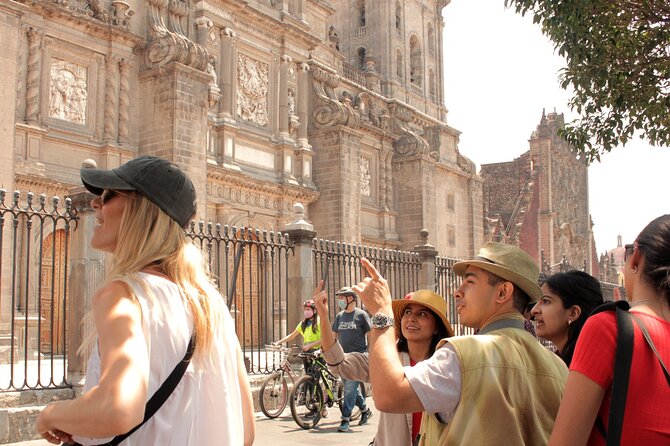
The walk continues to the Palace of Fine Arts, where it ends. The guide discusses its architectural style, curious details, history, and current program.
Bellas Artes is a fitting finish because it brings the tour into Mexico’s modern cultural life. You have moved from Aztec ritual space to Spanish religious power, historic commerce, public buildings, and the country’s major arts institution.
The tour allows about 15 minutes here. An important practical note is that an entrance ticket is not included, and one person reported that Bellas Artes tickets were not sold online. If you want to enter, ask about current ticket arrangements before you arrive and allow extra time after the walk. Do not count on the two-hour route to include a full visit.
Ending here is convenient. You are still in the historic center, and you can continue exploring after the guide leaves. The walk’s start and finish are both near public transportation, though the tour itself is on foot.
Diego Rivera’s murals and the story of Mexican life
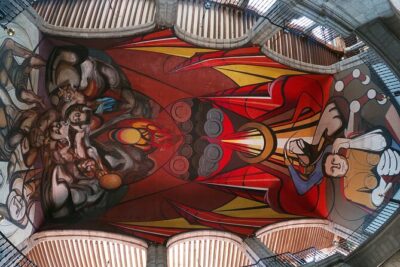
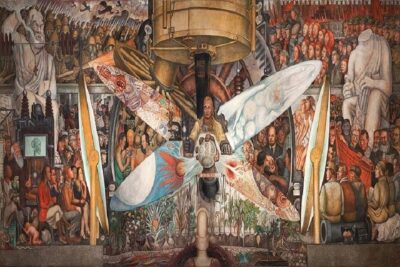
The final listed stop is the Diego Rivera mural collection at the Secretariat of Public Education. The guide uses Rivera’s work to explain Mexican traditions and customs.
This is one of the most meaningful parts of the route because the murals let you see history rather than only hear about it. Rivera’s large-scale scenes bring workers, celebrations, social conflict, and daily traditions into public view. The guide’s role is to help you notice how those images connect to Mexican identity.
The visit is scheduled for about 20 minutes, the longest stop on the route. That extra time makes sense. Murals reward patient looking, and the guide can help you follow themes across several scenes instead of treating the artwork as a quick photo stop.
The route’s art focus is especially helpful if you know Rivera mainly by name. You will get a basic framework for understanding his place in twentieth-century Mexican culture, even if you do not have time for a full art-history lesson.
What the guides add to the experience
The strongest personal details in the feedback center on Belen, Sara, and Diego. Belen has been praised for her clear explanations, kindness, and ability to share local places that many guidebooks skip. Sara is described as fluent in English, professional, and good at adding local experiences to the historical material. Diego is noted for his friendly manner and strong grasp of Mexico City’s past and architecture.
That does not mean every departure will feel identical. The guide assigned to your date may be different, and group size affects the experience. Still, the repeated pattern is clear: this tour depends heavily on the guide’s storytelling, not on elaborate transport or paid attractions.
I like that arrangement for a central-city walk. A good guide can connect the temple ruins, candy shop, post office, and murals into one story. You also have a chance to ask about places to return to later. If you prefer a fixed audio script or a long, academic lecture, this may feel too informal.
Timing, walking, and what to bring
The experience begins at 9:30 a.m. and lasts about two hours. The listed stop times add up to roughly 108 minutes, leaving the rest for walking between sites, gathering the group, and short pauses.
Wear comfortable shoes. The route links several places in the historic center, so you should expect regular walking rather than a vehicle between stops. Bring water because bottled water is not supplied. A small bag is more practical than bulky luggage, especially in a group.
Confirmation arrives at booking. The tour is offered in English, service animals are allowed, and most people can take part. It is near public transportation, which makes it easier to reach and useful as a first activity after settling into Mexico City.
Because the group can have up to 20 people, arrive early at República de Guatemala 4. You will want time to find the meeting point without starting the morning in a rush.
What the $20 price does and does not buy
At $20, the value comes from the route and the guide rather than included attractions. You are paying for a structured introduction to the center, with explanations at eight significant locations and a finish near Bellas Artes.
You are not buying a museum pass. The tour information says the guiding experience is free and that you may tip at the end, but the booking price is listed as $20. Entrance to museums is not included, and you should plan to pay separately if you want to enter Templo Mayor, Bellas Artes, or another attraction that charges admission.
That distinction is important for families. The price may look low compared with a private tour, but additional tickets can change the day’s total. The upside is flexibility: you can take the orientation walk, then choose which sites deserve more of your time and money.
The free-cancellation rule is simple. You can cancel at least 24 hours before the local start time for a full refund. Cancellations or changes made inside that 24-hour window are not refunded or accepted.
Who should book this walk?
I would choose this experience if you want to understand the historic center quickly, especially on your first day. It suits solo visitors, couples, and families who like walking, conversation, and a broad overview more than long indoor visits.
It is also a good match if you want a guide who can explain architecture and history in plain English while adding local observations. The candy shop and Palacio Postal keep the route from becoming a parade of only famous monuments.
You may want something else if your main goal is museum time. The schedule moves on quickly, and the lack of included admission means you will need a separate plan for interiors. Travelers with limited walking ability should also note that the experience is a walking tour, although the supplied information says most people can participate.
Should you book Andares Free Walking Tour?
Book it if you want a low-cost, well-planned introduction to Mexico City’s center, with Aztec history, colonial buildings, art, food culture, and a few places you might not find on your own. The route is compact, the ending at Bellas Artes is convenient, and guides such as Belen, Sara, and Diego have made a strong impression through clear English and personal local insight.
Skip it if you want a museum-heavy morning or a private tour with guaranteed individual attention. Before paying, confirm how the $20 charge relates to the optional tipping language, and set aside extra money and time for any museum visits. For most first-time visitors who want to get their bearings without spending half a day indoors, this is a sensible starting point.
FAQ
How long does the Mexico City walking tour last?
The experience lasts approximately two hours.
What time does the tour start?
It starts at 9:30 a.m.
Where does the tour begin?
The meeting point is República de Guatemala 4 in Centro Histórico, Mexico City.
Where does the tour finish?
The tour ends at the Palace of Fine Arts, also called Palacio de Bellas Artes, on Avenida Juárez.
Is the tour offered in English?
Yes. The experience is offered in English.
Are museum entrance tickets included?
No. Museum admission is not included, so you must purchase tickets separately if you choose to enter a museum.
How far in advance can I cancel for a full refund?
You can cancel at least 24 hours before the local start time for a full refund. Cancellations or changes made less than 24 hours before the start time are not refunded or accepted.
More Historical Tours in Mexico City
More City Tours in Mexico City


More tours in Mexico City we've reviewed





Historical Tours, compared.
 ★ 5.0Historic Downtown Walking TourFrom $263 hours (approx.)
 ★ 5.0Historic Center Food Tour in Mexico CityFrom $1155 hours (approx.)
 ★ 4.8Mexico City: Historic Downtown Walking TourFrom $263 hours
 ★ 5.0Walking Tour of the Historic Center of Mexico City3 hours (approx.)
 ★ 5.0Mexico City Historical Centre Food Tour with 7 Authentic TastingsFrom $653 hours (approx.)
 ★ 5.0Walking Tour in Mexico City for Exploring their Cultural HeritageFrom $252 to 3 hours (approx.)
 ★ 5.0Walking Tour – Impressive murals in Historical Center of Mexico CityFrom $511 to 3 hours (approx.)
 ★ 4.5Mexico City: Guided walking tour through the most historic parts of the city.From $303 hours
The lists this tour appears in