
Reviewed · HISTORIC CENTER WALKS
The best and most complete PRIVATE CITY TOUR through the Historic Center
Mexico City’s past comes at you quickly on this private walking tour, from the Monument to the Revolution to the Metropolitan Cathedral. Jorge Barmoll George connects presidents, churches, palaces, politics, and street life in a way that helps you understand how the city fits together.
In This Article
- Key points to know before booking
- A fast lesson in Mexico City’s center
- Starting at the Monument to the Revolution
- Alameda Central and the old Inquisition site
- Palacio de Bellas Artes, where styles meet
- The House of Tiles and a useful pause
- Palacio Postal and Palacio de Minería
- Tacuba and Brazil, streets as history books
- Plaza de Santo Domingo’s Baroque setting
- The Zócalo and Government Palace
- Templo Mayor from the Historic Center
- Ending inside the Metropolitan Cathedral
- What the private format is really worth
- Who should book this walk
- Should you book it?
- FAQ
- How long does the tour last?
- Where does the tour begin?
- Where does the tour end?
- Is transportation included?
- Is the tour private?
- Is the tour offered in English?
- Is bottled water included?
- Are meals and tips included?
- Are admission tickets included?
- What physical ability is required?
- What is the cancellation policy?
I like the broad route and Jorge’s background as a former history teacher. I also like the small practical touches: bottled water, planned bathroom time at the House of Tiles, and chances to step inside several buildings or churches at your own pace. The main drawback is pace. You cover many places in roughly three hours, and the walking can be demanding.
Key points to know before booking
- A private route across the Historic Center: Only your group participates, with no strangers to slow the pace or shape the conversation.
- Jorge teaches the story behind the buildings: His focus reaches beyond dates, adding politics, architecture, customs, and personal insight about Mexico City.
- The walk begins at the Monument to the Revolution: It ends at the Metropolitan Cathedral, with no vehicle transfer included.
- Eleven major sights fit into one outing: You see the Alameda, Bellas Artes, the House of Tiles, Palacio Postal, Palacio de Minería, Santo Domingo, the Zócalo, Templo Mayor, and more.
- Bring serious walking gear: Comfortable shoes, sun protection, and clothing suited to the weather will make a real difference.
- The $68.70 price depends on group size: For a couple or small group, private guiding can be good value. For one person, it is a more costly introduction.
A fast lesson in Mexico City’s center
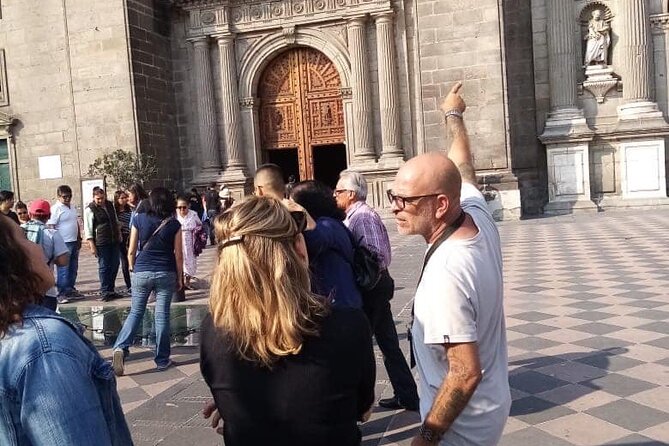
This tour works best as a first look at central Mexico City. You will not spend an hour inside each museum or church. Instead, Jorge gives you the setting, explains why a place matters, allows time for photographs, and points out where you may want to return.
That approach suits a short stay. One solo participant used the walk to decide which places deserved a longer visit later. A couple with only a few days in town found it useful as a greatest-hits orientation. I would think of the experience as a guided survey, not a series of full museum visits.
The route also has a clear geographic logic. You begin west of the main central plaza, then move east through grand public buildings and older streets before finishing at the cathedral. Since transportation is not part of the outing, you experience the change in the city block by block.
A few more Mexico City tours and experiences worth a look


Starting at the Monument to the Revolution
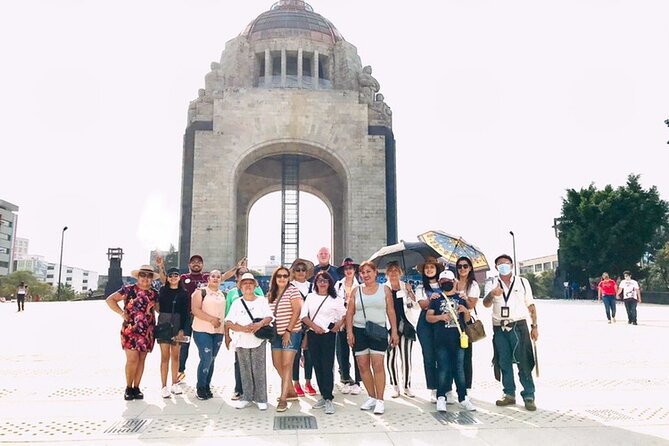
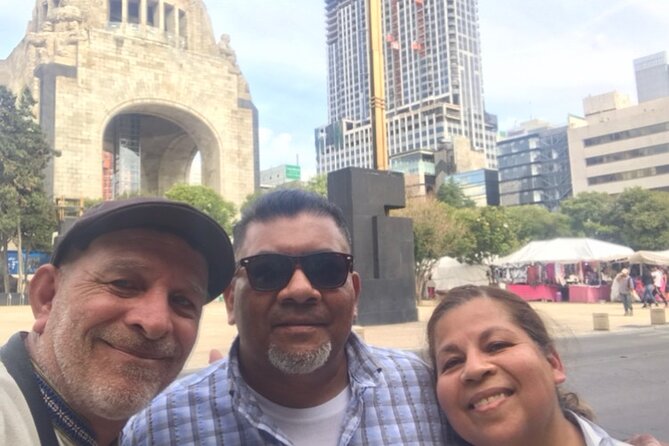
Meet Jorge at the Monument to the Revolution in Plaza de la República. This enormous structure was first planned as the center of a Legislative Palace. The plan changed, and the structure became a mausoleum and one of Mexico City’s best-known urban landmarks.
The scheduled stop is short, about 10 minutes. Expect an explanation and time for photographs, not an extended visit inside. Admission to the monument or museum is not included, so anyone wanting a longer interior visit should plan that separately.
This is a useful opening because the monument introduces one of the tour’s main ideas: Mexico City’s buildings often carry several layers of political meaning. Jorge’s explanations tend to connect architecture with the people and events that shaped the Mexican Republic.
Be precise about the meeting point. The start is the esplanade at the Monument to the Revolution, not a waiting area for a van. There is no tour vehicle. One group initially waited in the wrong place and nearly missed the guide, so read the meeting instructions carefully and watch for Jorge’s messages.
Alameda Central and the old Inquisition site
From the monument, the route continues toward Alameda Central, a historic park and a major gathering place in the city. This is a good place to shift from national monuments to everyday urban life. You see a public park that has long served as a meeting point while hearing about customs and social practices from earlier periods.
The stop also includes El Quemadero de la Inquisición, associated with the executions carried out during the Inquisition. Jorge explains the uses, customs, methods, and practices connected with that period. The subject is grim, but it gives the surrounding streets a sharper historical context.
Allow about 20 minutes here. Admission is free. You will want to listen closely, since the stop combines the park, the Inquisition site, and time for photographs.
The itinerary also includes a short profile of a much-loved 19th-century former president who was declared Meritorious of the Americas. The stop lasts about five minutes and adds a political figure to the architectural story. Since the time is brief, treat it as a compact introduction rather than a full biography.
Palacio de Bellas Artes, where styles meet
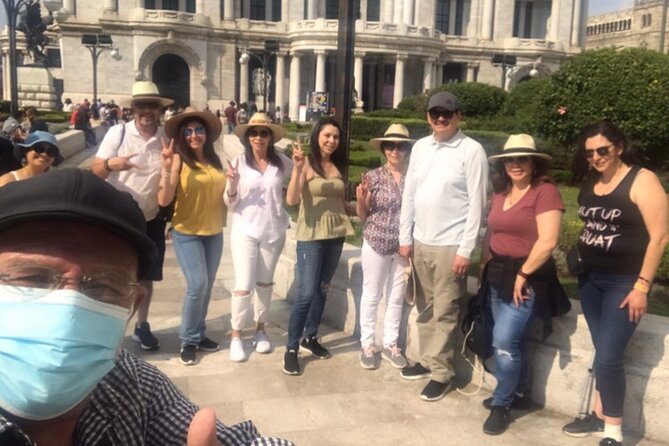
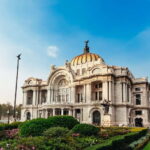
The Palacio de Bellas Artes is one of the visual highlights of the walk. Its design brings together Art Nouveau and Art Deco, creating a building that feels both ornate and modern. It has hosted theater, ballet, symphony, opera, and murals, so Jorge uses the exterior to explain how the building became a major home for Mexican art.
You receive an outside explanation and time for pictures. The scheduled visit is about 25 minutes in the itinerary, although another timing note lists 15 minutes, so expect the exact length to depend on the group and street conditions. Admission is not included.
I would not book this walk expecting a complete Bellas Artes visit. If you want to see the murals or attend a performance, return independently with more time. The value here is learning how the building fits into the city and getting a clear introduction before deciding if you want to go inside later.
The House of Tiles and a useful pause
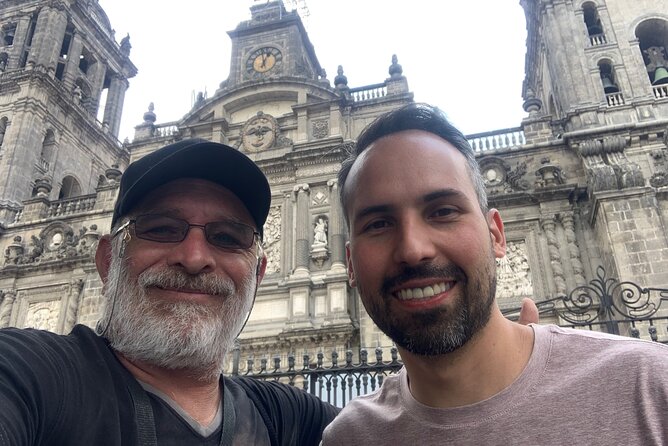
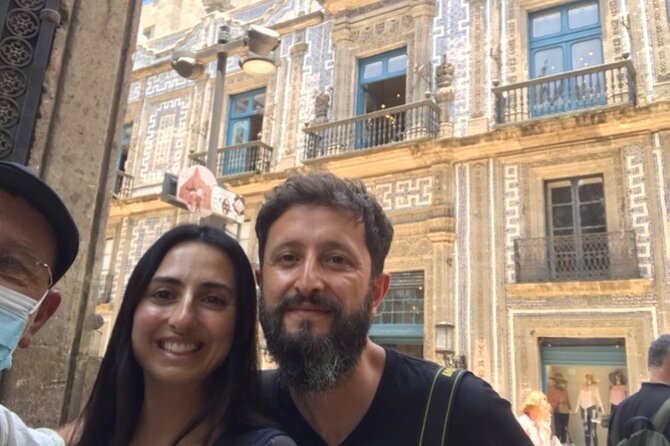
The House of Tiles, or Casa de los Azulejos, is an elegant viceregal palace on Calle Madero. Its tiled exterior makes it one of the most recognizable buildings in the Historic Center, but the interior matters too. Jorge explains the owners and history of the property from the 16th century to the present.
This stop lasts about 25 minutes in the itinerary, with another timing note listing 15 minutes. It includes explanations, photographs, and a chance to use the restrooms. That practical pause is welcome on a walking route with many stops.
Admission is free. You are not simply pausing for a bathroom break, though. The building gives you a close look at how Mexico City’s elite residences changed over time, and the famous Madero passage places you right in the flow of the Historic Center.
Other city tours we've reviewed in Mexico City


Palacio Postal and Palacio de Minería
The Palacio Postal is a luxurious French-style Neoclassical building from the early 20th century. Inside, look for marble, brass, and bronze finishes. Jorge explains the building and gives you time for photographs during a stop of about 15 minutes, with a separate timing note listing 10 minutes.
Admission is free. This is a particularly good stop for anyone who likes interiors and decorative details. The building still functions as a post office, so the visit links grand design with an ordinary civic purpose.
Next comes Palacio de Minería, a grand New Spanish Classical building. Inside, you can see four meteorites and take photographs. Outside, Plaza de Minería includes the statue of the Little Horse, created by architect and sculptor Manuel Tolsá.
The scheduled stop is about 10 minutes and admission is free. That is enough for a quick explanation and a look at the meteorites, but not a leisurely architectural study. If the Little Horse catches your eye, pay attention to the surrounding plaza as Jorge explains its connection to the building.
Tacuba and Brazil, streets as history books
The walk through Tacuba and Brazil is less about one famous monument and more about the street itself. Jorge points out mansions, palaces, and churches dating from the 16th through the 19th centuries, along with the architectural styles that helped earn the Historic Center its UNESCO cultural heritage designation.
This portion lasts about 25 minutes. It is one of the most useful parts for building a mental map because you see how major landmarks connect through ordinary streets and changing facades.
The tradeoff is street noise and crowds. One person specifically appreciated that Jorge could be heard over traffic and city activity, but you should still expect an active urban setting. Keep your attention on the guide while moving, and wear shoes that can handle a long walk on city pavement.
Plaza de Santo Domingo’s Baroque setting
Plaza de Santo Domingo provides a slower look at a historic square and its Baroque church. Jorge explains the setting and leaves time for photographs. The stop is scheduled for about 25 minutes, with another timing note listing 15 minutes.
This is a good place to ask questions. The square is not just a backdrop for pictures. Its church and surrounding buildings help show how religious, civic, and commercial life overlapped in the old center.
You may have time to appreciate the church interior, but the main explanation focuses on the exterior and plaza. Anyone wanting a detailed church tour should return separately. The strength of this stop is the connection between the building and the larger street plan.
The Zócalo and Government Palace
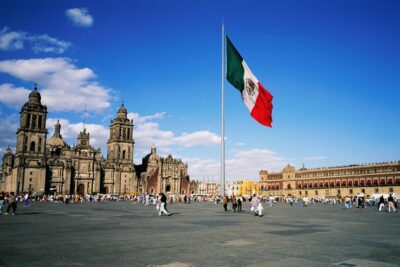
The Plaza de la Constitución, usually called the Zócalo, is the political heart of Mexico City. Jorge gives an overview of the square and the Government Palace, explaining the role these spaces play in the country’s public life.
The stop lasts about 20 minutes and is free. You get time to look around and take pictures, though the scale of the plaza can make 20 minutes feel short. The Zócalo is also a place where demonstrations, ceremonies, public gatherings, and temporary structures can affect what you see.
That changing city life matters. One outing had to adjust because some places were barricaded after protests, and Jorge changed the route to keep the experience moving. You should allow for similar changes if public events affect access on the day of your visit.
Templo Mayor from the Historic Center
The route includes a panoramic explanation of the archaeological zone of Templo Mayor. You learn about the Aztec site from the surrounding Historic Center rather than taking a full archaeological museum visit.
The scheduled time is about 20 minutes, and admission is free for this portion. This is another orientation stop. If Aztec history is a major reason for your visit, plan a separate return for a slower look at the excavation and museum. Here, Jorge’s role is to place the site within the modern city and explain why it matters.
The contrast is powerful: an ancient ceremonial center, colonial buildings, and a modern capital all occupy the same compact area. You do not need a long lecture to see why this part of the walk helps make sense of Mexico City.
Ending inside the Metropolitan Cathedral
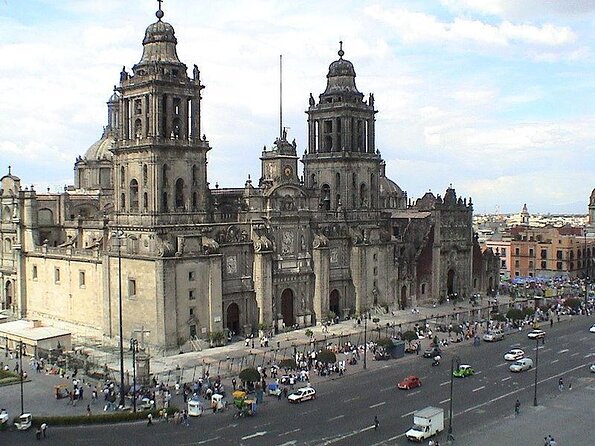
The tour finishes at the Metropolitan Cathedral, on the Zócalo. Jorge explains the exterior, shares historical anecdotes, and gives you free time to enter and enjoy the interior.
The listed time is 20 minutes. This has caused some confusion because the formal guided portion can appear to end before the full three-hour period. In practice, the cathedral time is intended as flexible personal time. You can stay longer to look at the interior, meditate, or attend Mass, without Jorge pressing you to leave.
That ending works well. After a fast route, you get a quiet chance to look on your own. It also gives you a natural place to continue exploring after the guide departs.
What the private format is really worth
The price is $68.70 per person. Since this is a private activity, the value improves as your group grows. A couple, family, or group of friends can split the cost of a dedicated guide and ask questions suited to their interests. For one person, the same price buys personal attention but is a larger expense than joining a shared walk.
There is no transportation, meal, or paid admission included. You receive a bottle of water, guiding in English, and the private route. That makes the price reasonable if you want a history-focused introduction and prefer not to manage the route yourself.
The strongest value is Jorge’s teaching style. He brings together architecture, Mexican politics, customs, and anecdotes instead of treating each stop as an isolated photo opportunity. The one caution is tone. Most comments describe him as warm, passionate, lively, and sincere, but one person found his delivery heavy-handed and authoritarian at times. If you prefer a very casual guide who speaks briefly, this may not be your ideal match.
Who should book this walk
I would choose this tour if you are visiting Mexico City for only a few days, enjoy history, or want to get your bearings before exploring the center alone. It suits couples, families, solo visitors, and friends who want a private conversation rather than a large group.
It is also a good choice for people who like to see many sights first and return later for detailed visits. Jorge gives you enough background to help you decide which churches, palaces, museums, and archaeological areas deserve more time.
I would think twice if you have mobility problems or dislike sustained walking. The activity asks for moderate physical fitness and is not recommended for people with mobility difficulties. Bring comfortable shoes, a hat, and sunscreen. Food and gratuities are extra.
The tour is offered in English, uses a mobile ticket, and is generally booked well ahead of time, around 28 days in advance on average. Free cancellation is available up to 24 hours before the start time. Poor weather can lead to a new date or a full refund.
Should you book it?
Book it if you want a personal, history-heavy introduction to central Mexico City and can keep moving for several hours. Jorge’s strongest qualities are his command of the subject, his love for his city, and his ability to connect a building to the people and politics around it.
Do not book it expecting long interior visits, transportation, meals, or a gentle stroll. This is a packed walking survey with short stops and flexible timing. For the right person, it is an efficient first morning in the Historic Center, followed by independent visits to the places that caught your attention.
FAQ
How long does the tour last?
The experience is listed as approximately three hours. The individual stop descriptions suggest that timing can vary, especially because the final cathedral visit includes flexible personal time.
Where does the tour begin?
It begins at the Monument to the Revolution, at Plaza de la República in the Tabacalera area of Mexico City.
Where does the tour end?
It ends at the Mexico City Metropolitan Cathedral on the Zócalo.
Is transportation included?
No. This is a walking tour between the listed locations, with no transportation included.
Is the tour private?
Yes. Only your group participates in the activity.
Is the tour offered in English?
Yes. English is the listed language.
Is bottled water included?
Yes. A water bottle is included.
Are meals and tips included?
No. Food and gratuities are not included in the price.
Are admission tickets included?
Most listed stops are free or involve exterior explanations. Admission is not included for the Monument and Museum of the Revolution or Palacio de Bellas Artes.
What physical ability is required?
You should have a moderate level of physical fitness. The activity is not recommended for people with mobility problems.
What is the cancellation policy?
You can cancel at least 24 hours before the experience begins for a full refund. Cancellations or changes made less than 24 hours before the start time are not accepted, and poor weather may result in a different date or a full refund.
More Private Tours in Mexico City



More City Tours in Mexico City
More Historic Center Walks in Mexico City


More tours in Mexico City we've reviewed


Historic Center Walks, compared.
 ★ 5.0Historic Downtown Walking TourFrom $263 hours (approx.)
 ★ 5.0Historic Center Food Tour in Mexico CityFrom $1155 hours (approx.)
 ★ 4.8Mexico City: Historic Downtown Walking TourFrom $263 hours
 ★ 5.0Walking Tour of the Historic Center of Mexico City3 hours (approx.)
 ★ 5.0Mexico City Historical Centre Food Tour with 7 Authentic TastingsFrom $653 hours (approx.)
 ★ 5.0Private Walking Tour Gems of the Historic Center of Mexico CityFrom $1564 hours (approx.)
 ★ 5.010 wonders of the Historic Center of Mexico City food and musicFrom $493 hours (approx.)
 ★ 5.0Walking Tour in Historic Center CDMXFrom $832 hours 30 minutes to 3 hours 10 minutes (approx.)
The lists this tour appears in