
Reviewed · HISTORIC CENTER WALKS
Walking Tour in Historic Center CDMX
Mexico City’s past unfolds in reverse on this walk. You begin with Diego Rivera’s political mural, move through the grand buildings of the colonial and Porfirian center, then finish with the Aztec city of Tenochtitlan. That order gives you a useful frame for understanding how one capital was built over another.
In This Article
- Key points to know before booking
- Why this walk works as a first look at CDMX
- Diego Rivera’s mural makes a smart opening
- Alameda Central shows the city at street level
- Bellas Artes delivers the biggest architectural moment
- Palacio Postal and Palacio de Minería reveal Porfirian ambition
- Museo Nacional de Arte adds sculpture and fine detail
- Teatro de la Ciudad brings a personal story
- Beneath Centro Cultural España, the Aztec past returns
- Templo Mayor closes the story at the Aztec capital
- What the guide adds to the experience
- Timing, comfort, and value at $83.64
- Who should choose this historic-center walk?
- Final call: book it for context, not exhaustive sightseeing
- FAQ
- How long does the walking tour last?
- Where does the tour begin?
- Where does the tour end?
- Is the tour offered in English?
- What is included in the price?
- What is the cancellation policy?
I like the wide sweep of the route and the chance to see major sights without arranging separate museum visits. I also like the personal touch: guides such as Delta, Diego, Jorge, and Jaime have been praised for clear English, patient answers, and adapting the pace to the group. The main drawback is simple: this is a brisk overview, not a detailed museum tour. You see many places, but only briefly.
Key points to know before booking
- Diego Rivera starts the story: The opening mural sets up Mexico’s colonial, political, and cultural conflicts.
- Nine major stops in one walk: You pass art museums, grand palaces, a theater, Aztec school ruins, and Templo Mayor.
- A useful historical sequence: The tour moves from modern Mexican history back to the Aztec capital and Spanish conquest.
- English-speaking certified guide: Delta, Diego, Jorge, and Jaime have each led highly praised tours, though your guide is not guaranteed.
- Plan for speed: The walk lasts about 2 hours 30 minutes to 3 hours 10 minutes, with short stops at most sites.
- Best for first-time orientation: You get the city’s big story and a helpful list of places to revisit later.
Why this walk works as a first look at CDMX
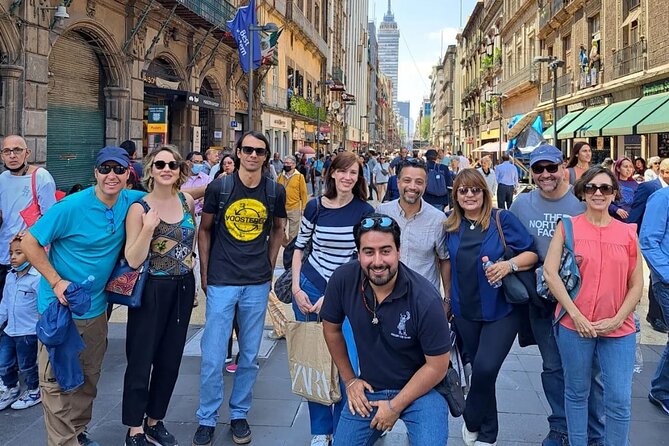
Mexico City’s historic center can feel like several cities stacked on top of each other. Aztec foundations sit below Spanish churches and government buildings. Porfirian steel and stonework appears beside colonial facades. Political murals, museums, theaters, and daily city life all share the same few streets.
This tour gives you a way to read those layers. Instead of treating Bellas Artes, Palacio Postal, and Templo Mayor as unrelated photo stops, your guide connects them to the forces that shaped Mexico City: conquest, religion, silver wealth, modern nationalism, social conflict, and the desire to make the capital look grand.
The route is also practical. You start at the Diego Rivera Mural Museum on Calle Colón Balderas and finish near the Templo Mayor Museum on Seminario. Since the route crosses the central district rather than looping back to its starting point, you can continue exploring from there after the walk.
The group can include up to 25 people. That is small enough for a guide to keep the group together, but it is not a private tour. If you want time for long questions, try to book an earlier departure. One guide specifically handled a group’s unusual questions well, but the amount of time available for conversation depends on group size and pace.
A few more Mexico City tours and experiences worth a look



Diego Rivera’s mural makes a smart opening
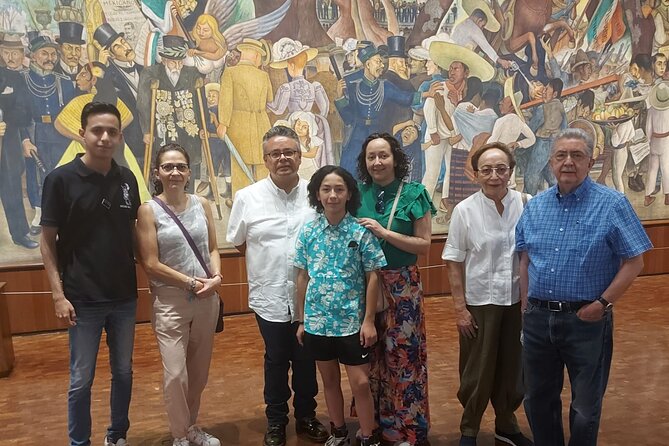
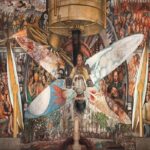
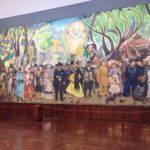
The first stop is the Museo Mural Diego Rivera, with about 25 minutes inside and admission included. The central work is Rivera’s famous mural showing figures tied to Mexico’s political and cultural past. The tour focuses on the controversy surrounding the mural’s censorship, including Rivera’s use of the phrase God does not exist.
That opening is more than an art stop. It gives you a fast introduction to the arguments that shaped modern Mexico: church and state, colonial rule, class, education, revolution, and national identity. A guide can point out the people Rivera placed in the scene and explain why their presence matters.
You should not expect a full art lecture in 25 minutes. The museum deserves more time if Rivera is a major reason you came to Mexico City. Still, as an introduction, this is an effective first chapter. One guide used the mural to explain roughly 400 years of colonial history before the group moved on. That approach makes the later buildings easier to understand.
Alameda Central shows the city at street level
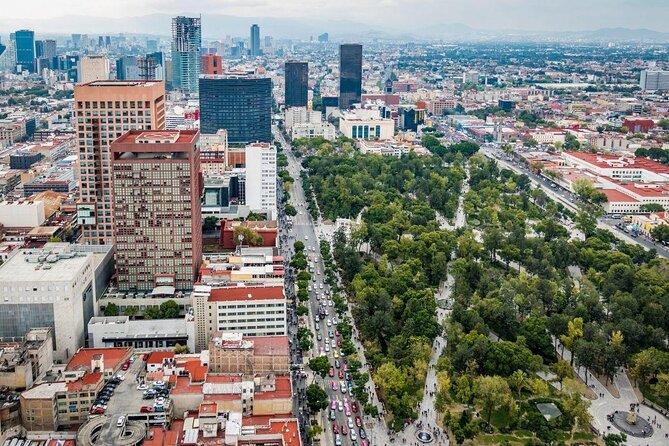
Next comes Alameda Central, with about 10 minutes among its sculptures and paths. The park is presented as the first public park in the Americas, and the guide explains how city residents use this open space.
This is a short stop, but it adds something the museums cannot. You see how the historic center functions as a public place, not just a collection of monuments. The classical sculptures and broad paths also help you notice the contrast between formal city planning and the everyday movement of Mexico City.
Ten minutes is enough for orientation and explanation, not for a relaxed park visit. If you want photographs, keep your camera ready. The group will soon continue toward the Palacio de Bellas Artes.
Bellas Artes delivers the biggest architectural moment
The Palacio de Bellas Artes receives about 20 minutes, and it is the most emblematic building on the route. The tour explains its history, design, and role in the city.
This is one of the places where you will wish for extra time. Bellas Artes combines a grand exterior with an interior known for murals and decorative detail, but a short guided visit can only cover the main points. The tour’s value here is context. You learn why the building matters before deciding if you want to return for a performance or a longer museum visit.
The guide also uses Bellas Artes to explain how Mexico City changed over time. The route is not only about beautiful buildings. It asks you to notice who funded them, what kind of city they were meant to represent, and how public taste changed.
Palacio Postal and Palacio de Minería reveal Porfirian ambition
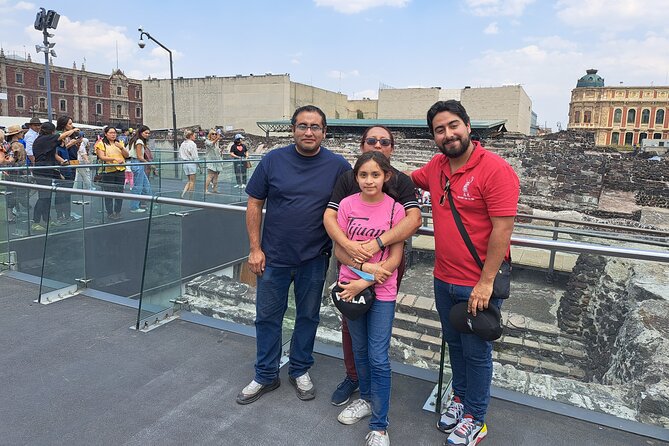
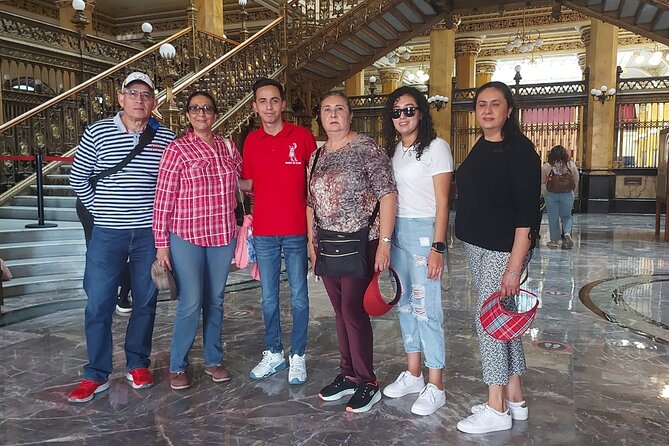
At the Palacio Postal, you spend about 15 minutes learning how the building fit into Porfirio Díaz’s plan to modernize and beautify Mexico City. The building is a sharp change from the mural and park. Its polished ornament and formal design reflect a government eager to present Mexico as modern and internationally important.
The stop works best if you pay attention to the building’s details rather than simply taking an exterior photo. Your guide can explain how architecture became part of the political message.
The Palacio de Minería follows, with about 10 minutes devoted to Mexico’s silver industry and the country’s position as the world’s leading silver exporter. This is a compact economic history lesson. Silver helped connect Mexico to global trade and helped finance institutions, buildings, and political power.
Again, ten minutes means you get the main idea rather than a full examination. If economic history is your interest, note the explanation and return later to explore the nearby buildings at your own pace.
Other walking tours we've reviewed in Mexico City


Museo Nacional de Arte adds sculpture and fine detail
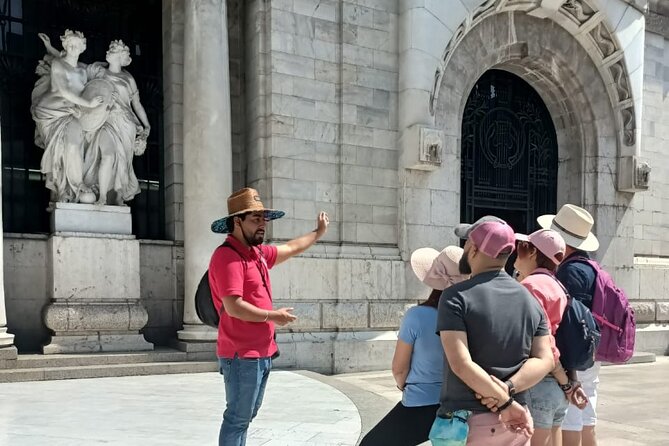
At the Museo Nacional de Arte, the group enters to see a sculpture made by an artist with one hand, along with architectural details. The stop lasts about 10 minutes.
That unusual sculpture story gives the visit a memorable human angle. The building itself is also part of the lesson, since its architecture reflects the wealth and ambition of earlier Mexico City. You are not simply being led from one famous facade to another. The guide draws your attention to craftsmanship, artistic skill, and the people behind the objects.
Ten minutes is not enough to tour the museum. Think of this as a carefully chosen sample. If the sculpture or the building catches your interest, you can make a return visit with more time.
Teatro de la Ciudad brings a personal story
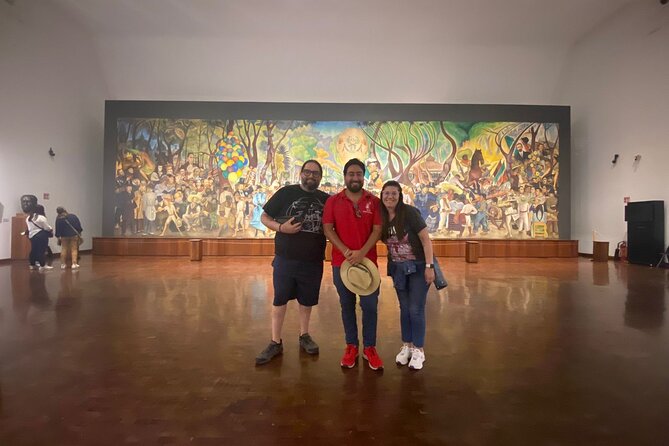
The Teatro de la Ciudad stop lasts about 15 minutes and focuses on theater in Mexico and the tragic life of Esperanza Iris. Across from the theater, the guide points out a building that served as an asylum for women labeled insane in the 18th century.
This is one of the route’s more human stops. Grand public buildings can make history feel distant, while Esperanza Iris’s story brings ambition, fame, and tragedy into sharper focus. The former asylum adds a darker note and reminds you that the city’s past includes institutions and lives that are not easy to celebrate.
The contrast fits the character of the tour. You move from beauty and national pride to exclusion, suffering, and difficult social history. The guide’s job here is to explain, not smooth over the uncomfortable parts.
Beneath Centro Cultural España, the Aztec past returns
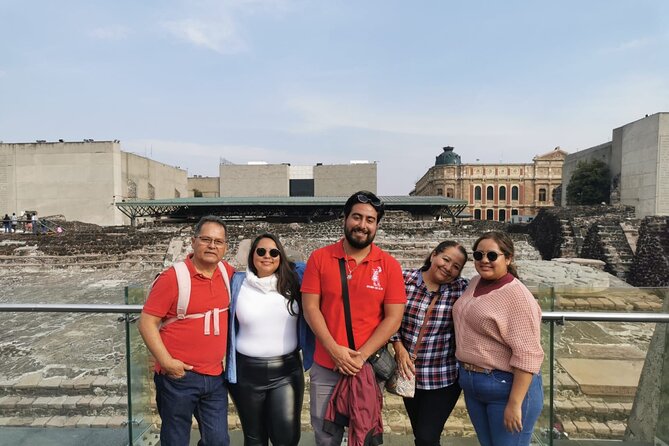
At the Centro Cultural España en México, the group goes below ground for about 20 minutes to see ruins connected with the school for the sons of Aztec nobles. Admission is free.
This is where the tour shifts firmly from colonial and modern Mexico toward Tenochtitlan. Seeing remains below a present-day cultural center makes the city’s layered past feel concrete. The ruins are not isolated in an archaeological park far from daily life. They sit beneath the streets and institutions of the modern center.
The stop also introduces the social structure of the Aztec world. A school for noble sons tells you something about education, status, and power before the Spanish conquest. Since the tour is moving quickly, you will get an explanation of the site rather than a long archaeological study.
Templo Mayor closes the story at the Aztec capital
The final stop is the Museo del Templo Mayor area, with about 25 minutes. The guide uses models to explain how the Aztecs built Tenochtitlan, how they understood the world, the role of sacrifice, and how the conquest took place.
There is an important practical detail here. The experience ends by explaining the main temple from outside, using models and the surrounding site rather than taking you through a full museum visit. Admission is listed as free for this stop, so do not treat the tour as a complete Templo Mayor Museum ticketed visit.
This ending works because it returns you to the beginning of Mexico City. After seeing colonial churches, Porfirian buildings, art museums, and modern cultural institutions, you finish with the city that existed before them. The guide’s model-based explanation can help you picture the scale and design of Tenochtitlan, something that is difficult to grasp from scattered ruins alone.
If Templo Mayor is high on your list, reserve separate time for the museum and archaeological area. The tour gives you an introduction and a strong sense of place, but 25 minutes cannot cover the full collection.
What the guide adds to the experience
The certified guide is the main reason to book this walk rather than follow a map on your phone. The route contains plenty of famous buildings, but their meaning is not always obvious from the outside.
Delta has been praised for a warm manner, strong command of the route, and careful time management. Diego has been praised for near-perfect English, broad knowledge, flexibility, and practical suggestions for lunch and getting an Uber afterward. Jorge has been praised for clear English and patient answers, while Jaime has been praised for kindness and adjusting the walk to individual needs.
Those names do not guarantee who will lead your tour. They do show the kind of guide you can reasonably hope for: someone who explains connections, answers questions, and keeps a large amount of material moving. One useful caution comes from the structure of the route itself. You should not expect an in-depth visit at every destination. Each major museum could take an hour or more on its own.
Book this if you enjoy learning through a connected story. If you want long periods for art, photography, or independent browsing, use the tour as an introduction and plan return visits.
Timing, comfort, and value at $83.64
The price is $83.64 per person. That is not a bargain-priced orientation walk, so the value depends on how much you want from the guide. You are paying for a certified English-speaking guide, a carefully linked route, explanations at several major sites, and included admission where noted.
The route covers a lot in roughly three hours. If you visited all these places independently, you would spend time researching the background, finding the entrances, and working out how the sites fit together. The tour saves that planning time and gives you a historical structure.
The tradeoff is depth. You are not buying full access and extended time at every museum. The strongest value comes on a first day in the historic center, when you want to learn the basic story and decide where to return.
Wear comfortable shoes and carry water. The exact duration can range from about 2 hours 30 minutes to 3 hours 10 minutes, and the city streets can make a short route feel full. Lunch, drinks, and tips are not included. The group size can reach 25 people, so stay near the guide and expect the pace to suit the whole group.
The tour is offered in English and is near public transportation. Confirmation arrives at booking, service animals are allowed, and most people can take part. You can cancel for a full refund up to 24 hours before the local start time. Cancellations or changes within 24 hours are not refunded or accepted.
Who should choose this historic-center walk?
I would recommend it to a first-time visitor who wants the major story of central Mexico City in one organized outing. It also suits families, solo visitors, and older adults who prefer a guide to handle the route and explain the context. The guide can adjust the pace in some cases, but the overall schedule still has several short stops.
It is especially useful if you are curious about the link between art and politics. Rivera’s mural, the Porfirian buildings, the theater story, and the Aztec ruins give you a more rounded view than a route focused only on churches and monuments.
You might skip it if you have already spent several days studying the historic center or if your main goal is extended museum time. In that case, a self-guided day with longer visits may suit you better. You might also find the price high if you mainly want exterior photographs.
Final call: book it for context, not exhaustive sightseeing
Book this tour if you want a clear introduction to Mexico City’s historic center and value a good guide more than a long stay inside each museum. The route’s best feature is its arc, from Rivera’s modern political vision back to Tenochtitlan and the conquest.
Choose an early time if possible, especially if you want easier movement through the center. Go in expecting short explanations at many sites, not a full tour of nine museums and monuments. With that expectation, the walk offers a useful foundation for the rest of your time in CDMX.
FAQ
How long does the walking tour last?
The experience lasts approximately 2 hours 30 minutes to 3 hours 10 minutes.
Where does the tour begin?
It begins at the Museo Mural Diego Rivera, at Calle Colón Balderas s/n in Colonia Centro, Mexico City.
Where does the tour end?
It ends at the Templo Mayor Museum area on Seminario 8. The final explanation covers the main temple, models, and the construction of Tenochtitlan from outside.
Is the tour offered in English?
Yes. The experience is offered in English.
What is included in the price?
A certified guide is included. Lunch, food, drinks, and tips are not included.
What is the cancellation policy?
You can cancel at least 24 hours before the start time for a full refund. Cancellations or changes made less than 24 hours before the experience are not accepted and are not refunded.
More Historical Tours in Mexico City
More Walking Tours in Mexico City
More Historic Center Walks in Mexico City

More tours in Mexico City we've reviewed





Historic Center Walks, compared.
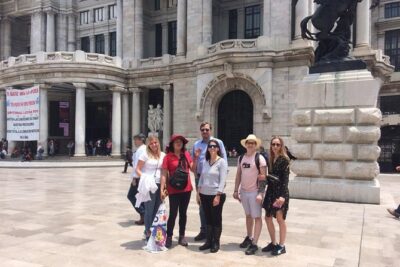 ★ 5.0Historic Downtown Walking TourFrom $263 hours (approx.)
 ★ 5.0Historic Center Food Tour in Mexico CityFrom $1155 hours (approx.)
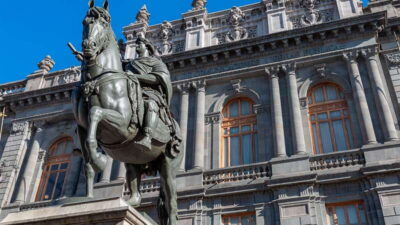 ★ 4.8Mexico City: Historic Downtown Walking TourFrom $263 hours
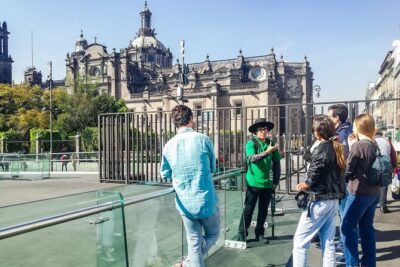 ★ 5.0Walking Tour of the Historic Center of Mexico City3 hours (approx.)
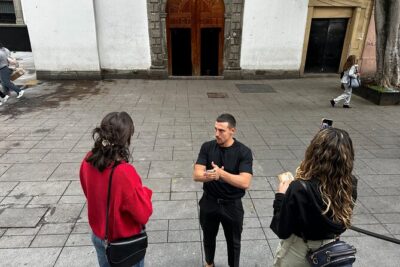 ★ 5.0Mexico City Historical Centre Food Tour with 7 Authentic TastingsFrom $653 hours (approx.)
 ★ 5.0Private Walking Tour Gems of the Historic Center of Mexico CityFrom $1564 hours (approx.)
 ★ 5.010 wonders of the Historic Center of Mexico City food and musicFrom $493 hours (approx.)
 ★ 5.0The best and most complete PRIVATE CITY TOUR through the Historic CenterFrom $683 hours (approx.)
The lists this tour appears in