
Reviewed · HISTORIC CENTER WALKS
10 wonders of the Historic Center of Mexico City food and music
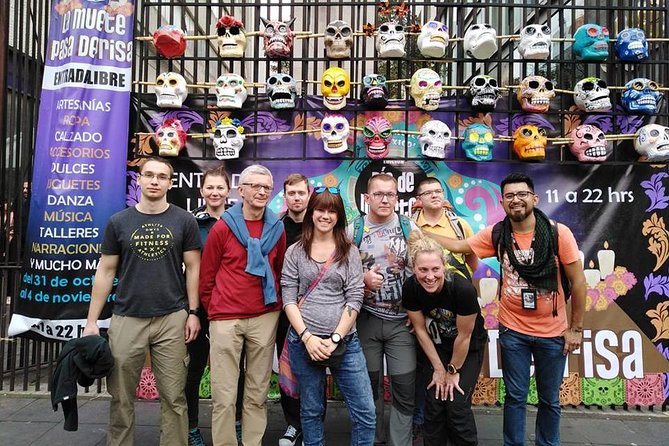
Mexico City’s Historic Center is best understood on foot, one grand building and one tasty stop at a time. This three-hour walk links Diego Rivera’s famous Alameda mural, Bellas Artes, the Postal Palace, the Cathedral, Temple Mayor, and old-school food shops into one busy but useful introduction.
In This Article
- Six useful things to know before booking
- Why this makes a smart first day in Mexico City
- Diego Rivera’s mural and Alameda Central
- Bellas Artes and the Postal Palace
- The House of Tiles and the old center’s commercial life
- The Gran Hotel and its Tiffany ceiling
- The Cathedral, Sagrario, and the layers beneath the plaza
- Temple Mayor and the final meal
- What $49 buys you
- Walking pace, weather, and route changes
- Who will enjoy this tour most
- Should you book the 10 Wonders walk?
- FAQ
- How long does the tour last?
- Where does the tour start?
- Where does the tour end?
- Is the tour offered in English?
- What food is included?
- Are entry tickets included?
- Is transportation included?
- How many people can join the tour?
- What is the cancellation policy?
I like the way the tour mixes major sights with everyday food, especially the stop at La Ideal bakery and the quesadilla meal at the end. I also like the small maximum group of 15, which gives guides such as Rodrigo and Balaam room to answer questions and adjust the route.
The main thing to consider is the walking. One person counted about 9,000 steps, and the tour can run beyond three hours. Lunch comes near the end, so eat a light breakfast first.
Six useful things to know before booking
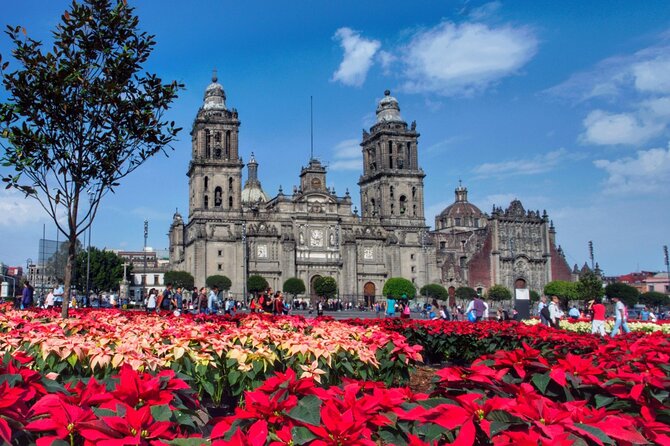
- You cover the city center’s essential sights: Bellas Artes, the Cathedral, Temple Mayor, Alameda Central, and several striking historic buildings.
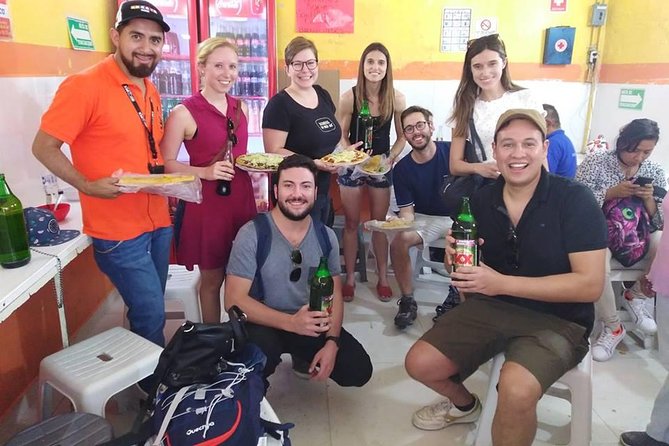
- The food is part of the tour, not an afterthought: You taste La Ideal bread, Mexican sweets, and a quesadilla with fillings such as huitlacoche or pork.
- The Diego Rivera mural gives you a strong opening: His huge scene of a Sunday afternoon in Alameda Central introduces Mexico’s people, politics, and public art.
- The route is led in English: Guides including Rodrigo, Balaam, Miguel, Balam, Cedrela, and Jesus have led this experience.
- Expect a real city walk: Public transportation and private vehicles are not included, and the route covers about 9,000 steps for some groups.
- The $49 price includes key costs: Guide, entry tickets, taxes, lunch, and tastings are included, which makes the price fair for a first look at downtown.
Why this makes a smart first day in Mexico City
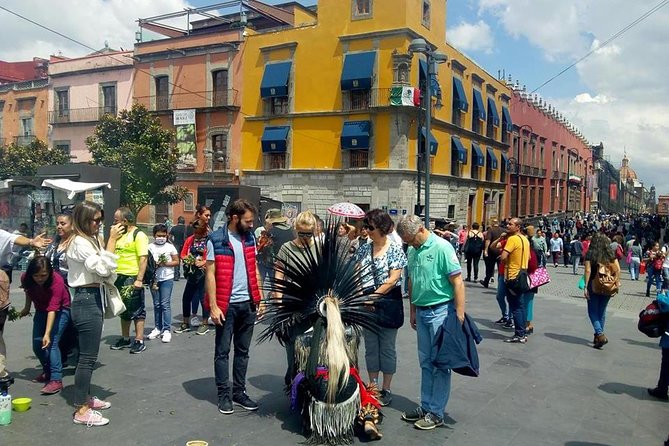
I would place this tour near the start of your Mexico City visit. It gives you a street-level map of Centro Histórico and shows you places that can be easy to miss when you are simply wandering between the Zócalo and Bellas Artes.
The appeal is not only the checklist of monuments. You move between art, Spanish colonial buildings, post-Revolution public spaces, old food businesses, and the remains of the Aztec capital. That range helps you understand why Mexico City feels like several periods of history occupying the same few blocks.
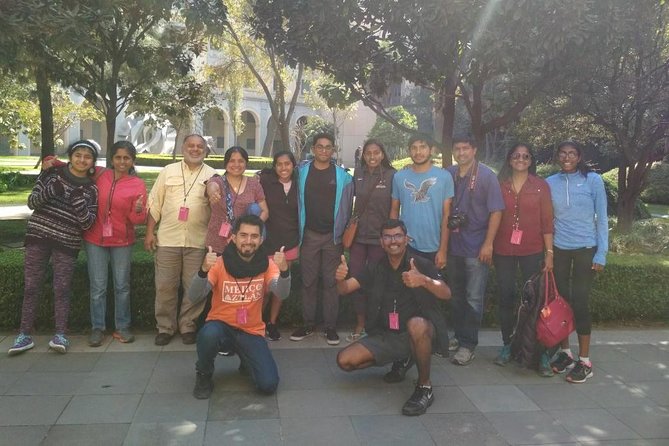
The guides are a major part of the experience. Rodrigo is often praised for clear storytelling, patience, and personal help, including assisting a guest with a bad knee. Balaam is also noted for adapting the walk to a group’s interests and adding useful stops. Other guides have led the tour as well, so the exact style may vary, but the strongest pattern is a friendly guide who explains rather than simply points.
The group limit of 15 matters. This is not a private tour, but it is small enough for questions and occasional detours. One solo participant ended up spending extra time with the group after the formal walk, while other groups received restaurant and sightseeing suggestions for the rest of their stay.
A few more Mexico City tours and experiences worth a look


Diego Rivera’s mural and Alameda Central
The meeting point is the Diego Rivera Mural Museum on Calle Colón Balderas, in Colonia Centro. This is a practical starting place because you begin with one of the city’s most famous works before heading into the wider center.
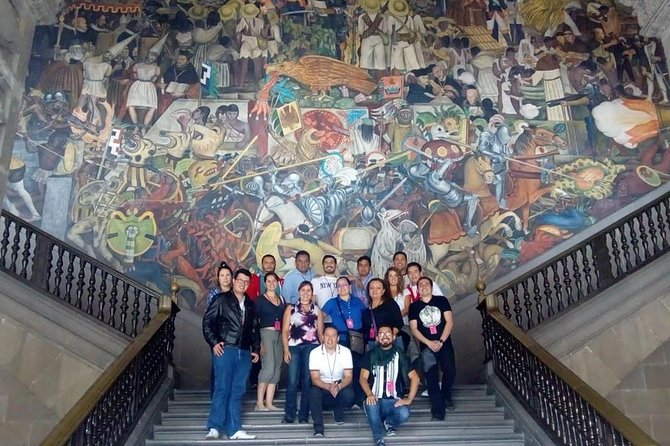
Rivera’s Dream of a Sunday Afternoon in the Alameda Central fills a large wall with historical figures and social types from Mexico’s past. You do not need to know every person in the painting to enjoy it. A good guide helps you read the crowd, the symbols, and Rivera’s view of Mexican identity.
After the museum, the route moves through Alameda Central, described as the oldest park in the Americas. The park gives you a change of pace after the indoor mural. It also helps explain the layout of the center, with Bellas Artes nearby and major government, religious, and commercial buildings spreading toward the Zócalo.
This section is a good example of the tour’s strength: you are not simply taking photos of a landmark. You get a connection between the art, the park, and the city around them.
Bellas Artes and the Postal Palace
The Palace of Fine Arts is one of the most recognizable buildings in Mexico City. Its white stone exterior, domes, cultural role, and collection of murals make it a key stop even if you do not have time for a full museum visit.
The tour focuses on the building and its place in the city rather than promising a long indoor visit. That distinction matters. If you want to see every gallery and performance space, return on your own with more time. During the walk, you get the essential architecture and context without losing the route’s momentum.
The Postal Palace offers a sharp contrast. Its decorative metalwork, stone details, and formal interior show how much pride Mexico placed in public buildings. It is an easy place to rush past, but the guide’s explanation turns it into more than a pretty facade.
Architecture fans will get plenty from these two stops. The pace also suits you if you want a broad look at downtown rather than spending an entire afternoon inside one museum.
The House of Tiles and the old center’s commercial life
The House of Tiles is another quick but memorable stop. Its blue and white tile exterior gives the building an instantly recognizable look, and it helps show how homes, shops, restaurants, and public buildings overlap in the center.
The tour’s food stops add another layer. At La Ideal bakery, you taste traditional Mexican bread, with choices that can include conchas and croissant-style pastries. The point is not a formal cooking lesson. It is a chance to sample the kind of bread people in the city buy as part of ordinary daily life.
The bakery can be busy, and the stop is brief, so think of it as a tasting rather than a relaxed café break. Still, this is one of the details I value most. A monument tells you about a city’s official past. A bakery tells you what people eat on a normal morning.
The route also includes Dulcería de Celaya, known here as the Temple of Mexican sweets. This traditional sweet shop gives you a look at the country’s confectionery culture. The precise tasting selection may vary, but the stop adds something different from the savory quesadilla later.
The Gran Hotel and its Tiffany ceiling
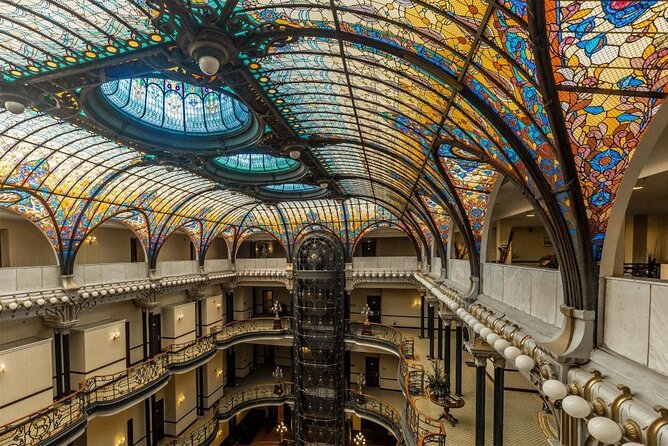
The Gran Hotel Ciudad de México brings you into one of the center’s most elegant interiors. The highlight is the Tiffany stained-glass ceiling, which spreads color and light across the lobby.
This is a worthwhile pause because it shifts the mood of the walk. You have moved through parks, museums, bakeries, and formal civic buildings. Here, the focus is decorative design and the grand hotel tradition.
Access can depend on conditions. One tour had to skip the Gran Hotel because of a city demonstration and replaced it with San Ildefonso College, where the group saw impressive murals. That is a useful sign of a flexible guide, but it also means you should treat the exact sequence as changeable.
Downtown Mexico City sometimes has protests, ceremonies, blocked streets, rain, or early closures. Guides have adjusted start times, rerouted groups, and swapped food stops when needed. You may not see every planned interior on an unusual day, but the best response is to keep the sightseeing moving rather than get stuck at a closed entrance.
A few more Mexico City tours and experiences worth a look





The Cathedral, Sagrario, and the layers beneath the plaza
The Metropolitan Cathedral is one of the largest churches in Latin America and one of the major visual anchors of the center. Its scale can be hard to grasp from a quick photograph, so the guide’s explanation is useful as you look at the facade, chapels, and interior spaces.
The nearby Sagrario Metropolitano adds a more detailed and ornate counterpoint to the Cathedral. Together, these buildings show the religious power and artistic ambition that shaped the colonial center.
The Cathedral is also important because it sits in a place layered with earlier cultures and later national events. This is where the tour’s broad story comes together. You are not looking at isolated buildings. You are seeing a city built over earlier cities, with each period leaving a mark.
The route can feel fast here if you want extensive time inside. Ask questions as you go, and plan to return if the church is a personal priority. The tour offers orientation and explanation, not an hour-long architectural study.
Temple Mayor and the final meal
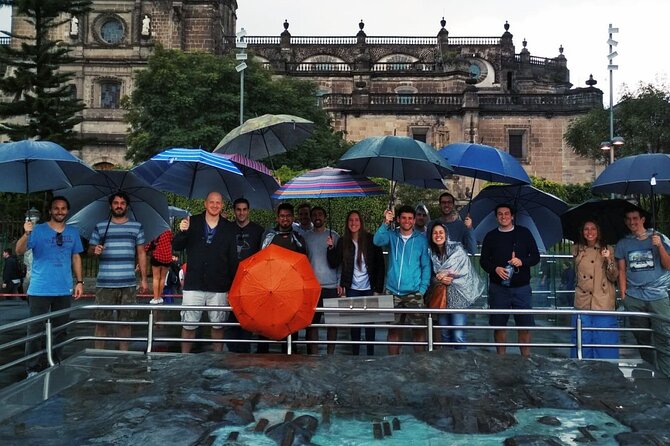
The walk concludes at the Temple Mayor ruins, where the remains of the Aztec capital sit beside the modern Historic Center. This is the most important archaeological stop on the route and a strong finish because it changes your view of everything you have just seen.
The guide explains the Aztec remains beneath your feet and connects the ruins to the later Spanish city. From the nearby area, you also get a useful setting for photographs, with the old center spread around you.
The final meal is a quesadilla. It may use a standard corn or blue corn tortilla and fillings such as cheese, huitlacoche, crispy pork cracklings, or meat, finished with red or green salsa. Huitlacoche, sometimes called Mexican corn truffle, is the most distinctive option if it is available.
Do not arrive expecting a large restaurant lunch with many courses. This is a traditional, casual food stop, and the exact choice may change. The experience has shifted to tacos and quesadillas when streets were blocked or businesses closed early. That flexibility is helpful, but picky eaters should know that the food is local and simple rather than carefully customized.
One practical tip deserves repeating: lunch comes at the end. A light breakfast will make the bakery and quesadilla stops more enjoyable.
What $49 buys you
At $49 per person, the value depends on how you use the tour. You are paying for a guide, entry tickets, taxes, bread, sweets, and a quesadilla. Private transportation is not included, but a vehicle would not add much to a walk through the compact center, where traffic can be slow and streets may close without warning.
I consider the price fair for a first visit. Entry fees and food add up, and the guide gives you a route that would take more planning to assemble alone. You also receive practical suggestions for other places to eat and visit.
The tour is less useful if you already know Centro Histórico well or prefer to spend 20 minutes inside each museum and church. In that case, a self-guided day may give you more control. But if you have limited time, the tour efficiently connects the city’s big sights with food you might not choose on your own.
Group discounts are available, and the tour is offered in English. It is booked around 16 days ahead on average, so I would not leave it until the last minute during a busy visit.
Walking pace, weather, and route changes
Plan on comfortable shoes. One group covered roughly 9,000 steps, and the route includes busy streets, plazas, indoor stops, and time on your feet. Most people can participate, but the walk is not designed as a short, seated sightseeing trip.
Rain can also affect the experience. A guide has continued through a rainstorm while keeping the group together, but bring sensible protection if the forecast looks unsettled. The center can be crowded, and a protest or public event may require a detour.
The maximum group size is 15, and the mobile ticket is convenient. Service animals are allowed, and the meeting point is near public transportation. The activity is scheduled for about three hours and is intended to return to the starting point, although one person found the final location different and had to make their own way back. Confirm the end point with your guide if the route changes.
Cancellation is free up to 24 hours before the local start time. A cancellation or change made less than 24 hours before departure is not refunded, so same-day illness can create a difficult situation.
Who will enjoy this tour most
I would recommend it to first-time visitors, solo travelers, couples, and families who want a quick orientation to central Mexico City. It also fits anyone staying downtown with only half a day available.
You will get the most from it if you enjoy stories about art, buildings, food, and the people who use these places. The guides have been praised for answering questions, helping with mobility concerns, and making small adjustments for personal interests.
It is less suited to you if you dislike walking, need a guaranteed fixed route, or want long museum visits. The tour has a lot to cover, and the most memorable moments may come from the guide’s explanation and food choices rather than from spending a long time at one stop.
Should you book the 10 Wonders walk?
Book it if this is your first day or two in Mexico City and you want the Historic Center to make sense quickly. The combination of Rivera, Bellas Artes, the Postal Palace, the Cathedral, Temple Mayor, La Ideal bread, Mexican sweets, and a final quesadilla gives you a solid first taste of the city.
I would especially choose it if you value a personable guide. Rodrigo, Balaam, Balam, Miguel, Cedrela, and Jesus have all led groups, with Rodrigo and Balaam receiving especially warm praise for storytelling, patience, and local advice.
Skip it if you already have a detailed downtown plan and prefer to set your own pace. For most first-time visitors, though, $49 is a sensible trade for three hours of context, food, and fewer wrong turns.
FAQ
How long does the tour last?
The tour lasts approximately three hours, though it can run longer depending on the pace, questions, route changes, and city conditions.
Where does the tour start?
It starts at the Diego Rivera Mural Museum on Calle Colón Balderas in Colonia Centro, Cuauhtémoc, Mexico City.
Where does the tour end?
The stated end point is back at the meeting point. Route changes can affect the final location, so confirm with the guide if streets or buildings are closed.
Is the tour offered in English?
Yes. The experience is offered in English.
What food is included?
Included food consists of traditional bread from La Ideal, Mexican sweets at Dulcería de Celaya, and lunch featuring a quesadilla. The quesadilla may contain cheese, huitlacoche, crispy pork cracklings, or meat with red or green salsa.
Are entry tickets included?
Yes. Entry tickets, all fees and taxes, the guide, and lunch are included.
Is transportation included?
Private transportation is not included. The tour is a walking experience and is near public transportation.
How many people can join the tour?
The maximum group size is 15 people. Group discounts are available.
What is the cancellation policy?
You can cancel up to 24 hours before the local start time for a full refund. Cancellations or changes made less than 24 hours before the start time are not refunded.
More City Tours in Mexico City


More Food Experiences in Mexico City
More Historic Center Walks in Mexico City

More tours in Mexico City we've reviewed




Historic Center Walks, compared.
 ★ 5.0Historic Downtown Walking TourFrom $263 hours (approx.)
 ★ 5.0Historic Center Food Tour in Mexico CityFrom $1155 hours (approx.)
 ★ 4.8Mexico City: Historic Downtown Walking TourFrom $263 hours
 ★ 5.0Walking Tour of the Historic Center of Mexico City3 hours (approx.)
 ★ 5.0Mexico City Historical Centre Food Tour with 7 Authentic TastingsFrom $653 hours (approx.)
 ★ 5.0Private Walking Tour Gems of the Historic Center of Mexico CityFrom $1564 hours (approx.)
 ★ 5.0Walking Tour in Historic Center CDMXFrom $832 hours 30 minutes to 3 hours 10 minutes (approx.)
 ★ 5.0The best and most complete PRIVATE CITY TOUR through the Historic CenterFrom $683 hours (approx.)
The lists this tour appears in