
Reviewed · HISTORICAL TOURS
Historical Center of the CDMX on foot
Mexico City’s historic center packs centuries of power, faith, art, and daily life into a walkable area. This private tour takes you from the Zócalo through grand government buildings and old streets to Palacio de Bellas Artes, with an English-speaking guide to explain what you are seeing.
In This Article
- Key points to know before booking
- Starting at the Zócalo, the city’s grand front room
- The cathedral and National Palace area
- Tacuba Street and the city between the monuments
- Manuel Tolsá Square and Mexico City’s architectural trio
- Palacio de Bellas Artes and the final landmark
- What the private format adds
- Timing, pickup, and practical planning
- Who will get the most from this walk
- Should you book the Historical Center of the CDMX on foot?
- FAQ
- How long does the Historical Center of the CDMX on foot tour last?
- Where does the tour begin and end?
- Is hotel pickup available?
- Are tickets to Palacio de Bellas Artes and MUNAL included?
- Is this a private tour?
- What happens if I need to cancel?
I like the private format, since your group can set the pace and ask about the places that catch your eye. I also like the route itself: it links major sights with smaller architectural details on Tacuba Street, at Manuel Tolsá Square, and around the Postal Palace.
The main drawback is that the tour can feel rushed if you want to enter several buildings. Admission to Palacio de Bellas Artes and MUNAL is not included, and the listed four to five hours cover a lot of ground.
Key points to know before booking
- The walk begins and ends at the Zócalo, Mexico City’s vast central square.
- The route joins major landmarks with street-level details, including Café Tacuba, Manuel Tolsá Square, the Mining Palace, and the Postal Palace.
- Private guiding gives you room to shape the visit, though you should tell the guide in advance what interests you most.
- Leonardo and Alejandro are named guides associated with the experience, with Alejandro praised for keeping historical subjects interesting.
- Palacio de Bellas Artes and MUNAL admission costs extra, so check your priorities before the tour begins.
- The walk lasts about four to five hours, includes bottled water and taxes, and requires good weather.
Starting at the Zócalo, the city’s grand front room
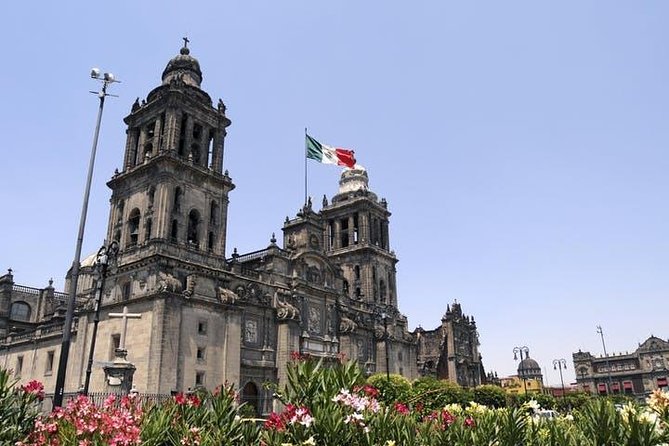
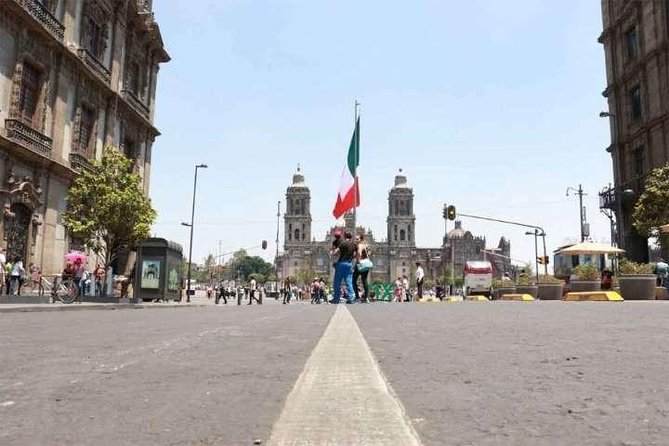
The tour starts at Plaza de la Constitución, better known as the Zócalo. This enormous square is the natural place to begin because it gives you a quick sense of Mexico City’s scale and political importance before you enter the surrounding streets.
The square takes its formal name from the Constitution of Cádiz, promulgated in 1812. It is described as the second-largest square in the world and the largest in a Spanish-speaking country. Those claims are less important than the feeling you get on site: this is a space built for ceremonies, public gatherings, government power, and civic life.
Plan to spend about an hour here. Your guide can help you read the square as more than an open expanse. The buildings around it represent different layers of the city, from the cathedral and National Palace to the former and current government offices and the Merchants Portal.
This is also a useful place to settle into the walking pace. The tour does not begin with a long transfer or a complicated ride. You meet at Constitution Plaza, and the activity returns there at the end. Hotel pickup is offered, with the guide identifying themselves in the lobby and carrying a sign with the name on the reservation.
That pickup detail matters if you are staying in a hotel and do not want to find the starting point alone. Still, confirm the arrangement when you book, since the stated meeting point remains the Zócalo.
Other historical tours in Mexico City



The cathedral and National Palace area
The next section brings you into the group of major buildings around the square. The Metropolitan Cathedral of Mexico City took more than three centuries to build, so its design reflects several periods of the Viceroyalty era rather than one clean architectural plan.
That long construction period is exactly what makes a guide useful here. You can look at a façade and see one building, while the explanation reveals changes in taste, power, and building practice across generations. If you are interested in architecture, religion, or the way colonial institutions shaped the city, this is one of the strongest parts of the route.
The National Palace is nearby and serves as the seat of Mexico’s executive power. The Old City Hall Palace and Government Building are also close, along with the Merchants Portal. In a few blocks, you see the physical concentration of church, state, commerce, and civic administration.
The tour description allows about two hours for this portion. That does not mean two full hours inside every building. Admission is listed as free for this part of the experience, but the information provided does not promise entry into every interior or specify an exact indoor route. Ask your guide what can be visited on your chosen date.
This is a good place to use the private-tour format. You may want more time for architecture, or you may prefer a brisk explanation before moving on to the streets. The experience is best when you tell the guide what you want early, rather than hoping the route will automatically match your interests.
Tacuba Street and the city between the monuments
The historic center becomes more personal once you leave the Zócalo area and follow streets such as Tacuba. The road was formerly known as the Mexico-Tacuba Road, and it now brings together restaurants, museums, elegant civic buildings, and the everyday movement of central Mexico City.
Café Tacuba is one of the traditional places identified along this street. Its interior is decorated with Talavera mosaics and Mexican design, and it serves traditional Mexican food. The tour does not include a meal, so think of the café as a visual and cultural stop rather than a guaranteed dining break.
I like this part of the route because it gives the monumental buildings some context. A city center is not only its grand square and official palaces. It is also the old road, the restaurant people recognize by name, and the way different periods of construction sit beside ordinary urban life.
You should wear comfortable walking shoes and keep your schedule fairly open. The route is described as four to five hours, with roughly two hours assigned to the wider historic center. That is enough for a strong introduction, but not enough for a slow inspection of every façade or museum.
Manuel Tolsá Square and Mexico City’s architectural trio
Manuel Tolsá Square is one of the most visually ordered parts of the walk. It is surrounded by buildings with a strong sense of proportion, including the National Museum of Art, often called MUNAL, and the Mining Palace.
MUNAL is noted for its beauty within the historic center. If you care about art and interiors, you may want to ask about adding entrance time, since admission is not included. The tour can show you the building and explain its place in the district, but an exterior visit is not the same as seeing the collection inside.
The Mining Palace has a more restrained neoclassical character. It also hosts the Mining Palace Book Fair, described as one of the city’s busiest. The fair is not presented as a guaranteed feature of every departure, so treat it as a possible event rather than a planned part of the tour.
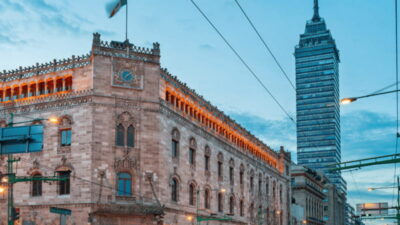
Almost across from Manuel Tolsá Square, beside the Mining Palace, is the Postal Palace. Its design draws inspiration from Venice and gives the route another architectural shift. After the broad civic spaces and religious buildings near the Zócalo, this refined postal building shows how much variety can fit into a short walk.
This section rewards people who look up. Mexico City’s center can be crowded with movement at street level, but the upper stories, stonework, balconies, and decorative details often explain why the district deserves more than a quick photo stop.
Palacio de Bellas Artes and the final landmark
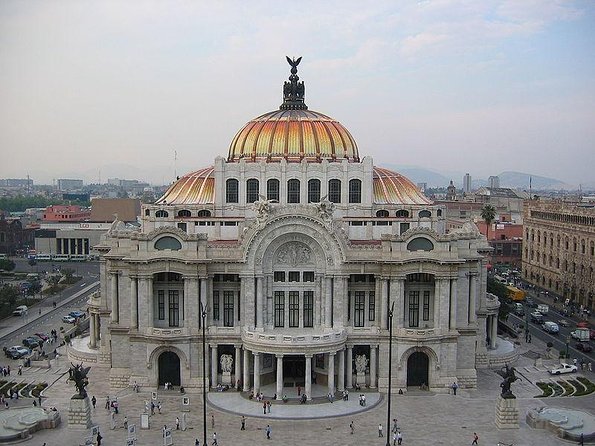
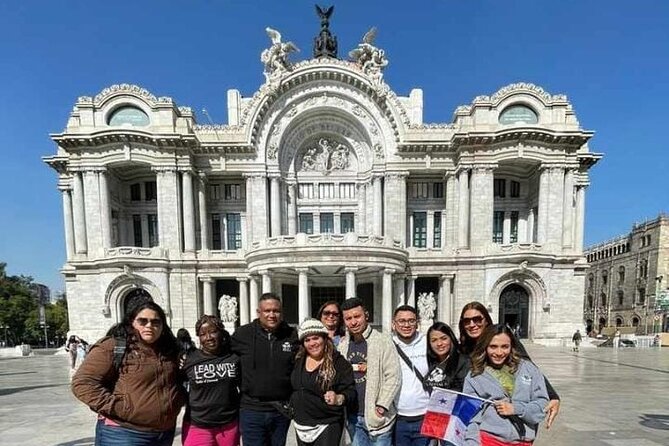
The last major stop is Palacio de Bellas Artes, one of Mexico City’s best-known cultural buildings. Its exterior uses Art Nouveau sculpture, while the interior has a more restrained Art Deco style with geometric and pre-Hispanic motifs.
That contrast makes Bellas Artes a fitting end to the tour. You have moved through colonial, neoclassical, and later architectural styles, then arrive at a building that brings European design ideas together with Mexican references.
About an hour is assigned to this stop. Admission is not included, so decide in advance how important the interior is to you. If you only want the guide’s explanation and an exterior look, the tour may fit comfortably into its advertised duration. If you want to enter Bellas Artes and MUNAL, allow for ticket costs and possible extra time.
The supplied information does not state the ticket price for either museum. That means you should compare the total cost of the tour with your own plan. If you already intend to visit both buildings, a guide who handles the walking route and explains the exteriors may add value. If your priority is extended museum time, you may prefer to visit them separately.



What the private format adds
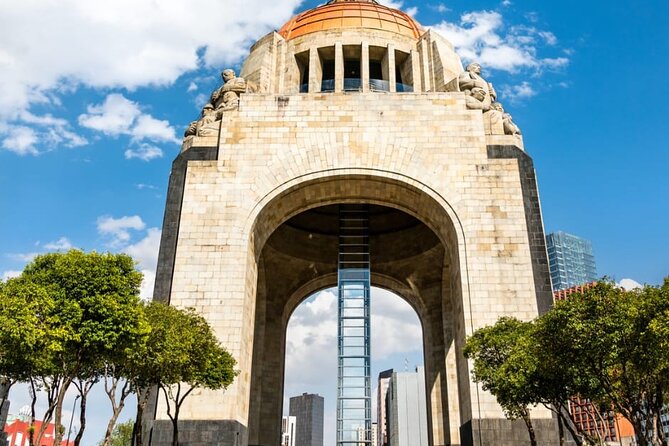
This is a private activity, so only your group participates. That is a meaningful difference in a dense city center. You can ask about a building when you are standing in front of it, rather than saving questions for a fixed pause or trying to hear over a large group.
The best use of a private guide is not simply walking faster. It is deciding where to spend your attention. You might want a stronger focus on political buildings, colonial-era design, art, food traditions, or the changing streets around Tacuba. Tell the operator or guide ahead of time, especially if you have only four hours.
The available guide feedback is positive but not uniform. Leonardo was praised for being informative and organizing the tour well. Alejandro was praised for his historical knowledge and for keeping the subjects interesting as the tour moved from one topic to another.
Another departure received praise for customer service and communication after a scheduling problem caused by a presidential celebration. The guide adjusted to a shortened four-hour plan and gave a small key chain as a thank-you. At the same time, the guide was judged less prepared than others, which is a useful warning: private service gives you flexibility, but the quality of the explanation can depend on the individual guide and how clearly you state your interests.
The overall rating is 4.3 from 12 reviews. That suggests a generally solid experience, with personal service and the route itself receiving more consistent praise than guide preparation.
Timing, pickup, and practical planning
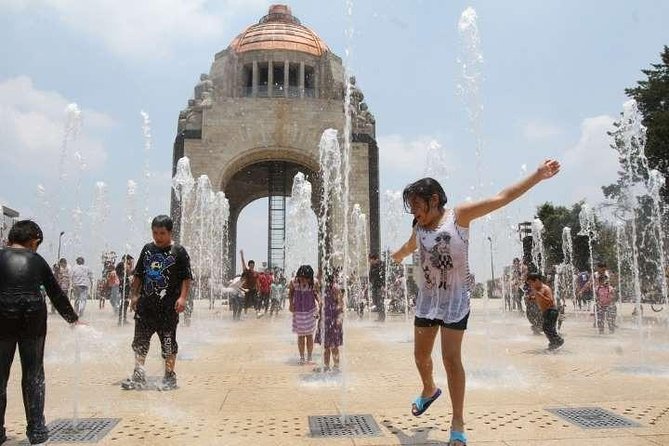
The activity lasts approximately four to five hours and ends back at the starting point. Since the route is on foot, the schedule depends on walking speed, stops, questions, and whether you enter any paid attractions.
Hotel pickup is offered. The operator-guide is expected to identify themselves in the hotel lobby with a sign showing the name on the reservation. If you use this option, have the reservation name available and confirm the pickup details before the day of the tour.
The tour is offered in English and includes bottled water, all fees, and taxes. Palacio de Bellas Artes and MUNAL tickets are not included. The historic center is near public transportation, so the meeting point is practical even if you do not use hotel pickup.
Most people can participate, according to the supplied activity information. No detailed mobility information is provided, so if you have concerns about walking, stairs, or standing for several hours, ask the operator before booking.
The experience requires good weather. You can cancel for a full refund up to 24 hours before the start time. Changes or cancellations within 24 hours are not refunded, and poor weather may lead to a different date or a full refund.
Who will get the most from this walk
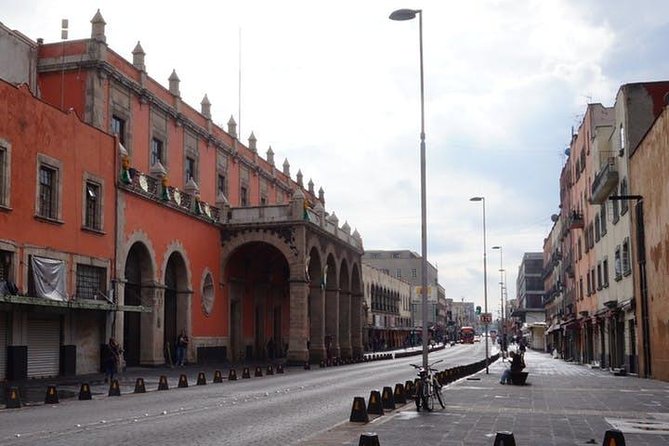
I would choose this tour if you are visiting Mexico City for the first time and want the center explained in one continuous outing. The route gives you orientation, major architecture, and enough local detail to help you decide where to return later.
It also suits you if you prefer a private guide to a large group. Families, couples, and small groups with different interests can ask for adjustments, at least within the available time. The short schedule makes it useful early in a visit, when you want to understand the district before exploring on your own.
Art lovers should plan carefully. Bellas Artes and MUNAL are important parts of the route, but their admission is extra, and the four to five-hour schedule may not allow for a long museum visit. If you want a full art day, book this as an introduction and return to the museums separately.
The tour is less suitable if you dislike walking, want a relaxed meal, or expect every major building to include a full interior visit. It is also not ideal for someone who has only one narrow hour available. The strength here is the connected route, not a quick single attraction.
Should you book the Historical Center of the CDMX on foot?
Book it if you want a private, English-language introduction to the central district, with a route that covers the Zócalo, cathedral area, National Palace, Tacuba Street, Manuel Tolsá Square, and Bellas Artes. The concentrated setting lets you see a great deal without spending the day in a vehicle.
Before booking, decide if you want museum entry. Since Bellas Artes and MUNAL tickets cost extra, the tour offers the best value when you want historical guidance and orientation rather than a packaged museum day.
I would also send the guide your top interests ahead of time. That small step may help avoid the uneven preparation noted in one account and make the private format work as intended. For a first look at Mexico City’s center, this is a practical and worthwhile walking route, as long as you accept that its broad coverage leaves limited time for lingering.
FAQ
How long does the Historical Center of the CDMX on foot tour last?
The activity lasts approximately four to five hours. The listed stops include about one hour at the Zócalo, two hours around the cathedral and National Palace area, two hours in the historic center, and one hour at Palacio de Bellas Artes.
Where does the tour begin and end?
It begins at Constitution Plaza, also called the Zócalo, at Plaza de la Constitución in Mexico City’s Centro Histórico. The activity ends back at the same meeting point.
Is hotel pickup available?
Yes. Pickup is offered, and the operator-guide will identify themselves in the hotel lobby with a sign showing the name of the person who made the reservation.
Are tickets to Palacio de Bellas Artes and MUNAL included?
No. Tickets for Palacio de Bellas Artes and MUNAL are not included. Bottled water, fees, and taxes are included.
Is this a private tour?
Yes. Only your group participates in the activity.
What happens if I need to cancel?
You can cancel at least 24 hours before the start time for a full refund. Cancellations or changes made within 24 hours are not accepted for a refund. If poor weather causes the operator to cancel, you will be offered another date or a full refund.
More Historical Tours in Mexico City

More tours in Mexico City we've reviewed





Historical Tours, compared.
 ★ 5.0Historic Downtown Walking TourFrom $263 hours (approx.)
 ★ 5.0Historic Center Food Tour in Mexico CityFrom $1155 hours (approx.)
 ★ 4.8Mexico City: Historic Downtown Walking TourFrom $263 hours
 ★ 5.0Walking Tour of the Historic Center of Mexico City3 hours (approx.)
 ★ 5.0Mexico City Historical Centre Food Tour with 7 Authentic TastingsFrom $653 hours (approx.)
 ★ 5.0Walking Tour in Mexico City for Exploring their Cultural HeritageFrom $252 to 3 hours (approx.)
 ★ 5.0Walking Tour – Impressive murals in Historical Center of Mexico CityFrom $511 to 3 hours (approx.)
 ★ 4.5Mexico City: Guided walking tour through the most historic parts of the city.From $303 hours
The lists this tour appears in