

Reviewed · WALKING TOURS
Mexico City: 1960s &1970s Mexican Architecture Walking Tour
Mexico City’s modern architecture tells a bigger story than concrete and glass. On this three-hour walk through Chapultepec Park, you’ll see how 1960s and 1970s design drew on Mesoamerican ideas, political change, artistic ambition, and even the Space Age. I especially like the link between ancient Mexican culture and modern building design, plus the chance to finish at Hotel Camino Real, a 1968 Olympic-era hotel with art inside its walls. The main drawback is the price: at $192 per person, this is costly for a three-hour tour, so you’ll want a serious interest in architecture, art, or Mexican history to get full value.
In This Article
- Key points to know before you book
- Why this Chapultepec architecture walk is different
- Starting at the National Museum of Anthropology
- Rufino Tamayo’s museum and the modern Mexican art scene
- A Space Age building from an optimistic era
- Ending at Hotel Camino Real and its art collection
- What the guide adds to the architecture
- Is $192 per person a fair price?
- Practical details for a smooth three hours
- Who should book this tour?
- Should you book it?
- FAQ
- How long is the Mexico City architecture tour?
- Where does the tour begin?
- Which museums are included?
- Is Hotel Camino Real part of the tour?
- What languages are available?
- How large is the group?
- Is the tour wheelchair accessible?
- What should I bring?
- Can I cancel the booking?
I also like that the group is limited to 10 people and that guides such as Natalia can shape the discussion around your interests. One caution: the route is described as wheelchair accessible and not especially walk-heavy, yet the activity is also listed as unsuitable for people with mobility impairments. If that matters to you, ask for a clear route description before booking.
Key points to know before you book

- The National Museum of Anthropology is the intellectual center of the tour: You’ll examine its 1960s design through Mesoamerican ideas and indigenous symbolism.
- Three museums are included: Your ticket covers the Anthropology Museum, Tamayo Museum, and Modern Art Museum.
- The buildings tell a political story: The tour connects architecture to the social and political climate of Mexico in the 1960s and 1970s.
- The Space Age stop adds variety: You’ll see a nearby building shaped by the futuristic optimism of its period.
- Hotel Camino Real is an unusual finale: Built for VIPs during the 1968 Olympics, it combines hotel design with a substantial modern Mexican art collection.
- The guide makes a major difference: Natalia has been praised for her art history background, friendly manner, and ability to tailor the tour to specific interests.
Why this Chapultepec architecture walk is different

Many Mexico City sightseeing walks focus on colonial streets, murals, or ancient ruins. This one looks at a newer period, when Mexico was presenting itself as a modern nation while still drawing strength from its pre-Hispanic past.
That tension gives the tour its shape. You’ll see buildings that use bold modern forms, but their ideas are not simply imported from Europe or the United States. The architects and artists were working with Mexican symbols, indigenous worldviews, national pride, and the hope that design could help define a modern country.
The setting matters, too. Chapultepec Park gives the tour room to breathe. You move between major cultural buildings rather than spending three hours in a dense city street setting. The park also helps you compare different approaches to public architecture, from a museum designed around ancient cosmology to a hotel made for international visitors during the 1968 Olympic Games.
The tour lasts three hours and uses a small group format of no more than 10 participants. That is a useful size for an architecture walk. You can hear the guide, ask questions, and spend more time on the buildings that interest you instead of being swept along in a large crowd.
Other walking tours we've reviewed in Mexico City



Starting at the National Museum of Anthropology
The tour begins inside or near the Porrua Bookstore in Chapultepec Park, close to the ticket booth. Make sure you choose the Chapultepec location, since Mexico City has several Porrua bookstores. Your guide waits inside with the Walk Mexico project logo.
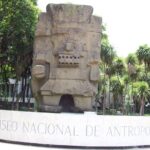
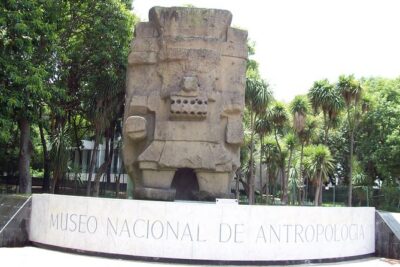
From there, you head to the National Museum of Anthropology, one of the key works of 1960s Mexican architecture. This is not just a stop to admire from outside. The guide explains how the building’s design reflects ideas drawn from pre-Hispanic cosmology, giving you a way to read the structure rather than simply photograph it.
That approach is the best reason to take the tour with an art historian, historian, or architect. Without guidance, the museum can seem like a huge, impressive container for archaeological objects. With the right explanation, the building itself becomes part of the story. You’ll look at how space, circulation, sculpture, and symbolism work together.
The museum also shows the close relationship between architecture and the visual arts in modern Mexico. The architect worked with renowned artists to bring indigenous ideas into the building through sculpture and design. That collaboration is important. It reflects a period when public buildings were expected to do more than serve a practical function. They were also meant to express national identity.
I would give this part your full attention. The museum is the place where the tour’s central idea becomes clearest: modern Mexican architecture could look forward without cutting itself off from the past.
Museum entry is included, along with admission to the Tamayo Museum and Modern Art Museum later in the route. That adds value, especially if you planned to visit these institutions anyway. It also means the tour is not limited to exterior viewing.
Rufino Tamayo’s museum and the modern Mexican art scene

The next stop is the Tamayo Museum of Contemporary Art, dedicated to Rufino Tamayo. The building was conceived by two influential architects in the early 1980s, so it moves the tour slightly beyond the main 1960s and 1970s focus.
That time shift is useful. It lets you see how the architectural language developed after the first wave of postwar modernism. The Tamayo building takes a modernist approach while responding to its natural setting and Mexico’s artistic traditions. You’ll get a sense of how architects were trying to make a contemporary museum that still belonged in Mexico.
The museum’s connection to Tamayo adds another layer. Tamayo was a major Mexican artist, and the building is not treated as a neutral box for his work. Its form helps frame a discussion about how museums present national art and how architecture can support an artist’s legacy.
You’ll receive an entrance ticket, so you can spend time inside rather than only looking at the exterior. The exact balance between walking, looking, and discussion may depend on the guide and the pace of your group. Natalia, one of the guides associated with this experience, has been praised for adjusting commentary to personal interests and answering questions patiently. That matters here because the Tamayo Museum can appeal to both architecture fans and people more interested in modern art.
If you are mainly interested in buildings, tell your guide at the start. If you want more art context, say so. The tour appears designed to support both approaches, but three hours is still a limited window for three museums and several buildings.
A Space Age building from an optimistic era

A short walk from the Tamayo Museum brings you to a striking example of 1960s design shaped by Space Age aesthetics. The building captures the futuristic mood of its time through both its form and its function.
This stop gives the tour a change of rhythm. The Anthropology Museum connects modern design to ancient Mesoamerican ideas. The Tamayo Museum looks at modern art and its setting. The Space Age building shows a different side of the period, one filled with confidence in science, technology, and the future.
The value here is comparative. You are not simply collecting architectural photographs. You are seeing how several buildings responded to the same broad era in different ways. One looks backward for cultural strength, another seeks a modern artistic identity, and another embraces futuristic design.
The provided details do not name this building, so you should not expect a specific landmark to be confirmed in advance from the tour description alone. If this is the stop you are most curious about, ask the operator for the exact building name before you go.
Ending at Hotel Camino Real and its art collection

The tour concludes at Hotel Camino Real, built to host VIP guests during the 1968 Olympic Games. That origin gives the hotel a strong connection to a turning point in Mexico City’s modern public life.
The Olympics brought international attention, and the hotel was designed for that audience. But its importance is not limited to accommodation. Inside, you’ll find a notable collection of modern Mexican art, turning the property into a combination of hotel and gallery.
This is an excellent ending because it brings together the tour’s main subjects. You have architecture, art, public image, international ambition, and the cultural politics of the 1960s. A hotel may seem less obvious than a museum, but that is exactly why the stop is useful. It shows how modern Mexican design reached beyond cultural institutions and into spaces built for diplomacy, tourism, and public presentation.
The hotel also gives the tour a more human scale. Museums are planned for collections and public education. A hotel has to welcome, impress, direct, and serve people. Looking at its art and design helps you consider how architecture works in daily life, not just in an academic setting.
Bring a camera. The places on the route are described as safe and suitable for photography, and the buildings offer plenty to study in their shapes, surfaces, sculpture, and relationship to the park.
Other city tours we've reviewed in Mexico City




What the guide adds to the architecture

The guide is the heart of this experience. Walk Mexico uses guides with graduate academic degrees in art history, history, or architecture, and the languages offered are English and Spanish.
The strongest comments about the tour focus on Natalia. She has been described as engaging, friendly, and generous with local knowledge. Her particular strength seems to be connecting architecture with art history and Mexican culture, then changing the level of detail to suit the people in front of her.
That flexibility can make a big difference. An architecture enthusiast may want to discuss materials, design movements, and the architects’ choices. Someone with a stronger interest in Mexican history may prefer the social and political setting. A good guide can connect those interests instead of giving everyone the same prepared speech.
The tour’s subject also rewards questions. Ask why indigenous forms were important to modern Mexican architects. Ask how the 1968 Olympics shaped the city’s public image. Ask how the museums balance international modernism with Mexican identity. These questions give the walk more depth and help you get your money’s worth.
For larger groups, headsets are provided so you can hear the guide clearly. Since the usual group is capped at 10 people, headsets may not always be needed, but the option is helpful.
Is $192 per person a fair price?

At $192 per person, this is not a budget sightseeing tour. You are paying for a three-hour small-group experience, a specialist guide, and admission to three museums. If you visited all three museums separately and wanted to understand the buildings rather than simply walk through them, the price becomes easier to defend.
Still, the cost is high for the length of the tour. The strongest value comes if you care about modern Mexican architecture and want an expert to explain the connections among the buildings. If you only want a quick look at Chapultepec’s museums, you can likely find less expensive ways to do that.
A private-feeling outing is possible. One booking became a personal tour when other group members did not arrive, and another couple had Natalia as their own guide. You cannot count on that happening, but the small group limit gives you a better chance of a focused discussion than a large coach tour.
I would book it for a special-interest day, especially early in a Mexico City visit. The guide can help you understand the city’s modern design and may suggest other art and architecture sites for later. I would not choose it as a general introduction to Mexico City if your main interests are food, markets, colonial history, or ancient ruins.
Practical details for a smooth three hours

Wear comfortable shoes, even though the tour description says you will not have to walk much. You’ll move through Chapultepec Park and between cultural sites, so sensible footwear is still the easy choice.
Bring sunscreen and rain gear. The activity runs rain or shine, and some movement takes place outdoors. A camera is welcome, but leave luggage and large bags behind because they are not allowed.
The meeting point is the Chapultepec Porrua Bookstore, near the ticket booth. Do not go to another Porrua branch. Look for the guide inside the bookstore and the Walk Mexico logo.
The tour is offered in English or Spanish. It is listed as wheelchair accessible, but it is also marked as unsuitable for people with mobility impairments. That wording is not fully clear, so anyone with mobility concerns should confirm the exact walking route, surfaces, museum access, and seating before paying.
You can cancel up to 24 hours in advance for a full refund, and the reserve-now, pay-later option keeps your plans flexible. Food, drinks, hotel pickup, drop-off, and extra hours are not included.
Who should book this tour?

I would recommend it to you if you enjoy architecture, modern art, museum design, or the way politics shapes public buildings. It is also a good choice if you have already seen Mexico City’s best-known historic sights and want a more focused look at the city’s twentieth-century identity.
It suits curious visitors who like asking questions and comparing buildings. The tour is less suitable if you want a relaxed stroll with little explanation, or if you are looking for a cheap way to visit Chapultepec’s museums.
The tour has earned an overall rating of 4.6 from 10 reviews, with especially strong praise for Natalia’s warmth, preparation, and art history background. One useful criticism is that the experience can feel more like a history tour than a pure architecture tour. I see that as a matter of expectation rather than a flaw. The buildings are the starting point, but the tour explains the society that produced them.
Should you book it?
Book this tour if the idea of reading Mexico City through its modern buildings appeals to you, and if you are willing to pay for an academic guide rather than explore the museums alone. The National Museum of Anthropology and Hotel Camino Real are especially strong stops, while the Tamayo Museum and Space Age building add range.
Skip it if $192 feels too steep for three hours or if your interest in architecture is casual. For the right audience, though, this is one of the more distinctive ways to understand Mexico City: not just as an old capital with modern additions, but as a city that used modern design to argue about identity, memory, and the future.
FAQ
How long is the Mexico City architecture tour?
The tour lasts three hours.
Where does the tour begin?
You meet at the Porrua Bookstore in Chapultepec Park, near the ticket booth. The guide waits inside with the Walk Mexico project logo.
Which museums are included?
Admission to the National Museum of Anthropology, Tamayo Museum, and Modern Art Museum is included.
Is Hotel Camino Real part of the tour?
Yes. The tour ends at Hotel Camino Real, a hotel built to host VIP guests during the 1968 Olympic Games and known for its modern Mexican art collection.
What languages are available?
The tour is offered in English and Spanish.
How large is the group?
The tour is limited to 10 participants. Headsets are provided for larger groups so you can hear the guide clearly.
Is the tour wheelchair accessible?
The activity is listed as wheelchair accessible, but it is also marked as unsuitable for people with mobility impairments. Contact the provider before booking to clarify the route and access details.
What should I bring?
Bring comfortable shoes, sunscreen, rain gear, and a camera. The tour takes place rain or shine.
Can I cancel the booking?
You can cancel up to 24 hours in advance for a full refund. A reserve-now, pay-later option is also available.
More City Tours in Mexico City
More Walking Tours in Mexico City

More tours in Mexico City we've reviewed




Walking Tours, compared.
 ★ 5.0Historic Downtown Walking TourFrom $263 hours (approx.)
 ★ 4.8Mexico City: Historic Downtown Walking TourFrom $263 hours
 ★ 5.0Frida Kahlo VIP [Museum Tickets Included] Walk, Markets & ChurrosFrom $833 to 4 hours (approx.)
 ★ 5.0Walking Tour of the Historic Center of Mexico City3 hours (approx.)
 ★ 5.0Anthropology Museum Private Experience Walking TourFrom $783 hours (approx.)
 ★ 5.0Walking Tour in Mexico City for Exploring their Cultural HeritageFrom $252 to 3 hours (approx.)
 ★ 5.0Walking Tour – Impressive murals in Historical Center of Mexico CityFrom $511 to 3 hours (approx.)
 ★ 5.0Muralist Art Semi Private Walking Tour in Mexico City DowntownFrom $583 hours 30 minutes (approx.)
The lists this tour appears in