
Reviewed · WALKING TOURS
Mexico City Walking Tour
Mexico City’s center is best understood on foot, where Mexica ruins, Spanish churches, grand civic buildings, and modern pedestrian streets sit almost side by side. This three-hour private walk with Orlando follows that layered story from the Zócalo to Palacio de Bellas Artes.
In This Article
- Key things to know before you book
- Why this walk works as a first look at Mexico City
- Starting at the Zócalo and Templo Mayor
- The cathedral and Mexico’s political center
- Walking Francisco I. Madero Avenue
- San Francisco and the story of religious conquest
- The House of Tiles and Plaza Tolsa
- Bellas Artes and Alameda Central
- What three hours really gets you
- Price, group size, and practical value
- How to prepare for the walk
- Who should book this Mexico City walk
- Should you book it?
- FAQ
- How long does the Mexico City Walking Tour last?
- Where does the tour begin?
- Where does the tour end?
- Is the tour offered in English?
- Is this a private tour?
- What is included in the price?
- Are food, drinks, or transportation included?
- What happens if the weather is poor?
I like the clear route and the guide’s personal touch. Orlando explains complex history in an engaging way, answers questions, shares images, and may even help take trip photos. I also like the price: $14.87 per person is a strong value for a private tour with a guide and taxes included.
The main caution is simple: this is a real walking tour. You will cover ten stops in about three hours, with little time for a full museum visit or a long meal. Bring water, wear good shoes, use sunscreen, and eat breakfast first.
Key things to know before you book
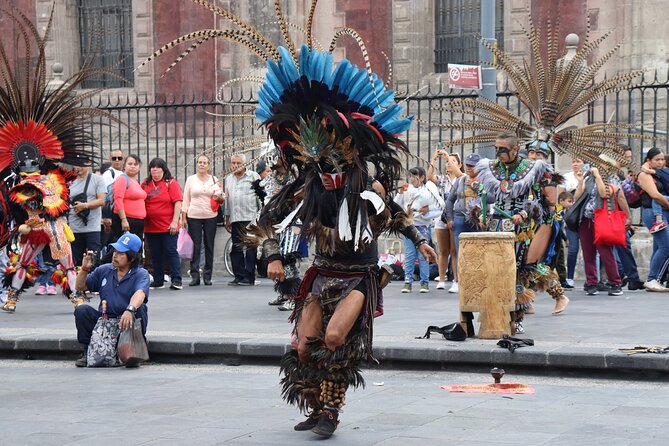
- Orlando leads a private English-language walk for only your group, which allows room for questions and a more personal pace.
- The route connects Tenochtitlan, Spanish rule, and modern Mexico City through the Zócalo, Templo Mayor, cathedral, Palacio Nacional, and central avenues.
- You finish at Palacio de Bellas Artes, making this a useful first-day orientation for the historic center.
- The $14.87 price includes the guide, fees, and taxes, but not food, drinks, or transportation.
- Expect moderate physical activity, direct sun, city pavement, and roughly three hours on your feet.
- The tour has a perfect five-star rating from seven submitted reviews, with special praise for Orlando’s clear explanations, patience, and help with photographs.
Why this walk works as a first look at Mexico City
This experience gives you a useful framework before you tackle the city’s museums on your own. The route is not just a parade of buildings. It shows how Mexico City grew from the Mexica capital of Tenochtitlan into the Spanish colonial center and then into the political and cultural capital you see today.
I like that the route begins at the Zócalo, the city’s main square, and ends at Bellas Artes. Along the way, you move through religious, political, commercial, and artistic parts of the center. That variety keeps the walk from feeling like three hours of looking at similar facades.
Because this is a private activity, only your group participates. That matters if you want to ask frequent questions, pause for photographs, or ask Orlando to explain a point in another way. It also means the experience could feel especially personal for a solo visitor or a small family group.
The tour is offered in English, and Orlando’s style appears to be one of its strongest features. He uses images when explaining places, answers questions, and can offer museum suggestions. One especially thoughtful detail is his willingness to help with photographs, useful when you want a picture of yourself rather than another building shot.
Other walking tours we've reviewed in Mexico City



Starting at the Zócalo and Templo Mayor
The walk begins at Plaza de la Constitución, better known as the Zócalo. You spend about 20 minutes learning how this huge central square changed over time. It is the right place to begin because so many periods of the city’s story meet here.
Look around carefully. The square helps you understand the scale and importance of the historic center before you begin moving through its streets. Orlando’s job here is to connect the visible city with the earlier Mexica capital beneath and around it.
The next stop is the Museo del Templo Mayor, also allotted about 20 minutes. This is your first direct look at Mexica culture and the remains of the ceremonial center associated with Tenochtitlan. The visit is described as a glance at the past rather than a full museum session, so you should not expect time to study every display.
That short stop is still valuable. It gives you a base for understanding why the Zócalo area matters and why later buildings were placed where they were. If you plan to return to the museum independently, this introduction can make your later visit easier to follow.
The cathedral and Mexico’s political center
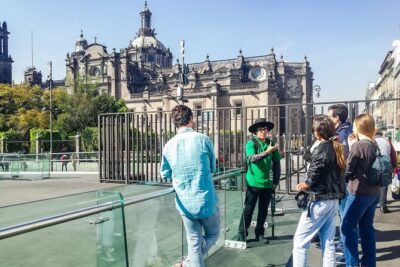
From there, the route reaches the Metropolitan Cathedral of Mexico City, with around 20 minutes for exploration. This is the country’s most important cathedral, and the stop adds a strong religious dimension to the tour.
The cathedral is also a useful counterpoint to Templo Mayor. In a short walk, you are considering Mexica beliefs, Spanish religious power, and the way Mexico City’s institutions developed over time. You may find the 20-minute allocation enough for an overview, but not enough for a slow architectural study.
Next comes the Palacio Nacional, with about 15 minutes. This building is presented as a political center from the Mexica period through the Spanish era. The stop helps tie the religious and ceremonial sites to government and power.
Fifteen minutes is brief, so think of this as an explanation from outside or a compact orientation rather than a full interior visit. That is one of the tour’s tradeoffs. You see many major places, but the schedule favors breadth over long visits inside any one building.
Walking Francisco I. Madero Avenue
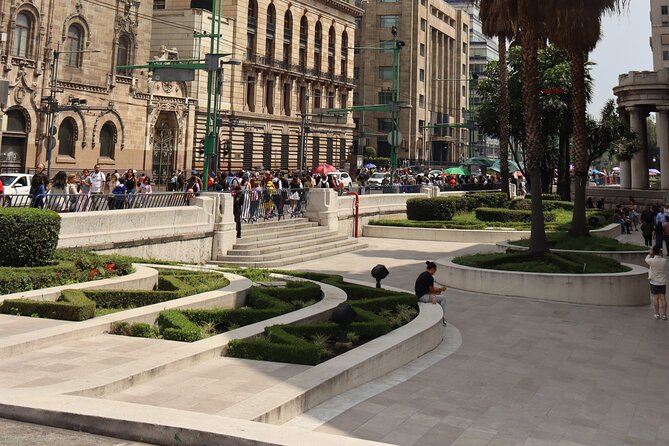
The route then shifts from major monuments to the experience of moving through the city itself. Francisco I. Madero Avenue is Mexico City’s main pedestrian street, and the tour allows about 15 minutes to walk along it and take in its architecture.
I like this part because it breaks up the formal stops. You are not simply standing in front of buildings while Orlando talks. You are walking through a central public route and seeing how the historic center functions as an urban place.
The avenue also leads naturally toward more landmarks. Keep your eyes up as well as forward. This is a good section for noticing facades, street views, and the change from the open Zócalo to a more enclosed city corridor.
San Francisco and the story of religious conquest
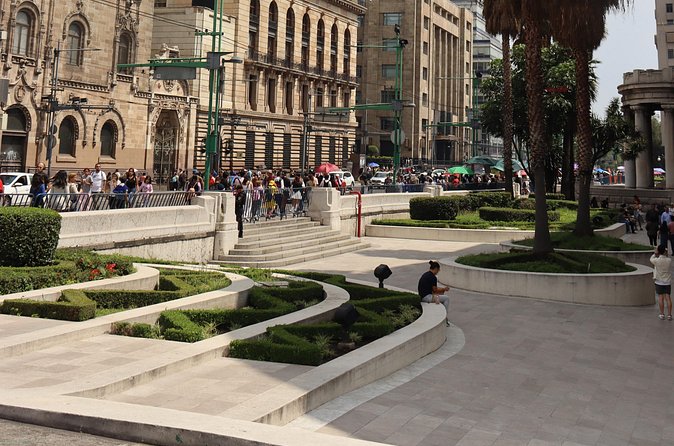
At El Atrio del Templo de San Francisco, you spend about 20 minutes learning about the religious conquest of Mexico and its effect on Mexican culture and identity. This stop gives the tour a chance to handle a complicated subject directly.
The value here is the connection between a physical religious site and a much larger historical change. The guide is not only pointing out an old church or courtyard. He is explaining how religious conquest shaped the country’s culture and sense of destiny.
This is one section where Orlando’s teaching style matters. The tour covers a lot of material quickly, and the historical links can be dense. His patient, easy-to-follow explanations are useful if you are new to Mexico City’s past or need a clear refresher.
Other city tours we've reviewed in Mexico City



The House of Tiles and Plaza Tolsa
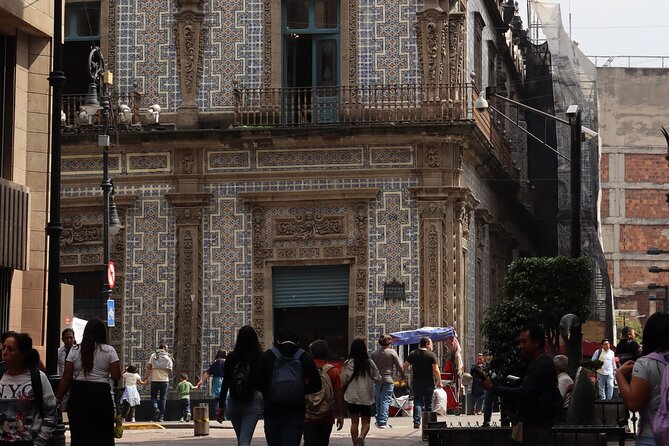
The House of Tiles, or Casa de los Azulejos, receives about 15 minutes. It is described as the most iconic house in Mexico, known for its distinctive architecture and legends.
This is a shorter stop, but it provides a welcome visual change. After the major cathedral and government buildings, the House of Tiles draws attention to a more intimate piece of architecture. Orlando also explains the stories connected with the building, giving you something to remember beyond its appearance.
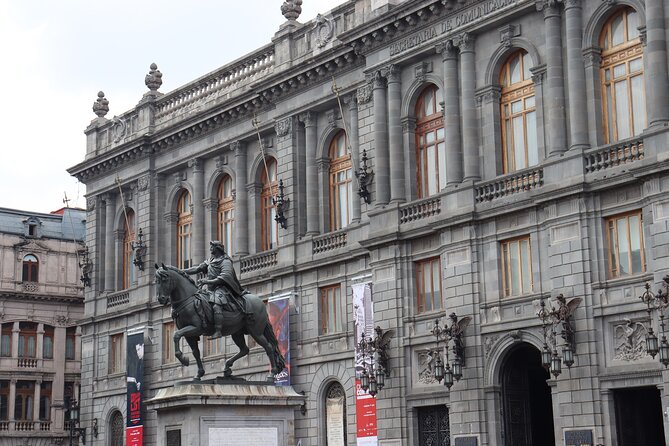
You then reach Plaza Tolsa, with about 20 minutes to take in its setting and views. From here, you can look toward the Mining Palace, MUNAL, and the Postal Palace along one of Mexico City’s oldest streets.
This may be one of the best places for photographs because several landmark facades come together in one view. It also shows why a walking guide is useful. A guide can identify what you are seeing and explain how the buildings relate to the street and square around them.
Bellas Artes and Alameda Central
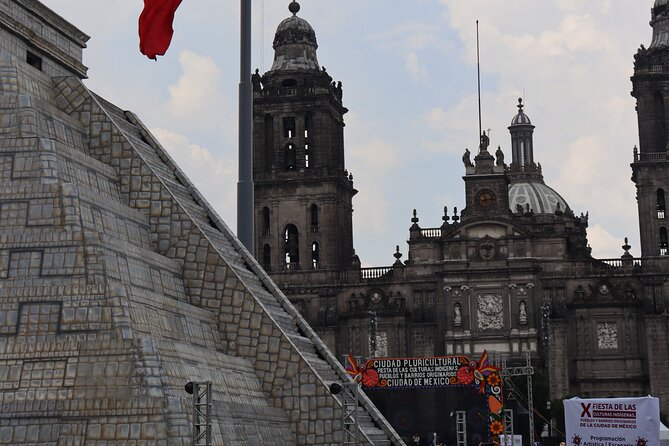
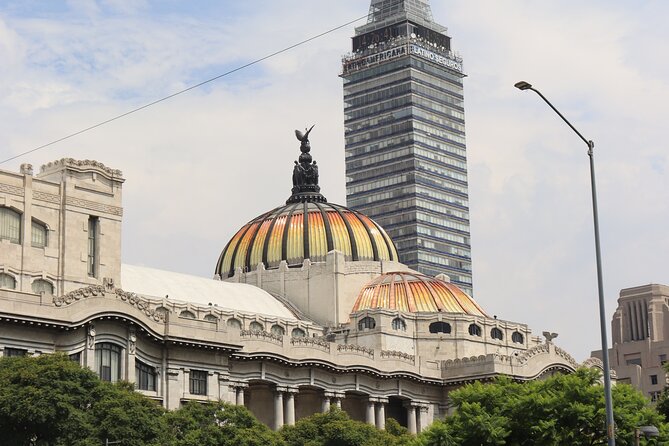
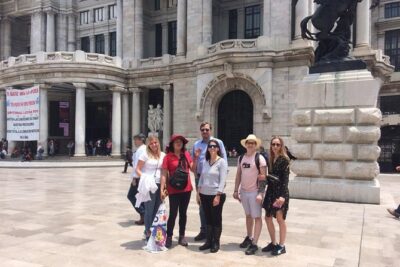
The tour continues to Palacio de Bellas Artes, Mexico’s main center for arts and culture. The schedule gives this stop about 20 minutes, enough for an introduction to the building’s role and appearance.
You finish at Bellas Artes, which is practical if you want to continue sightseeing in the area afterward. The ending also gives the route a clear sense of arrival. You begin at the city’s political and ceremonial heart and end at one of its major cultural institutions.
The final stop is Alameda Central, allotted about 15 minutes. This is the oldest public park in Mexico City, dating from 1592 to the present day. It adds open space and everyday city life to a route otherwise filled with squares, churches, government buildings, and museums.
I especially like having the park at the end. After several hours of monuments and explanations, Alameda Central gives you a different way to read the city. You can consider how a public space has remained part of urban life across centuries.
The itinerary lists Bellas Artes before Alameda Central, but the stated endpoint is Palacio de Bellas Artes. Since the walk ends there, confirm the exact final sequence with Orlando if the distinction matters to your plans.
What three hours really gets you
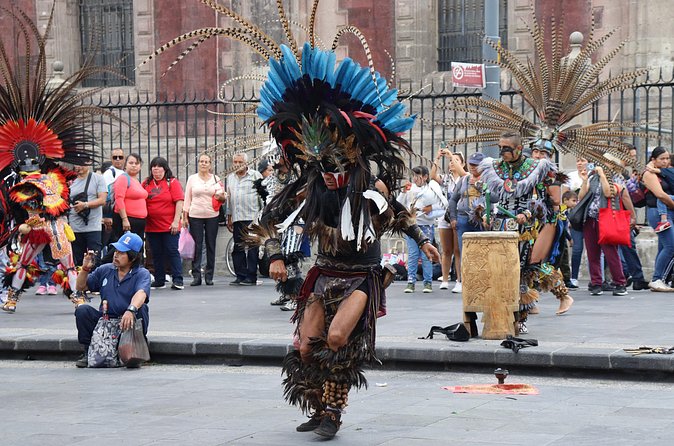
The timing adds up to roughly three hours, with individual stops ranging from 15 to 20 minutes. That is enough for a guided introduction to ten important places, but it is not a substitute for a full museum day.
I would choose this tour if you want context, orientation, and a strong overview. I would not choose it if your main goal is to spend an hour inside Templo Mayor, study the cathedral at length, or linger over every museum facade.
The pace also means you should arrive ready to listen and walk. One useful piece of advice is to expect a lot of information. Orlando covers Mexica and Tenochtitlan history, Spanish religious conquest, politics, architecture, and culture in a short span.
That density is a strength if you enjoy learning. It can feel like a lot if you prefer a loose stroll with only occasional commentary. Ask questions as you go. Since the group is private, you have a better chance of shaping the discussion around what interests you.
Price, group size, and practical value
At $14.87 per person, the tour offers good value, especially because it is private and includes the guide, all fees, and taxes. Many low-cost city walks use larger groups, while this activity is limited to your own party.
The value is not in admission tickets, since the listed stops have no admission charge included. The value comes from having Orlando explain what you are seeing and connect separate places into one story.
You do not get lunch, bottled water, or private transportation. The meeting point is at the Zócalo and the endpoint is Bellas Artes, so you should arrange your own way to the starting plaza and onward transport after the tour. The area is near public transportation, which helps with arrival and departure.
The walk is booked, on average, 54 days ahead. That does not guarantee that every date will sell out, but it is a useful reason to reserve early if your schedule is fixed. Confirmation is sent within 48 hours of booking, subject to availability.
Free cancellation is available when you cancel at least 24 hours before the local start time. Cancellations or changes inside that period are not refunded or accepted. If poor weather cancels the experience, you are offered another date or a full refund.
How to prepare for the walk
Start with breakfast. The tour does not include lunch, and the three-hour format leaves no planned meal break. A small snack is recommended if you need one.
Bring water. The route is outdoors for much of the time, and the practical advice from the experience is clear: use strong sunscreen and wear a hat that covers your neck. Comfortable walking shoes matter just as much.
You should have a moderate level of physical fitness. The tour is not described as accessible to people who cannot walk for extended periods, and no private transportation is provided between stops. Service animals are allowed.
Think about the weather when choosing your date. The activity requires good weather, so a poor forecast can lead to a rescheduled outing or a full refund. Check the local forecast and dress for direct sun rather than assuming the city center will feel cool.
Bring your phone if you want photographs, since Orlando has helped participants take pictures during the walk. You can also ask him for museum suggestions, an advantage if you plan to continue exploring after Bellas Artes.
Who should book this Mexico City walk
I would recommend it most to first-time visitors who want a clear introduction to the historic center. It suits you if you enjoy history, architecture, and asking questions, but do not yet know which landmarks deserve a longer return visit.
It is also a good fit for solo visitors and small groups. A private format can feel more relaxed than a large group, and Orlando’s friendly, patient manner helps make the tour personal. The fact that he uses images and assists with photos adds practical value beyond a standard landmark explanation.
Families with older children may also find the route useful, provided everyone can manage three hours of walking and concentrated commentary. Younger children who need frequent breaks may find the pace harder.
You should think twice if you want a museum-heavy experience, a food tour, or a ride between sites. This is a walking introduction, not a full-day cultural program. You will see many places, but you will need to return on your own for longer visits.
Should you book it?
Book this tour if you want an affordable, private orientation to central Mexico City and you value a guide who can explain Mexica, Spanish, religious, political, and cultural history in plain English. Orlando’s strengths are clear: he is engaging, patient, attentive to questions, and willing to help with photographs and later museum plans.
Skip it if three hours on foot sounds tiring or if you prefer to explore each site at your own slow pace. For most first-time visitors who can handle the walking, the combination of ten major stops, a strong historical thread, and a $14.87 price makes this a sensible way to begin.
FAQ
How long does the Mexico City Walking Tour last?
The tour lasts approximately three hours.
Where does the tour begin?
It begins at the Zócalo, at Plaza de la Constitución in Mexico City’s Centro Histórico.
Where does the tour end?
The stated endpoint is Palacio de Bellas Artes on Avenida Juárez.
Is the tour offered in English?
Yes. The tour is offered in English.
Is this a private tour?
Yes. Only your group participates.
What is included in the price?
The price includes the tour guide and all fees and taxes.
Are food, drinks, or transportation included?
No. Lunch, bottled water, and private transportation are not included. You are advised to eat breakfast and bring water or a snack if needed.
What happens if the weather is poor?
The experience requires good weather. If it is canceled because of poor weather, you are offered a different date or a full refund.
More City Tours in Mexico City
More Walking Tours in Mexico City

More tours in Mexico City we've reviewed




Walking Tours, compared.
 ★ 5.0Historic Downtown Walking TourFrom $263 hours (approx.)
 ★ 4.8Mexico City: Historic Downtown Walking TourFrom $263 hours
 ★ 5.0Frida Kahlo VIP [Museum Tickets Included] Walk, Markets & ChurrosFrom $833 to 4 hours (approx.)
 ★ 5.0Walking Tour of the Historic Center of Mexico City3 hours (approx.)
 ★ 5.0Anthropology Museum Private Experience Walking TourFrom $783 hours (approx.)
 ★ 5.0Walking Tour in Mexico City for Exploring their Cultural HeritageFrom $252 to 3 hours (approx.)
 ★ 5.0Walking Tour – Impressive murals in Historical Center of Mexico CityFrom $511 to 3 hours (approx.)
 ★ 5.0Muralist Art Semi Private Walking Tour in Mexico City DowntownFrom $583 hours 30 minutes (approx.)
The lists this tour appears in