
Reviewed · HISTORICAL TOURS
Mexico City’s Historical Center Icons
Mexico City’s historic center is a stack of civilizations, and this private walk gives you a useful way to read it. You move from the Mexica ruins beneath the modern city to the Metropolitan Cathedral, grand public buildings, and the dazzling Palacio de Bellas Artes. The strongest feature is the guide’s role in connecting those pieces into one clear story.
In This Article
- Key points to know before you book
- Why this four-hour walk works so well
- Starting at the Cathedral and Zócalo
- Seeing the Mexica remains at Templo Mayor
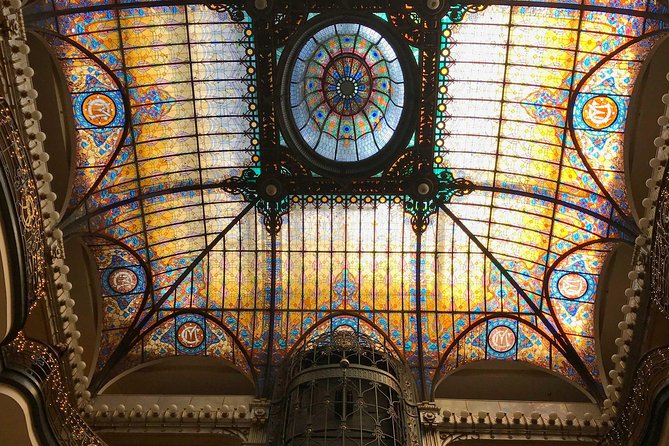
- The Gran Hotel’s ornate interior
- House of Tiles and a memorable colonial facade
- Palacio Postal and the city’s grand public style
- Finishing at Palacio de Bellas Artes
- What the private format adds
- Guides who make the difference
- Walking, timing, and practical comfort
- Who should book this experience
- Should you book the Mexico City Historical Center Icons tour?
- FAQ
- How long is the Mexico City Historical Center Icons tour?
- Is this a private tour?
- Is the tour offered in English?
- Where does the tour begin?
- Where does the tour end?
- Is transportation included?
- What happens if bad weather cancels the tour?
I like the private format, since your guide can adjust the pace and answer questions about architecture, politics, culture, and current events. I also like that the route includes interiors you might miss on your own, especially the Gran Hotel and Palacio Postal. The main catch is time: four hours goes quickly, and this is an overview rather than a series of long museum visits.
Key points to know before you book
- A private walk through six major sights: Your group has the guide to itself, with no large tour crowd to slow things down.
- A clear timeline of Mexico City: The route links the Mexica period, Spanish colonial rule, the late 1800s, and the early 1900s.
- Strong guide choices: Alejandro is praised for clear English and broad knowledge, while Tlilal is described as friendly and engaging.
- Mostly an orientation tour: You see many important places, but the short stops leave little time for detailed museum study.
- No private transport: You walk between sights, so comfortable shoes and a moderate fitness level matter.
- A useful first-day activity: The tour helps you understand the Centro Histórico before exploring it on your own.
Why this four-hour walk works so well
Mexico City’s Centro Histórico can feel confusing at first. One block may show a cathedral, an Aztec foundation, a baroque facade, a modern political building, and a grand 20th-century theater. Without context, the city’s layers can blur together.
This tour gives you a basic map in both the physical and historical sense. You begin at the Zócalo, Mexico City’s main square, then move through buildings and ruins that explain how the capital changed over centuries. The route ends near Palacio de Bellas Artes, giving you a natural launch point for more sightseeing afterward.
The experience is private, offered in English, and lasts about four hours. That setup is especially useful if you want to ask questions as you go. Guides such as Alejandro have handled questions about history, architecture, culture, economics, and current events, rather than sticking to a memorized script.
I would book this early in a Mexico City visit. The tour is often reserved about 30 days ahead, and its greatest value comes when you use the background later. Afterward, a building that looked merely grand may suddenly make sense.
Other city tours we've reviewed in Mexico City



Starting at the Cathedral and Zócalo
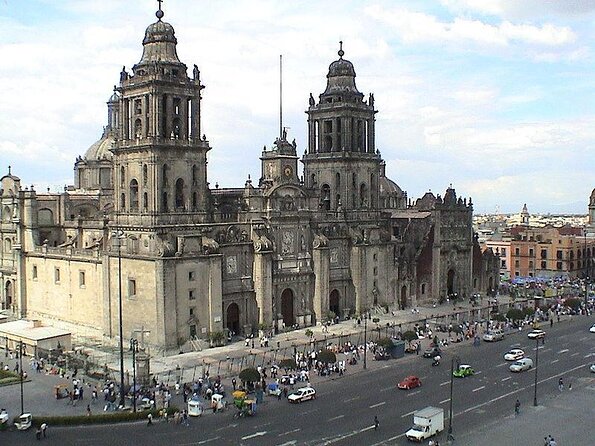
The meeting point is at Plaza de la Constitución 803, in the Centro Histórico. That places you beside the Metropolitan Cathedral and the Zócalo, one of the best starting points in the city.
The cathedral receives about 30 minutes. You discuss its role as the head of Mexico’s Catholic Church and its place in the city’s story. The building is monumental, but the important point is not only its size. It represents the Spanish colonial order built over the former Mexica capital.
A guide can help you notice how the cathedral fits into the larger square. This is where the tour’s chronological approach matters. Instead of treating the church as an isolated sight, you begin to see it as part of the transformation of Tenochtitlan into Mexico City.
The cathedral stop is listed with no admission charge, though the tour does not promise admission fees for every museum or interior on the route. Ask for current details if entering a particular site is important to you.
Seeing the Mexica remains at Templo Mayor
From the cathedral, the tour turns to the Museo del Templo Mayor, where you see ruins from the pre-Columbian Mexica city. This is one of the most important stops because it makes the city’s oldest layer visible.
The ruins sit in the middle of the modern capital, close to the cathedral and government buildings. That physical closeness tells you something important: colonial Mexico City was built directly over the former Mexica center. The tour can give you the basic setting before you return later for a longer museum visit.
The scheduled stop is about 30 minutes. That is enough for an introduction and a look at the site, but not enough for a careful museum visit if you want to study every object and display. The tour information says museum entrance fees not specifically included are your responsibility, so confirm the entry arrangement before booking if you expect a full indoor visit.
For most people, this stop is valuable as orientation. You leave with a better sense of why the Centro Histórico feels so layered. The city is not simply old in a general way. It contains visible traces of several different eras in a tight area.
The Gran Hotel’s ornate interior
The Gran Hotel Ciudad de México gets about 15 minutes. This is a short stop, but it adds a different note to the walk.
The building is an impressive art nouveau work from the transition between the 19th and 20th centuries. Its style helps show Mexico City during a period when the capital was looking toward modern European design and grand civic architecture.
The interior is one of the reasons a guide adds value here. It is easy to walk past a handsome hotel without understanding why it matters. Your guide can point out the design and place it in the city’s broader development.
Do not expect a long visit. Fifteen minutes gives you a look and some explanation, not a full architectural study. Still, the stop breaks up the ancient and colonial material with a glimpse of a later Mexico City.
House of Tiles and a memorable colonial facade
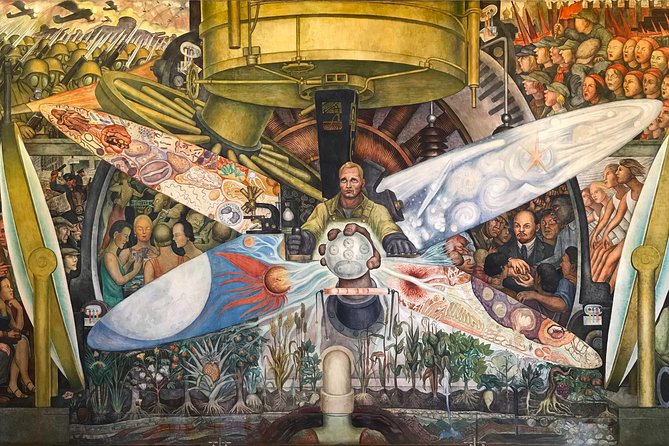
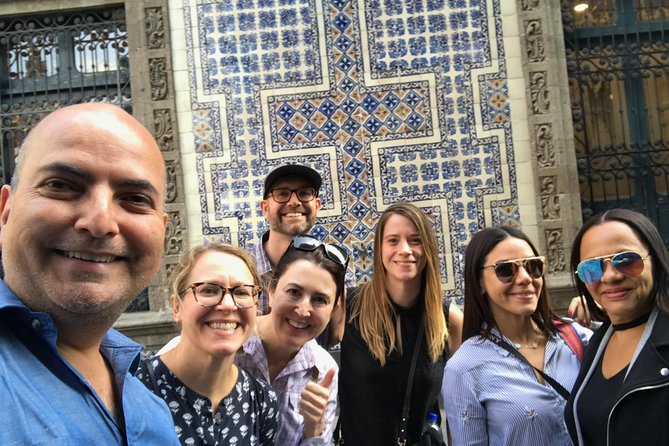
The House of Tiles receives about 30 minutes. This 18th-century house is one of the route’s most visually distinct buildings, and its tiled exterior makes it easy to remember.
The attraction here is both the facade and the sense of how the city’s wealthy colonial architecture once presented itself. A house like this lets you think beyond churches and official buildings. It shows the domestic and commercial character of the old center as well.
The tour description calls the building unique and beautiful, but its real strength is contrast. After the cathedral and Mexica ruins, the House of Tiles offers a more intimate architectural scale. I like this kind of stop because it gives your eyes a rest from huge monuments while still adding useful context.
The 30-minute allocation should allow time to admire the building and hear its story. If you want an extended meal or a long interior visit, plan that separately. Snacks and drinks are not included, so bring money for anything you want during or after the walk.
Other historical tours in Mexico City






Palacio Postal and the city’s grand public style
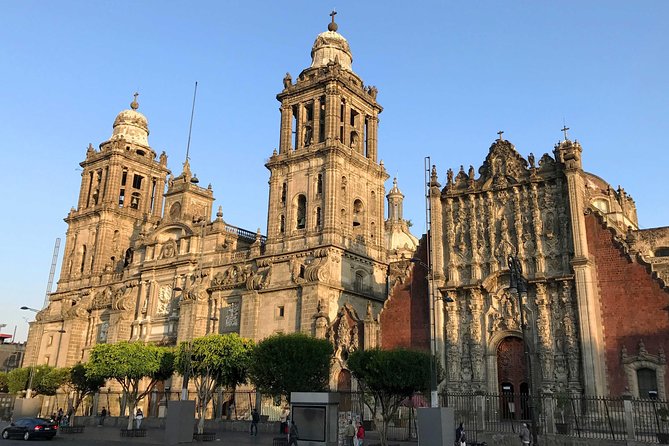
The Palacio Postal receives about 15 minutes. This early 20th-century post office is another quick architectural stop, but it helps complete the shift from colonial Mexico City to the modernizing capital.
The building is admired for its elaborate design and formal interior. It is the sort of place you might overlook if you are focused only on the major museums. A guide can direct your attention to details that would otherwise pass by during a street walk.
The short timing is both a benefit and a limit. You get a concise explanation and a chance to see the building, but you will not have much time to linger. I would treat it as a strong preview. If the Palacio Postal becomes one of your favorites, you can return later with your own schedule.
Together, the Gran Hotel, House of Tiles, and Palacio Postal give the walk an appealing range. You are not only looking at ruins and churches. You are also seeing the public and private architecture of later Mexico City.
Finishing at Palacio de Bellas Artes
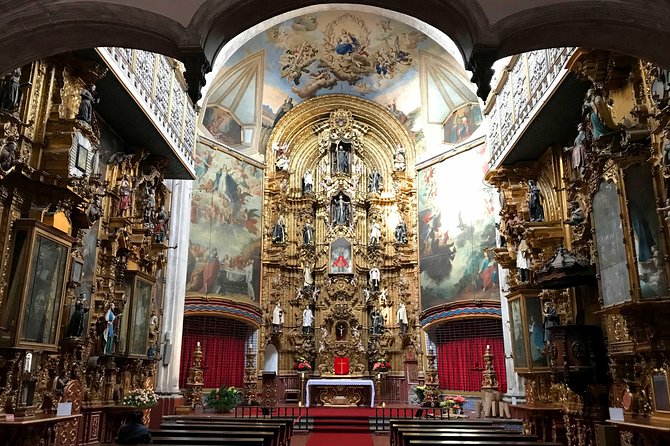
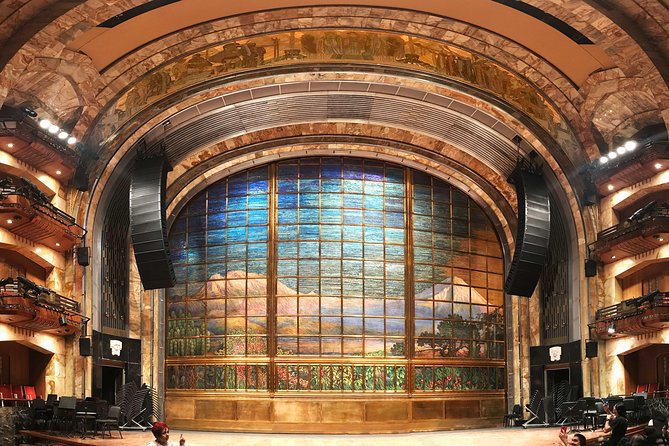
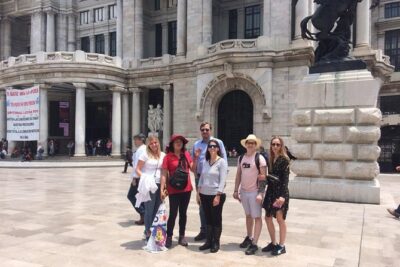
The final major stop is Palacio de Bellas Artes, the monumental theater that serves as an icon of the historic center. The scheduled visit lasts about 30 minutes, and the walk ends at its square on Avenida Juárez.
This is a sensible finish. Bellas Artes brings together art, performance, architecture, and civic ambition. It also gives you a strong visual endpoint after the earlier stops.
The building is worth seeing even if you do not enter. If you want a longer look at its murals or interior spaces, check what is open on the day you visit. One guide adapted the route when the National Palace murals were closed on a Monday, finding another place to see murals instead. That example is useful: the route can benefit from a guide who pays attention to your interests and responds to closures.
Because the tour ends at Bellas Artes square, you are well placed to continue exploring. The provided details do not promise transport afterward, so you should arrange your next stop on foot or through Mexico City’s public transport system.
What the private format adds
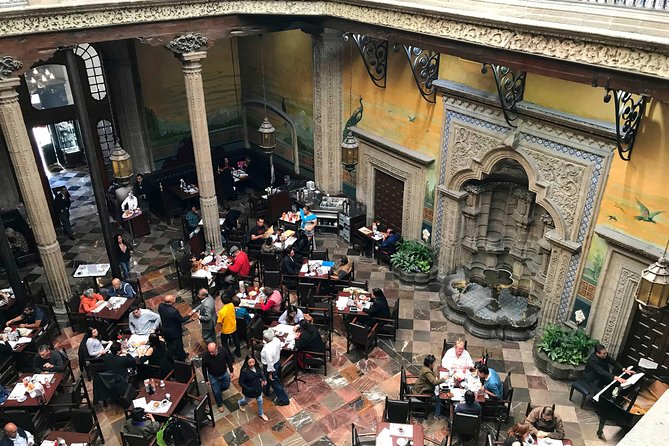
A private tour costs $98 per person. That is not the cheapest way to walk around the historic center, especially since no private transportation, snacks, or general museum entrance fees are included.
The value comes from the guide, not from bundled extras. You are paying for four hours of a personal explanation, a planned route, and the ability to ask questions without competing with a large group. If your group has two or more people and you want a strong first look at the city, that can be fair value.
The private setup also helps with pacing. You can spend a little longer on the sites that interest you and move faster when a building is less important to your group. That flexibility is hard to get on a large scheduled walk.
Still, keep your expectations realistic. The price does not buy a full museum day. It buys an organized introduction to the Centro Histórico. You will need separate time and possibly separate admission fees for deeper visits.
Guides who make the difference
Alejandro is the guide most often named in the available comments. He is described as clear in English, thorough, and able to explain Mexico’s story from the 1500s through the 1950s. His chronological approach is particularly useful if you want to understand how archaeological, political, cultural, and economic changes connect.
He also appears comfortable handling questions outside the basic route. That matters in Mexico City, where a question about a church can lead into colonial rule, independence, government, or modern life.
Tlilal is another named guide. She is described as friendly and well informed, with an easy manner that helped make the tour appealing for a couple who strongly recommended the experience.
Guide quality can vary with any private activity, but these names give you useful information. If a particular guide matters to you, request one when booking, then wait for confirmation within 48 hours, subject to availability.
Walking, timing, and practical comfort
This is a walking tour with no private transport included. The route covers several central sights, and you should have a moderate level of physical fitness. Wear comfortable shoes, since the usefulness of the experience depends on moving from one building to the next.
The published operating hours are Saturday and Sunday from 10 a.m. to 2 p.m. for the stated booking period, which runs through July 3, 2027. Check the confirmed date and time carefully, especially if your Mexico City visit falls outside those weekend hours.
Bottled water is included. Snacks and other drinks are not, so carry some cash or plan a stop before or after the tour. Since the walk takes place outdoors as well as inside buildings, poor weather can affect the experience. If the operator cancels because of weather, you can accept another date or receive a full refund.
Service animals are allowed, and the meeting point is near public transportation. The activity is private, so only your own group participates.
Who should book this experience
I would choose this tour for a first visit, especially if you want the historic center explained rather than simply photographed. It suits couples, families, and small groups who like asking questions and adjusting the pace.
It is also a good fit if you enjoy architecture. The route moves from a cathedral and archaeological ruins to art nouveau, colonial domestic design, early 20th-century public architecture, and a major theater.
You may want something else if your main goal is lengthy museum time. Thirty minutes at Templo Mayor or Bellas Artes can introduce the sites, but it cannot replace a focused museum visit. You also need to budget separately for food, transport, and any entrance fees that apply.
Should you book the Mexico City Historical Center Icons tour?
Book it if you want a private, English-language introduction to the Centro Histórico with a guide who can connect the city’s eras in a clear order. The best reasons are the small-group attention, the six-stop route, and the chance to see interiors you might otherwise pass.
Skip it if you prefer exploring alone, dislike walking, or want to spend most of your day inside museums. At $98 per person, the tour makes the most sense when you treat it as a high-quality orientation, not an all-inclusive sightseeing package.
For a first day in Mexico City, I think it is a smart choice. You finish at Bellas Artes with a working sense of the city’s past, a list of places to revisit, and far fewer blank spaces on the map.
FAQ
How long is the Mexico City Historical Center Icons tour?
The tour lasts approximately four hours.
Is this a private tour?
Yes. Only your group participates in the activity.
Is the tour offered in English?
Yes. The experience is offered in English.
Where does the tour begin?
It begins at P.za de la Constitución 803, Centro Histórico de la Ciudad de México, near the Metropolitan Cathedral and the Zócalo.
Where does the tour end?
The tour ends at Palacio de Bellas Artes square on Avenida Juárez.
Is transportation included?
No. Private transportation is not included. This is a walking tour.
What happens if bad weather cancels the tour?
You will be offered a different date or a full refund if the experience is canceled because of poor weather.
More Historical Tours in Mexico City
More City Tours in Mexico City


More tours in Mexico City we've reviewed









Historical Tours, compared.
 ★ 5.0Historic Downtown Walking TourFrom $263 hours (approx.)
 ★ 5.0Historic Center Food Tour in Mexico CityFrom $1155 hours (approx.)
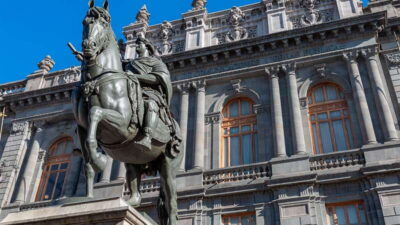 ★ 4.8Mexico City: Historic Downtown Walking TourFrom $263 hours
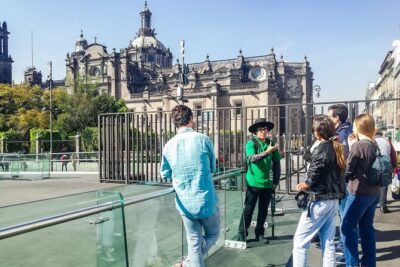 ★ 5.0Walking Tour of the Historic Center of Mexico City3 hours (approx.)
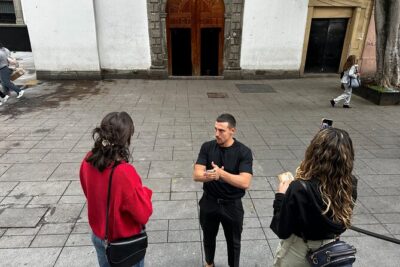 ★ 5.0Mexico City Historical Centre Food Tour with 7 Authentic TastingsFrom $653 hours (approx.)
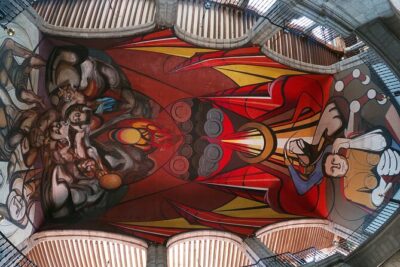 ★ 5.0Walking Tour in Mexico City for Exploring their Cultural HeritageFrom $252 to 3 hours (approx.)
 ★ 5.0Walking Tour – Impressive murals in Historical Center of Mexico CityFrom $511 to 3 hours (approx.)
 ★ 4.5Mexico City: Guided walking tour through the most historic parts of the city.From $303 hours
The lists this tour appears in