
Reviewed · HISTORICAL TOURS
Tour history of Muralism in Mexico
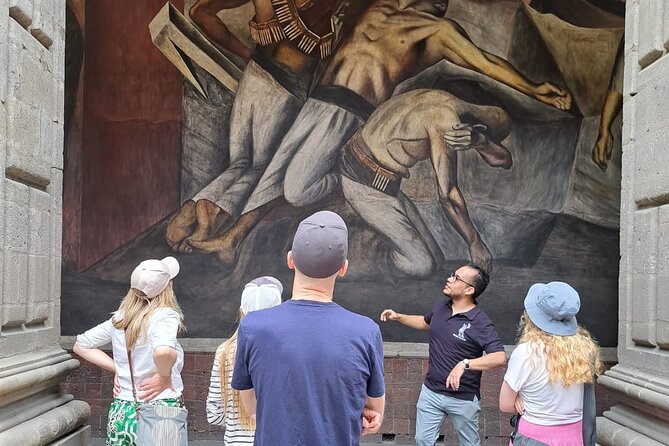
Mexico City’s mural movement is best understood by seeing the paintings where they were made for public life, not only in a formal gallery. This tour connects San Ildefonso, Abelardo L. Rodríguez Market, the Secretariat of Public Education, and Palacio de Bellas Artes in one useful walk through the city center.
In This Article
- Key points at a glance
- Why muralism makes a better city tour than a standard museum visit
- San Ildefonso: beginning inside a former Jesuit school
- Abelardo L. Rodríguez Market: murals beside daily work
- The Secretariat of Public Education: Rivera’s long public project
- Palacio de Bellas Artes: ending with a final mural lesson
- Group size, language, and the pace of the walk
- Who gets the most from the $59.57 price
- Cancellation and basic booking facts
- Should you book this muralism tour?
- FAQ
- How much does the muralism tour cost?
- How long does the experience last?
- What language is the tour offered in?
- Where does the tour start and finish?
- Which sites are included in the route?
- Can I cancel for a refund?
I like the way the route puts Diego Rivera beside José Clemente Orozco, David Alfaro Siqueiros, and lesser-known artists. I also like the market stop, where the murals belong to an everyday working place rather than a quiet museum. The trade-off is the group size, which can reach 35 people, so a close, private conversation with the guide is not guaranteed.
Key points at a glance
- See muralism in working buildings: The route includes a historic school, a public market, and a government building turned museum.
- Visit three major mural sites: San Ildefonso, Abelardo L. Rodríguez Market, and the Secretariat of Public Education form the core of the tour.
- Meet Rivera’s public Mexico: The SEP stop contains many of Diego Rivera’s murals and explains the larger project behind them.
- Learn about women muralists: The Abelardo Rodríguez section includes the Greenwood sisters, described as the first women to paint in Mexico.
- Finish at Bellas Artes: The tour ends outside or at Palacio de Bellas Artes with an explanation of its murals.
- Good value for a half-day outing: At $59.57, admission is included, and the English-language experience lasts about three and a half hours.
Why muralism makes a better city tour than a standard museum visit
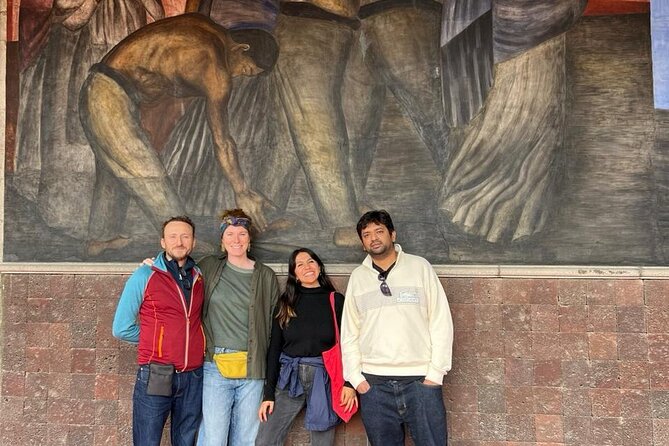
Mexican muralism was made for walls, courtyards, schools, markets, and public offices. That setting matters. You are not simply looking at framed pictures arranged by date. You are seeing art placed in the middle of civic life, where workers, students, shoppers, and government employees would encounter it.
This route gives you a clear way into that story. It begins at the Former College of San Ildefonso, moves through the Abelardo L. Rodríguez Market, then reaches the murals of the Secretariat of Public Education. The finish at Palacio de Bellas Artes adds one more major reference point.
The tour lasts about three hours and 30 minutes. The listed visits account for about one hour and 55 minutes, leaving the rest of the time for walking, explanations, and movement between sites. That makes the pace more useful than a quick photo stop, though you should expect an active outing in the Historic Center rather than a seated lecture.
The experience is offered in English and includes admission entries. Tips and lunch are not included. At $59.57 per person, the value depends on how much context you want. If you already know Mexico’s muralists and are happy to explore alone, you may prefer to pay individual admission and set your own pace. If you want the sites connected into one story, the price is reasonable for a guided half-day route.
Other historical tours in Mexico City

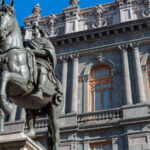
San Ildefonso: beginning inside a former Jesuit school
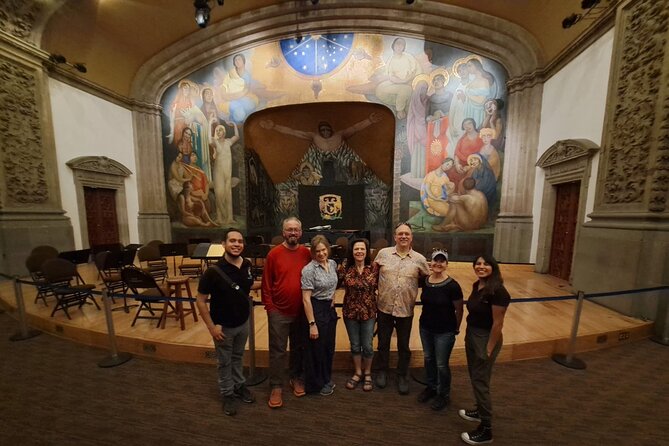
The tour starts at Justo Sierra 16, at the Former College of San Ildefonso in the Historic Center. The building began as a Jesuit school in the 16th century, and its colonial architecture gives the first stop a strong sense of place before the murals even enter the discussion.
You spend about 35 minutes here, with admission included. San Ildefonso is now a museum and temporary exhibition venue, but its older identity still shapes the visit. The building connects education, religion, art, and public culture, which gives the mural discussion a useful setting.
The collection includes work by Diego Rivera, José Clemente Orozco, and David Alfaro Siqueiros. Seeing these artists together helps you notice that Mexican muralism was not a single style produced by one famous painter. It was a broad public art movement with competing ideas, techniques, and political concerns.
This stop is especially useful if you are new to the subject. The guide can introduce the main names and explain why San Ildefonso matters before you reach the larger mural program at the Secretariat of Public Education. The 35-minute visit is long enough for a focused explanation, but not so long that you are likely to feel stuck in one building.
One practical point: the tour description does not give a guide name, so you cannot select a particular guide in advance. The available review describes the guide as prompt, well informed, personable, and highly familiar with the subject. That is the strongest praise attached to this experience, and it points to the importance of the person leading the walk.
Abelardo L. Rodríguez Market: murals beside daily work
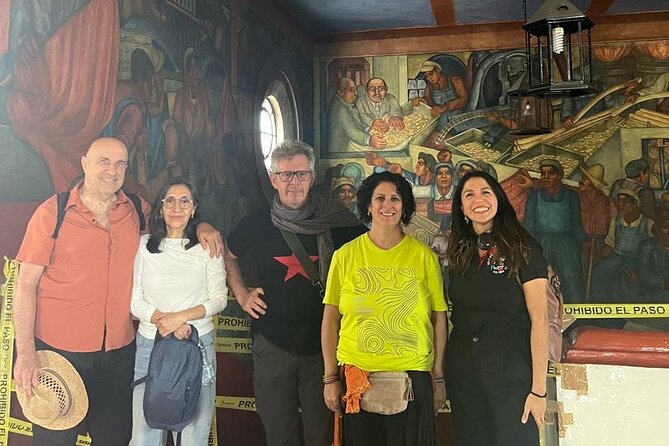
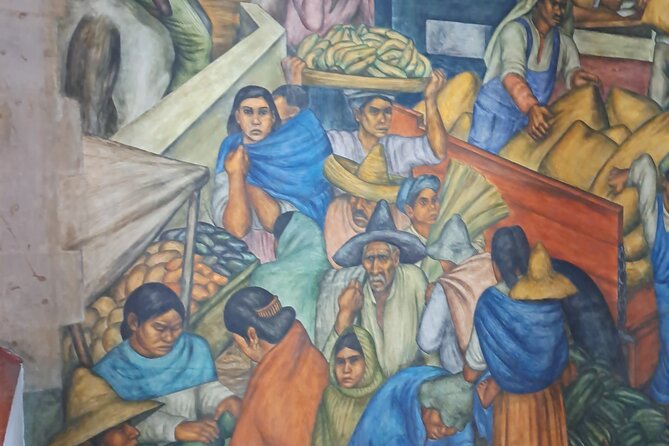
The second stop lasts about 35 minutes and takes you to Abelardo L. Rodríguez Market. This is the most unusual part of the route because the murals are tied to a place where people begin their working day, rather than to a building visited only for art.
The market offers a look at Mexico City through ordinary activity. You may find the setting more visually and socially interesting than a standard gallery, but it also means the experience is less controlled. A market is a working place, so the atmosphere can be active and practical. That is part of the point.
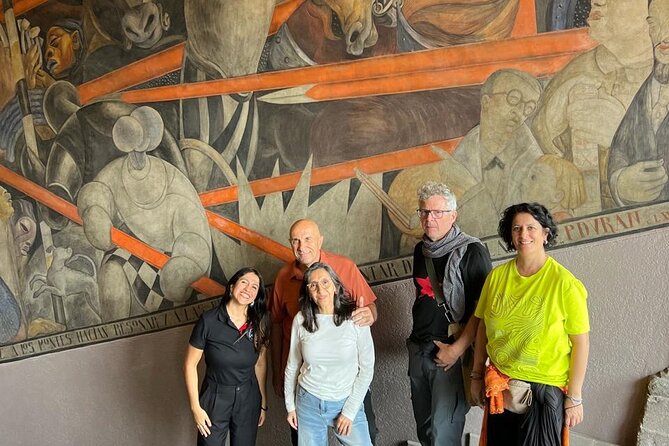
Here, the guide explains the pictorial project that brought many artists together. The tour also highlights the Greenwood sisters, identified in the description as the first women to paint in Mexico. That detail broadens the story beyond the best-known male muralists and gives you a reason to pay close attention to the less familiar names.
I like this stop because it links art to the people who used the building. The murals were not isolated from public life. They were placed in a site where people got up early, opened for business, bought food, and went about their day.
The short visit also has a possible limitation. Thirty-five minutes is enough for an introduction, but not for every mural to receive equal attention. If you want a long examination of individual panels, you may find the schedule brisk. The benefit is that the tour keeps moving and shows you a wider range of sites in one morning or afternoon.
The Secretariat of Public Education: Rivera’s long public project
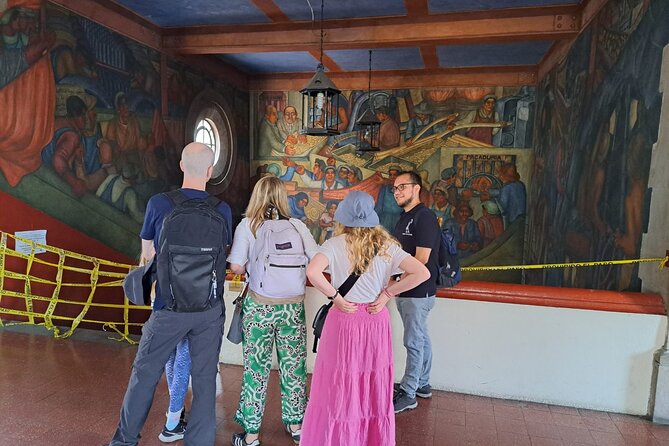
The longest formal stop is at the Murales de Diego Rivera en la Secretaría de Educación Pública, with about 45 minutes set aside. The building is now described as a museum of muralism, and this is where the tour explains the history of the larger project.
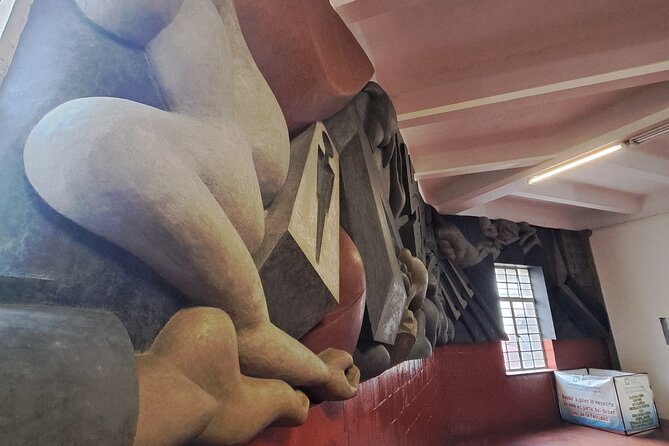
The main draw is the concentration of Diego Rivera’s work. Rather than seeing one isolated mural, you encounter many paintings connected to the same public institution. That gives you a better sense of Rivera’s approach to history, labor, social classes, and national identity.
This stop is likely the central reason to book the tour if Rivera is your main interest. San Ildefonso introduces several important names, and the market adds a social setting, but the SEP offers the fullest single look at Rivera on this route.
The guide’s explanation matters here. A long series of murals can become a blur if you only walk past it and take photographs. The tour is designed to explain the project as a whole, helping you understand how the building, its purpose, and its paintings relate to one another.
You should also keep your expectations measured. The tour provides 45 minutes, not an unlimited museum visit. You will receive an organized overview rather than a slow study of every wall. If you are an art specialist, you may want to return later on your own, assuming opening arrangements allow it. For a first visit, the guided structure should help you focus on the most important sections.
Palacio de Bellas Artes: ending with a final mural lesson
The tour ends at Palacio de Bellas Artes, at Av. Juárez in the Historic Center. The stated finish includes an explanation of the Fine Arts murals. The route therefore ends with one of Mexico City’s best-known cultural buildings, tying the earlier stops to a major public art venue.
The information provided does not state that a separate Bellas Artes admission ticket is included. It does state that entries are included overall, while the three listed stops specifically show admission included. Ask the provider if entering the Bellas Artes interior is part of your scheduled visit, especially if you want to see more than the murals discussed at the end.
Ending here is practical. Bellas Artes is near other central sights and public transportation, so you can continue sightseeing after the tour. The end point is not the same as the start, which also means you do not have to return to San Ildefonso.
The final explanation gives the experience a proper closing point. Instead of ending after Rivera’s SEP murals, the guide can show how muralism appears in another major cultural setting. For someone building a first-day introduction to Mexico City art, that wider frame is useful.



Group size, language, and the pace of the walk
The tour is offered in English, which makes the historical and artistic explanations easier to follow if you are not comfortable with Spanish. Confirmation arrives at booking, and the experience can include up to 35 people.
A group of 35 is not tiny. You may need to stay close to the guide, especially while moving through public areas. At the same time, a larger group can work well for a route built around major sites, particularly if the guide keeps the explanations clear and organized.
The description says the tour is near public transportation and that most people can participate. Service animals are allowed. No special fitness level is stated, so you should rely on the general nature of the route: several central stops, movement between buildings, and about three and a half hours of touring.
Since lunch is not included, plan to eat before or after the experience. The route ends at Bellas Artes, giving you a convenient point from which to continue your day, but the tour does not promise a meal break.
The strongest practical praise concerns the guide. The guide is described as prompt, well informed, personable, and quite familiar with the subject. There is no guide name supplied, so you should judge the experience by the quality of the explanation rather than by a named personality.
Who gets the most from the $59.57 price
At $59.57, this is not the cheapest way to see a few murals. It is priced as a guided cultural experience with included entries and a connected route through several central buildings.
I think the price makes the most sense for you if:
- You want the murals explained in English.
- You are visiting Mexico City for the first time.
- You prefer a planned route to arranging several admissions yourself.
- You want to see Rivera alongside Orozco, Siqueiros, and the Greenwood sisters.
- You value public settings such as a market as much as formal museums.
The value is less clear if you mainly want to photograph Rivera’s work at your own speed. The schedule gives each site a set amount of time, and a group of up to 35 can limit personal flexibility. You also pay for the guide’s interpretation, not just for entry to the buildings.
The tour is booked, on average, 26 days ahead. That suggests you should reserve early if your Mexico City dates are fixed, even though there is no promise that every departure will sell out. The provider requires a minimum number of participants, so a cancellation is possible if that minimum is not met. In that case, you are offered another date or experience, or a full refund.
Cancellation and basic booking facts
You can cancel up to 24 hours before the local start time for a full refund. Cancellations made inside that 24-hour window are not refunded, and changes are not accepted during that period.
The experience is provided by Educando con Cultura. Mobile tickets are available, and confirmation is received when you book. Those details make the tour fairly simple to add to a Mexico City schedule, but keep your start time free and arrive at the Former College of San Ildefonso rather than going directly to Bellas Artes.
Should you book this muralism tour?
Book it if you want a clear introduction to Mexico’s public art tradition, especially if you appreciate the idea of seeing murals in a school, a market, and a government building. The mix of Rivera, Orozco, Siqueiros, and the Greenwood sisters gives the route more range than a Rivera-only visit.
I would be most inclined to choose it early in a Mexico City stay. The tour gives you useful cultural bearings for later visits to the Historic Center, Bellas Artes, and other museums. Its best feature is the connection between art and ordinary city life, with the market providing a welcome change from formal exhibition halls.
Skip it if you need a private guide, a slow art-study session, or certainty that every minute will be spent inside a museum. The possible 35-person group and fixed stop times may feel restrictive to a specialist. For most first-time visitors who want context, included admissions, and an English-speaking guide, the route offers a sensible way to meet Mexico City’s mural tradition.
FAQ
How much does the muralism tour cost?
The tour costs $59.57 per person. Admission entries are included, while tips and lunch are not.
How long does the experience last?
The tour lasts approximately three hours and 30 minutes.
What language is the tour offered in?
The experience is offered in English.
Where does the tour start and finish?
It starts at the Former College of San Ildefonso, Justo Sierra 16, in Mexico City’s Historic Center. It ends at Palacio de Bellas Artes on Av. Juárez.
Which sites are included in the route?
The route includes the Former College of San Ildefonso, Abelardo L. Rodríguez Murals, and the Diego Rivera murals at the Secretariat of Public Education. The finish includes an explanation of the murals at Palacio de Bellas Artes.
Can I cancel for a refund?
Yes. You can cancel at least 24 hours before the experience start time for a full refund. Cancellations or changes made less than 24 hours before the start time are not accepted for a refund.
More Historical Tours in Mexico City
More tours in Mexico City we've reviewed


Historical Tours, compared.
 ★ 5.0Historic Downtown Walking TourFrom $263 hours (approx.)
 ★ 5.0Historic Center Food Tour in Mexico CityFrom $1155 hours (approx.)
 ★ 4.8Mexico City: Historic Downtown Walking TourFrom $263 hours
 ★ 5.0Walking Tour of the Historic Center of Mexico City3 hours (approx.)
 ★ 5.0Mexico City Historical Centre Food Tour with 7 Authentic TastingsFrom $653 hours (approx.)
 ★ 5.0Walking Tour in Mexico City for Exploring their Cultural HeritageFrom $252 to 3 hours (approx.)
 ★ 5.0Walking Tour – Impressive murals in Historical Center of Mexico CityFrom $511 to 3 hours (approx.)
 ★ 4.5Mexico City: Guided walking tour through the most historic parts of the city.From $303 hours
The lists this tour appears in