
Reviewed · WALKING TOURS
Walk around UNAM campus, a UNESCO World Heritage Site
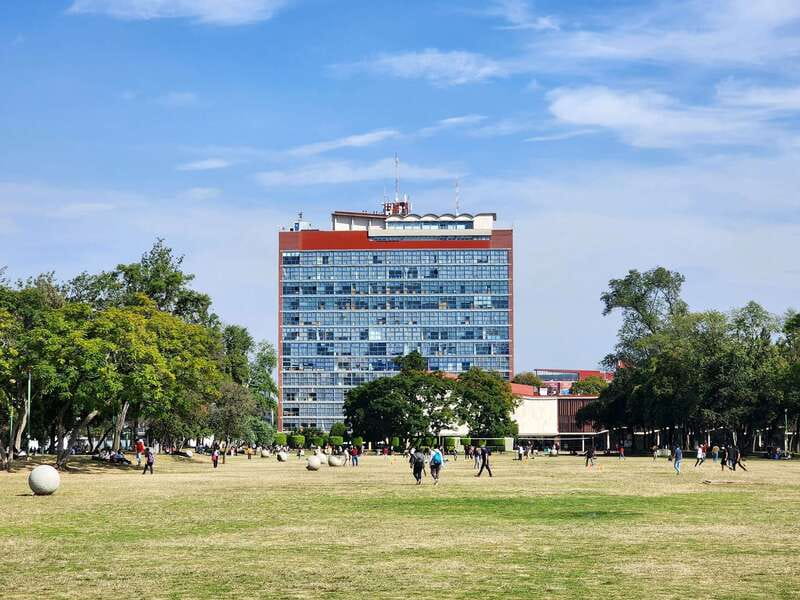
UNAM is not simply a university campus. It is a huge 1950s modernist project where Juan O’Gorman’s Central Library wears a mural like a stone-covered history book, while volcanic rock shapes the paths and buildings around it. You get art, architecture, Mexican history, and a look at daily university life in one three-hour walk.
In This Article
- Key points at a glance
- Why UNAM belongs on your Mexico City itinerary
- Meeting the guide at Olympic Stadium
- The 1950s vision behind University City
- Reading the murals by O’Gorman, Rivera, and Siqueiros
- Volcanic rock as part of the architecture
- Moving through faculties and student life
- What makes Sebastián’s guiding style useful
- Is $76 a fair price for three hours?
- How to prepare for the 4-kilometer route
- Who should book this UNAM walk?
- FAQ
- How long does the UNAM campus tour last?
- How far do you walk?
- Where does the tour meet?
- How can I reach the meeting point by public transport?
- How long does it take from Condesa or Roma by Uber?
- Is the tour offered in English?
- Is water included?
- Does the tour run in bad weather?
- Is the route wheelchair accessible?
- Can I cancel for a full refund?
- Should you book the UNAM campus tour?
I like the way guide Sebastián connects the murals to Mexico’s wider political and social story instead of treating them as pretty decoration. I also like that he is a former UNAM student and lecturer, so you hear about both the grand design and the ordinary life of students. The main drawback is practical: this is a four-kilometer walk, rain or shine, with limited toilet access.
Key points at a glance
- Juan O’Gorman’s Central Library: Study one of Mexico City’s most striking modernist buildings and the meaning built into its enormous exterior mural.
- Murals by major Mexican artists: See work connected to Diego Rivera, David Alfaro Siqueiros, and O’Gorman.
- A UNESCO World Heritage Site: Walk through a campus created in the 1950s, when Mexico and the United States were in close contact.
- Volcanic ground underfoot: The black, rocky terrain is part of the design, not just an obstacle between buildings.
- A social and political lesson: Sebastián explains student life, campus politics, class differences, and why university attendance does not always lead to graduation.
- A 4-kilometer walking tour: Plan for comfortable shoes, water, weather protection, and a bathroom stop before meeting the guide.
Why UNAM belongs on your Mexico City itinerary
Mexico City offers famous museums, plazas, and grand colonial buildings. UNAM gives you a different way to read the country. Here, architecture and public art were planned together on a vast university campus in the 1950s.
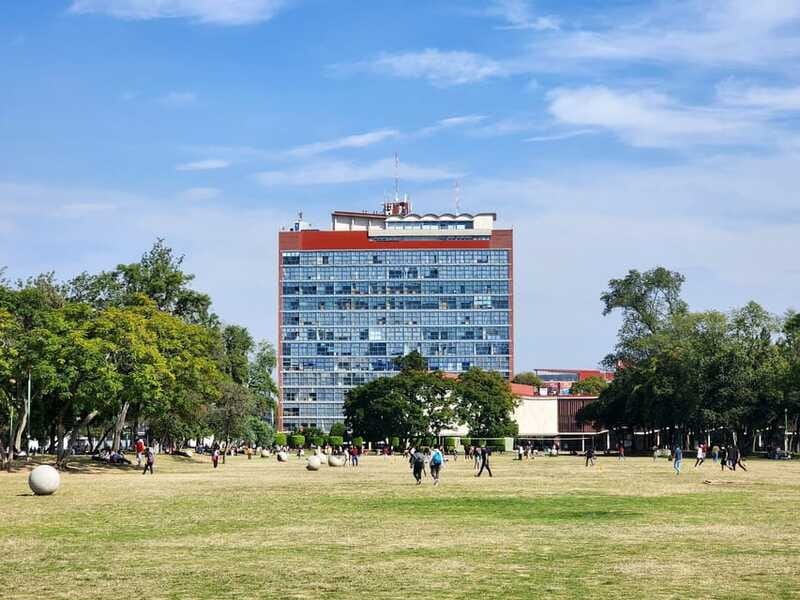
The campus is known as Ciudad Universitaria, or University City. Its importance comes from the way buildings, murals, open spaces, and the rugged volcanic setting work as one project. You are not just visiting one monument. You are walking through a modern idea of education made visible in stone, concrete, paint, and public space.
That makes this tour a good choice if you have already seen the historic center and want a less expected side of Mexico City. It also works well for anyone interested in architecture, art, politics, design, or sociology. You do not need specialist knowledge. Sebastián provides the background as you go.
The campus can feel less familiar than the city’s main sightseeing areas. That is part of the appeal, but it also means the tour requires more walking and a little more effort to reach. You are coming for substance rather than a quick photo stop.
Other walking tours we've reviewed in Mexico City



Meeting the guide at Olympic Stadium
The tour begins in front of Estadio Olímpico Universitario, the Olympic Stadium. This is a practical meeting point, but allow enough time to reach it. From Condesa or Roma, an Uber ride usually takes about 30 minutes, depending on traffic.
You can also use Metrobús Línea 1. Get off at Dr. Gálvez Station, then walk south from Insurgentes Avenue for about 10 minutes. I would avoid arriving at the last minute. Mexico City traffic can be slow, and the campus is large enough that confusion at the start could cost you part of the tour.
The stadium provides a fitting introduction. It places you directly inside UNAM’s major architectural zone rather than beginning with a general city meeting point. From there, the route leads into a campus where the setting itself is part of the story.
The tour is offered in English or Spanish. It normally runs in the morning or afternoon, lasts three hours, and includes water. Food and drinks beyond that are not included, so eat beforehand or carry a small snack if you need one.
The 1950s vision behind University City
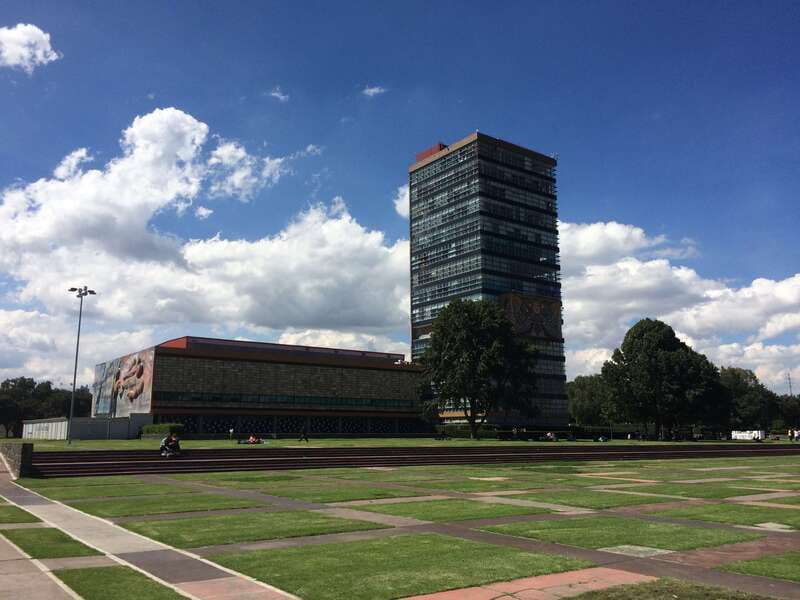
The first major theme is the creation of UNAM’s campus in the 1950s. This was a period of close contact between Mexico and the United States, and the project reflected modern ideas about planning, education, and public art.
You will hear how the university was designed as more than a collection of classrooms. The buildings were meant to express Mexico’s identity while also using the clean lines and large-scale planning associated with modernist architecture.
That balance is what makes the campus interesting. It is modern, but not detached from place. Its architects used local materials and responded to the rough volcanic ground. Its artists filled public buildings with images tied to Mexican history and society.
Sebastián’s contribution is especially useful here. He explains the buildings, but he also connects them to the university’s role in Mexican life. The result is not just a design lesson. You get a clearer picture of why UNAM matters as an autonomous institution in Latin America.
Reading the murals by O’Gorman, Rivera, and Siqueiros
The murals are the visual heart of the tour. Mexico’s mural tradition puts history and public debate on walls, where students and residents can encounter them without entering a museum.
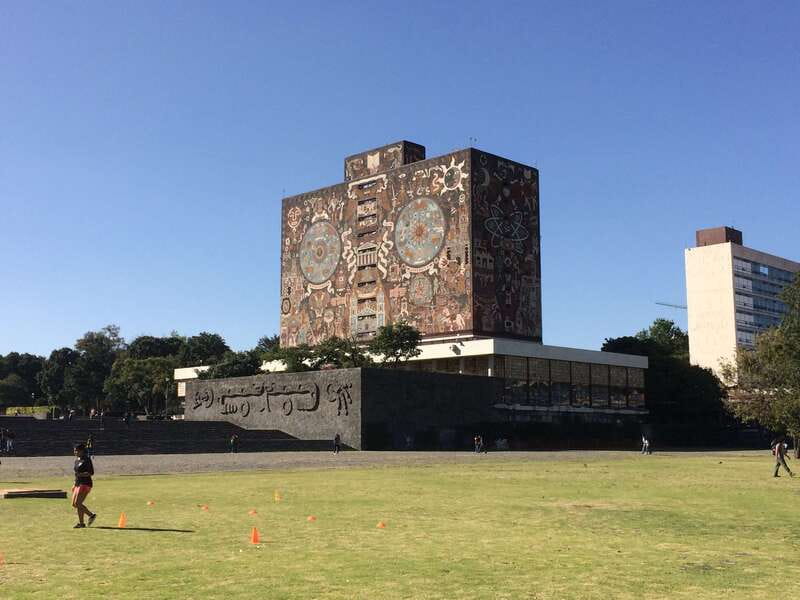
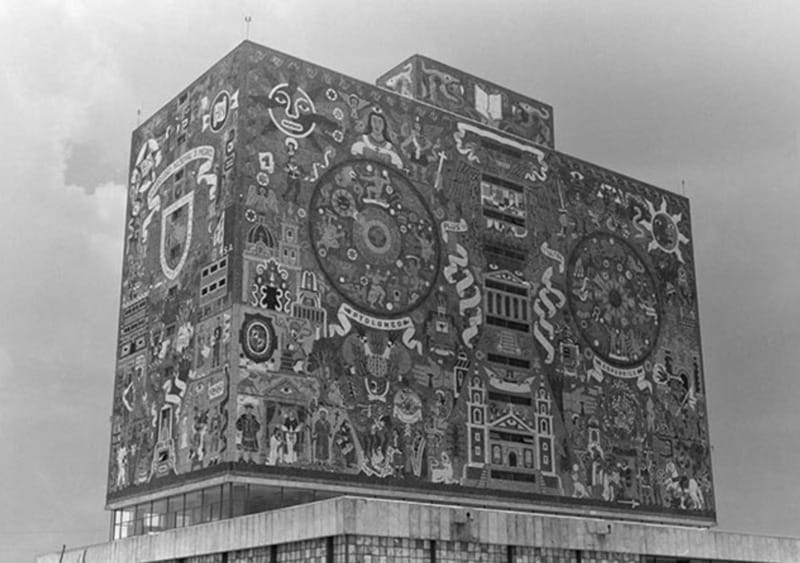
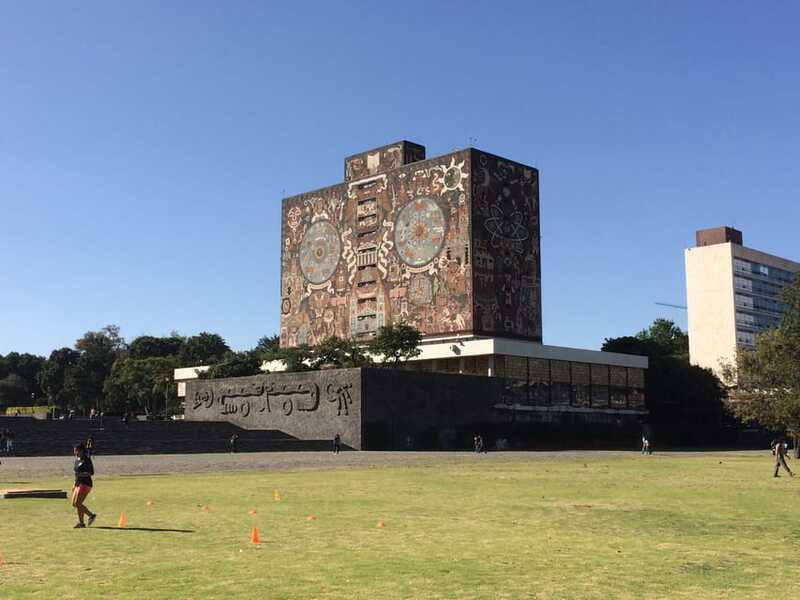
Juan O’Gorman’s Central Library is the major example. Its exterior is covered with a vast mural made from colored stone. The building is instantly recognizable, but the useful part of a guided visit is learning how to look beyond its scale.
The mural carries historical and cultural ideas through its images and materials. Rather than simply pointing out the building and moving on, Sebastián explains the symbols and the place the library holds in UNAM’s design. You begin to see why the structure is treated as one of Mexico City’s key architectural works.
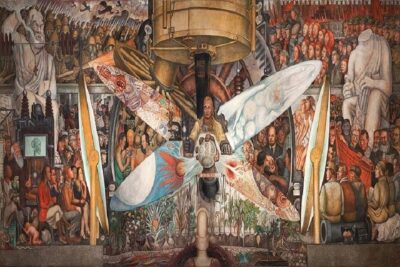
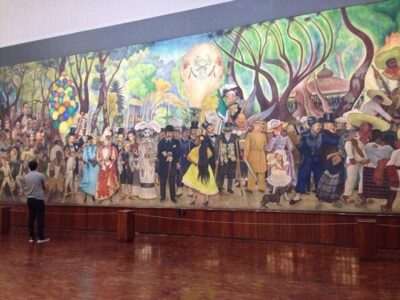
The tour also includes murals associated with Diego Rivera and David Alfaro Siqueiros. These artists used large public images to address Mexico’s past, politics, labor, education, and social order. Their work can be bold and demanding, especially if you are used to museum art presented with a small label and a quiet room.
Here, the setting changes the experience. You see the murals as part of an active university, with students moving through the same spaces. That connection between art and daily life is one of the strongest reasons to book the walk.
Volcanic rock as part of the architecture
UNAM’s rocky ground is not just a detail to notice between murals. The campus rises from a volcanic setting, and the designers worked with that uneven, dark terrain instead of hiding it completely.
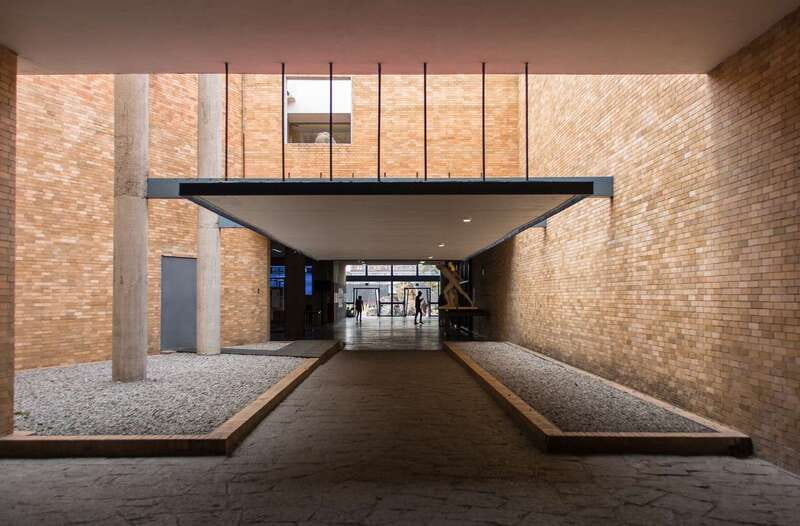
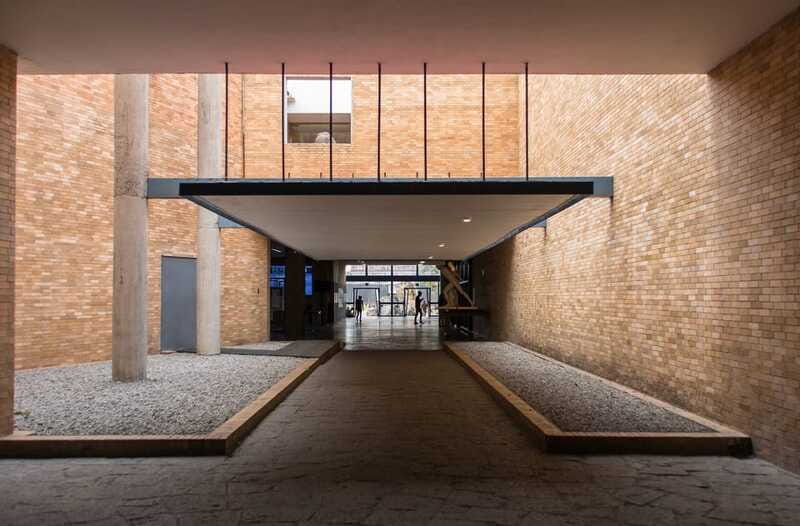
As you walk, pay attention to the contrast between the rough stone and the smooth modernist forms. Concrete, open plazas, painted surfaces, and exposed rock create a place that feels very different from central Mexico City.
This is where a guide adds real value. Without context, you might see an unusual campus with attractive buildings and rough paths. With explanation, the ground becomes part of the design argument. The university is tied to the physical setting of Mexico, not placed on a blank surface with no local character.
The terrain also has a practical effect. The four-kilometer route is a real walk, and rocky or uneven sections may make it less comfortable for anyone with limited stamina. The activity is described as wheelchair accessible, but you should still ask for current route details if you need specific access arrangements.
Other historical tours in Mexico City




Moving through faculties and student life
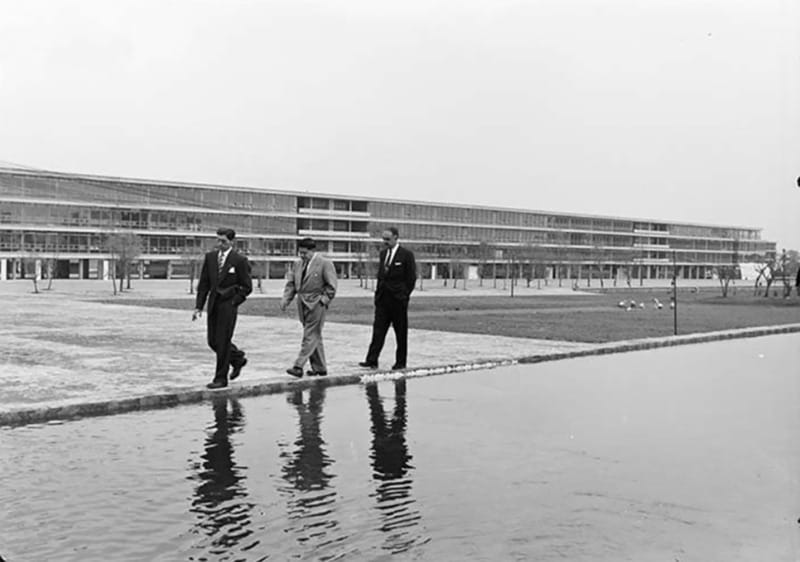
UNAM is a working university, not a museum frozen for sightseeing. During a weekday tour, you may see students attending classes, working in workshops, and meeting across campus. That ordinary activity gives the architecture a purpose.
Sebastián also explains how different faculties can have different moods and identities. That comparison helps you understand the campus as a collection of communities rather than one uniform institution.
The social side of the tour is a major strength. You learn about the socioeconomic and political pressures students face, along with the fact that attending the university is virtually free for students. The discussion also addresses why the graduation rate is low, an issue that reveals more about Mexican society than a simple list of buildings could.
This material may be more detailed than you expect from an architecture walk. That is good news if you want context, but less so if you want a short, purely visual tour. The experience gives you a fuller picture of the institution, including tensions and challenges rather than only its successes.
You may also see the auditorium where Okupa Che is based. Its presence adds another political layer to the campus and shows that UNAM remains a place where public issues are debated, contested, and lived out.
What makes Sebastián’s guiding style useful
The strongest praise for this experience centers on Sebastián’s teaching. He explains the campus, murals, architecture, politics, and student life in a way that joins the subjects together.
His background matters. As a former UNAM student and current lecturer, he can speak from personal experience as well as academic study. That lets him explain not only what a building was designed to do, but how the university feels to people who study and work there.
You should feel comfortable asking questions. Several comments point to his patience and ability to adapt the tour to personal interests and needs. If you care most about design, he can focus on the buildings. If you are more interested in Mexican politics or social divisions, the campus offers plenty to discuss.
The experience has earned a perfect 5 rating from 22 reviews, with praise repeated for the guide’s command of architecture, history, and campus life. That does not mean every visitor will want the same level of discussion, but it does indicate a clear strength: this is a guide-led interpretation, not a simple walk from one photo point to another.
Is $76 a fair price for three hours?
At $76 per person, this is not the cheapest way to see UNAM. The value depends on how much you want from the visit.
If you only want to photograph the Central Library and see a few murals, you could reasonably feel that the price is high. The campus itself is a public place, and the tour does not include a meal, hotel pickup, or a special museum admission.
If you want the meaning behind the art, the history of the campus, and an explanation of how UNAM fits into Mexican society, the calculation changes. You are paying for three hours of focused guidance across a large site that would be difficult to understand on your own.
The guide also saves you from spending your limited Mexico City time finding the main buildings and trying to interpret murals without context. Water is included, and the ability to reserve now and pay later gives you some planning flexibility. Free cancellation is available up to 24 hours before the tour.
For architecture fans, art lovers, and visitors who value local interpretation, I consider the price reasonable. For a casual sightseeing stop, it may be more than you need.
How to prepare for the 4-kilometer route
Treat this as a walking tour, not a relaxed campus stroll. Three hours and four kilometers can feel easy for a fit walker, but the distance, weather, and rocky setting add up.
Wear comfortable shoes with good support. Bring sun protection and a light rain layer because the tour runs rain or shine. Carry any extra water or food you need, since only water is included and food and drinks are not.
Use a toilet before you meet the guide. Toilet access can be difficult during the walk, and this is one of the clearest practical weaknesses of the experience.
Pregnant visitors should note that the tour is not considered suitable for them. Anyone with mobility concerns should ask for current route information even though the activity is listed as wheelchair accessible. The campus is large, and exact conditions can matter more than a general accessibility label.
Who should book this UNAM walk?
I would choose this tour if you want to understand Mexico City through its public art and institutions. It suits visitors who enjoy asking questions, walking through active neighborhoods, and connecting buildings to politics and daily life.
It is especially good for:
- Architecture students and design fans
- Visitors interested in Mexican muralism
- People who want a UNESCO site outside the usual historic-center route
- Anyone curious about university life and social class in Mexico
- Repeat visitors looking for a different side of Mexico City
You may want to skip it if you dislike long walks, need frequent toilet stops, or prefer a quiet tour with little discussion. It is also less suitable if your only goal is a quick look at one building.
FAQ
How long does the UNAM campus tour last?
The tour lasts three hours.
How far do you walk?
The route covers about 4 kilometers, or 2.5 miles.
Where does the tour meet?
You meet in front of Estadio Olímpico Universitario.
How can I reach the meeting point by public transport?
Take Metrobús Línea 1 to Dr. Gálvez Station, then walk south from Insurgentes Avenue for about 10 minutes.
How long does it take from Condesa or Roma by Uber?
The ride usually takes about 30 minutes.
Is the tour offered in English?
Yes. The live guide speaks English or Spanish.
Is water included?
Yes, water is included. Food and other drinks are not included.
Does the tour run in bad weather?
Yes. The tour takes place rain or shine.
Is the route wheelchair accessible?
The activity is listed as wheelchair accessible, but you should confirm current route details if you need specific access information.
Can I cancel for a full refund?
Yes. You can cancel up to 24 hours in advance for a full refund.
Should you book the UNAM campus tour?
Book it if you want more than a quick view of a famous building. UNAM gives you remarkable murals, modernist architecture, volcanic stone, and a working university, while Sebastián adds the political and social context that makes the site easier to understand.
The decision comes down to walking and interest. You will cover four kilometers, deal with limited toilet access, and spend three hours listening as well as looking. If that sounds worthwhile, $76 buys a thoughtful introduction to one of Mexico City’s most important and least routine cultural stops.
More Historical Tours in Mexico City
More Walking Tours in Mexico City
More tours in Mexico City we've reviewed





Walking Tours, compared.
 ★ 5.0Historic Downtown Walking TourFrom $263 hours (approx.)
 ★ 4.8Mexico City: Historic Downtown Walking TourFrom $263 hours
 ★ 5.0Frida Kahlo VIP [Museum Tickets Included] Walk, Markets & ChurrosFrom $833 to 4 hours (approx.)
 ★ 5.0Walking Tour of the Historic Center of Mexico City3 hours (approx.)
 ★ 5.0Anthropology Museum Private Experience Walking TourFrom $783 hours (approx.)
 ★ 5.0Walking Tour in Mexico City for Exploring their Cultural HeritageFrom $252 to 3 hours (approx.)
 ★ 5.0Walking Tour – Impressive murals in Historical Center of Mexico CityFrom $511 to 3 hours (approx.)
 ★ 5.0Muralist Art Semi Private Walking Tour in Mexico City DowntownFrom $583 hours 30 minutes (approx.)
The lists this tour appears in