
Reviewed · GUADALUPE SHRINE TOURS
Basilica of Guadalupe. Mexico City. Walking tour
The most striking part of this Villa de Guadalupe walking tour is the chance to stand close to the original mantle associated with the Virgin of Guadalupe inside the New Basilica. I like the mix of major religious sites and smaller chapels, and I like that the guide leaves room for questions, photos, and a slower look. The main drawback is that two hours can feel tight if you want to linger at every church or climb the hill at an easy pace.
In This Article
- Key points at a glance
- Why the New Basilica makes this walk worthwhile
- The Old Basilica and the story of a changing site
- Walking through Villa Gustavo A. Madero
- The baroque chapel and the climb uphill
- San Miguel Chapel and the final part of the route
- What the guide adds to a sacred place
- Is $38.90 a fair price?
- Meeting point, timing, and practical details
- Who should book this Guadalupe walking tour?
- Should you book it?
- FAQ
- How long does the Basilica of Guadalupe walking tour last?
- What language is the tour offered in?
- What is included in the price?
- How much does the tour cost?
- Where does the tour start?
- Where does the tour end?
- What will I see at the New Basilica?
- Does the tour include the Old Basilica?
- Is the tour accessible to most people?
I also like the small-group limit of 20 people and the option of a Spanish or English guide. Adriana Hdz has been praised for clear narration, useful photo spots, and giving each site enough time. If you book at the last minute, you might even find yourself with a private, personalized walk, though that cannot be guaranteed.
Key points at a glance
- See the original mantle in the New Basilica: The sacred image is displayed above the altar, giving you a close view of the focus of the pilgrimage site.
- Compare the New and Old Basilicas: You learn why the Virgin was moved from the older church and how the two buildings differ.
- Walk through Villa de Guadalupe: The route includes several churches, monuments, and important photo points.
- Climb to the hilltop chapels: The walk includes a baroque-style chapel, a panoramic viewpoint, and the chapel dedicated to San Miguel.
- Get time for questions and pictures: The guide can adjust the pace, explain details, and help with photos.
- Keep the group manageable: The maximum is 20 people, with guiding in English and Spanish.
Why the New Basilica makes this walk worthwhile
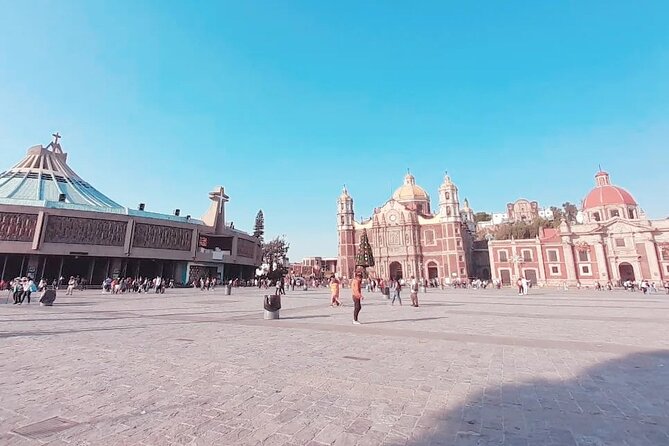
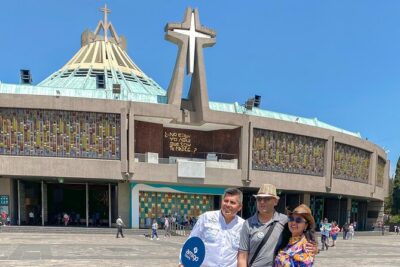
The New Basilica of Guadalupe is the central stop, and it gives the tour its real purpose. Built in 1976, the modern church was designed around devotion to the Virgin of Guadalupe. The most important feature is not a side altar or a distant painting. The original mantle is displayed above the altar, allowing you to get very close to it.
That detail matters. You are not simply looking at a grand church from the doorway. You are being shown the object at the heart of the devotion, while your guide explains what you are seeing and why the basilica was built in its present form.
I would pay close attention here, even if you have already visited the basilica on your own. A quick independent visit can leave you with a large modern building and a crowd of people. A guide gives the space a clearer frame, pointing out the meaning of the display and connecting it to the other churches on the hill.
The New Basilica is also a practical starting point for understanding the whole area. Once you know where the central image is located and why the site draws pilgrims, the older churches and chapels make more sense. You are not just ticking off religious buildings. You are following the development of one important place of worship.
A few more Mexico City tours and experiences worth a look
The Old Basilica and the story of a changing site
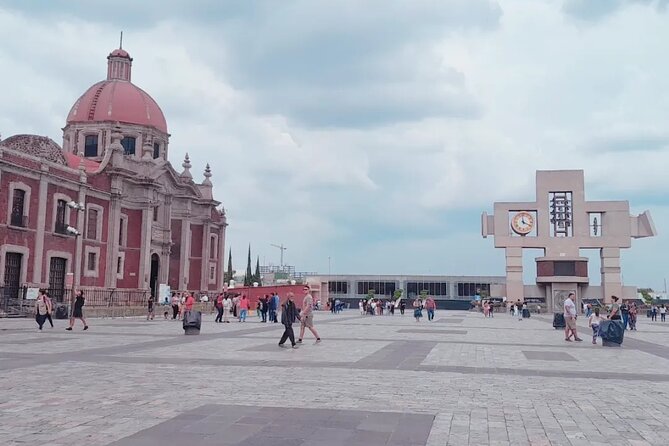
The Old Basilica offers a useful contrast. The Virgin of Guadalupe was previously kept there, and the guide explains its history before leading you onward. This is one of the strongest parts of the walk for anyone who wants more than a quick look inside the New Basilica.
The change from the old church to the newer building also shows how a sacred site has to adapt over time. Here, the point is not simply that one church is old and the other is modern. You get a sense of how the focus of devotion shifted between buildings and how the site grew into a larger complex.
I like this pairing because it gives you a before-and-after view in the same visit. The New Basilica is built for the modern scale of the site, while the Old Basilica connects you to an earlier chapter. Your guide can do more than recite dates. The useful information is the relationship between the two buildings.
The tour description does not promise a long stop at each interior, so keep your expectations sensible. You will learn about the Old Basilica and see it as part of the wider complex, but the two-hour time limit means this is not an architectural study. If you want to examine every painting, altar, and design detail, you may need extra time on your own.
Walking through Villa Gustavo A. Madero
The walk continues through Villa Gustavo A. Madero, where the focus broadens from the two basilicas to the collection of churches and public monuments around them. You may enter some of the churches to see their interiors, and you will have chances to photograph important points along the way.
This part gives the experience a more local, street-level feel. Instead of staying in one large building, you move through a historic religious area and see how its different parts fit together. The guide can point out details that are easy to miss when you are moving from one landmark to another without context.
One named feature is the Ofrenda monument. It provides another photo stop and adds a public, commemorative element to the visit. The supplied details do not explain its exact design or story, so your guide is the person to ask about what it represents when you reach it.
The group size matters here. With as many as 20 people, the walk is not guaranteed to feel private, especially at popular points. Still, that limit is more workable than a very large coach group. It should be easier to hear the guide, stay together, and pause for a question or photograph.
A smaller group may also help if the guide is Adriana Hdz. Her approach, based on the available experience details, includes giving people time at each site and helping with pictures. That is a real advantage on a walking tour. You are not forced to rush past a church simply because the guide has a fixed speech to deliver.
The baroque chapel and the climb uphill
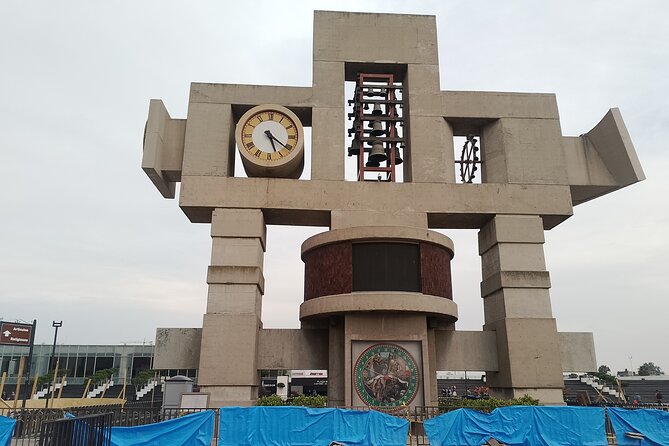
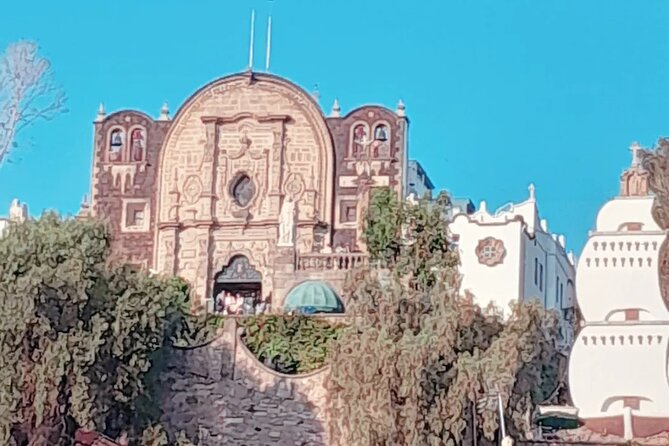
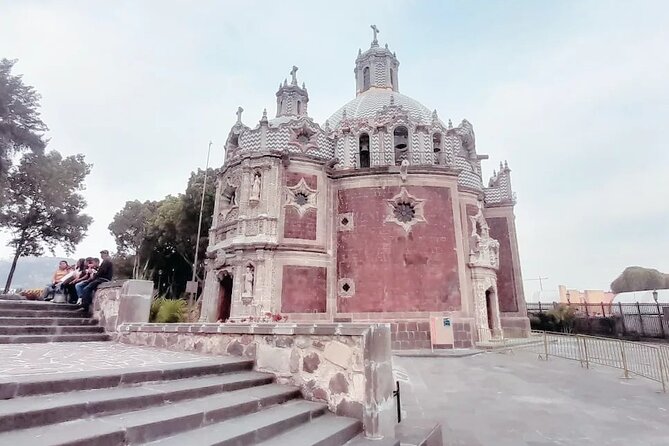
The route includes a chapel in the baroque style, then continues uphill toward a church and a panoramic view. These stops change the pace of the visit. After the larger basilicas, the smaller chapel gives you a closer look at a different design tradition, while the climb opens up the physical setting around the sanctuary.
The word climb is worth taking seriously. The tour is not limited to flat sidewalks and indoor visits. You should be ready to walk uphill for part of the two hours. The information provided does not give the exact distance, number of steps, or level of difficulty, so I would not assume the climb will suit every pace.
The payoff is the view. From the hill, you can look across the area and understand the site in a more visual way. A panoramic stop also gives the tour a welcome pause from church interiors. If you enjoy taking pictures, this is likely one of the places where the guide can suggest a useful angle.
The guide has been specifically praised for knowing good photo spots. That is more valuable than it may sound. Religious buildings can be difficult to photograph well, and a guide who knows where to stand can save you time. You should still ask before taking pictures inside any church, since rules can vary from one place to another.
San Miguel Chapel and the final part of the route
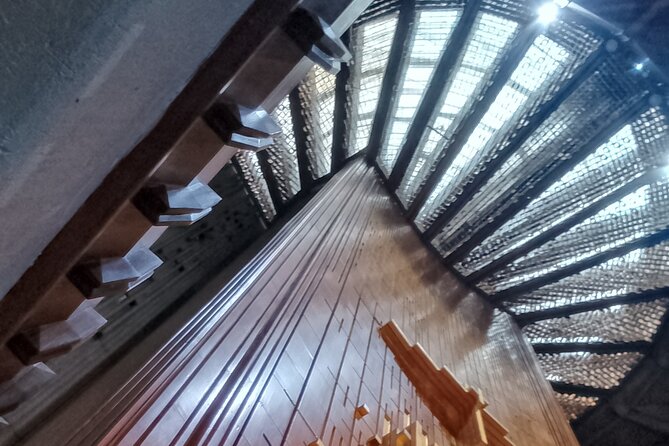
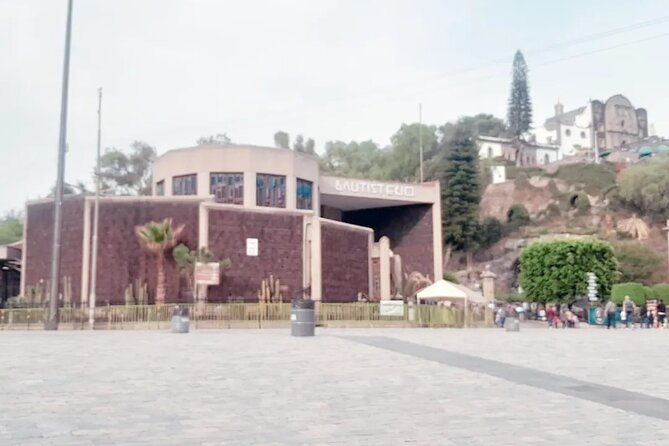
The final named stop is the chapel on the hill dedicated to San Miguel. It gives the uphill section a clear destination rather than making the climb feel like a walk to a viewpoint alone.
The chapel is also part of the broader story of Villa de Guadalupe. A visit here helps you see that the site is made up of many places of worship, not only the best-known basilica. You get a sense of the area as a group of connected religious sites, each with its own place in the route.
Because the total tour lasts about two hours, the time at San Miguel Chapel may depend on the walking pace of the group and how long earlier stops take. A guide who allows questions and photographs can make the visit feel personal, but a flexible pace also means you may not spend the same amount of time at every location.
I would treat this as a guided introduction rather than a complete examination of every church. The benefit is variety. You see the New Basilica, Old Basilica, church interiors, monument, baroque chapel, hilltop church, view, and San Miguel Chapel in one compact visit. The tradeoff is that none of those stops is likely to receive the attention of a full-length specialist tour.
Other walking tours we've reviewed in Mexico City




What the guide adds to a sacred place

The guide is the difference between a walk through buildings and a useful visit. The experience is offered in English and Spanish, and Adriana Hdz is identified as the provider. Her guiding style appears to focus on explanation, patience, and practical help rather than rushing from one point to the next.
That matters particularly at the New Basilica. The mantle and the image connected with it carry religious meaning that may not be obvious from a quick glance. A guide can explain the importance of the display and place the building within the larger history of the site.
The personal side of the tour is another benefit. The guide may let you take your time, answer questions, and help with photographs. On one occasion, a last-minute booking resulted in a private experience because no one else had joined. You should not book expecting a private tour, but the possibility shows why a small-group format can work well.
If you prefer to move quickly and avoid conversation, this may not be your ideal way to visit. The value comes from asking questions and listening to the explanation. I would arrive with a few things you want to understand, such as why the mantle is displayed in the New Basilica, what changed when the Virgin moved from the Old Basilica, and what the hilltop chapels add to the site.
Is $38.90 a fair price?
At $38.90 per person, the price is reasonable if you want a guide to connect several locations during a two-hour visit. Admission to the Villa de Guadalupe portion is listed as free, so you are mainly paying for the guided walk, language support, local explanation, and the convenience of seeing the major points in a planned order.
That means the value depends on how you normally travel. If you are comfortable reading signs, finding the churches, and building your own route, you can visit the area without paying for a tour. But you may miss the connections between the New Basilica, Old Basilica, the smaller churches, and the hilltop chapels.
I think the price makes the most sense for a first visit, for someone who wants an English guide, or for anyone who prefers not to work out the story alone. It is less compelling if you want a long, slow architectural visit or if you already know the religious history of the site.
The tour is often booked about 39 days ahead, which suggests that reserving early can be sensible during a busy trip. At the same time, the small-group cap and the possibility of a quieter walk may appeal to people who dislike large organized excursions.
Meeting point, timing, and practical details
The starting point is 5 Nte 5, Tepeyac Insurgentes, Gustavo A. Madero, Mexico City. The walk ends at Fray Juan de Zumárraga 2 in Villa Gustavo A. Madero, so you should note that the tour does not return you to the starting address.
The route is near public transportation, which helps when planning your arrival and departure. Since the experience is a walking tour with an uphill section, wear shoes you can comfortably use for two hours. The supplied information does not state the exact surface, step count, or amount of time inside each church, so ask the provider if you need a precise mobility assessment.
Confirmation is sent at booking. Service animals are allowed, and most people can take part. The group can contain up to 20 people, with guiding in English and Spanish.
You can cancel for a full refund if you do so at least 24 hours before the local start time. Changes or cancellations made within 24 hours are not accepted for a refund. That policy gives you some flexibility, but you should watch the local time cutoff rather than relying on the time where you booked.
Who should book this Guadalupe walking tour?
I would recommend it to you if you want the main religious sites explained in one compact visit. It suits first-time visitors, people who value personal stories and historical context, and anyone who wants help finding photo spots without spending a full day on the area.
It is also a good fit if you want to see both major basilicas and smaller places of worship. The comparison between the New and Old Basilicas gives the visit shape, while the baroque chapel and hilltop stops add variety.
You may want to skip it if you strongly prefer independent sightseeing, need a completely flat route, or want to spend a long time studying each interior. The climb and the two-hour schedule are the two clearest limits.
Should you book it?
Book this tour if you want a guided introduction to the Basilica of Guadalupe and the surrounding Villa de Guadalupe sites, especially in English. The strongest reasons are the close view of the mantle, the comparison of the two basilicas, the hilltop view, and Adriana Hdz’s patient approach to questions and photos.
Skip it if your priority is a slow, self-directed visit or a detailed architectural examination. For most first-time visitors, though, $38.90 buys useful context and a well-shaped route through a place that is easy to underestimate.
FAQ
How long does the Basilica of Guadalupe walking tour last?
The tour lasts approximately two hours.
What language is the tour offered in?
The tour is offered in English and Spanish.
What is included in the price?
The price includes a guided walking tour of Villa de Guadalupe and a guide.
How much does the tour cost?
The listed price is $38.90 per person.
Where does the tour start?
The tour starts at 5 Nte 5, Tepeyac Insurgentes, Gustavo A. Madero, 07020 Ciudad de México, CDMX, Mexico.
Where does the tour end?
The tour ends at Fray Juan de Zumárraga 2, Villa Gustavo A. Madero, Gustavo de Madero, 07050 Ciudad de México, CDMX, Mexico.
What will I see at the New Basilica?
You will visit the New Basilica, built in 1976, and see the original mantle of the Virgin of Guadalupe displayed above the altar.
Does the tour include the Old Basilica?
Yes. You will visit the Old Basilica and learn about its history and the fact that the Virgin of Guadalupe was previously kept there.
Is the tour accessible to most people?
The information states that most people can participate. The route also includes a climb up the hill, so you should consider that part of the walk when deciding if it suits you.
More City Tours in Mexico City



More Walking Tours in Mexico City
More Guadalupe Shrine Tours in Mexico City
More tours in Mexico City we've reviewed


Guadalupe Shrine Tours, compared.
 ★ 5.0Teotihuacan, Guadalupe Shrine & Tlatelolco Day Tour with LunchFrom $399 hours (approx.)
 ★ 4.6Mexico City: Teotihuacan, Tlatelolco & Guadalupe Shrine TourFrom $49
 ★ 4.7Mexico City: Teotihuacan, Tlatelolco & Basilica of GuadalupeFrom $579 hours
 ★ 5.0Private Tour: Teotihuacan and Guadalupe ShrineFrom $1896 hours (approx.)
 ★ 4.5Teotihuacan Tour with Basilica of Guadalupe & TlatelolcoFrom $408 hours 30 minutes (approx.)
 ★ 5.0Teotihuacan, Shrine of Guadalupe & Tlatelolco Day TourFrom $667 hours (approx.)
 ★ 4.5Pyramids of Teotihuacan, Guadalupe Shrine & Tlatelolco TourFrom $638 hours (approx.)
 ★ 4.5Teotihuacan & Basilica Guadalupe Tour with lunchFrom $598 to 9 hours (approx.)
The lists this tour appears in