
UNAM’s campus turns public art into a history lesson. This two-hour walk takes you from Juan O’Gorman’s remarkable Biblioteca Central to murals by Siqueiros, Chávez, Eppens, and others, then to the Olympic Stadium and its Diego Rivera mural.
In This Article
- Key points at a glance
- Why UNAM is the right place for this walking tour
- Biblioteca Central and the work of Juan O’Gorman
- One hour with UNAM’s mural tradition
- The Olympic Stadium and the 1968 Games
- What the guide adds to the visit
- Price, timing, and practical value
- Who should book this UNAM experience
- Should you book the UNAM mural and revolution walk?
- FAQ
- Where does the UNAM walking tour begin?
- Where does the tour end?
- How long does the experience last?
- What language is the tour offered in?
- What will I see at Biblioteca Central?
- Which mural artists are included?
- What does the Olympic Stadium portion cover?
- Is admission included?
- How many people can join the tour?
I like the small maximum group of 15, which should make it easier to hear the guide and ask questions. I also like the focus on stories behind the art, especially the university’s construction, its development, and the events connected with 1968, subjects praised in the account of guide Fernando.
The main consideration is time. Two hours gives you a useful introduction, but not a leisurely study of every mural or building on this large campus. The $53.46 price is fair if you value interpretation, though art fans who prefer to explore alone may find the cost harder to justify.
Key points at a glance
- Juan O’Gorman’s Biblioteca Central: Spend about 20 minutes with one of UNAM’s most striking architectural works.
- Murals by major Mexican artists: Set aside about an hour for works by Siqueiros, Chávez, Eppens, and others.
- 1968 at the Olympic Stadium: Learn about the Olympic Games and see the Diego Rivera mural connected with the stadium.
- Fernando’s storytelling: The guide has been praised for explaining the university’s construction, development, and major events.
- Compact English-language format: The tour lasts about two hours and uses a bilingual guide, with a maximum of 15 people.
- Simple return route: You begin and finish at the Rectoría de la UNAM Escolar meeting point in Ciudad Universitaria.
Why UNAM is the right place for this walking tour
The National Autonomous University of Mexico is more than a campus stop. Here, architecture, public art, education, and political history share the same open spaces. That makes this experience useful if you want to see Mexico City through ideas and images, not only through churches, plazas, and museums.
The tour is built around three connected areas. First comes the central library, where the building itself provides the visual hook. Next, the walk shifts to murals by several important artists. Finally, you reach the Olympic Stadium, where sport and public art meet.
I like that structure because it gives the walk a clear rhythm. You begin with architecture, spend the most time with mural art, and finish with a place tied to the 1968 Olympic Games. The guide’s job is to connect those stops so they feel like parts of one story rather than isolated sights.
The group limit matters here. A mural tour loses much of its value if you are standing at the back of a crowd while the guide points out small details. With no more than 15 people, you should have a better chance of following the explanations and asking about a work that catches your eye.
Other walking tours we've reviewed in Mexico City


Biblioteca Central and the work of Juan O’Gorman
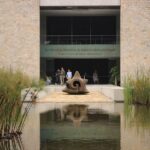
The first stop is UNAM Biblioteca Central, also called the central library. You have about 20 minutes here, and the focus is the building’s architecture and Juan O’Gorman’s role in creating it.
This is not simply a quick photo stop. O’Gorman’s work gives the guide a chance to explain how the university was built and how its major structures fit into the institution’s development. The tour information describes the library as an incredible architectural work, so you should expect the exterior and its artistic treatment to receive the main attention.
Twenty minutes is enough for an introduction, but it is not a full architectural study. I would use this part to get the broad design story, listen for details about construction, and take in the building before the group moves on. If you hope to examine every section closely, you may want extra time on another visit.
Admission is free at this stop. That keeps the tour focused on the guide’s interpretation rather than ticket handling, and it means the listed price is paying for the guided experience, not entrance to a paid attraction.
One hour with UNAM’s mural tradition
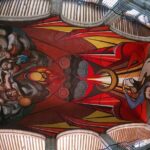
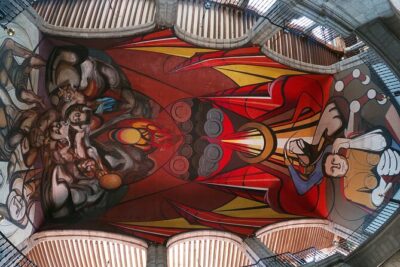
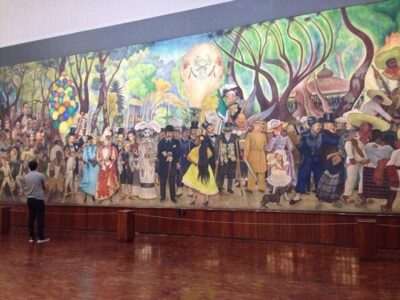
The mural section is the heart of the experience. You spend about an hour looking at works by Siqueiros, Chávez, Eppens, and other artists. That is half the tour, a useful signal that this is aimed at people who want context rather than a fast campus orientation.
Mexican mural art can be hard to read at first glance. Large walls often combine people, symbols, history, science, education, and political ideas. A guide can point out how the image is organized and explain what you are seeing, helping you move beyond a quick judgment that a wall is simply colorful or impressive.
The supplied details do not identify every mural or say exactly how long you will stop at each one. You should expect the guide to select key works rather than provide an exhaustive survey. That is a sensible approach in two hours, but it also means the experience may feel introductory if you already know UNAM’s art well.
I like the range of artists. Seeing Siqueiros alongside Chávez, Eppens, and others gives you a wider sense of Mexican public art than a tour centered on one famous name. The variety also lets the guide compare different approaches without turning the walk into a single-artist biography.
The strongest praise goes to the storytelling. Fernando is described as an excellent history teller who explains the university’s construction and later development, including the famous events of 1968. That detail matters because the murals become more meaningful when you understand their setting. You are not only looking at painted surfaces. You are hearing how art and university life connect.
Admission is free for the mural portion as well. The value comes from the explanations, the route, and the chance to look at several works in one organized visit.
The Olympic Stadium and the 1968 Games
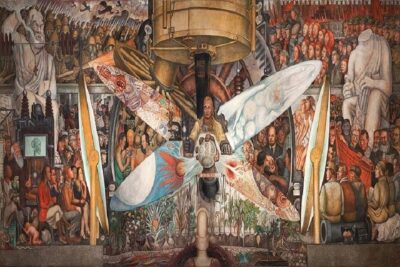
The final stop is Estadio Olímpico Universitario. You spend about 30 minutes here discussing the 1968 Olympic Games and Diego Rivera’s mural.
This gives the tour a strong finish. The library introduces the university through architecture, the central portion focuses on murals, and the stadium adds a major international event to the story. If you have an interest in sports, modern Mexican history, or large-scale public art, this stop should broaden the walk beyond campus design.
The available details do not say that you enter the stadium or view a particular seating area. They do specify that you will talk about the 1968 Games and Diego Rivera’s mural, so you should book this for the interpretation rather than for an athletic event or a full stadium tour.
Thirty minutes is a good amount of time for a focused explanation. It lets the guide develop the Olympic connection without making the stop dominate the day. As with the library, though, you should not expect an extended visit to every part of the venue.
What the guide adds to the visit
A bilingual guide is included, and the experience is offered in English. That is important at UNAM, where a casual walk can leave you with strong images but limited context.
The guide’s role is especially valuable because the tour crosses several subjects: architecture, mural painting, university development, and the 1968 Olympics. Fernando’s contribution, as described in the supplied material, is his ability to connect construction and development with the events that shaped the university’s story.
I would choose this tour for explanation and structure, not for independent wandering. You are given a set route and a limited window, which helps if you have only part of a day in southern Mexico City. It also removes the need to decide which buildings and murals deserve your attention first.
The small group should help keep the experience personal. A cap of 15 is not the same as a private tour, but it is far more manageable than a large coach group. You should still be ready to stay with the guide, since the value depends on hearing the commentary at each stop.
Other guided tours in Mexico City

Price, timing, and practical value
The cost is $53.46 per person for about two hours. Since admission is free at the listed stops, the price mainly covers the bilingual guide, the planning of the route, and the interpretation of UNAM’s art and history.
That is a reasonable purchase if you would otherwise walk through the campus without understanding what you are seeing. It is less compelling if you already have strong knowledge of O’Gorman, Mexican muralism, UNAM, and the 1968 Olympics, or if you prefer to spend two hours taking photographs at your own pace.
The tour is typically booked about 20 days ahead. That suggests you should not leave it until the last minute if the timing matters to you, though the stated maximum of 15 people may also help explain why advance planning is useful.
The meeting point is Rectoría de la UNAM Escolar, C.U., Coyoacán, 04510 Ciudad de México, CDMX. The activity returns to that same meeting point, so you do not need to arrange a separate pickup at the end.
The location is near public transportation. The information does not specify a particular station, route, or walking time, so check your own route before setting out. Confirmation arrives when you book, and most people can participate.
Free cancellation is allowed up to 24 hours before the start time for a full refund. Cancellations or changes made less than 24 hours before the start time are not accepted for a refund, and the cut-off uses local Mexico City time.
Who should book this UNAM experience
I would recommend it to first-time visitors who want a focused introduction to Ciudad Universitaria. It suits people who enjoy art but want help reading murals, as well as anyone curious about how a university can reflect national events and cultural change.
It is also a good match for visitors who prefer a compact tour. Two hours is long enough to cover the three main stops without taking over your day. Since the route ends where it begins, you can make other plans afterward without arranging transport from a different neighborhood.
Families and mixed-interest groups may find the variety useful. One person can focus on architecture, another on painting, and another on the Olympic connection. The guide’s explanations give the group a common thread.
I would hesitate if your priority is a slow, detailed art study. The mural portion receives the most time, but an hour still requires selection. I would also hesitate if you are looking for a private experience, since the tour can include up to 15 people.
Should you book the UNAM mural and revolution walk?
Book it if you want the campus translated for you. The best reasons are the combination of O’Gorman’s Biblioteca Central, a substantial hour with several mural artists, and the Olympic Stadium discussion tied to 1968 and Diego Rivera.
The strongest practical choice is the guide-led format. Fernando’s storytelling about construction, university development, and 1968 gives the visit a human and historical frame. At $53.46, the tour makes sense when that context is worth more to you than free independent sightseeing.
Skip it if you already know the art well or want a completely flexible visit. For everyone else, this is a compact way to see an important side of Mexico City, with free admission to the sites and a manageable two-hour commitment.
FAQ
Where does the UNAM walking tour begin?
It begins at Rectoría de la UNAM Escolar, C.U., Coyoacán, 04510 Ciudad de México, CDMX, Mexico.
Where does the tour end?
The activity ends back at the same meeting point.
How long does the experience last?
The walking tour lasts approximately two hours.
What language is the tour offered in?
The experience is offered in English and includes a bilingual guide.
What will I see at Biblioteca Central?
You will visit UNAM Biblioteca Central and learn about its architecture as an important work by Juan O’Gorman.
Which mural artists are included?
The tour includes murals by Siqueiros, Chávez, Eppens, and other artists.
What does the Olympic Stadium portion cover?
You will discuss the 1968 Olympic Games and Diego Rivera’s mural at Estadio Olímpico Universitario.
Is admission included?
Admission tickets are free at the listed stops. A bilingual guide is included, while tips are not included.
How many people can join the tour?
The maximum group size is 15 people. Most people can participate, and the meeting point is near public transportation.
More Guided Tours in Mexico City
More Walking Tours in Mexico City
More tours in Mexico City we've reviewed


Walking Tours, compared.
 ★ 5.0Historic Downtown Walking TourFrom $263 hours (approx.)
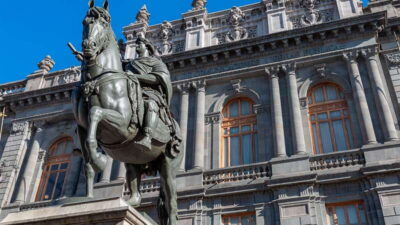 ★ 4.8Mexico City: Historic Downtown Walking TourFrom $263 hours
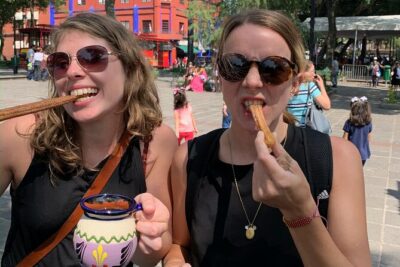 ★ 5.0Frida Kahlo VIP [Museum Tickets Included] Walk, Markets & ChurrosFrom $833 to 4 hours (approx.)
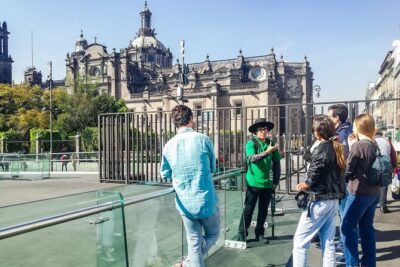 ★ 5.0Walking Tour of the Historic Center of Mexico City3 hours (approx.)
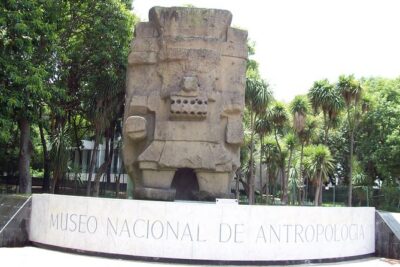 ★ 5.0Anthropology Museum Private Experience Walking TourFrom $783 hours (approx.)
 ★ 5.0Walking Tour in Mexico City for Exploring their Cultural HeritageFrom $252 to 3 hours (approx.)
 ★ 5.0Walking Tour – Impressive murals in Historical Center of Mexico CityFrom $511 to 3 hours (approx.)
 ★ 5.0Muralist Art Semi Private Walking Tour in Mexico City DowntownFrom $583 hours 30 minutes (approx.)
The lists this tour appears in