
Reviewed · ROMA & POLANCO TOURS
Multi-Variety Mole Class in a Condesa home or art gallery rooftop
Mexico’s mole is far more than a chocolate sauce, and this four-hour class makes that clear. You’ll grind and combine the many ingredients behind manchamanteles and mole verde, then sit down to eat what you helped prepare.
In This Article
- Key points to know before booking
- Why these two moles make a useful Mexico City cooking class
- Arriving in Condesa and settling into the class
- The first two hours: ingredients, method, and hands-on work
- Manchamanteles: a red mole with tropical fruit
- Mole verde: a fresher second course
- Setting the table and eating what you prepared
- What the $107.60 price really covers
- Who will enjoy this class most
- Practical details that can affect your day
- Should you book the mole class?
- FAQ
- How long does the mole class last?
- Where does the class meet?
- Where does the activity end?
- How many people can attend?
- Is the class offered in English?
- Which moles will I prepare?
- What ingredients are used in the manchamanteles?
- What ingredients are used in the mole verde?
- Are drinks and dessert included?
- Are recipes provided after the class?
- Can dietary requirements be accommodated?
- Is the class wheelchair accessible?
- Are there cats at the Condesa home?
- What is the cancellation policy?
- Can the class be canceled by the provider?
I like the small maximum of eight people, which gives the cooking a personal feel. I also like the contrast between the two dishes: one is a dark, fruity red mole with pineapple and plantain, while the other gets its color and lift from spinach, cilantro, parsley, and epazote.
The main consideration is the price, $107.60 per person. That covers lunch, drinks, dessert, instruction, equipment, and recipes, but the same experience may cost less when booked directly through Martaja. The Condesa home also has two cats, and the building has no elevator.
Key points to know before booking
- Two very different moles: Make a sweet, spice-filled manchamanteles and a fresh green mole in the same session.
- Small group size: The class accepts no more than eight people, a useful limit for hands-on cooking.
- A home or rooftop setting: The class takes place in a Condesa home or, for some bookings, on an art gallery rooftop.
- Lunch and Mexican drinks included: Adults receive Mexican beer and mezcal, while younger participants receive traditional local soft drinks.
- Recipes arrive by email: You leave with instructions for making both moles again at home.
- Check the final price: Direct booking through Martaja may be cheaper than the listed $107.60 rate.
Why these two moles make a useful Mexico City cooking class
Mole is often reduced to one famous dish, usually mole poblano. This class gives you a broader picture. You prepare two sauces with different colors, textures, and flavor profiles, so you can see how Mexican cooking changes with local ingredients and regional traditions.
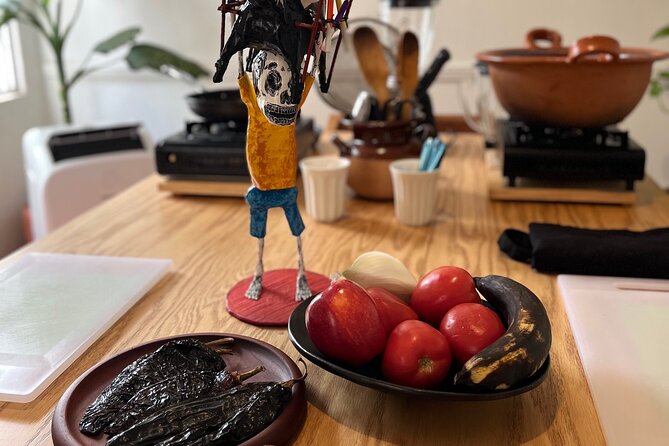
The first dish is mole manchamanteles. It shares some of the method and spice character associated with mole poblano, but it does not depend on chocolate for its sweetness. Instead, pineapple, plantain, and apple bring fruit into the sauce. The result should appeal to you if you like savory food with a clear sweet note and warm spices.
The second is mole verde. Its base includes spinach, cilantro, parsley, and epazote. That combination gives the sauce a fresh green character, making it a useful counterpoint to the heavier red mole. I like this pairing because you are not spending four hours learning two versions of nearly the same dish.
The class also helps explain why mole takes patience. The ingredient list is long, and the process can look complicated at first. Your instructor walks you through the selections and preparation, breaking the work into steps that feel manageable rather than mysterious.
A few more Mexico City tours and experiences worth a look


Arriving in Condesa and settling into the class
The stated meeting point is Av Nuevo León 4 in Colonia Condesa, Cuauhtémoc. The area is near public transportation, so you do not need a private car to reach the start. The activity ends at the same meeting point, which keeps the day simple.
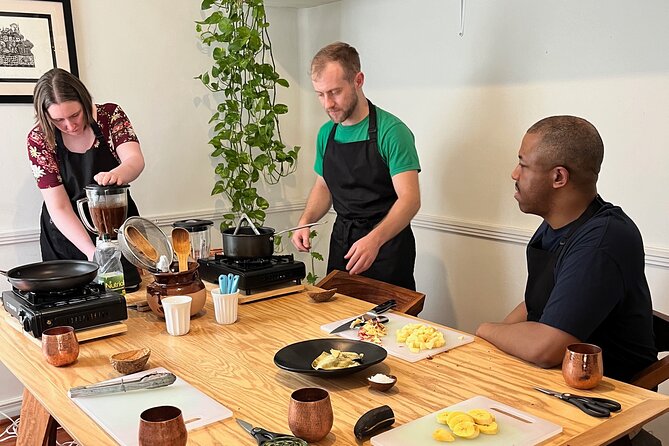
The setting is part of the appeal. You may cook in the guide’s Condesa home, a more intimate arrangement than a commercial cooking school. Some sessions take place on an art gallery rooftop instead. If your booking uses the rooftop location, check your inbox after booking for the exact details.
That alternate setting matters. A home class offers a close, domestic feel, while a rooftop gives you a different backdrop and may change the atmosphere of the meal. The available information does not promise a particular view, so I would book this for the food and teaching rather than for sightseeing from above.
The maximum group size is eight. That is small enough for the instructor to explain unfamiliar ingredients and help with preparation. It also means the room may feel social, but this is not a private class unless your own booking fills the group.
The first two hours: ingredients, method, and hands-on work
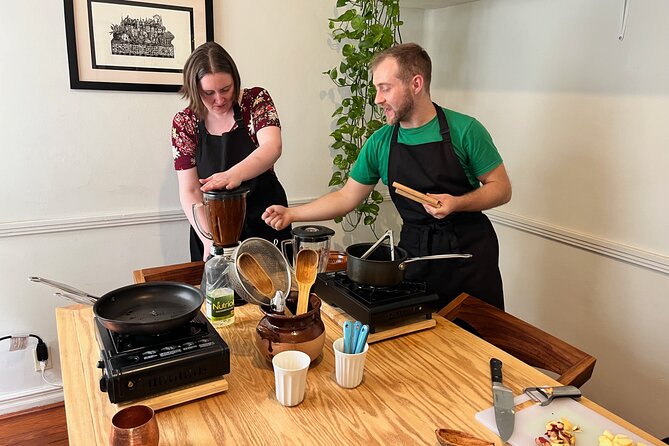
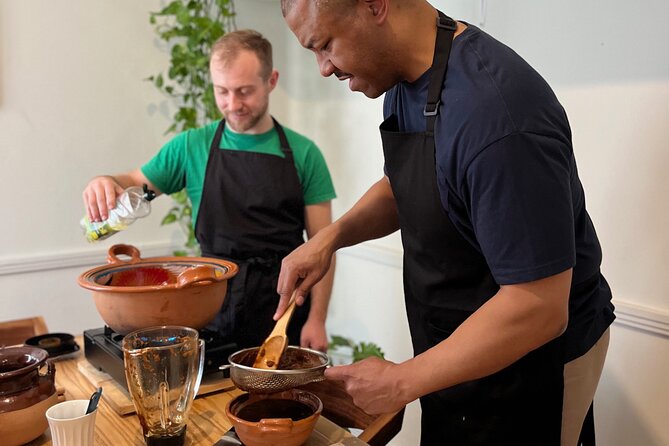
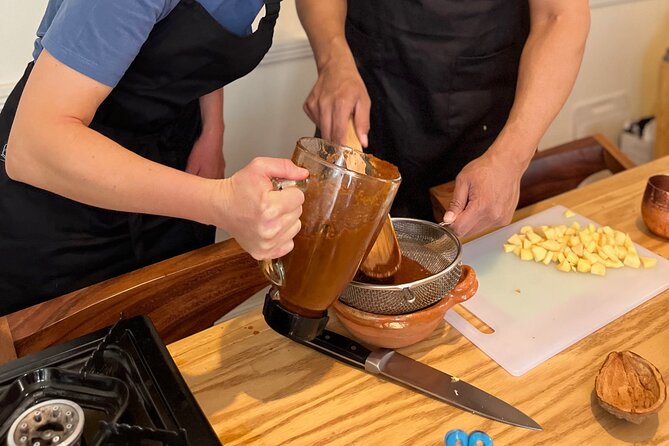
The cooking portion lasts about two hours before you sit down to eat. You receive the ingredients, equipment, and guidance needed to prepare both moles from scratch. That makes this more useful than a demonstration where you only watch someone else cook.
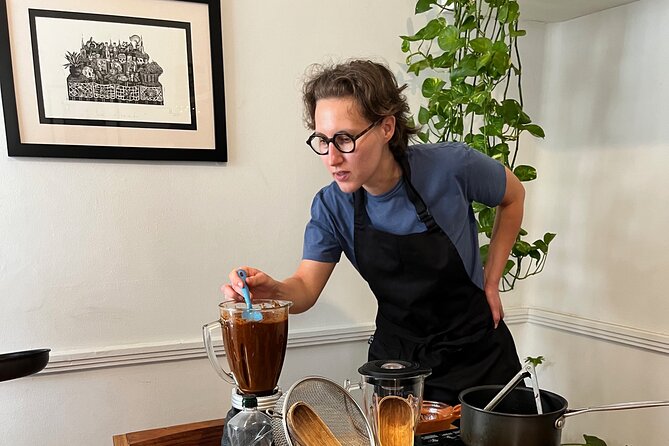
Mole can intimidate beginners because it brings together many spices and other ingredients. The class gives you a practical way to understand the sauce, from selecting components to combining them into a finished dish. One especially useful part is the explanation of how the ingredients work together, since the sauces rely on balance rather than one dominant flavor.
You should expect the work to involve a number of ingredients. That is not a flaw, but it is worth knowing before you arrive. If you prefer a short recipe with a few easy steps, this may feel like a lot. If you want to understand why mole tastes so layered, the long ingredient list is the lesson.
The instructor has been praised for making the process feel simple and for explaining both food and culture clearly. That is important here. A mole class succeeds only if you learn more than a list of measurements, and the teaching appears to connect the cooking with the place it comes from.
You will prepare both main dishes during this period. The exact division of tasks is not specified, so your hands-on time may depend on the group and the stage of cooking. Still, the class includes direct preparation, not just tasting.
Manchamanteles: a red mole with tropical fruit
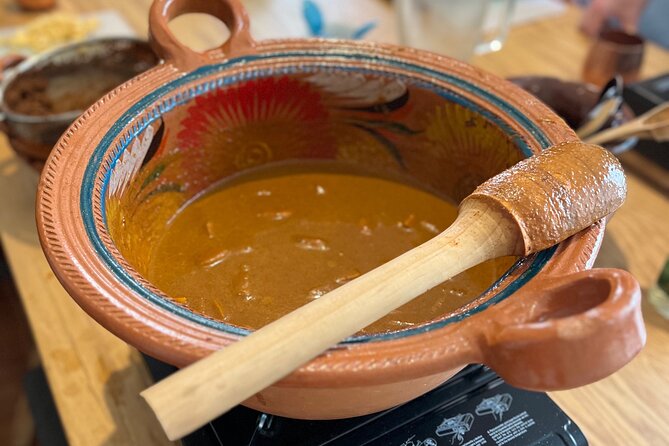
Manchamanteles is the more decadent of the two dishes. It is a red mole flavored with fragrant spices and fresh pineapple, plantain, and apple. The fruit is not a garnish added at the end. It is part of the dish’s identity, giving the sauce its sweet and savory balance.
The name is often associated with the idea of a tablecloth stained by sauce, which fits a dish this bold, though the supplied class details focus on its flavor rather than a formal explanation of the name. You can expect a sauce with more weight and spice than the green mole served alongside it.
This is a good dish to pay attention to if you want to recreate the class at home. Fruit changes as it cooks, and the balance between sweetness and spice will matter. The emailed recipe should help, but your best memory aid will be noting how the instructor describes the ingredients and tasting the sauce as it comes together.
The class presents manchamanteles as similar in process and ingredients to mole poblano, but with fruit taking the place of chocolate as the main sweet element. That comparison gives you a useful reference point without suggesting that all mole follows one standard recipe.
Mole verde: a fresher second course
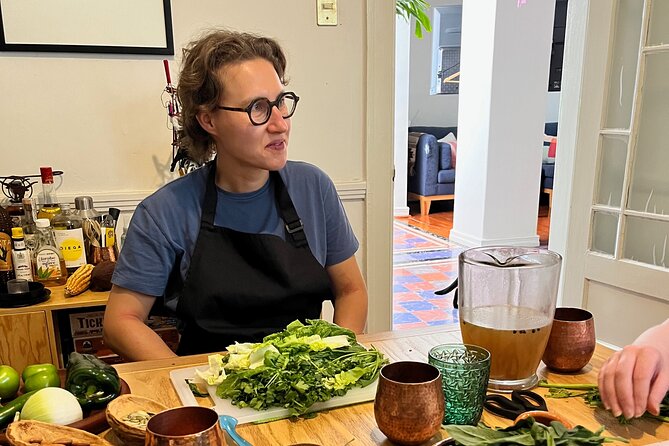
Mole verde provides a sharp contrast. Spinach, cilantro, parsley, and epazote form the green base, creating a sauce that is lighter and more herbal than the red mole.
If you have tried only dark mole sauces, this is likely the more surprising dish. The flavor profile should feel fresher, and the green color comes from leaves and herbs rather than from food coloring or a decorative topping. It also shows why ordering two moles together makes sense: you can compare how different ingredients shape the final sauce.
Epazote is an especially useful ingredient to encounter in context. The class information does not promise a separate lecture about it, but using it in the mole gives you a direct taste of an herb closely associated with Mexican cooking. You may not find every ingredient easily at home, which makes the recipe and the instructor’s explanations worth keeping.
The green mole also offers a practical lesson in balance. Fresh herbs can easily overpower a sauce, while spinach can make it taste flat if used without enough seasoning. The preparation gives you a chance to see how those elements become a complete dish.
Other museum experiences in Mexico City
Setting the table and eating what you prepared
After roughly two hours of cooking, you set the table with locally made dinnerware and sit down for lunch. This part gives the class a proper finish instead of leaving you standing around the kitchen with a sample spoon.
You eat both the manchamanteles and the mole verde, followed by dessert. The dessert is prepared before you arrive, so your cooking work is focused on the two moles. That is sensible: dessert can be ready while you concentrate on the main lesson.
The meal is paired with Mexican beer and mezcal for those age 18 and older. Younger participants receive traditional local soft drinks. The minimum drinking age is 18, and alcoholic drinks are not presented as optional extras that you need to purchase separately.
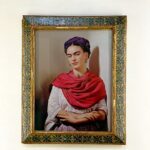
One detail worth noting is the attention to serving pieces. The locally made dinnerware adds a small cultural element to the meal without turning the class into a shopping stop. You are eating from objects connected to Mexican craft, but the main value remains the cooking and shared table.
The food itself has received strong praise for its seasoning and execution. The instructor’s preparation appears careful, and the sauces are intended to be served as finished dishes rather than rough practice batches. Still, flavor is personal, so you should not book solely on the promise that every mole will suit your taste.
What the $107.60 price really covers
At $107.60, this is not a budget lunch. The price makes more sense when you count what is included: about four hours, two cooked mains, all ingredients, kitchen equipment, teaching, a sit-down meal, dessert, Mexican beer and mezcal for adults, soft drinks for younger participants, and recipes sent by email.
A small group also adds value. With no more than eight people, you are paying for access to an instructor rather than simply buying a meal. The class can be especially worthwhile if you want to understand mole well enough to attempt it again.
That said, price-checking is essential. The same experience may be available for less through the Martaja website, the provider’s own booking channel. I would compare the total price and cancellation terms before paying through another platform. Group discounts are also listed, which could make the class more practical for friends or families booking together.
The recipes help extend the value beyond the afternoon. Mole requires work, so you may not prepare it often, but the emailed instructions give you a chance to repeat the dishes when you have the time and ingredients.
Who will enjoy this class most
I would recommend this to you if food is a major reason you visit Mexico City and you want more than a quick tasting. It suits cooks of different skill levels because the instructor guides you through the process and provides the equipment.
It is also a good fit for anyone who thinks mole means only chocolate and chili. The two sauces show a wider range, from fruit-filled red manchamanteles to herb-based mole verde.
Families can consider it too, since younger participants receive nonalcoholic local drinks. The class is limited to eight people, but the available details do not set a specific child age or explain how much of the preparation children can handle. If that matters to you, ask before booking.
Most dietary requirements can be accommodated. Tell the provider about your needs before the class rather than waiting until you arrive. If you have allergies to cats, take the setting seriously: two cats live in the Condesa home. Service animals are allowed, but the home building has no elevator. Wheelchair users have attended before, though access should be confirmed in advance.
Practical details that can affect your day
Plan on about four hours from start to finish. The activity begins and ends at Av Nuevo León 4, and it is near public transportation. Confirmation is sent at booking.
The experience is offered in English. The guide’s name is not provided in the available details, so do not expect to select a particular instructor by name.
If you are assigned the art gallery rooftop, check your inbox after booking for the location information. Do not assume that every booking starts at the Condesa home, even though that is the listed meeting point.
Cancellation is free up to 24 hours before the local start time. Less than 24 hours before the class, you cannot receive a refund or make changes. The class also needs a minimum number of participants, so if the provider cancels because that number is not reached, you can choose another date or experience or receive a full refund.
The activity is often booked about 25 days ahead. That does not guarantee that every date sells out, but it is a useful sign that you should reserve early if your Mexico City schedule is fixed.
Should you book the mole class?
Book it if you want a small, food-centered experience that teaches you why Mexican mole has so many forms. The pairing of fruity manchamanteles and fresh mole verde is the strongest reason to choose it, followed by the hands-on work, full lunch, drinks, dessert, and emailed recipes.
I would hesitate only if $107.60 feels high for a cooking class, if you need a fully accessible building with an elevator, or if cats are a serious allergy concern. Check Martaja’s direct price first, then confirm the location and dietary needs.
For an afternoon spent learning, cooking, and eating two very different sauces, this is a strong choice for curious cooks and serious food lovers. You leave with more than a full stomach: you have a clearer idea of what mole can be and a recipe for trying it again.
FAQ
How long does the mole class last?
The class lasts approximately four hours, including cooking, lunch, dessert, and drinks.
Where does the class meet?
The listed meeting point is Av Nuevo León 4, Colonia Condesa, Cuauhtémoc, Mexico City. Some bookings take place on an art gallery rooftop, so check your inbox for location details after booking.
Where does the activity end?
The activity ends back at the meeting point.
How many people can attend?
The class has a maximum of eight participants.
Is the class offered in English?
Yes. The experience is offered in English.
Which moles will I prepare?
You will prepare mole manchamanteles and mole verde from scratch.
What ingredients are used in the manchamanteles?
The manchamanteles includes pineapple, plantain, and apple, along with fragrant spices.
What ingredients are used in the mole verde?
The mole verde has a base of spinach, cilantro, parsley, and epazote.
Are drinks and dessert included?
Yes. Adults age 18 and older are offered Mexican beer and mezcal. Younger participants receive traditional local soft drinks, and dessert is included.
Are recipes provided after the class?
Yes. The recipes are sent by email after the class.
Can dietary requirements be accommodated?
Most dietary requirements can be accommodated. You should provide those details before attending.
Is the class wheelchair accessible?
Wheelchair users have attended the class before, but the building does not have an elevator. Service animals are allowed.
Are there cats at the Condesa home?
Yes. Two cats live in the house, which is important information for anyone with allergies.
What is the cancellation policy?
You can cancel at least 24 hours before the local start time for a full refund. Cancellations or changes made less than 24 hours before the start time are not accepted for a refund.
Can the class be canceled by the provider?
Yes. The experience requires a minimum number of participants. If it is canceled because that minimum is not met, you can choose another date or experience or receive a full refund.
More Workshops & Classes in Mexico City



More Museum Experiences in Mexico City
More Roma & Polanco Tours in Mexico City

More tours in Mexico City we've reviewed





Roma & Polanco Tours, compared.
 ★ 5.0Polanco Food Tour: The Bestselling Food Adventure in Mexico CityFrom $1093 hours (approx.)
 ★ 5.0Colonia Roma Food TourFrom $1104 hours (approx.)
 ★ 4.9Mexico City: 3–Hour Polanco Food TourFrom $1053 hours
 ★ 5.0Michelin Taco Bike Tour: Roma Norte & Condesa /All-Inclusive.From $1013 hours 30 minutes (approx.)
 ★ 5.0Mexico City: Roma & Condesa Private & Personalized Walking TourFrom $772 to 5 hours (approx.)
 ★ 5.0Tacos and Mezcal Experience in Polanco!From $493 hours (approx.)
 ★ 5.0Epic Condesa and Roma Norte Walking TourFrom $594 hours 30 minutes (approx.)
 ★ 4.9Mexico City: Roma and Condesa Neighborhoods Walking TourFrom $583 hours
The lists this tour appears in