
Reviewed · HISTORIC CENTER WALKS
CDMX Historic Center Walking Tour (2 hours)
Mexico City reveals its oldest layers quickly on this two-hour walking tour. You move from the ruins of Tenochtitlán to a vast cathedral, grand tiled buildings, the stained-glass lobby of Gran Hotel, and the arts center at Bellas Artes. It is a compact introduction to the city’s central core, with food and drink stops pointed out along the way.
In This Article
- Key points to know before booking
- What this Centro Histórico walk really covers
- Templo Mayor: where Mexico City begins
- Metropolitan Cathedral: a brief look inside
- House of Tiles: five minutes of New Spain style
- Gran Hotel and its Tiffany ceiling
- Bellas Artes: an important detail about the ending
- Madero Avenue: food, shops, and a useful final stroll
- Timing, walking, and group size
- What the $30 price delivers
- Who should choose this walking tour?
- Final call: a useful first walk, not a full museum day
- FAQ
- How long does the CDMX Historic Center Walking Tour last?
- How much does the tour cost?
- What language is the tour offered in?
- What is included in the price?
- Is private transportation included?
- Where does the tour start?
- Where does the tour end?
- Does the guide enter Palacio de Bellas Artes with the group?
I like the route’s mix of major sights and street-level details. You get architecture, public ritual, shopping streets, and local eating ideas rather than a single museum visit. I also like that the tour ends at Palacio de Bellas Artes, where you can continue on your own.
The main limitation is time. Five minutes at several landmarks is enough for an explanation and a look, but not a full visit. The guide does not enter the final venue with the group, and cathedral access depends on public availability. The non-refundable booking policy also calls for firm plans.
Key points to know before booking
- See the remains of Tenochtitlán at Templo Mayor: The tour begins beside one of Mexico City’s most important archaeological sites, though the ruins are viewed from outside.
- Watch traditional spiritual rituals: Local shamans may perform cleansings and ceremonies near the historic center, adding a living cultural element to the walk.
- Cover six central landmarks in two hours: The route links the cathedral, House of Tiles, Gran Hotel, Bellas Artes, and Madero Avenue without private transport.
- Look up at Tiffany glass in Gran Hotel: A large French-made Art Nouveau ceiling window is the highlight of this brief interior stop.
- Finish beside Palacio de Bellas Artes: You receive an outside introduction and can explore the palace independently afterward.
- Get practical food and drink ideas: The guide points out places along Madero Avenue that you might miss if you walked the street alone.
What this Centro Histórico walk really covers
At $30 per person, this is priced as an orientation walk rather than a full museum tour. You pay for a local guide, a planned route through some of the city’s most important sights, and a bottle of water. Admission is free at the listed stops, so the value depends mainly on how useful you find the explanations and how much time you save finding the landmarks yourself.
The route is a little unusual in a good way. It does not simply connect postcard buildings. It begins with the Aztec capital’s ceremonial center, passes through Spanish colonial and later Mexican architecture, and ends in a modern pedestrian shopping district beside one of the country’s best-known arts buildings.
You should expect a group of up to 30 people. That is not an intimate private walk, so keep close to the guide and be ready for a quicker pace near busy public streets. Group discounts are available, and the tour is offered in English.
The walk starts at the intersection of República de Guatemala and República de Argentina in Centro Histórico. It ends at Palacio de Bellas Artes on Avenida Juárez. Both points are near public transportation, and private transportation is not included. If you need a private transfer, the provider gives a WhatsApp contact for arranging one.
A few more Mexico City tours and experiences worth a look



Templo Mayor: where Mexico City begins

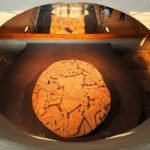
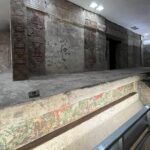
The opening stop is Museo del Templo Mayor, where you observe the remains of the ceremonial precinct of Tenochtitlán from outside. That short introduction gives the entire walk a stronger sense of place. The modern capital is not merely built near an old city. It occupies the center of one.
You spend about 10 minutes here, with no admission charge included or required for the outside viewing. This is useful if you want a quick explanation of the ruins without committing to the full museum and archaeological site.
The stop also includes the chance to observe traditional rituals and spiritual cleansings performed by local shamans. These practices bring present-day belief into a place usually discussed through archaeology and conquest. Watch respectfully and let the guide explain what you are seeing rather than treating a ceremony as a photo opportunity.
The drawback is clear: the tour does not provide a full visit inside the museum or archaeological area. If Templo Mayor is a main reason for your visit, plan separate time for it.
Metropolitan Cathedral: a brief look inside
Next comes Catedral Metropolitana de la Ciudad de México, the largest cathedral in Latin America. The building is presented as both a major place of worship and an architectural work, which matters because this is not just a quick exterior photo stop.
You have about 15 minutes here. If public access is available, the group enters to look around the interior. That condition matters. Religious services, closures, or other restrictions may mean you only see the outside, so do not book this walk expecting guaranteed interior access.
The short stop works best as a first look. You can appreciate the scale and decoration, hear why the cathedral matters, and then return later if you want more quiet time. Churches can be active places of worship, so the pace and access may change.
I would dress and behave as you would in any working religious building. The tour description does not promise a private entry or an extended explanation inside. Think of this as a useful introduction, not a dedicated cathedral visit.
House of Tiles: five minutes of New Spain style

The House of Tiles, or Casa de los Azulejos, is one of the quickest stops, with about five minutes for viewing. Its exterior is covered in Talavera tiles, giving the building a strong blue-and-white presence along the route.
The tiles are the point here. They show how decorative surfaces can turn an ordinary street frontage into a major sight, and they connect the building to New Spain baroque design. You get an explanation and a chance to take in the facade without stopping for a long indoor visit.
Five minutes is enough to understand why the building is included. It is not enough for a slow look at every detail or a meal inside. If you are drawn to colonial architecture, mark the location and return at your own pace after the tour.
Gran Hotel and its Tiffany ceiling

The Gran Hotel Ciudad de México provides another short but memorable stop. The highlight is a large Tiffany stained-glass ceiling window in the lobby, made in France and described as one of the largest of its kind in Mexico.
You spend roughly five minutes here. That may sound brief, but the ceiling gives you an immediate reason to look up. Colorful light fills the lobby, and the Art Nouveau design offers a sharp contrast to the cathedral and colonial buildings earlier in the walk.
This is a good example of the tour’s range. You are not seeing only one era or one style. The route shifts from archaeological remains to religious architecture, tiled baroque design, and a later European-influenced interior.
Because the stop is short, you should not expect a hotel tour or time to sit and study the lobby. The value comes from knowing where to look and understanding why the ceiling deserves attention.
Other walking tours we've reviewed in Mexico City





Bellas Artes: an important detail about the ending
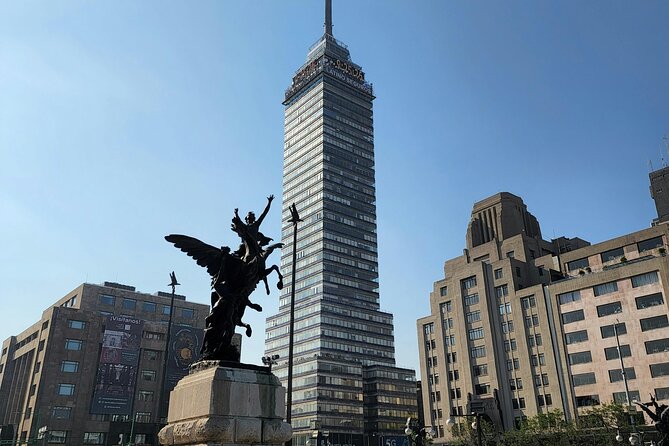
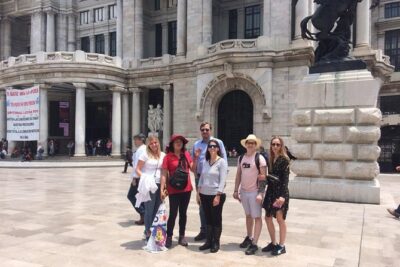
The tour continues to Palacio de Bellas Artes, a building devoted to music, dance, theater, and visual arts. Its architecture is impressive, and the interior contains major murals. The route allows about five minutes for an internal view.
There is an important practical qualification: the guide will not enter the venue with the group. From the meeting point at Bellas Artes, you explore the place on your own. That means the tour can point you toward the palace and explain its importance, but it does not provide a guided museum visit inside.
This arrangement has both a benefit and a drawback. You are free to continue at your own pace once the walk ends, but you need to handle your own entry and exploration. The tour does not state that admission to the interior is included, so budget and plan separately if you want a longer visit.
For many people, this is a sensible ending. You finish near a major cultural building, with the rest of the day still open. If you want a guide to explain every mural or manage your visit inside Bellas Artes, this tour will not do that.
Madero Avenue: food, shops, and a useful final stroll

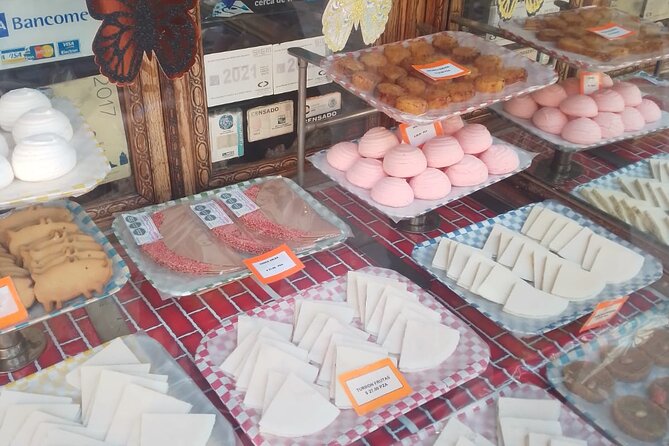
Francisco I. Madero Avenue is a lively pedestrian street lined with shops, restaurants, and historic buildings. You walk here for about 10 minutes while the guide points out sights and food and drink options.
This may be the most practical part of the tour for your later time in the center. A guide can help you notice places that blend into the street frontage, and food suggestions are especially useful when you are deciding where to eat after a morning of sightseeing.
Do not expect a food tasting or a full culinary tour. Water is included, but the tour does not list meals, drinks, or tastings. The value lies in the orientation and the ideas you can use afterward.
Madero Avenue also helps connect the older monuments to the everyday center of Mexico City. You see people shopping, eating, and moving through a pedestrian street rather than only visiting formal attractions.
Timing, walking, and group size
The advertised duration is about two hours. The listed stop times add up to about 50 minutes, leaving the rest for walking between sites, explanations, and transitions. That makes the schedule plausible, but it also confirms that this is a quick survey of the center.
You should wear comfortable shoes and expect to remain on foot for the full route. The tour does not include private transportation. Its central meeting and ending points are near public transit, which makes it easier to connect with the rest of your day.
A maximum of 30 people is allowed. That is a manageable number for a commercial city walk, but it is still large enough that you may need to stand close to hear clearly. If you prefer a slow pace, long photo stops, or frequent questions, a private tour would likely suit you better, though this experience is specifically sold as a group walk.
Most people can participate, according to the supplied details. No special physical requirements are listed, but the route involves walking through a central urban area and spending the tour outdoors and in public spaces.
What the $30 price delivers
The $30 fee is fair if you want a guided first look at the historic center and useful suggestions for food and drink afterward. The route covers six named stops, includes an English-speaking local guide and a water bottle, and avoids the need to plan the walking order yourself.
It is less appealing if you already know the center well or want long interior visits. Since listed admission is free at most stops and several visits last only five minutes, the price is not buying extensive entry access. It is buying structure, context, and local direction.
The strongest value comes during a first visit to Mexico City. You can use the walk to learn how the central sights fit together, then return to Templo Mayor, the cathedral, or Bellas Artes with a better idea of what deserves your time.
The tour has received a perfect five-star score from six reviews, and the most praised elements are the guides’ explanations of history and culture plus their suggestions for food and drink spots. That praise points to the experience’s real strength: it is not just a route between buildings. It helps you make better choices after the two hours are over.
Who should choose this walking tour?
I would recommend it to a first-time visitor with a limited schedule, especially someone who wants a quick introduction before exploring independently. It also suits you if you enjoy architecture, public spaces, cultural context, and practical restaurant ideas more than long museum sessions.
It can work well early in a Mexico City visit. Afterward, you can decide which places deserve a return visit and use Madero Avenue or Bellas Artes as a starting point for the rest of the day.
Families and mixed-age groups may appreciate the short stops, though the maximum group size and city walking pace are worth considering. The English-language format helps if you want explanations in English and do not want to arrange a private guide.
I would skip it if your priority is a detailed archaeological visit, a full cathedral tour, a long Bellas Artes visit with a guide, or a food tasting. Those interests require more time than this compact route provides.
Booking is also a commitment. The experience is non-refundable and cannot be changed for any reason. Because of that rule, choose a date you are confident you can keep.
Final call: a useful first walk, not a full museum day
Book this tour if you want a practical two-hour introduction to Mexico City’s historic center, with major landmarks, living cultural traditions, and food ideas folded into one route. The guide-led structure helps you get oriented fast, and the final location near Bellas Artes leaves room for more sightseeing.
Do not book it expecting deep access to every stop. Templo Mayor is viewed from outside, cathedral entry depends on public access, and the guide does not enter Bellas Artes with the group. At $30, it is best viewed as a well-planned starting point for the center, not a complete substitute for returning to its major museums and buildings.
FAQ
How long does the CDMX Historic Center Walking Tour last?
The tour lasts approximately two hours.
How much does the tour cost?
The price is $30 per person. Group discounts are available.
What language is the tour offered in?
The tour is offered in English.
What is included in the price?
A local guide and a bottle of water are included.
Is private transportation included?
No. Private transportation is not included, though it can be requested through WhatsApp at +52 5542 690991.
Where does the tour start?
It starts at República de Guatemala and República de Argentina in Centro Histórico de la Ciudad de México.
Where does the tour end?
It ends at Palacio de Bellas Artes, Avenida Juárez, in Mexico City’s historic center.
Does the guide enter Palacio de Bellas Artes with the group?
No. The guide does not enter the venue with the group. From the ending point, you can explore the palace on your own.
More Historical Tours in Mexico City
More Walking Tours in Mexico City
More Historic Center Walks in Mexico City

More tours in Mexico City we've reviewed







Historic Center Walks, compared.
 ★ 5.0Historic Downtown Walking TourFrom $263 hours (approx.)
 ★ 5.0Historic Center Food Tour in Mexico CityFrom $1155 hours (approx.)
 ★ 4.8Mexico City: Historic Downtown Walking TourFrom $263 hours
 ★ 5.0Walking Tour of the Historic Center of Mexico City3 hours (approx.)
 ★ 5.0Mexico City Historical Centre Food Tour with 7 Authentic TastingsFrom $653 hours (approx.)
 ★ 5.0Private Walking Tour Gems of the Historic Center of Mexico CityFrom $1564 hours (approx.)
 ★ 5.010 wonders of the Historic Center of Mexico City food and musicFrom $493 hours (approx.)
 ★ 5.0Walking Tour in Historic Center CDMXFrom $832 hours 30 minutes to 3 hours 10 minutes (approx.)
The lists this tour appears in