
Reviewed · HISTORIC CENTER WALKS
Cultural Ride: Historic center & Highlights of Mexico City
Mexico City’s past comes into focus quickly from a bicycle. In four hours, you move from Aztec and Spanish-era landmarks to Diego Rivera’s murals, the Revolution Monument, and the Angel of Independence, with colonial streets and courtyards linking the stops.
In This Article
- Key points to know before you ride
- Why a bike is a smart way to see Mexico City’s center
- Meeting the guide near the Ikagai coffee shop
- The Metropolitan Cathedral and the city’s layered past
- Palace of Fine Arts and Diego Rivera’s murals
- Revolution Monument and the story of Pancho Villa
- Angel of Independence and the city’s grand avenue
- Colonial streets, courtyards, and the quieter parts of the route
- What the $70 price really covers
- Who should book, and who should choose another tour
- Should you book this Mexico City bike tour?
- FAQ
- How long is the bike tour?
- What language is the guide?
- What is included in the price?
- Is food included?
- Is hotel pickup included?
- Where does the tour meet?
- Which landmarks does the tour visit?
- Do I need to be an experienced cyclist?
- What should I wear?
- Can children join the tour?
- Is cancellation allowed?
- Can I reserve now and pay later?
I like the small-group format, which gives guides room to explain the city and help you manage traffic. I also like the practical setup: bike, helmet, bottled water, and a local guide are included. The main drawback is that you need to feel comfortable riding in city traffic, and the tour is not suitable for children under 12, wheelchair users, or people with visual impairments.
Key points to know before you ride
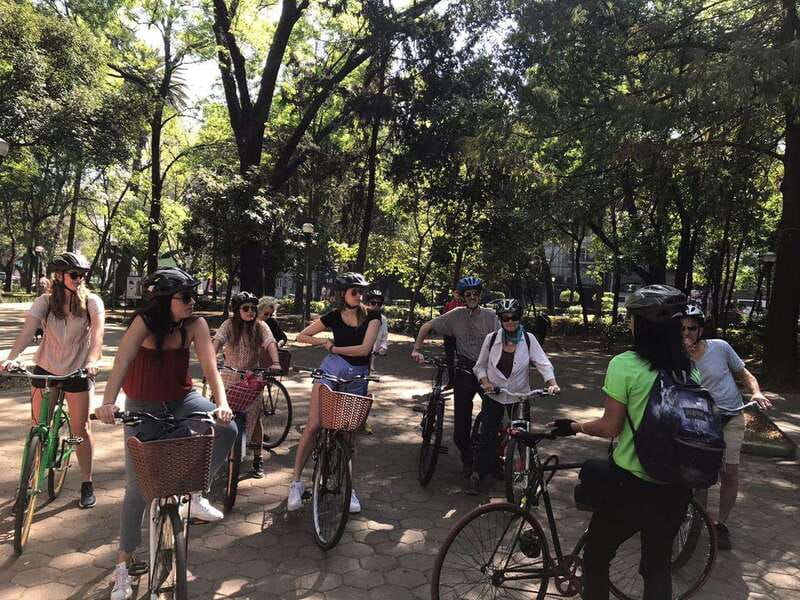
- Aztec and Spanish history meet on two wheels: The route connects major monuments with less formal streets and courtyards.
- Four hours covers the city center and beyond: You see the Metropolitan Cathedral, Palace of Fine Arts, Diego Rivera murals, Revolution Monument, and Angel of Independence.
- Guides Hector and Louis have led engaging outings: English and Spanish tours are available.
- Traffic is part of the experience: You need confidence on a bicycle, though the small group and guide support help.
- The $70 price includes the essentials: Bike, helmet, water, and guiding are covered, while food and transport to the meeting point are not.
- Dress for riding: Wear closed shoes and practical clothing. Skirts are best left at the hotel.
Why a bike is a smart way to see Mexico City’s center
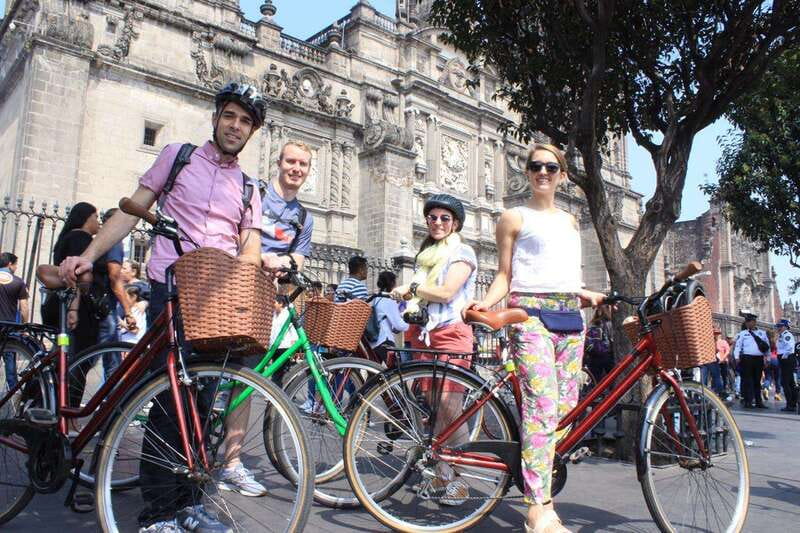
Mexico City is too large to understand from one plaza or museum. A bicycle gives you a useful middle ground. You cover more ground than you would on foot, but you still move slowly enough to notice street details, old facades, public art, and the way one historic district changes into another.
This is not a downhill countryside ride or a relaxed path beside a lake. It is an urban sightseeing tour. You will ride through the center, where traffic and crowds can be part of the day. That makes comfort on a bicycle important. If you are already uneasy riding near cars, this may not be the best first cycling experience.
The reward is variety. One moment you are looking at the Metropolitan Cathedral, the next you are near the Palace of Fine Arts and Diego Rivera murals. The route then reaches the Revolution Monument and the Angel of Independence, two symbols from different chapters of Mexico’s past.
A small group makes a real difference here. The guide can keep the pace manageable, answer questions, and give you more direct help than you might receive on a large bus excursion. It also makes the ride feel less like a convoy and more like an introduction from a local.
A few more Mexico City tours and experiences worth a look

Meeting the guide near the Ikagai coffee shop
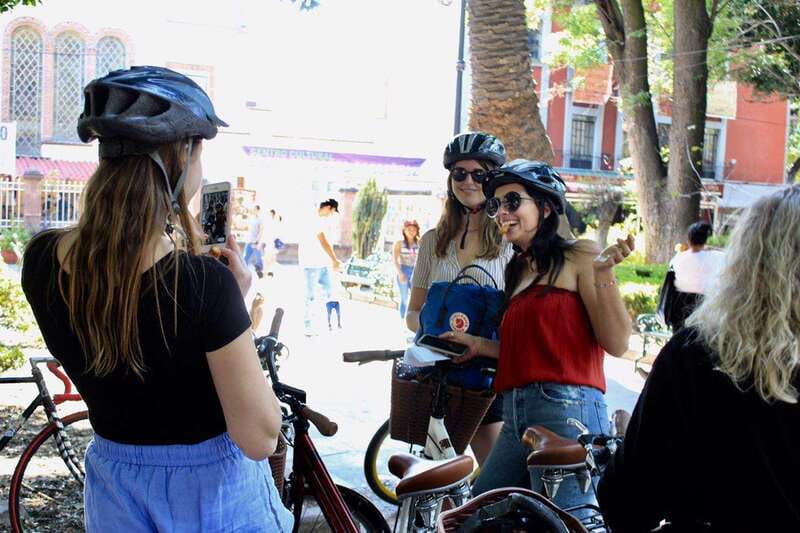
The tour begins at the bike shop. Look for the green flag and the nearby Ikagai coffee shop. Since pickup and drop-off are not included, you need to make your own way to this meeting point and return independently after the ride.
That arrangement keeps the $70 price focused on the tour itself rather than private transport. Still, allow enough time to find the shop. A bike tour should begin calmly, especially when you need to complete the mandatory waiver before riding.
Your guide provides the bicycle, helmet, and bottled water. English and Spanish are available. Guides named Hector and Louis have led the tour, and the experience is built around their explanations as much as the cycling. Ask questions early if you have a particular interest in the Revolution, murals, colonial architecture, or the city’s parks.
The waiver is not a minor detail to skip. You must sign it before the ride, and you should use that moment to make sure you understand the route and the riding expectations.
The Metropolitan Cathedral and the city’s layered past
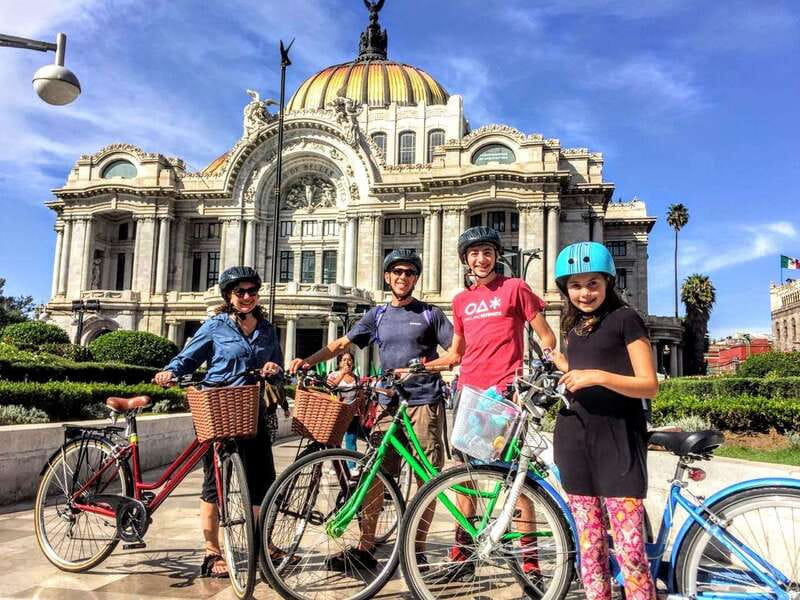
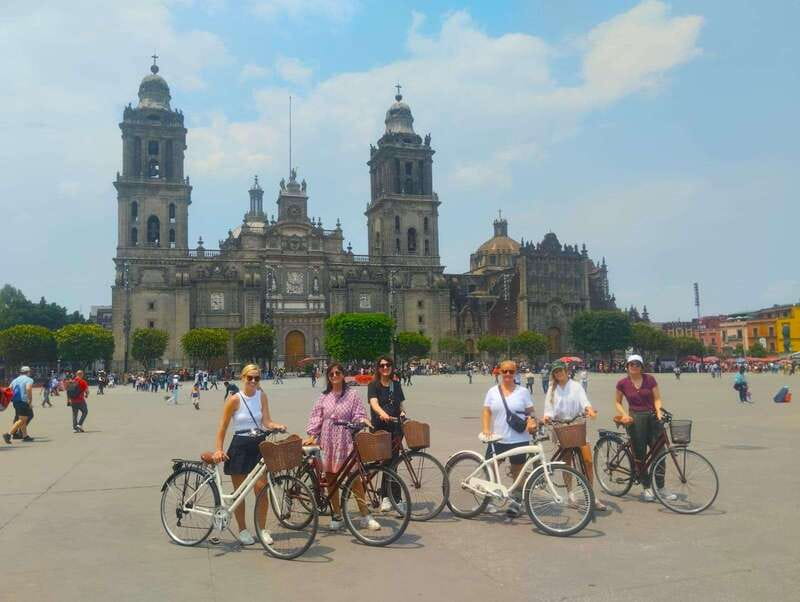
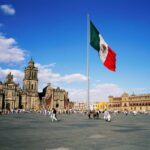
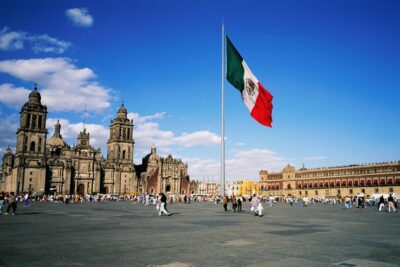
The Metropolitan Cathedral is one of the tour’s major early landmarks. It gives you a clear sense of how Mexico City’s Spanish colonial identity was placed over an older Aztec setting.
The value of seeing it by bike is the surrounding context. You are not only arriving at a single building for a quick photograph. You are moving through the historic center and seeing how the cathedral relates to the streets and public spaces around it.
The tour’s theme is the collision of Aztec and Spanish culture. That idea is more useful than a simple list of dates because it gives you a way to read the city. Look for how older traditions, colonial buildings, and modern urban life occupy the same area. Your guide can connect those layers while you move between stops.
Because the tour has several major sights, the time at each location may be shorter than on a walking tour devoted only to the cathedral. If you want a long interior visit, this ride may not meet that need. It is better suited to seeing the city as a whole and deciding which places deserve a return visit.
Palace of Fine Arts and Diego Rivera’s murals
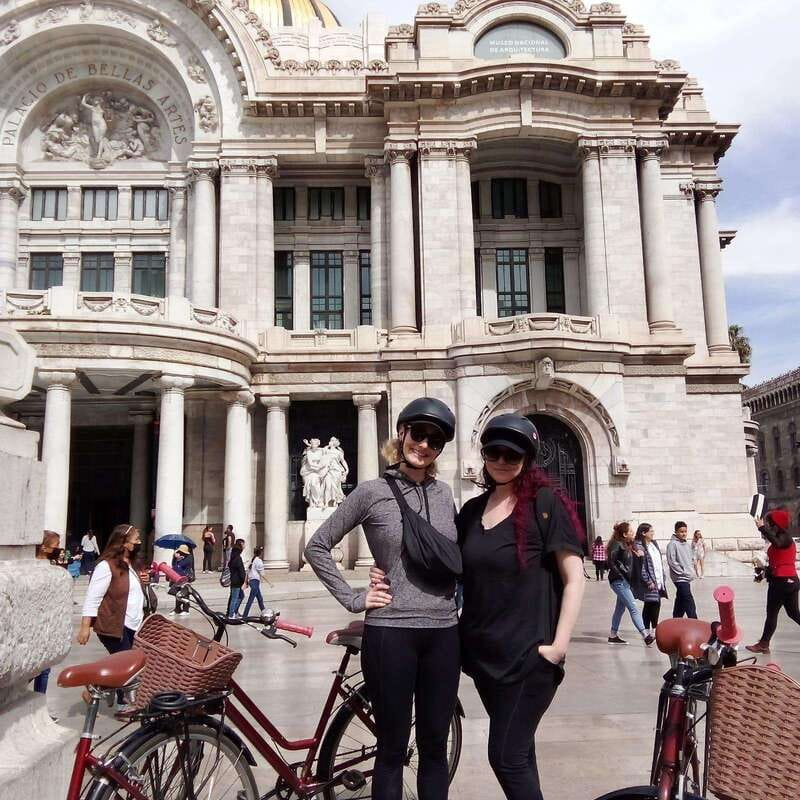
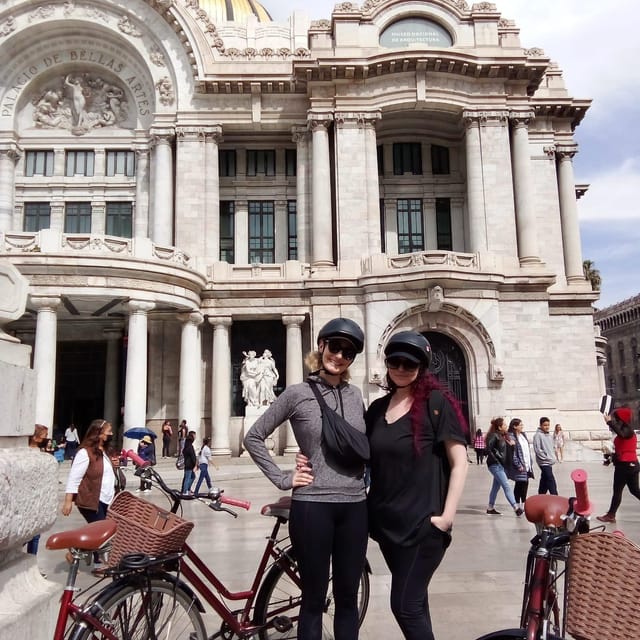
The Palace of Fine Arts provides one of the tour’s most striking architectural stops. Its appearance contrasts with the older cathedral and colonial streets, giving the route a change of mood and scale.
The Diego Rivera murals add a strong political and cultural element. These works are not just decoration. They give your guide a chance to discuss Mexico’s people, power struggles, and national identity through public art.
A bike tour works well for this part of the route because it connects the building and murals to the city outside. You get a sense of how art, public space, and daily movement overlap in the center. The ride is also useful if you have limited time in Mexico City and want a first look at several major cultural sights in one outing.
Do not expect the bicycle itself to provide a close museum visit. The tour focuses on the city’s notable exterior sights and the stories tied to them. If the murals are your main reason for booking, check how much time your guide plans to spend at them when the tour begins.
Revolution Monument and the story of Pancho Villa
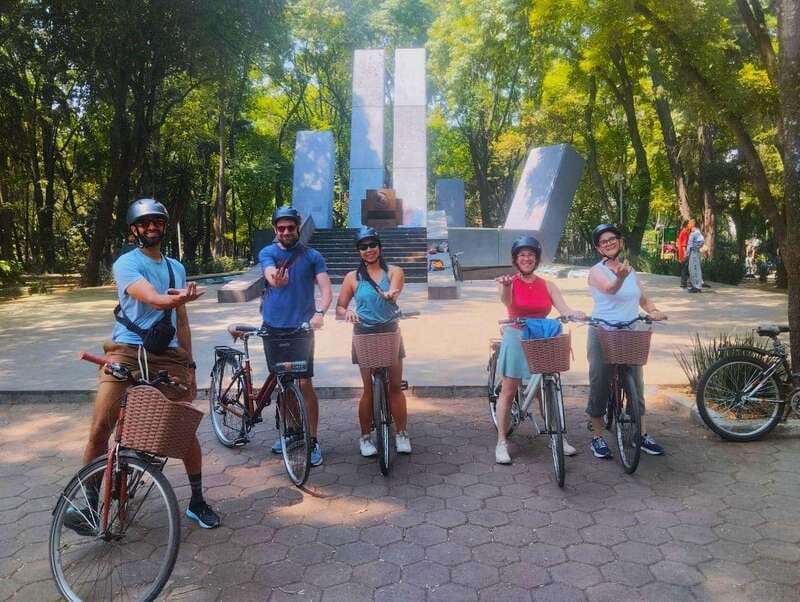
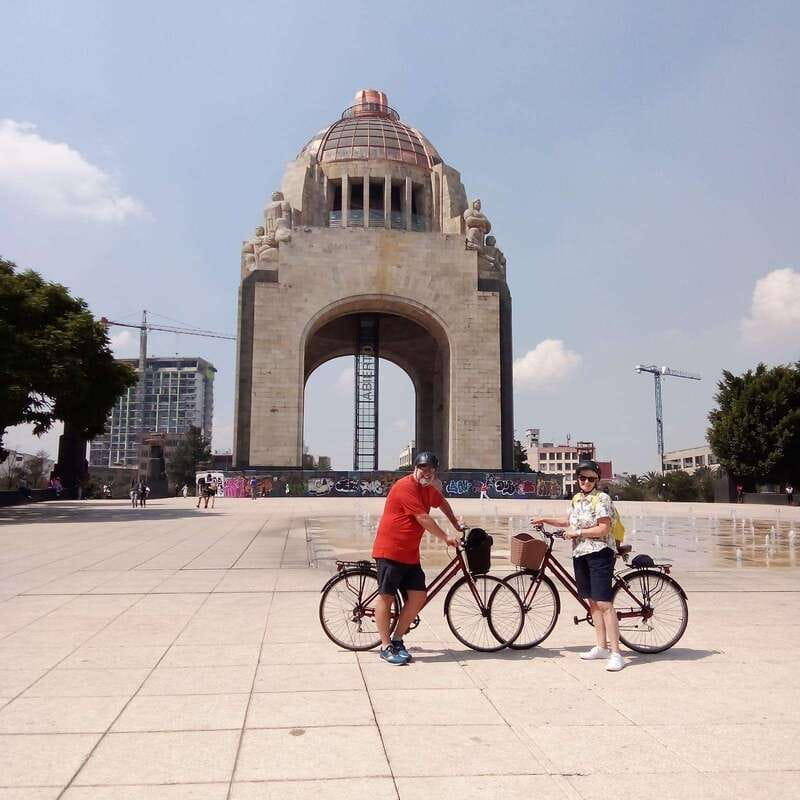
The Revolution Monument gives the tour one of its strongest historical stops. Its story is tied to Mexico’s revolution, and the site is also associated with the burial of famous revolutionaries, including Pancho Villa.
That detail makes the monument more than a grand structure for a quick photo. It becomes a place where political history and personal stories meet. The guide’s explanation can help you understand why particular figures remain important in Mexico’s public memory.
This stop also broadens the route beyond the oldest part of the center. You are not simply circling a compact group of colonial buildings. You are following a wider line through the city and seeing how different periods are represented by different monuments.
The tour description does not promise entry into every site. Treat the Revolution Monument as a guided exterior stop unless your guide tells you otherwise. That keeps your expectations realistic and lets you focus on the route’s main strength, connecting many places in a single ride.
Other city tours we've reviewed in Mexico City

Angel of Independence and the city’s grand avenue
The Angel of Independence is another major symbol on the route. It offers a different kind of Mexico City image, one shaped by national pride, ceremony, and a broad urban setting.
Seeing it after the historic center creates a useful contrast. You can compare the older streets and colonial buildings with a monument built to project a national identity. That contrast is one reason the ride is more interesting than a simple loop around the central plaza.
The route is also a reminder that Mexico City cannot be reduced to one historic district. The cathedral, Palace of Fine Arts, Revolution Monument, and Angel of Independence each tell a different part of the story. A guide helps tie those places together so the ride feels like one connected outing rather than a string of unrelated photo stops.
Traffic matters around major avenues. One guide-led outing was described as feeling safe despite the traffic, but that should not be read as a promise of empty streets. Stay alert, follow your guide’s instructions, and ride only if you are comfortable handling an urban route.
Colonial streets, courtyards, and the quieter parts of the route
The most appealing part of the experience may be the movement between headline sights. The route includes charming colonial streets and hidden courtyards, where the city feels less formal than it does around its famous monuments.
These sections give you room to notice texture and scale. A large monument tells you what a city wants to remember publicly. A narrow street or courtyard can show you how that history sits inside everyday urban life.
The ride also includes large parks, which one guide, Louis, used to give the route a pleasant change of pace. Parks matter on a bicycle tour because they break up the harder parts of city riding. They offer a moment to look around, listen, and reset before continuing.
The exact order of the stops is not provided, and starting times vary with availability. Think of this as a guided city circuit rather than a fixed timetable with guaranteed minutes at each landmark.
What the $70 price really covers
At $70 per person, the tour sits in the midrange for a four-hour guided city activity. The price includes the bicycle, helmet, bottled water, and a live guide in English or Spanish.
I see the best value in the time saved. Covering the historic center, Palace of Fine Arts, Revolution Monument, and Angel of Independence independently would require planning and a comfortable approach to city cycling. Here, the guide supplies the route and historical connection.
The price does not include food, pickup, or drop-off. You should budget for your own meal and transport to the bike shop. Bottled water is included, but bring suitable clothing and do not count on the tour to provide anything beyond the listed equipment.
The small-group setup strengthens the value. You are paying for a personal, active introduction rather than only for a rented bicycle. If you want a full day of museum interiors, the cost may be better spent elsewhere. If you want an efficient first look at central Mexico City, four hours on a bike is a sensible use of part of your schedule.
Who should book, and who should choose another tour
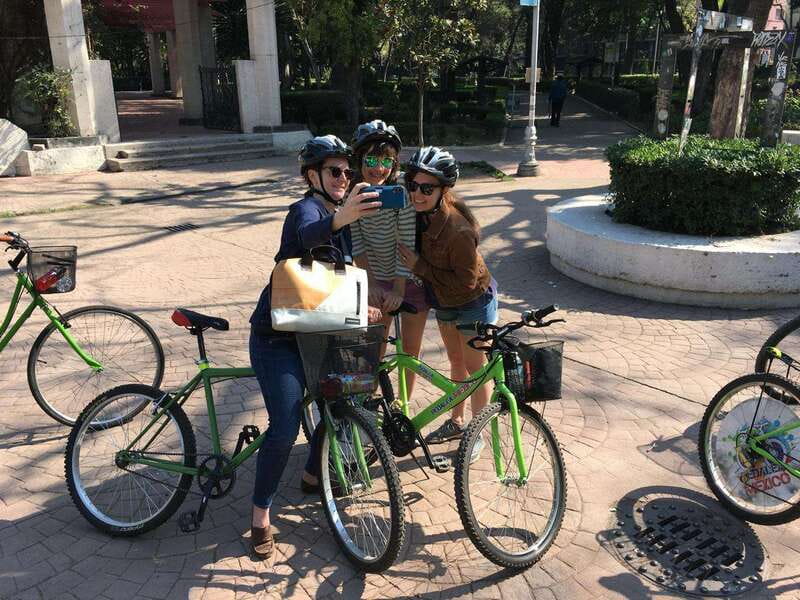
This experience suits you if you:
- Ride confidently in an urban setting
- Want a broad first look at Mexico City
- Prefer active sightseeing to a bus or long walking tour
- Enjoy hearing local stories while moving between landmarks
- Can manage four hours on a bicycle
- Are comfortable with a small-group format and shared pace
It is less suitable if you need step-free access, cannot see clearly enough to cycle, or are traveling with a child under 12. It is also a poor fit if you want a slow visit inside each landmark or dislike riding near traffic.
Wear closed shoes and practical clothing. Avoid skirts, and choose clothes that let you mount, pedal, and stop comfortably. Alcohol and drugs are not allowed, and the waiver must be signed before the tour.
The activity has a 4.8 rating from four listed reviews. The strongest praise centers on guides who make the ride informative, fun, and safe. Hector was singled out for an engaging outing, while Louis was praised for keeping the city tour lively and for the appeal of the large parks. Those details point to the human side of the experience: the guide’s pacing and storytelling will shape your day.
Should you book this Mexico City bike tour?
Book it if you want to connect major landmarks with streets and courtyards you might miss from a vehicle. The route offers a good mix of national monuments, public art, colonial settings, parks, and stories about the Aztec, Spanish, and revolutionary chapters of Mexico City.
I would choose it near the start of a Mexico City visit. It can help you understand the layout and decide where to return for longer visits. I would skip it if city traffic makes you nervous, if you need accessibility equipment, or if your priority is spending hours inside museums and historic buildings.
For a confident cyclist seeking a personal, eco-friendly way to see the center, $70 is reasonable. Just arrive at the bike shop near the green flag and Ikagai coffee shop, wear proper riding clothes, and come ready to pedal.
FAQ
How long is the bike tour?
The tour lasts four hours.
What language is the guide?
The live guide is available in English or Spanish.
What is included in the price?
The price includes a local guide, bicycle, helmet, and bottled water.
Is food included?
No. Food is not included.
Is hotel pickup included?
No. Pickup and drop-off are not included.
Where does the tour meet?
The meeting point is the bike shop. Look for a green flag and the Ikagai coffee shop.
Which landmarks does the tour visit?
The route includes the Metropolitan Cathedral, Palace of Fine Arts, Diego Rivera murals, Revolution Monument, Pancho Villa’s burial connection, Angel of Independence, colonial streets, courtyards, and parks.
Do I need to be an experienced cyclist?
You need to feel comfortable riding a bicycle. The tour takes place in Mexico City, where traffic may be present.
What should I wear?
Wear suitable attire, closed shoes, and clothing that is comfortable for cycling. Skirts should be avoided.
Can children join the tour?
Children under 12 are not permitted to participate.
Is cancellation allowed?
You can cancel up to 24 hours in advance for a full refund.
Can I reserve now and pay later?
Yes. You can reserve your place and pay later, so you do not need to pay at the time of booking.
More Historical Tours in Mexico City
More City Tours in Mexico City
More Historic Center Walks in Mexico City
More tours in Mexico City we've reviewed


Historic Center Walks, compared.
 ★ 5.0Historic Downtown Walking TourFrom $263 hours (approx.)
 ★ 5.0Historic Center Food Tour in Mexico CityFrom $1155 hours (approx.)
 ★ 4.8Mexico City: Historic Downtown Walking TourFrom $263 hours
 ★ 5.0Walking Tour of the Historic Center of Mexico City3 hours (approx.)
 ★ 5.0Mexico City Historical Centre Food Tour with 7 Authentic TastingsFrom $653 hours (approx.)
 ★ 5.0Private Walking Tour Gems of the Historic Center of Mexico CityFrom $1564 hours (approx.)
 ★ 5.010 wonders of the Historic Center of Mexico City food and musicFrom $493 hours (approx.)
 ★ 5.0Walking Tour in Historic Center CDMXFrom $832 hours 30 minutes to 3 hours 10 minutes (approx.)
The lists this tour appears in