

Reviewed · HISTORIC CENTER WALKS
Mexico City: Historic Center Walking Tour and Bellas Artes
Mexico City’s past is packed into a few walkable blocks on this tour. You move from the Mexica ceremonial center at Templo Mayor to the Metropolitan Cathedral, Spanish colonial palaces, grand hotels, and the murals inside Palacio de Bellas Artes. It is a quick but striking lesson in how one city was built over another.
In This Article
- Key points
- Start at the Metropolitan Cathedral
- Templo Mayor and the remains of Tenochtitlan
- Cortés, Moctezuma, and the complicated colonial center
- The Gran Hotel’s art nouveau interior
- Palace of Iturbide and the House of Tiles
- Palacio de Bellas Artes and Mexico’s great muralists
- The bakery stop and the rhythm of the walk
- Is $75 good value for 3.5 hours?
- Pace, comfort, and access
- Who should book this Mexico City walk?
- Should you book it?
- FAQ
- Where does the tour begin?
- Where does the tour finish?
- How long does the experience last?
- Is entry to Templo Mayor included?
- Which languages are available?
- What is included at the bakery?
I like the mix of major sights and smaller interiors, especially the Gran Hotel de México with its art nouveau decoration and the House of Tiles. I also like the final bakery stop, where a local bread gives the walk a simple, edible finish. The possible drawback is the pace: three and a half hours covers a lot of ground, and Templo Mayor entry may cost extra unless you choose the appropriate option.
Key points
- Three layers of Mexico City in one walk: See Mexica ruins, Spanish colonial buildings, and modern Mexican art within the historic center.
- Templo Mayor is the main history lesson: Learn about Tenochtitlan, the Mexica ceremonial center, and the eagle-and-cactus symbol linked to Mexico’s flag.
- Cathedral entry is included: Spend time inside the Metropolitan Cathedral, built over pre-Hispanic ruins.
- Several grand interiors are part of the route: Visit the Gran Hotel de México, Palace of Iturbide, House of Tiles, and Palacio de Bellas Artes.
- Guides can make the experience personal: Laila, Jorge, Francisco Sandoval, and David have led tours in German, English, Spanish, and Italian-friendly settings.
- A small local treat closes the walk: The bakery visit includes one bread, though meals and drinks are not included.
Start at the Metropolitan Cathedral
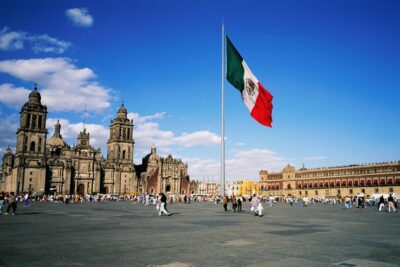
The meeting point is the entrance to the Metropolitan Cathedral, right in the historic center. This is a useful place to begin because the cathedral immediately shows the city’s central tension: a Spanish colonial church built on the foundations of the Mexica capital.
You spend about 25 minutes inside. The scale is the first thing you notice. This is described as the largest cathedral in Latin America, and its broad interior, chapels, religious art, and layered architectural styles make that claim easy to understand.
Your guide can help you read the building rather than simply walk through it. Look for the way different periods meet in one structure. Mexico City’s historic center is not a clean sequence of old buildings, each from one era. It is a place where pre-Hispanic foundations, Spanish power, Catholic faith, and later Mexican identity occupy the same ground.
The cathedral is an active religious site, so conditions can vary. Photography is allowed, but flash may be restricted in some areas. Wear modest, practical clothing and avoid high heels, which are not allowed on the tour.
A few more Mexico City tours and experiences worth a look



Templo Mayor and the remains of Tenochtitlan
The longest stop is Templo Mayor, with about an hour and a half set aside for the visit. This was the most important ceremonial and spiritual center of the Mexicas, and it gives the tour its strongest sense of time travel.
The ruins sit beside the cathedral and the Zócalo area, making the city’s development unusually clear. You can look across the modern center and picture Tenochtitlan before the Spanish conquest, then see how colonial Mexico was placed directly on top of it.
One important booking detail needs attention. The experience includes a guided visit to the Mexica ruins from outside, but the ticket to Templo Mayor is not included unless you select the option that includes it. The itinerary allows substantial time here, so check exactly what your chosen price covers before booking. At $75 per person, that distinction matters.
The tour also points out the sign that guided the Mexicas to establish their empire: an eagle associated with the sun god Huitzilopochtli, perched on a cactus with a serpent. That image became the central symbol of the Mexican flag. Seeing the connection on the ground gives the national emblem more meaning than a quick glance at a flag ever could.
You will also hear about what Tenochtitlan looked like in its prime. The guide may use the ruins, nearby buildings, and a metro station to help you imagine the old city. The metro stop is an unexpected part of the route. It shows how modern Mexico City keeps revealing its earlier layers through public spaces and daily transportation.
This section rewards attention. The stones alone can seem fragmentary, especially if you have not visited an archaeological site before. The guide’s explanation is what turns scattered remains into a ceremonial center, a capital, and a symbol of a civilization.
Cortés, Moctezuma, and the complicated colonial center
The route continues through places tied to the meeting between Hernán Cortés and Moctezuma, the Mexica emperor. You see a mural depicting that encounter and learn where Cortés’s remains lie.
This is a short stop, around 10 minutes at the National Palace area and another 20-minute stop elsewhere on the route. Do not expect a full National Palace tour in this format. The value is the connection between people and events that shaped Mexico’s next centuries.
The story is not simple, and it should not be treated as a neat meeting between two equal sides. The tour links Mexica power, Spanish conquest, religious change, and the construction of colonial authority. Even a short explanation can help you understand why Mexico City’s architecture carries such strong political weight.
The National Palace itself is one of the places where the city’s public identity comes together. The most important artistic interiors are reserved for Palacio de Bellas Artes later in the tour, but the palace stop helps connect the historic center’s buildings to national government and memory.
The Gran Hotel’s art nouveau interior

One of the more pleasant surprises is entry to the Gran Hotel de México. You are not only looking at facades from the street. You get inside one of the center’s most beautiful hotels and see its art nouveau decoration.
This is exactly the sort of stop that can disappear if you explore on your own with a checklist. A large public building may be easy to photograph from outside, yet the interior details explain why it matters. Look up, slow down, and pay attention to the decorative work around the lobby and upper spaces.
The hotel also gives the walking tour a change of mood. Templo Mayor is archaeological and open to the sky. The cathedral is solemn and religious. The hotel is decorative, polished, and tied to the city’s later urban life. That range keeps the 3.5-hour walk from feeling like one long architecture lecture.
Guide quality matters here. Laila has led a private German-language tour, taking time with questions and creating a relaxed, personal rhythm. If you need German, French, English, or Spanish, check availability for your date and language. Francisco Sandoval has also guided in a way that helped an Italian-speaking participant feel comfortable, even when the booking language was Spanish.
Palace of Iturbide and the House of Tiles
The Palace of Iturbide adds another layer to the route. It is connected with Mexico’s first emperor and now presents exhibitions. The exact exhibition can change, so the building is the reliable part of the visit, while the current display is an extra reason to look inside.
This stop is useful for understanding how colonial residences and later national ambitions share the same center. Mexico City’s old buildings were not frozen in one period. They changed owners, functions, and meanings as the country changed.
The House of Tiles is another visual highlight. Its exterior is famous, but the point of entering is to see the building from within. The tiled surfaces give the place a look that is immediately recognizable, and the 25-minute visit offers enough time to appreciate it without turning the tour into a long museum session.
I like these two stops because they break up the larger monuments. You get grand national history at the cathedral and Templo Mayor, then more intimate architecture in buildings where decoration and daily use matter. If you love historic interiors, these may be among the most satisfying minutes of the walk.
Other walking tours we've reviewed in Mexico City



Palacio de Bellas Artes and Mexico’s great muralists

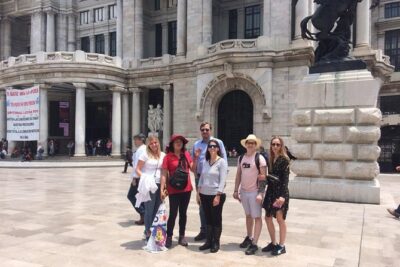
The tour finishes at Palacio de Bellas Artes, one of the most beautiful opera palaces in the world. Entry is included, and you spend about 25 minutes inside.
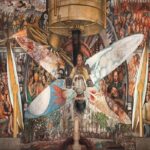
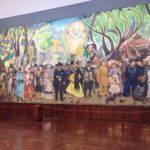
The exterior is famous for its pale stone, domes, and decorative detail, but the interior is the real payoff. You can see murals by Diego Rivera, David Alfaro Siqueiros, and José Clemente Orozco. These works are not just decoration. They present competing ideas about revolution, labor, power, and Mexican identity.
Twenty-five minutes is enough to see the key works with a guide, but it is not enough for a slow museum visit. If Bellas Artes is one of your main interests, plan to return on your own if the building’s schedule and admission arrangements allow. This tour gives you a strong introduction, not unlimited time.
Ending here makes practical sense. The final meeting point is Palacio de Bellas Artes, so you finish near one of the city center’s best-known cultural buildings rather than having to retrace your steps. The tour’s focus also shifts neatly from archaeology and conquest to modern Mexican art.
The bakery stop and the rhythm of the walk
Before the tour ends, you visit one of the oldest bakeries in the city and receive one bread. Meals and drinks are not included, so this is a small taste rather than a food tour.
I like the idea of this stop because it makes the experience feel connected to ordinary city life. After churches, palaces, ruins, and murals, bread gives you something simple and local. It also offers a short pause during a route with significant walking.
Do not treat the bakery visit as lunch. Bring water, especially in warm or dry weather, and carry a reusable flask. The provider asks participants to avoid plastic bottles. Food and drinks are not allowed inside some of the historic venues, so save your snack for the proper stop.
Is $75 good value for 3.5 hours?
At $75 per person, this is not the cheapest way to walk Mexico City’s center. The price makes more sense if you want a guide to connect the sites and you value included entry to the cathedral, Gran Hotel de México, Palace of Iturbide, House of Tiles, and Palacio de Bellas Artes.
The Templo Mayor ticket issue is the main value question. If your selected option does not include entry, budget for that separately. Since Templo Mayor receives the longest portion of the route, confirm the ticket arrangement before you pay.
You are also paying for access and organization. The tour offers a separate entrance for skipping the line, though all visits remain subject to availability and changes caused by circumstances beyond the provider’s control. That can be useful in a busy historic center, but no walking tour can guarantee that every site will operate exactly as planned.
For a first visit to Mexico City, the route covers a strong set of central sights in one half-day. If you already know the center well, the price may feel high unless you specifically want guided access to the interiors and the historical connections.
Pace, comfort, and access
The walk lasts 3.5 hours and includes a significant amount of time on your feet. Comfortable shoes are essential. Bring a hat, sunscreen, camera, and water, and prepare for changing weather.
Wheelchair access is listed, but historic buildings can still have practical limits depending on the day, entrances, and conditions. Contact the provider before booking if you need detailed access information for a particular venue.
The route is available in Spanish, English, French, and German. Guides who have led it include Laila, Jorge, Francisco Sandoval, and David. Jorge has also managed to keep a tour moving during a major protest, which is a reminder that public events can affect the historic center. The exact route or timing may change without notice when circumstances require it.
The tour does not include hotel pickup or drop-off, so you need to reach the cathedral entrance yourself. Smoking, alcohol, drugs, intoxication, and explosive substances are not allowed. Those rules are basic, but the center’s religious and cultural sites also require care with photography and food.
Who should book this Mexico City walk?
I would choose this tour if you want a guided first look at the historic center and prefer a clear route over deciding among dozens of nearby buildings. It suits you especially well if you enjoy architecture, archaeology, Mexican mural painting, and stories about how one capital was rebuilt over another.
It is also a good fit for language-sensitive visitors. A German speaker may appreciate the chance to request Laila or another German-language guide if available. Spanish, English, and French are also offered, and Francisco Sandoval has shown flexibility with Italian-speaking participants.
Families and older visitors should consider the walking time and weather. The route is wheelchair accessible according to the activity information, but anyone who finds long walks tiring should ask about the day’s exact conditions.
You may want a different plan if your priority is a slow, detailed museum visit. The Templo Mayor and Bellas Artes sections are valuable, but the schedule moves on. This is a broad introduction with many stops, not a deep examination of one collection.
Should you book it?
Book this experience if you want to see the historic center’s major contrasts in one organized morning or afternoon: Mexica ruins, the Metropolitan Cathedral, art nouveau interiors, colonial palaces, tiled architecture, mural art, and a bakery visit.
Before booking, confirm two things: the Templo Mayor ticket option and the language available on your date. At $75, the tour earns its price through its range of included entrances and guide-led connections, but only if you use those indoor visits and want the context.
For a first day in Mexico City, I think it is a sensible choice. Bring good shoes, water, and patience for a full route. You will leave with a better sense of how Tenochtitlan, colonial Mexico, and modern Mexican culture occupy the same remarkable center.
FAQ
Where does the tour begin?
The meeting point is at the entrance of the Metropolitan Cathedral in Mexico City’s historic center.
Where does the tour finish?
The tour finishes at Palacio de Bellas Artes, also called the Palace of Fine Arts.
How long does the experience last?
The walking tour lasts 3.5 hours.
Is entry to Templo Mayor included?
The guided visit to the Mexica ruins is included from outside. A ticket to Templo Mayor is not included unless you select the option that includes it.
Which languages are available?
Live guiding is available in Spanish, English, French, and German.
What is included at the bakery?
The bakery visit includes one bread. Meals and drinks are not included.
More City Tours in Mexico City




More Walking Tours in Mexico City
More Historic Center Walks in Mexico City

More tours in Mexico City we've reviewed





Historic Center Walks, compared.
 ★ 5.0Historic Downtown Walking TourFrom $263 hours (approx.)
 ★ 5.0Historic Center Food Tour in Mexico CityFrom $1155 hours (approx.)
 ★ 4.8Mexico City: Historic Downtown Walking TourFrom $263 hours
 ★ 5.0Walking Tour of the Historic Center of Mexico City3 hours (approx.)
 ★ 5.0Mexico City Historical Centre Food Tour with 7 Authentic TastingsFrom $653 hours (approx.)
 ★ 5.0Private Walking Tour Gems of the Historic Center of Mexico CityFrom $1564 hours (approx.)
 ★ 5.010 wonders of the Historic Center of Mexico City food and musicFrom $493 hours (approx.)
 ★ 5.0Walking Tour in Historic Center CDMXFrom $832 hours 30 minutes to 3 hours 10 minutes (approx.)
The lists this tour appears in