
Reviewed · HISTORIC CENTER WALKS
Private Tour in the Historic Center of CDMX with Local Guide
Mexico City’s Historic Center packs Aztec ruins, Spanish churches, presidential power, grand cafés, and early 20th-century architecture into a walkable area. This private tour gives you a guide to connect those layers, from the remains of Tenochtitlan near Templo Mayor to Diego Rivera’s murals and the ornate Palacio Postal.
In This Article
- Key points to know before booking
- Start at the Zócalo and read the city in layers
- Templo Mayor: the city beneath the city
- Bellas Artes brings art and architecture together
- Rivera’s murals at Museo Vivo del Muralismo
- Inside the Metropolitan Cathedral
- The House of Tiles and a short pedestrian-street walk
- San Francisco de Asís and the city’s Franciscan chapter
- The Zócalo, Mexico City’s main public room
- Palacio Postal and the former imperial residence
- What the private format adds
- Price, walking, and practical value
- Who should book this Mexico City walk?
- Should you book it?
- FAQ
- How long does the private tour last?
- What language is the tour offered in?
- Is this a private activity?
- Where does the tour start?
- Where does the tour end?
- Is transportation included?
- Are admission fees included?
- What level of fitness is needed?
- Can I cancel for a full refund?
I like the private format, since your group can ask questions without waiting for a large crowd to catch up. I also like the strong art focus, especially the time set aside for Rivera’s murals and the explanation of the architecture at Bellas Artes, the cathedral, and the Palacio Postal.
The main caution is pace. Three to four hours is a lot of walking and a great deal of history, with several stops lasting only 10 to 15 minutes. Transportation is not included, and the tour ends at Bellas Artes rather than returning you to the starting point.
Key points to know before booking
- Templo Mayor links Mexico City to Tenochtitlan: The route includes the main Aztec temple area and an explanation of the conquest.
- Hilary leads an art-focused walk: Her art history background is especially useful at Rivera’s murals and the city’s grand buildings.
- A private group keeps the tour flexible: Only your party takes part, which makes questions and conversation easier.
- The route covers major landmarks: You see Bellas Artes, the cathedral, the Zócalo, the House of Tiles, Palacio Postal, and more.
- Tickets and taxes are included: You do not pay extra for the listed admissions, but transportation is your responsibility.
- Plan for moderate walking: The tour lasts about 3 to 4 hours and stays in the central city, close to public transportation.
Start at the Zócalo and read the city in layers
The meeting point is outside Zócalo Central Hotel at Avenida 5 de Mayo 61, just off Mexico City’s enormous central square. This is a useful place to begin because the Zócalo puts the city’s main stories in one view: Aztec foundations, Spanish colonial power, the cathedral, the presidential center, and modern public life.
Your guide can help you sort out what you are seeing instead of leaving you with a series of impressive but disconnected façades. That matters here. Mexico City’s center is visually dense, and the same block can hold remains from one civilization, a colonial building, and a modern political gathering.
The tour also includes the official residence of the president of Mexico, identified in the route as the Palacio Nacional. Access and the exact time spent there are not specified, so you should treat this as part of the central-city sightseeing route rather than assume a full interior visit.
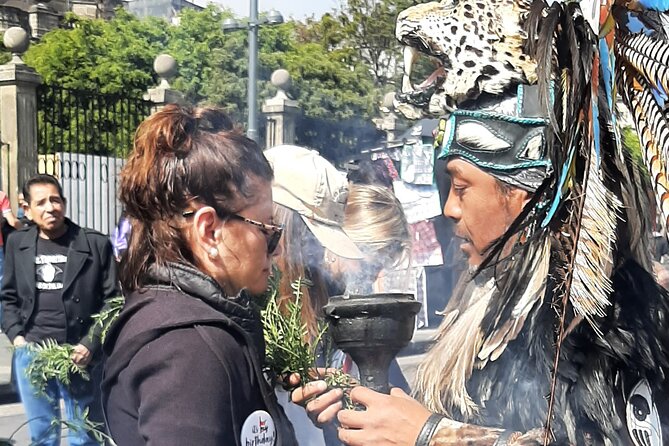
A memorable part of the walk can be the view toward the remains of Tenochtitlan. One published account describes a large demonstration at the Palacio Nacional on the day of the tour, followed by a walk across the Zócalo to the Aztec remains. Public events can change the feel of the square, so your route may not look exactly the same on every date.
A few more Mexico City tours and experiences worth a look



Templo Mayor: the city beneath the city
The main Aztec temple is one of the most important stops because it explains why the Historic Center feels layered rather than neatly planned. The Spanish capital was built over Tenochtitlan, and the surviving ruins make that fact visible.
You will get an explanation of the conquest and the old Aztec capital while looking at the remains. That context is more useful than simply taking photographs of stones beside modern streets. It helps you understand why the cathedral, government buildings, and archaeological remains sit so close together.
The supplied details do not give a separate visit length or clearly state whether a museum entrance is part of the route. Ask Hilary at the start how much time will be spent at the archaeological site and whether the plan includes an interior visit. The package says tickets for all included places are covered, but the exact access at each stop can depend on the day.
Bellas Artes brings art and architecture together
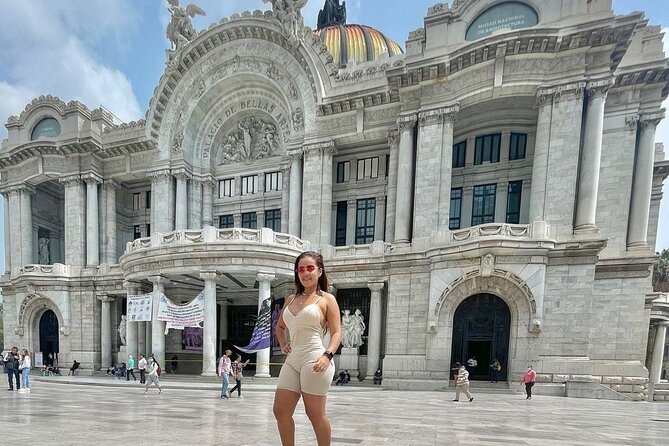
Palacio de Bellas Artes is one of the city’s best-known buildings, and the tour allows about 30 minutes there with admission included. That is enough time for an introduction to the building and its role in the Historic Center, though not enough for an exhaustive museum visit.
This is also where the tour ends, so the building has practical importance as well as visual appeal. If you want to continue sightseeing afterward, you are already near other central attractions and public transportation. If you are hoping to finish back at the hotel, remember that you will need to make your own way there.
The building works especially well with a guide because its exterior and interior belong to different periods and artistic moods. The supplied details do not specify which rooms or exhibits you will see, so think of this as a focused stop rather than a full museum afternoon.
Rivera’s murals at Museo Vivo del Muralismo
The 40-minute visit to Museo Vivo del Muralismo is one of the strongest parts of the plan for anyone interested in Mexican art. Tickets for Rivera’s murals are included, and the guide explains the paintings rather than leaving you to guess at the figures, symbols, and political ideas.
Hilary received especially strong praise for her art history background and for fitting a large amount of information into the walk. That makes this stop more than a quick look at famous walls. You can ask about Rivera’s subject matter, his place in Mexican public art, and how the murals relate to the country’s history.
Forty minutes is a sensible amount of time for a guided introduction. It gives you room to look closely without turning the whole tour into a museum visit. If Rivera is a main reason you are booking, tell the guide early. The private format should make it easier to spend a little more time on the paintings if the schedule allows.
Inside the Metropolitan Cathedral
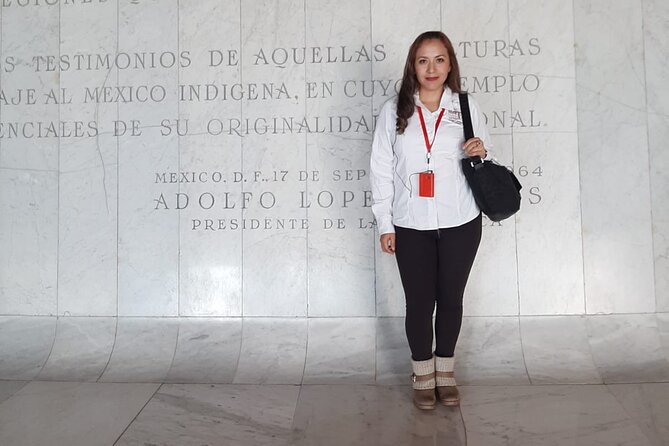
The Catedral Metropolitana de la Ciudad de México receives about 15 minutes, with admission listed as free. Built beginning in 1573, it is the seat of the archbishopric and one of the center’s major landmarks.
Fifteen minutes is brief, but a guide can use that time well by pointing out the building’s difficult construction and the long process behind it. One account specifically recalls Hilary explaining why the cathedral was difficult to build. That kind of detail helps you see the building as an engineering problem as well as a religious monument.
Do not expect a quiet, lengthy church visit on this schedule. The cathedral is a working religious site, and the tour’s purpose is to place it in the wider story of Mexico City. If you want to study chapels or attend a service, plan separate time.
Other guided tours in Mexico City


The House of Tiles and a short pedestrian-street walk
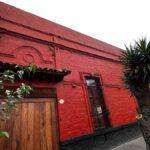
The House of Tiles gets about 10 minutes, with no separate admission charge. Its blue-and-white tile-covered exterior makes it one of the easiest buildings to recognize in the center, and its former connection to the Counts of the Orizaba Valley adds a colonial chapter to the route.
Today it operates as a restaurant, so this is mainly an exterior and architectural stop. Ten minutes is enough for an explanation and photographs, but not a meal. If you want to eat there, arrange that after the tour rather than count on a table during the walk.
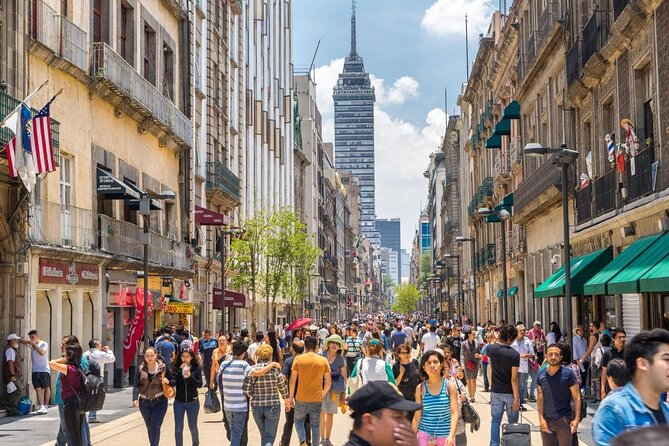
The route may also include a walk down Independencia, described as largely pedestrian and offering a distinctive view through the center. The exact streets can shift with demonstrations, traffic control, or local events. That flexibility is useful in a private tour, since the guide can respond to what is happening around the Zócalo.
San Francisco de Asís and the city’s Franciscan chapter
Templo y Exconvento San Francisco de Asís receives about 30 minutes, with admission included. It was the first Franciscan convent, built in the 16th century, so it gives the tour another way to examine the Spanish period beyond the cathedral.
The longer stop is welcome. Churches and convents can look similar when you see several in one morning, but the guide’s explanation can help distinguish their roles and place this complex in the early colonial period.
As with the other religious buildings, the supplied information does not identify every room or area open during the visit. Admission is included, but access can be shaped by services, restoration, or local operating conditions. Your guide can tell you what is available that day.
The Zócalo, Mexico City’s main public room
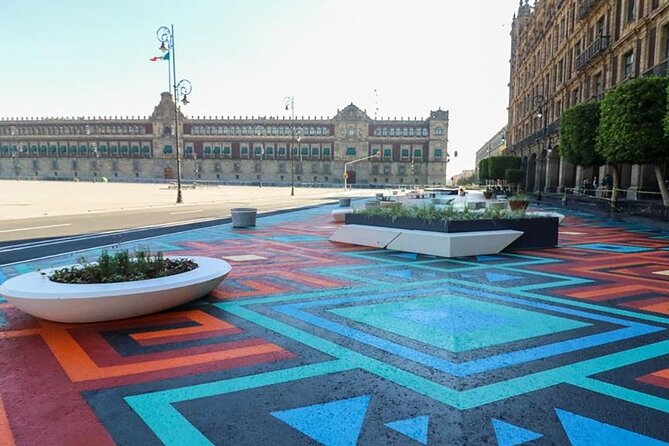
The Zócalo receives about 15 minutes, although you will already encounter it near the start of the tour. It is described as the heart of Mexico City and one of the world’s largest squares.
A short formal stop does not mean the square is unimportant. It is the place where the route’s themes meet: the Aztec capital, Spanish rule, the cathedral, the presidential center, public demonstrations, and daily city life. This is also the location where you can best feel how large and politically important the center remains.
Build in a little patience here. A demonstration, ceremony, or other public event can affect walking routes. That is not necessarily a problem, but it may change the order of the stops or limit access near government buildings.
Palacio Postal and the former imperial residence
Palacio Postal is scheduled for about 15 minutes, with admission included. It remains a functioning post office and is known for its ornate Porfirian design and Art Nouveau details.
This stop is a good reminder that Mexico City’s center is not only about Aztec and colonial history. The building reflects the modernization and grand civic style of the Porfirian period. Even a short visit can show how dramatically the city’s architectural language changed over time.
Museo Antiguo Palacio de Iturbide also receives 15 minutes, with free admission. It was once the residence of Mexico’s first emperor and now presents changing art exhibitions. Because exhibitions can change, the specific display is not guaranteed, but the building itself adds a useful political chapter to the walk.
Together, these two stops make the tour more varied. You move from a working public building to a former imperial residence, then back into the streets of the modern center. The short timing keeps the overall tour manageable, but you should not expect to study every exhibit in detail.
What the private format adds
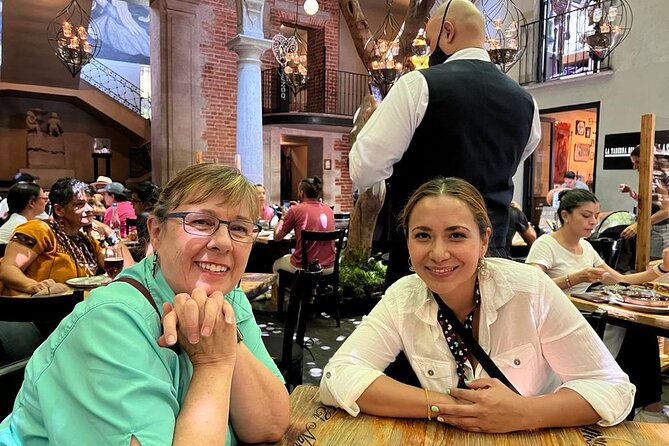
This is a private activity, so only your group participates. That changes the feel of a historical walk. You can ask for a clearer explanation, pause for a photograph, or tell Hilary that you would rather spend more time with the murals than move quickly through another exterior.
The strongest praise attached to this tour centers on Hilary’s energy, communication, and art history background. One account describes her as having more energy than the group, while another notes that she offered a good balance of information. Those points matter because a three to four-hour walk can become tiring if the guide talks without reading the group.
The private format also helps with different interests. One person may care most about Tenochtitlan, another about Rivera, and another about architecture. You still have a planned route, but the conversation should feel less fixed than it would with a large group.
Price, walking, and practical value
At $65 per person, the tour is reasonably priced if you want a guide, included admissions, and a private group rather than a self-guided walk. The value depends on how much you use the guide. If you simply want exterior photographs, you can see many of these sights on your own for less.
The price makes more sense for someone who wants the connections explained. The route covers archaeology, colonial religion, Mexican political history, mural art, and Porfirian architecture in one session. Included tickets also keep the cost predictable, although transportation is not part of the price.
Plan on a moderate level of physical fitness. The tour is on foot, lasts up to four hours, and includes several historic buildings and public spaces. Wear comfortable shoes and bring enough time afterward to rest or continue exploring near Bellas Artes.
The tour is offered in English. Confirmation is sent within 48 hours of booking, subject to availability, and the experience is commonly reserved about 18 days ahead. If your dates are fixed, booking earlier is sensible.
Free cancellation is available until 24 hours before the start time. Changes or cancellations inside that period are not accepted for a refund, based on local time.
Who should book this Mexico City walk?
I would choose this tour if you have limited time in Mexico City and want a strong first look at the center without joining a large group. It suits first-time visitors, people interested in art and architecture, and anyone who wants the conquest and colonial periods explained while standing at the actual sites.
It is also a good fit if Rivera’s murals are high on your list. The dedicated 40-minute mural visit and Hilary’s art history background give that subject more attention than a standard sightseeing walk might.
I would hesitate if you dislike walking, prefer long museum visits, or want transportation between stops. The schedule is full, several visits are short, and the tour ends at Bellas Artes. You should also confirm the precise access planned for the Aztec temple area and the presidential residence, since the supplied details do not spell out the interior visits.
Should you book it?
Book this private walk if you want the Historic Center explained by an energetic English-speaking guide, with particular attention to Rivera, architecture, and the remains of Tenochtitlan. The included admissions and private format make $65 a fair price for a focused half-day introduction.
Skip it if you want to wander slowly, shop at length, or spend hours inside each museum. For most first visits, though, this is a useful way to get your bearings, see the major sights, and learn why Mexico City’s center is built from several eras at once.
FAQ
How long does the private tour last?
The tour lasts approximately 3 to 4 hours.
What language is the tour offered in?
The tour is offered in English.
Is this a private activity?
Yes. Only your group participates in the tour.
Where does the tour start?
It starts at Zócalo Central Hotel, Avenida 5 de Mayo 61, in Mexico City’s Historic Center.
Where does the tour end?
The tour ends at Palacio de Bellas Artes on Avenida Juárez.
Is transportation included?
No. Transportation is not included.
Are admission fees included?
Yes. All fees and taxes are included, along with tickets for Rivera’s murals and the listed places included in the tour.
What level of fitness is needed?
A moderate level of physical fitness is recommended.
Can I cancel for a full refund?
Yes, if you cancel at least 24 hours before the experience begins. Cancellations or changes made less than 24 hours before the start time are not refunded.
More Private Tours in Mexico City



More Guided Tours in Mexico City
More Historic Center Walks in Mexico City


More tours in Mexico City we've reviewed






Historic Center Walks, compared.
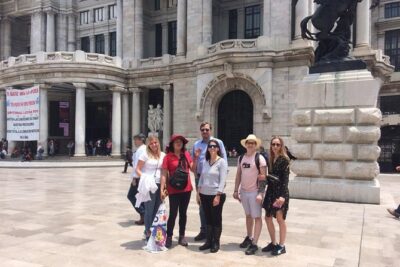 ★ 5.0Historic Downtown Walking TourFrom $263 hours (approx.)
 ★ 5.0Historic Center Food Tour in Mexico CityFrom $1155 hours (approx.)
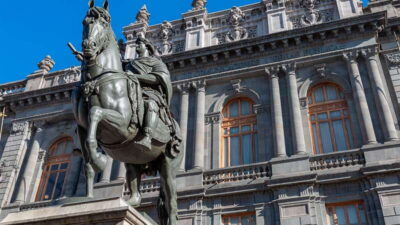 ★ 4.8Mexico City: Historic Downtown Walking TourFrom $263 hours
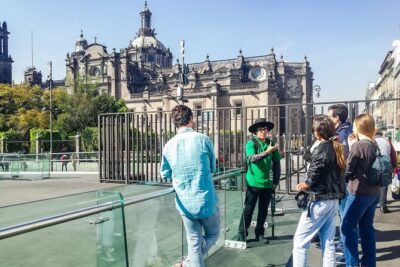 ★ 5.0Walking Tour of the Historic Center of Mexico City3 hours (approx.)
 ★ 5.0Mexico City Historical Centre Food Tour with 7 Authentic TastingsFrom $653 hours (approx.)
 ★ 5.0Private Walking Tour Gems of the Historic Center of Mexico CityFrom $1564 hours (approx.)
 ★ 5.010 wonders of the Historic Center of Mexico City food and musicFrom $493 hours (approx.)
 ★ 5.0Walking Tour in Historic Center CDMXFrom $832 hours 30 minutes to 3 hours 10 minutes (approx.)
The lists this tour appears in