
Reviewed · HISTORIC CENTER WALKS
Walking Tour of the Historic Center in Mexico City
The most striking part of this Mexico City walk is how quickly the city’s layers come together. At Templo Mayor, you see the remains of the Aztec capital. A few blocks later, the Metropolitan Cathedral and grand colonial buildings show how Spanish rule reshaped the same ground. By the end, murals and art nouveau architecture carry the story into modern Mexico.
In This Article
- Key points before you book
- Why this route makes sense in Mexico City
- Templo Mayor: Mexico City’s Aztec foundation
- The Metropolitan Cathedral and the long colonial story
- The Zócalo: Mexico City’s great public room
- House of Tiles: a short stop with plenty to see
- Palacio Postal and Mexico City’s art nouveau flourish
- Bellas Artes: murals, theater, and the final stop
- Private flexibility versus the small-group option
- What the $29 price gives you
- Pace, clothing, and weather
- Who will get the most from this walk?
- Should you book it?
- FAQ
- How long does the walking tour last?
- What places are included?
- Is the tour offered in English?
- Is this a private tour?
- How many people can join a semi-private tour?
- Can I customize the route?
- Is hotel pickup included?
- Where does the tour meet?
- Are admission fees included?
- What happens if the weather is bad?
I like the private local guide and the route’s mix of archaeology, religion, architecture, and art. Guides such as Andrés, Eduardo, Ivan, Ari, and Diana have been praised for clear explanations and flexible pacing. I also like that a private tour can adjust time at each stop, though you should confirm the meeting point carefully because the details differ for private and small-group bookings.
Key points before you book
- Aztec ruins in the city center: Templo Mayor gives you a direct look at Mexico City’s pre-Hispanic foundations.
- A strong art-and-architecture route: The House of Tiles, Palacio Postal, and Bellas Artes offer plenty of detail for photographers.
- Private tours can be adjusted: You may request a market, restaurant, or other nearby stop if it fits the three-hour route.
- Several guides earn high praise: Andrés, Eduardo, Ivan, Ari, and Diana are singled out for strong history explanations and personal attention.
- The walk is mostly an orientation: The route finishes outside Bellas Artes, and admission to paid interiors is not included.
- Check departure instructions: Small-group tours meet at MUMEDI at 2:30 p.m. on Saturdays, while private tours use a chosen time.
Why this route makes sense in Mexico City
Mexico City’s Historic Center is not just a collection of attractive buildings. It is a place where one civilization was built over another, and this tour gives you a useful way to read what you are seeing.
The Aztec capital of Tenochtitlan occupied this area before the Spanish conquest. After 1519, colonial builders used the same central zone for churches, government buildings, and public spaces. Later generations added grand civic buildings, post offices, theaters, murals, and shops. A guide helps connect those changes instead of leaving you with a series of unrelated photo stops.
The route lasts about three hours and covers six main locations. That is enough time for a solid first look, but not enough for long museum visits at every stop. I would treat it as an introduction to the Historic Center, followed by independent exploration later in your visit.
This is especially useful early in a Mexico City stay. You will learn the basic layout, hear the major historical turning points, and get suggestions for places worth revisiting at a slower pace.
A few more Mexico City tours and experiences worth a look



Templo Mayor: Mexico City’s Aztec foundation
The walk’s most important historical stop is Museo del Templo Mayor. Here you see remains of the Great Aztec Temple and other structures from the surrounding area, some dating to the 14th century.
The value of this stop is visual. You are not hearing about Tenochtitlan in the abstract. You are looking at the remains of a ceremonial and urban center that existed before the colonial city took shape. The ruins also make the later buildings around them easier to understand.
Your guide explains the Aztec political and social system, religious ideas, daily life, culture, and the growth of the empire in central Mexico. The discussion reaches the early years of Spanish colonization in 1519, giving you the basic framework for the rest of the walk.
The scheduled stop lasts about 40 minutes. Admission is listed as free for this portion, but the tour information also says entrance fees are not included, so confirm what access is covered when you book. If you want time to explore museum displays in detail, three hours for the entire experience will not allow much lingering here.
This is the stop where a strong guide matters most. The ruins can be difficult to read without context, and the surrounding modern streets do not always reveal what once occupied the site. Guides Ivan and Eduardo have been praised for explaining historical places in a way that made details easier to notice.
The Metropolitan Cathedral and the long colonial story
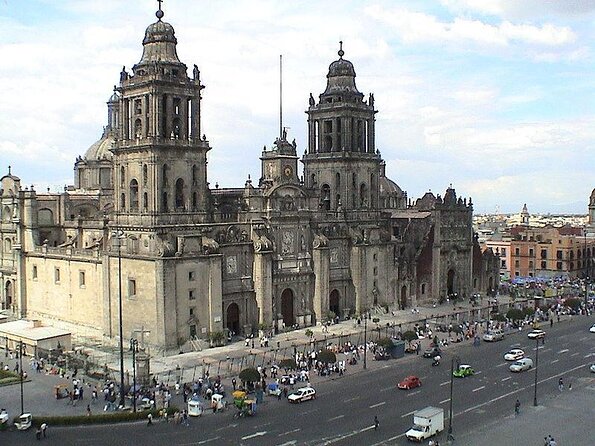
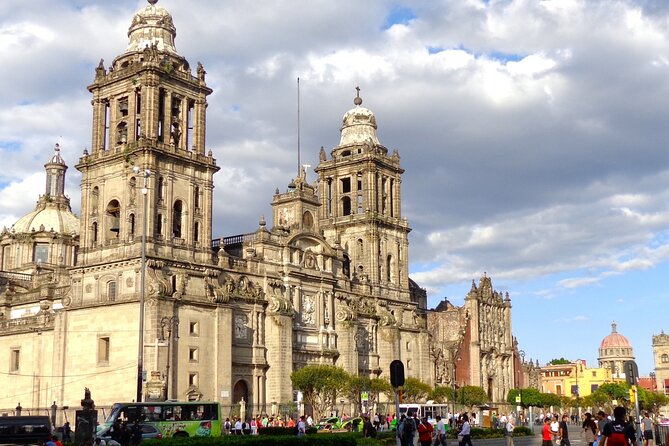
Next comes the Metropolitan Cathedral, one of Mexico City’s most recognizable religious buildings. Its construction and decoration stretch back to the 16th century, and its appearance reflects several periods of building rather than one neat architectural plan.
That makes it a useful stop for learning how Mexico City changed over time. Successive builders added styles and design ideas from different periods, creating a building that is best understood as a record of changing tastes and power.
The visit lasts about 30 minutes, with no admission ticket listed. The route focuses on the cathedral’s history, art, and architecture. You should not expect a long, detailed interior visit unless your guide and the day’s conditions allow it.
I like this stop because it follows Templo Mayor in a logical way. You first see the pre-Hispanic city, then the building that represents the colonial order placed over it. The contrast gives the walk a clear shape.
The Zócalo: Mexico City’s great public room
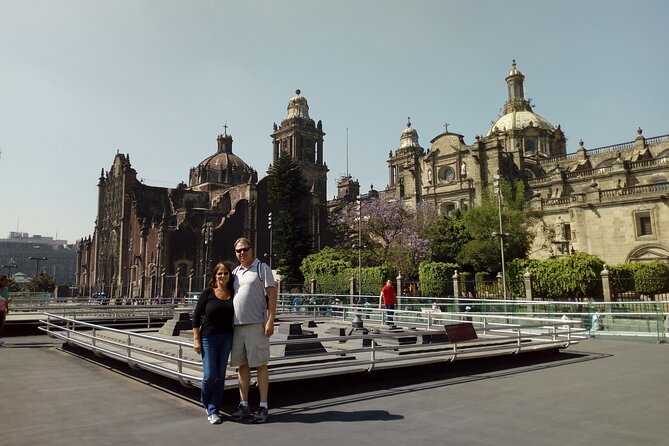
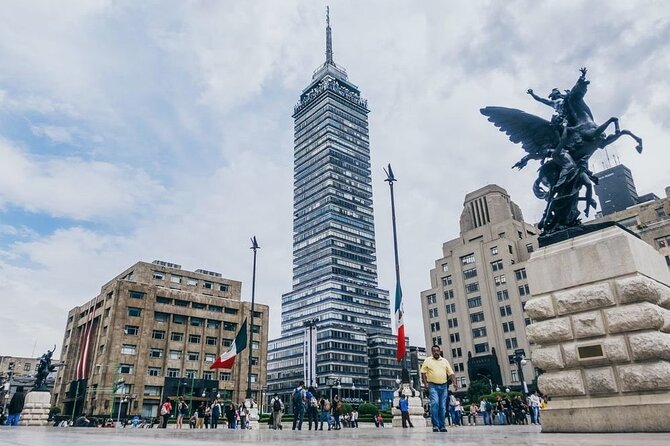
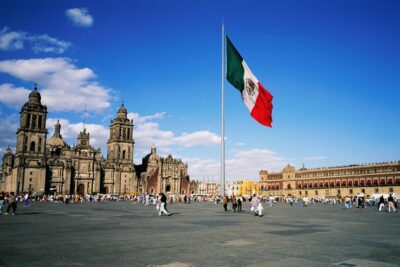
The Zócalo is the central square of Mexico City and one of the key places on the route. It has served as a gathering place since Aztec times and continues to host ceremonies, festivals, political events, and military parades.
Allow about 40 minutes here. The square is broad, open, and surrounded by buildings that help explain the city’s political and religious importance. Your guide points out structures around the plaza and describes how the center changed across the centuries.
This is also the part of the walk where pacing matters. One review described too much time standing in the plaza while the guide delivered a history lesson, especially after a request for more walking and a seat because of a knee problem. That experience is a useful warning. Tell your guide at the start how much walking, standing, and sitting works for you.
For most people, the Zócalo is an ideal place to pause and take photographs. Still, the square can be used for public events, and the atmosphere may vary on the day of your visit. Your guide may need to adjust where the group stands or how long you remain there.
House of Tiles: a short stop with plenty to see
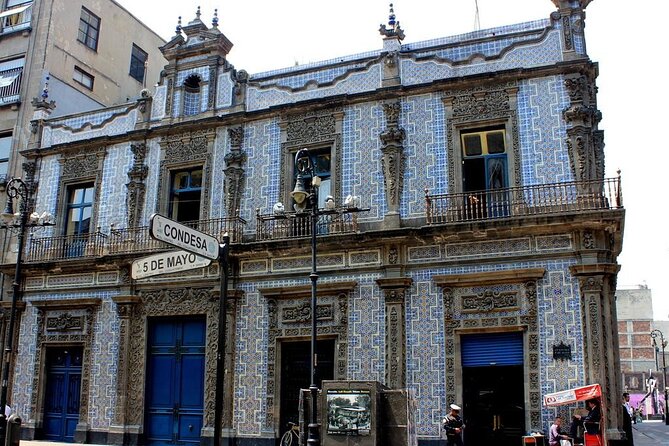
The House of Tiles is one of the route’s most photogenic buildings. Its facade is covered in colorful Talavera tiles, which have survived for centuries and give the building an appearance unlike the stone-heavy structures nearby.
Inside, you may see a mural by José Clemente Orozco, along with a glass-roofed atrium, stone pillars, murals, and a fountain. The planned stop lasts about 20 minutes, so this is a quick look rather than a full architectural study.
I would keep your camera ready here. The exterior rewards a careful look, and the interior details are easy to miss if you rush in, take one picture, and leave. A guide can point out the mural and explain why the building matters beyond its colorful facade.
One useful detail from a past visit is the suggestion of ending with a drink and bite at Café Azulejos. That is not part of the standard tour, but a private guide may be able to add a nearby restaurant or market if it fits the route and does not extend the normal duration.
Other walking tours we've reviewed in Mexico City



Palacio Postal and Mexico City’s art nouveau flourish
Palacio Postal brings a different style to the walk. This early 20th-century post office is decorated with gargoyles, marble ornaments, plasterwork, and other polished details.
The building still functions as a post office and also has a museum displaying objects and historical documents. The tour allows about 20 minutes, which is enough to admire the interior and exterior but not necessarily to study the museum collection at length.
This stop helps prevent the tour from becoming only an Aztec and colonial history lesson. Mexico City continued changing after independence, and Palacio Postal shows the city’s taste for grand public buildings in the early 1900s.
The building is also a good example of why a walking tour can be more useful than a simple list of attractions. You might pass the post office on your own and see an ornate facade. With a guide, you get a reason to stop, look upward, and pay attention to the smaller decorative features.
Bellas Artes: murals, theater, and the final stop
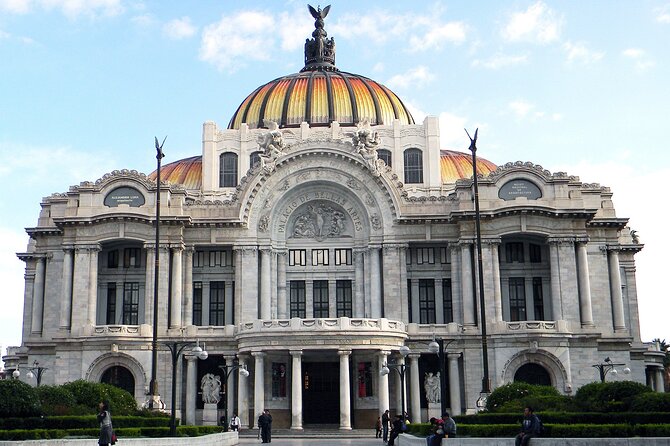
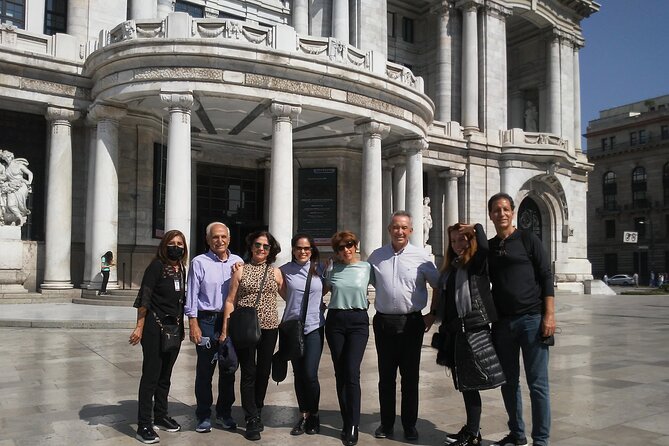
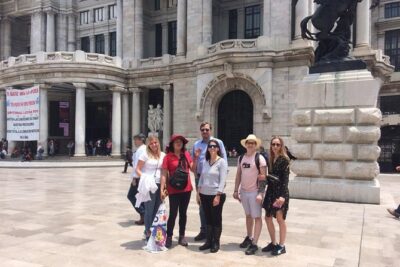
The tour finishes at Palacio de Bellas Artes, an important performance space and one of Mexico City’s best-known cultural buildings. The outside stop lasts about 20 minutes.
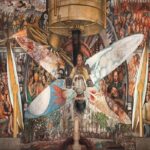
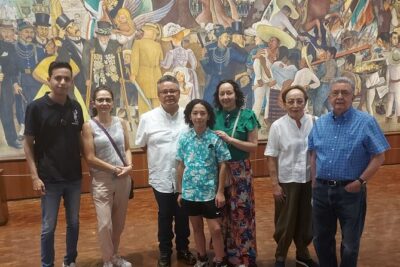
The route highlights the murals inside by Diego Rivera, David Alfaro Siqueiros, José Clemente Orozco, and other major Mexican artists from the 1930s. It also explains the building’s ongoing role as a venue for operas, recitals, lectures, temporary art exhibitions, and publishing events.
There is an important practical point here: the tour finishes outside Bellas Artes, and admission is not included. If you want to see the murals from inside, plan for a separate visit and check the opening arrangements for the day.
Several highly rated experiences placed special value on the art. One guide made a clear effort to include the Bellas Artes murals, while another helped a couple visit an exhibition by painter Covarrubias. If Mexican muralism interests you, tell the guide early. On a private tour, the route may be adjusted, but extra admission or a major route change can cost more.
Private flexibility versus the small-group option
The advertised experience can be private, but the additional booking details also describe small-group and semi-private formats. The difference matters.
A private tour is for your group alone, with a chosen starting time. You can adjust the amount of time spent at each destination and may request a nearby attraction, restaurant, or market if it fits the standard route and three-hour duration. Extending the tour, changing the route substantially, or adding participants requires advance notice and may bring an extra fee.
The semi-private option allows up to 12 people. It is offered in English and Spanish, but it is not customizable. The stated small-group departure is Saturday at 2:30 p.m. from MUMEDI, at Avenida Francisco I. Madero 74.
The meeting information also lists Palacio de Bellas Artes as the start and end point, while the detailed departure notes say MUMEDI is the meeting point for both the Saturday small-group tour and private tours. Because those instructions do not match, check your confirmation carefully and contact the operator before the day of the walk.
The guides are bilingual in Spanish and English. Some speak French, German, Italian, Portuguese, or Mandarin, but those languages depend on availability and are not guaranteed. You must provide a working phone number with the international prefix because the guide may need to reach you.
What the $29 price gives you
At $29 per person, the tour is reasonably priced for a three-hour private-guided orientation, provided your booking is actually in the private format. The main value is not transportation or included admissions. It is the guide’s interpretation of the city center and the ability to ask questions as you walk.
You pay separately for meals, personal expenses, tips, insurance, and entrance fees. Hotel or airport pickup is not included. Pickup or drop-off can be arranged for an extra fee if you contact the company in advance.
The price per person for a private tour varies with the number of people in your booking. A small group may therefore offer better value than a solo private booking, while a couple or family may prefer the privacy and flexible pace.
I would not book this expecting a series of long museum visits. I would book it for orientation, local explanation, and a carefully connected route through major Historic Center sights.
Pace, clothing, and weather
You will be on your feet for much of the three hours, so wear comfortable shoes and clothes. Bring a hat or cap, sunscreen, sunglasses, some cash, personal identification, and travel insurance.
The experience requires good weather. If poor weather causes cancellation, you are offered another date or a full refund. A past guide continued the discussion in a cafe when rain arrived, but you should not assume every weather problem will be handled that way.
The route is near public transportation, and most people can participate. Still, if you have a knee problem or need regular seating, say so before the walk begins and agree on a pace that works for you. The Zócalo portion may involve standing while the guide explains the setting.
Who will get the most from this walk?
I would recommend this tour to a first-time visitor who wants a clear introduction to central Mexico City. It also suits families and couples who prefer asking questions rather than following a large, fixed group.
History and art fans will get the most from it, especially if you care about Aztec archaeology, colonial architecture, or Mexican muralism. Photographers will appreciate the House of Tiles, Palacio Postal, Bellas Artes, and the changing views around the Zócalo.
You may want another option if you prefer long museum visits, a fast walking pace, or a fully fixed schedule with no discussion. The one negative experience supplied here shows that guide style matters. Confirm that your guide will balance explanation with movement and allow breaks when needed.
Should you book it?
Book this walk if you want the Historic Center explained as one connected story, from Templo Mayor to Bellas Artes. The strongest reasons are the private guide, the mix of archaeology and art, and the chance to request modest changes to the route.
Before paying, confirm whether you are booking private or small-group service, where you will meet, what admission is covered, and how much time you want inside Bellas Artes or Templo Mayor. If those details suit you, $29 is a fair starting point for three hours of focused sightseeing. Free cancellation is available until 24 hours before the start time, which gives you some useful flexibility.
FAQ
How long does the walking tour last?
The standard tour lasts approximately three hours, with the advertised duration calculated from pickup or meeting time through drop-off or the end of the walk.
What places are included?
The route includes Museo del Templo Mayor, the Metropolitan Cathedral, the Zócalo, the House of Tiles, Palacio Postal, and Palacio de Bellas Artes.
Is the tour offered in English?
Yes. Private tours are led by local bilingual guides who speak at least Spanish and English. Other languages may be available but are not guaranteed.
Is this a private tour?
The experience is described as a private activity, but the booking information also gives small-group and semi-private options. Confirm the format and price for your selected booking.
How many people can join a semi-private tour?
The semi-private format allows up to 12 participants. A private tour is limited to your own group, with the group size affecting the price per person.
Can I customize the route?
Private tours can adjust time at each stop. A nearby attraction, restaurant, or market may be added if it fits the standard duration and does not require a major route change. Small-group tours are not customizable.
Is hotel pickup included?
No. Hotel and airport pickup are not included. Pickup or drop-off can be arranged for an additional fee if requested in advance.
Where does the tour meet?
The detailed departure information gives MUMEDI, at Avenida Francisco I. Madero 74, as the meeting point for the Saturday small-group tour at 2:30 p.m. Private tours use an agreed time and location. Other information lists Palacio de Bellas Artes, so check your confirmation.
Are admission fees included?
The tour information says entrance fees are not included. The stops at Templo Mayor and the Metropolitan Cathedral are listed with no admission ticket, while Bellas Artes admission is specifically not included.
What happens if the weather is bad?
The experience requires good weather. If it is canceled because of poor weather, you can choose another date or receive a full refund. You can cancel for a full refund up to 24 hours before the start time.
More City Tours in Mexico City




More Walking Tours in Mexico City
More Historic Center Walks in Mexico City

More tours in Mexico City we've reviewed





Historic Center Walks, compared.
 ★ 5.0Historic Downtown Walking TourFrom $263 hours (approx.)
 ★ 5.0Historic Center Food Tour in Mexico CityFrom $1155 hours (approx.)
 ★ 4.8Mexico City: Historic Downtown Walking TourFrom $263 hours
 ★ 5.0Walking Tour of the Historic Center of Mexico City3 hours (approx.)
 ★ 5.0Mexico City Historical Centre Food Tour with 7 Authentic TastingsFrom $653 hours (approx.)
 ★ 5.0Private Walking Tour Gems of the Historic Center of Mexico CityFrom $1564 hours (approx.)
 ★ 5.010 wonders of the Historic Center of Mexico City food and musicFrom $493 hours (approx.)
 ★ 5.0Walking Tour in Historic Center CDMXFrom $832 hours 30 minutes to 3 hours 10 minutes (approx.)
The lists this tour appears in